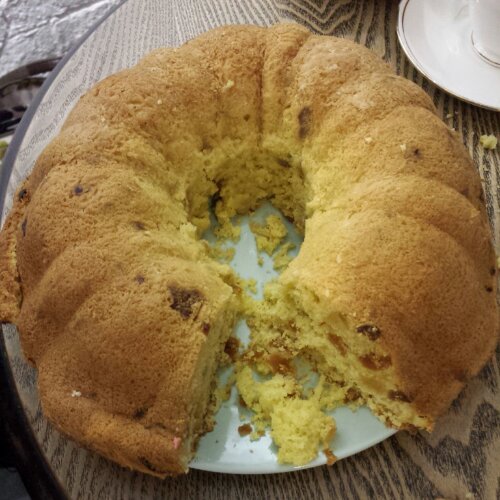
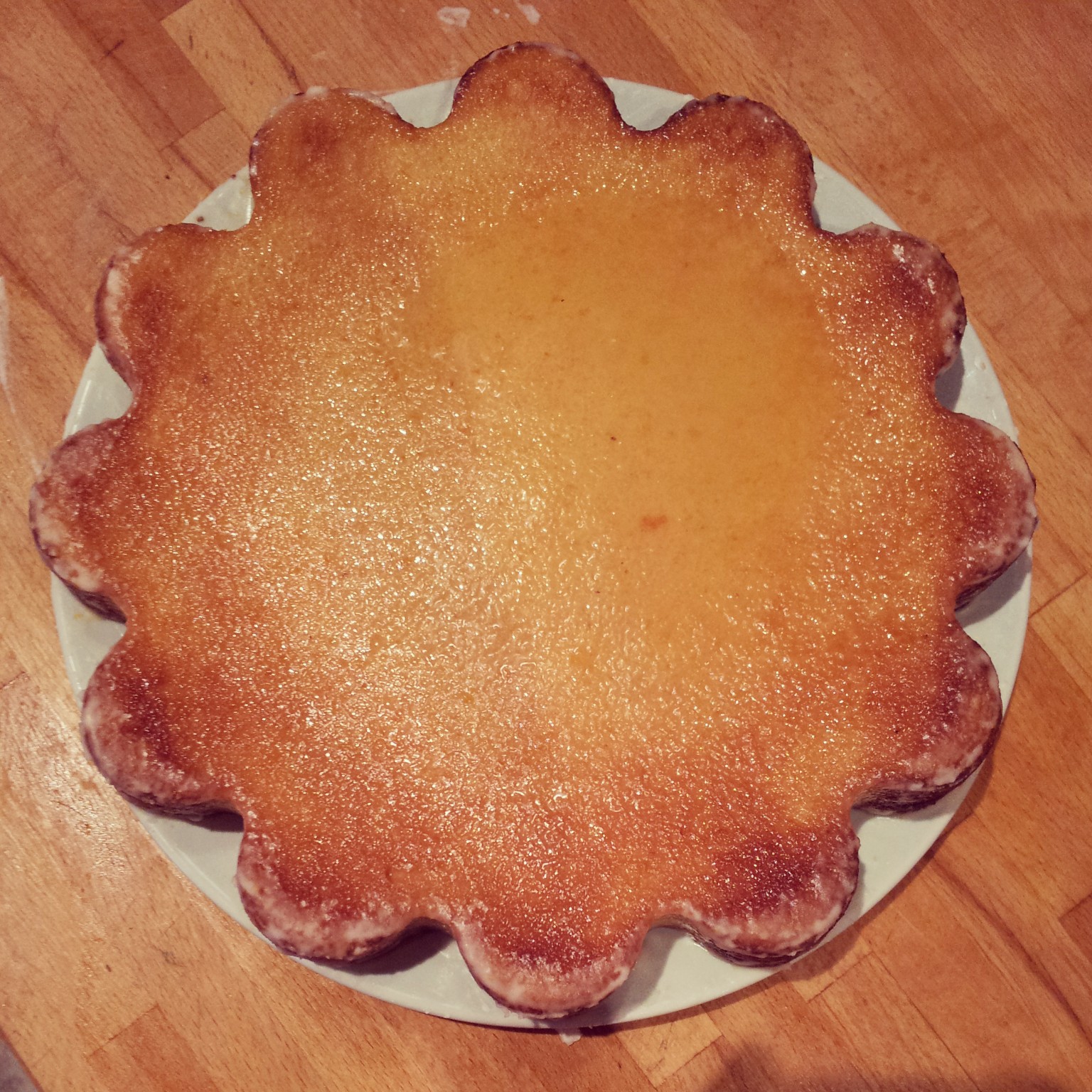
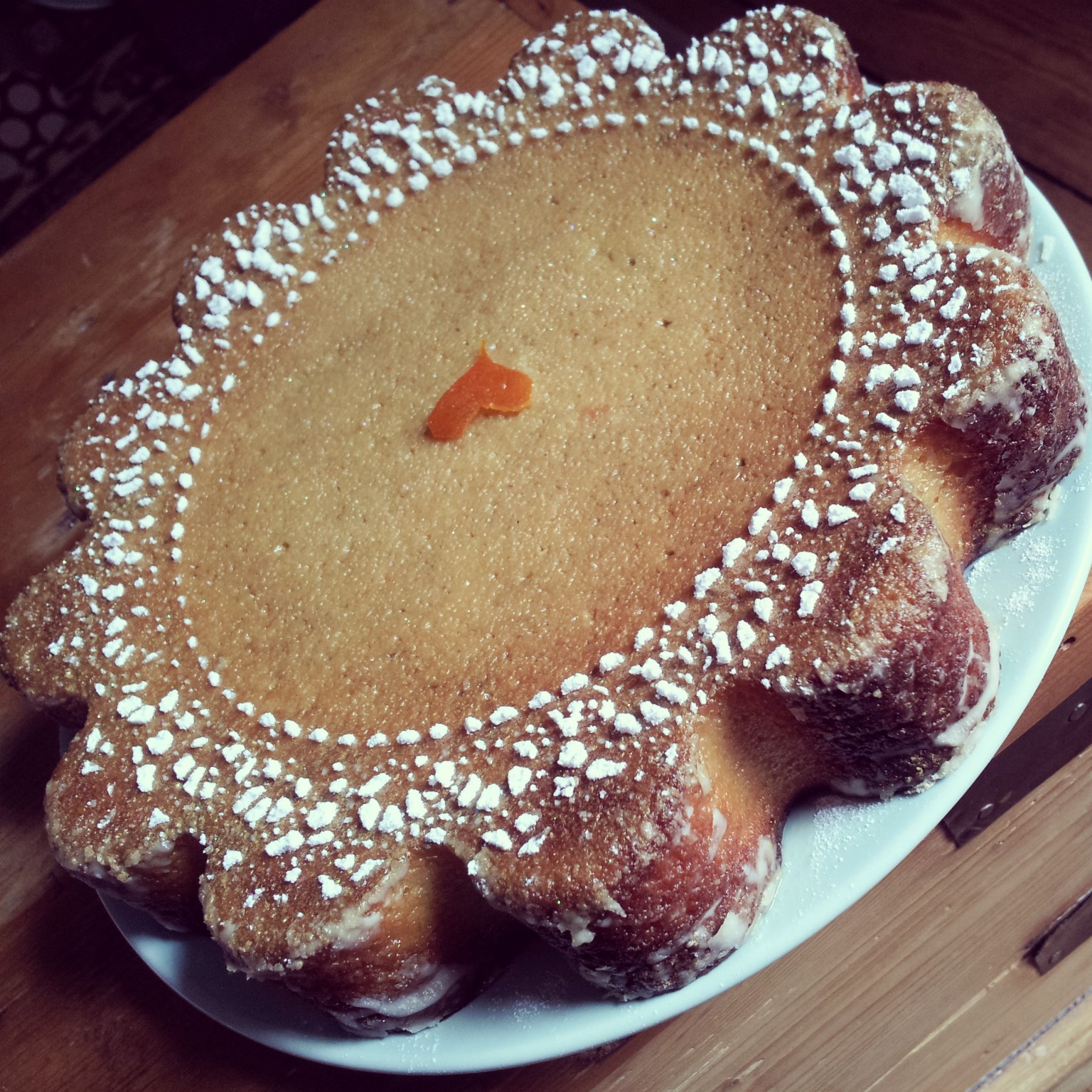
57. Iranian Pistachio Cake

Iranian Pistachio Cake - powered by pistachios

Iranian Pistachio Cake – powered by pistachios

How delicious are pistachios? Ever since I’ve ventured to Greece and gorged myself on Baklava and Pistachio Gelato in Italy I’ve longed to flavour more with the glorious green god of nuts. I could eat them every day and love the Middle Eastern desserts which feature the beauteous nuts. Thank god I remembered to buy shelled pistachios this time round as this contains a HUGE amount of pistachios! No more lonely hours spent cracking nuts in the kitchen or broken nails for me.

How many pistachios can you cram into one cake?

How many pistachios can you cram into one cake?

I was looking for an especially decadent cake for my friend’s birthday and the Iranian Pistachio Cake offers everything I was looking for. A delicious, moist, sweet sponge with a hint of exotic spice. I know Pistachios aren’t cheap, so you could try substituting them for your favourite nuts (or whatever you have in your cupboard) instead. Maybe almonds, cashews or even hazelnuts? They would also be gorgeous versions of this cake.

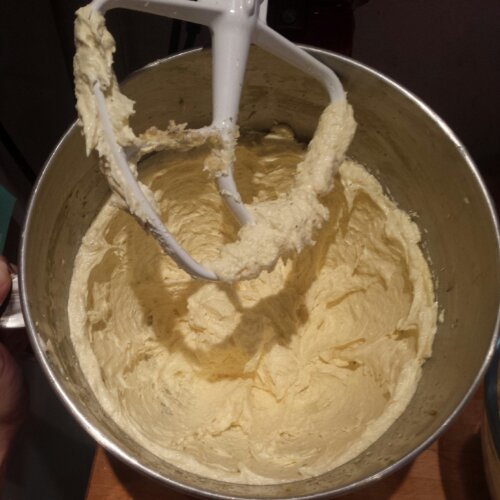
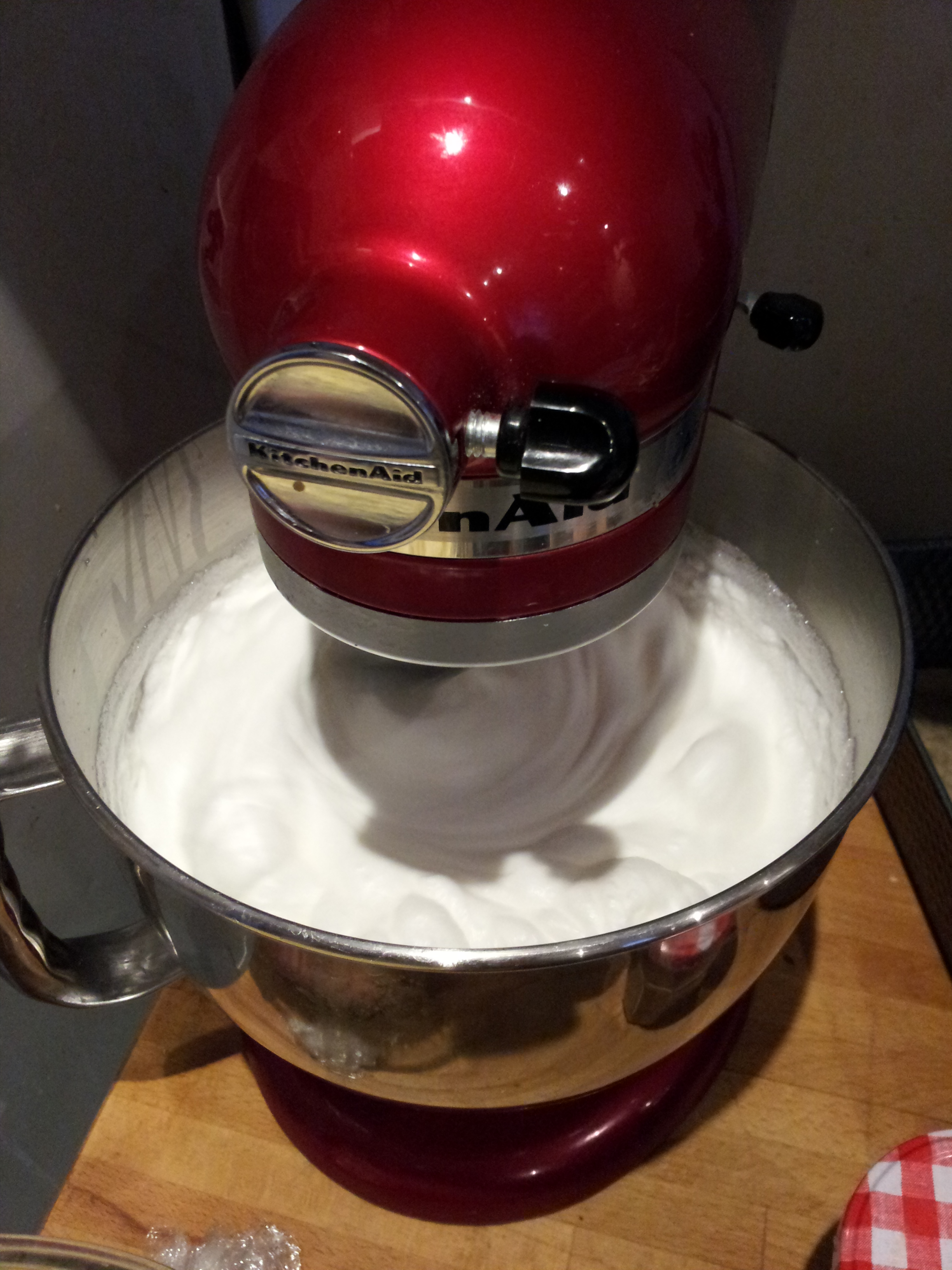
Start with beating the butter and sugar together...

Start with beating the butter and sugar together…

As with most cakes the Iranian Pistachio Cake begins with beating the sugar and butter together until light and fluffy. Adding as much air as possible to get that wonderfully tender sponge.
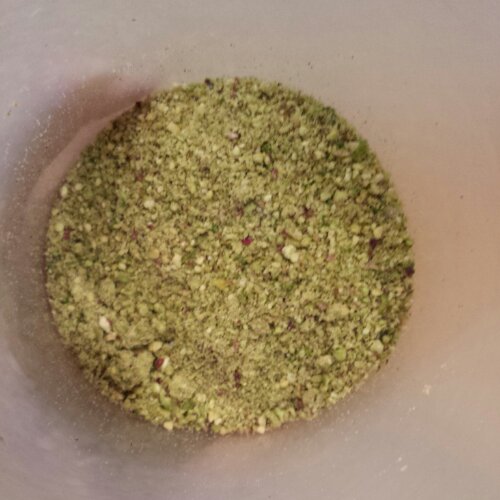
Grind up your nuts, salt and spices

Grind up your nuts, salt and spices

Then for the fun part, smashing up the nuts! Blitz the pistachios with an electric blender/food processor until they’re finely ground. Careful not to grind them too much though as the nuts will release their oils and end up as a pistachio paste which will deflate your cake (or if you keep going you could make your own raw nut butter). I  ground my cardamom along with the salt for extra friction in a pestle and mortar and then added it to the nuts and blitzed them all together to ensure the spice was evenly distributed and fine.

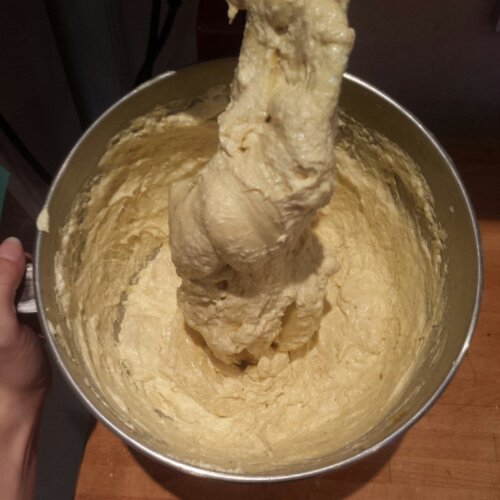
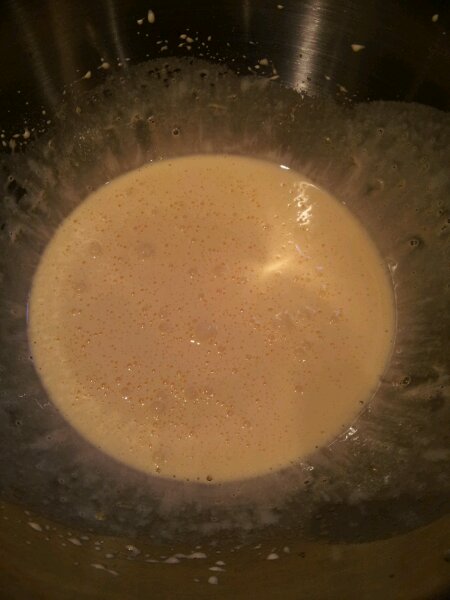
The eggs should then be beaten into the butter one at a time. Beat the mixture until very fluffy and increases in volume.
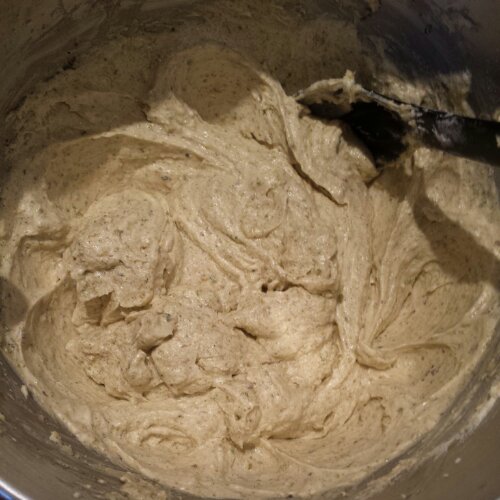
Whisk in the eggs one at a time

Whisk in the eggs one at a time

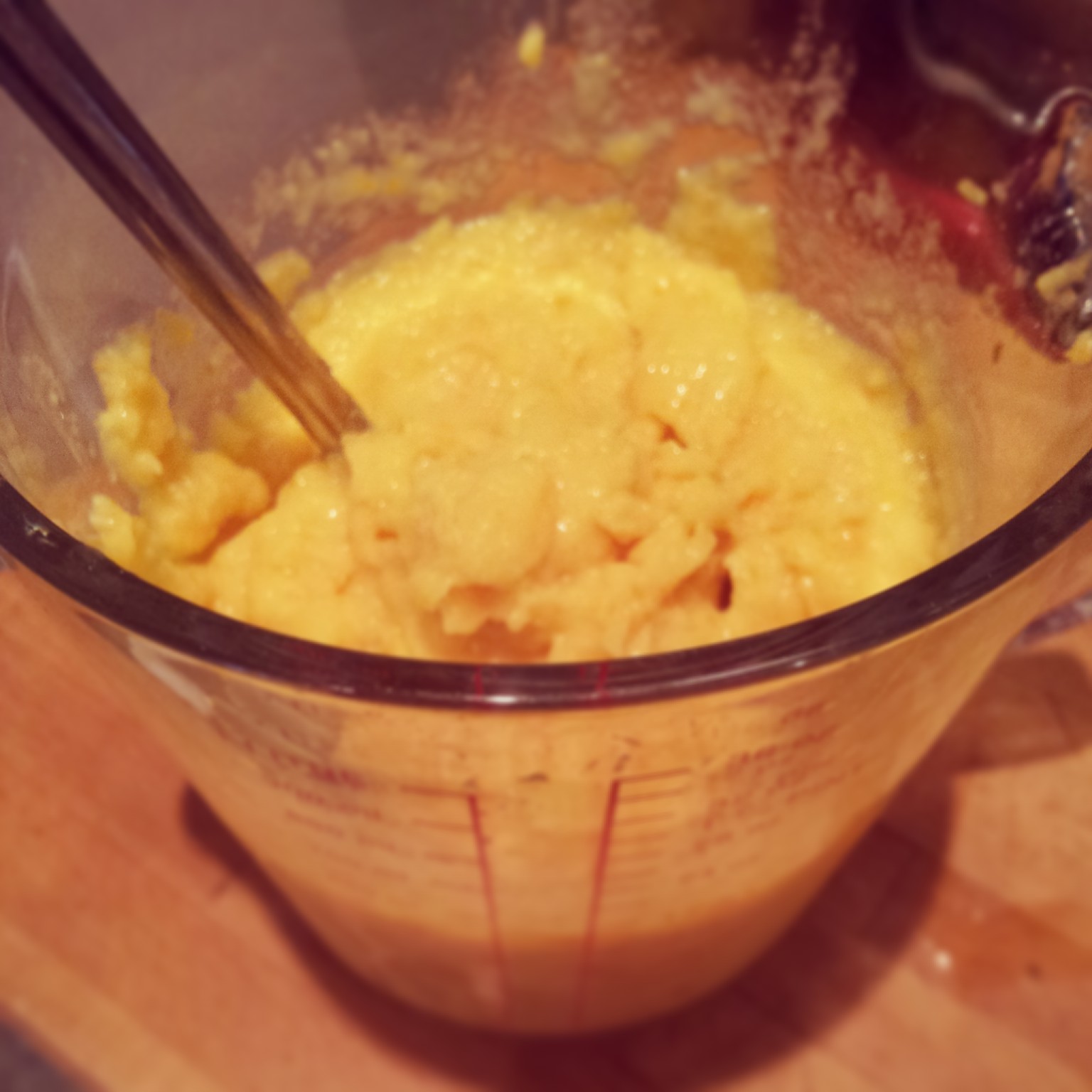
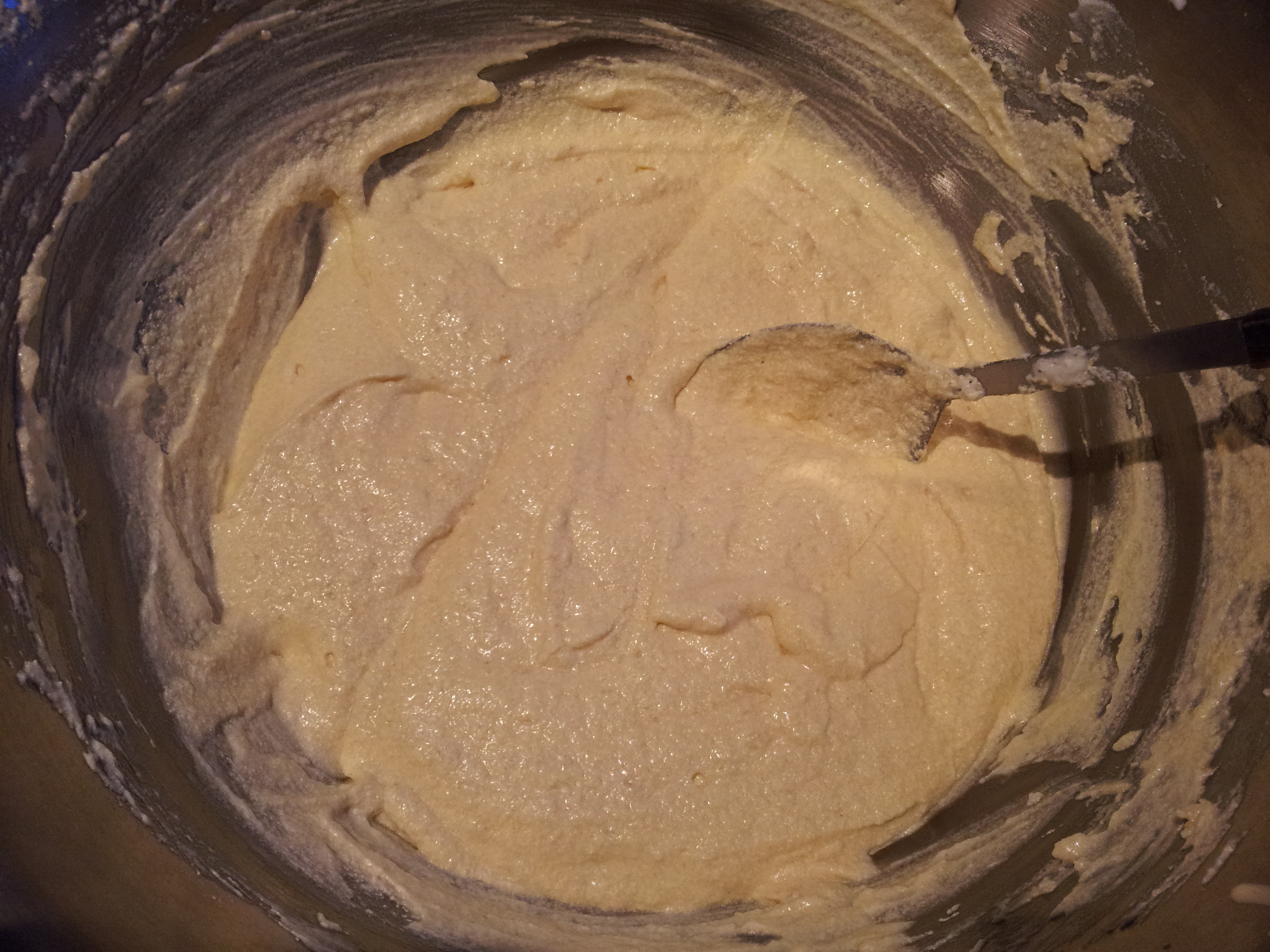
Combine the ground pistachios, spice and salt with the flour and baking powder in a separate bowl. Measure the milk into a jug and add the vanilla paste. Fold one third of the flour into the butter mixture followed by a third of the milk. Fold in a third of the flour followed by another third of the milk alternately until all of the ingredients are fully incorporated into the batter.
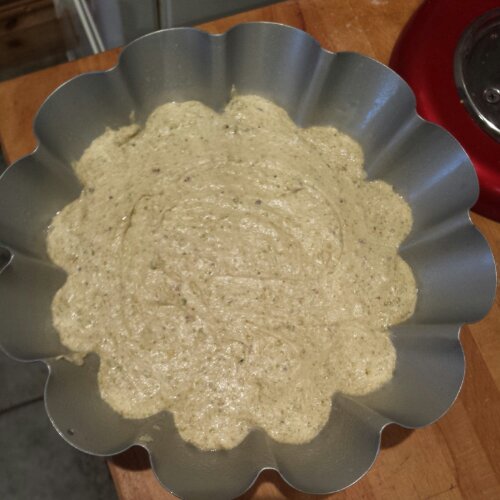
Pistachio Cake ready and waiting

Pistachio Cake ready and waiting

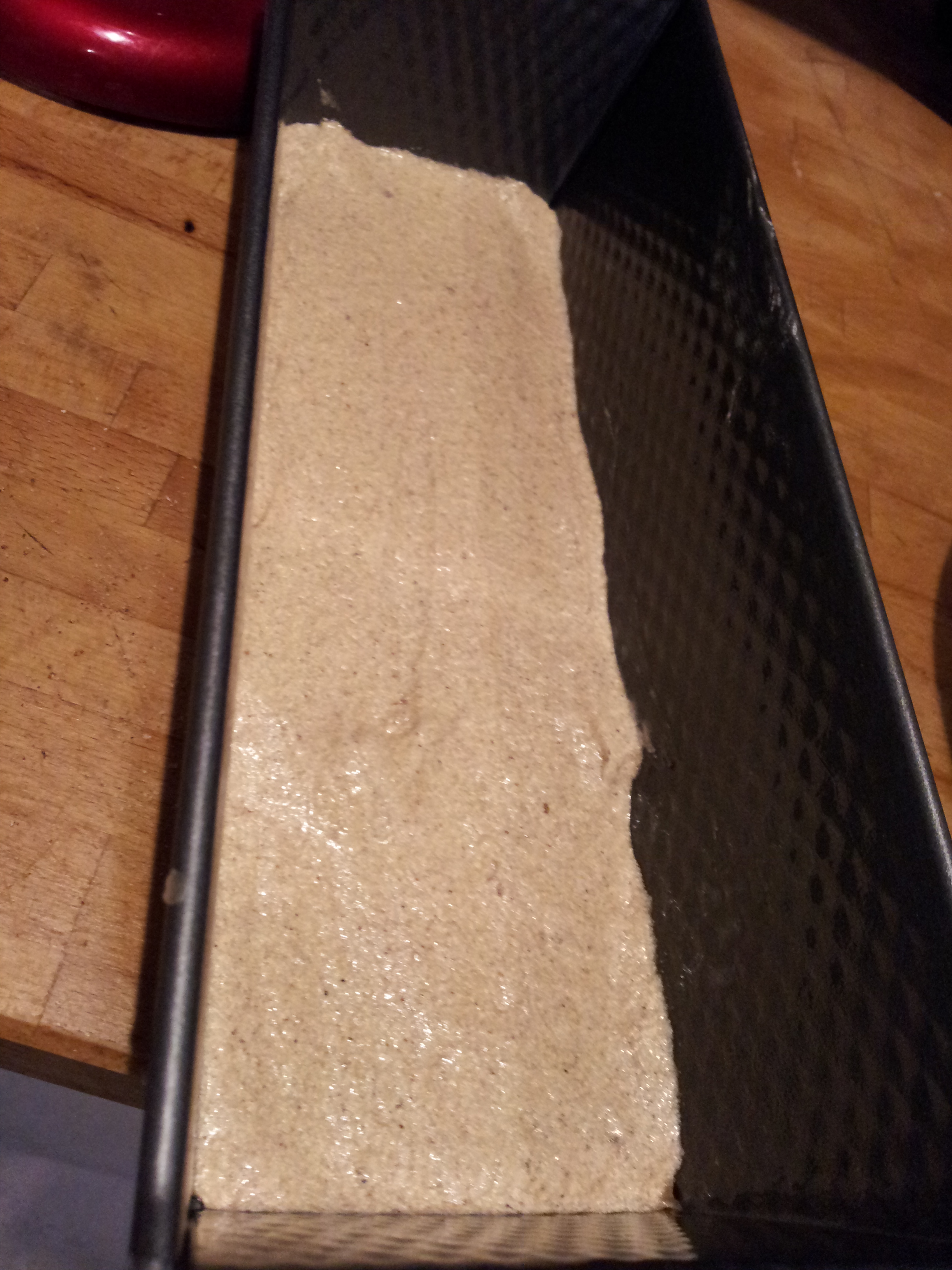
Carefully pour the cake batter into a greased cake tin so you don’t knock any of the precious air out of the sponge. I wanted to test out my new fluted brioche tin to make the cake look a little more fancy. (Hope you like my holiday souvenir! I managed to squash 3 cake tins in my suitcase from Portugal! Is it just me who brings baking equipment home from holiday?) I love the moulded shape. Using a smaller tin means the cake requires a longer baking time in the oven but I think the dramatic shape is well worth the effort.

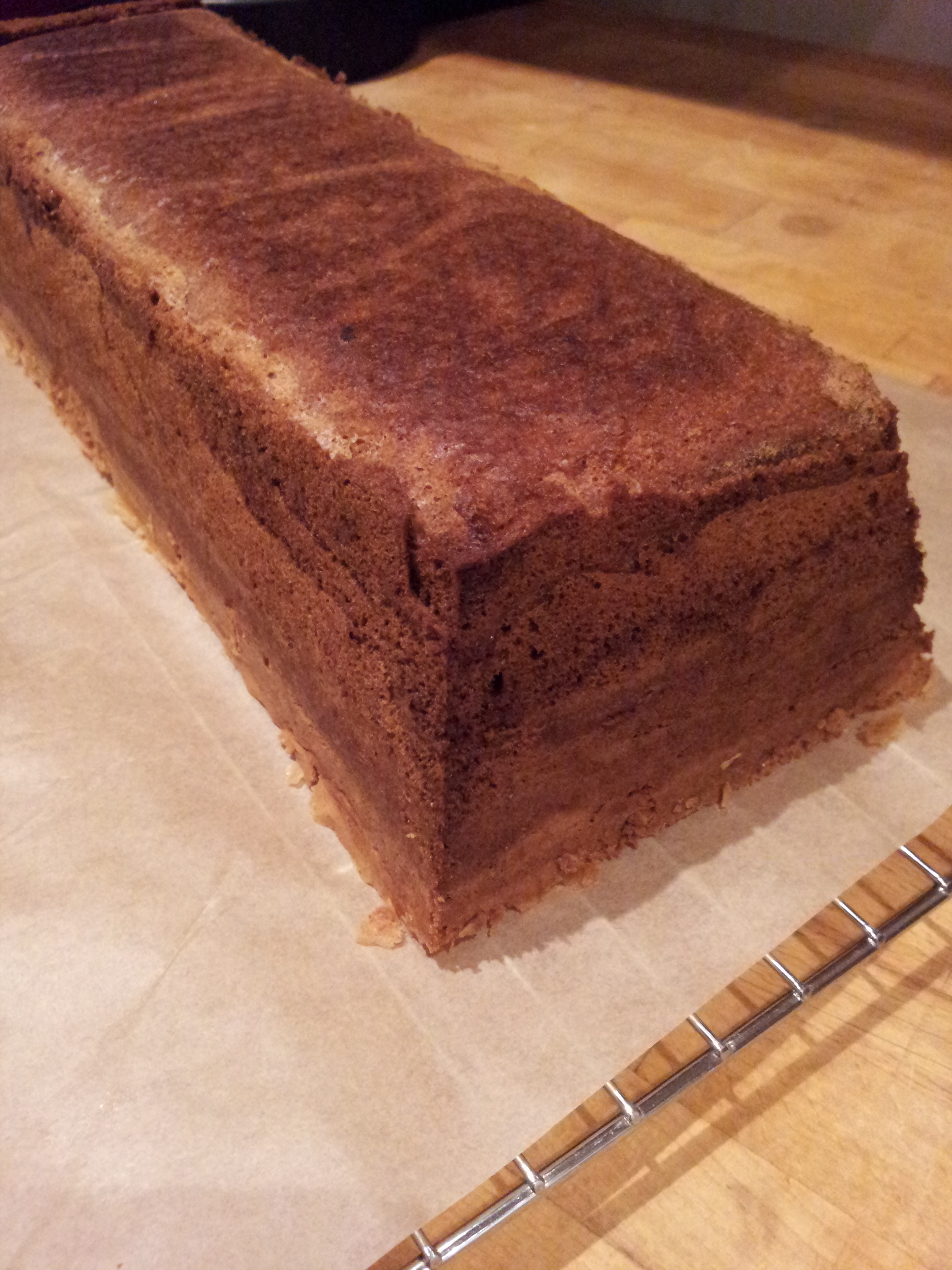
Fully baked Iranian Pistachio Cake chilling

Fully baked Iranian Pistachio Cake chilling

After almost an hour in the oven the cake was thoroughly cooked.  I patiently waited 30 minutes before tentatively opening the oven to check if it was done and continued to check every 10 minutes with a skewer that the cake was cooked. The edges did start to brown, so I resorted to a cap of tin foil to protect the top of the cake from burning. You could bake the cake in a bundt tin or a 9 inch round tin. and should take a little less time to cook. You will need to bake it for probably around 30-40 minutes if you’re using a larger tin as the cake will be thinner and require less cooking time. The final cake is a deep brown in colour and springs back when touched.

Rosewater sugar icing

Rosewater sugar icing – the perfect consistency!

Cardamom is a regular character in Eastern cakes and desserts. It compliments the delicious pistachios with it’s subtle spice. Traditionally this cake doesn’t ask for any icing, but I thought something sweet would be a welcome addition. I added my own rosewater glace icing to sweeten the sponge. I always struggle with glace or water icing, with it often ending up runny, resulting in soggy cakes and never endingly wet icing. If I was hoping to make a syrup I would be able to do this with my eyes closed. Desperate to get it right, I actually measured my liquids before adding them to the icing sugar! Using my kitchen aid I beat the icing sugar adding the rosewater one teaspoon at a time to ensure I didn’t over egg the pudding, as I’ve learnt from experience you can’t take extra liquid out if you get a bit too enthusiastic with the bottle…

Genuinely thick rosewater icing

Genuinely thick rosewater icing

Triumph! I succeeded in making a thick pipeable rosewater icing for the first time ever!! Hurrah! If anything it could have been a tiny bit more runny so that it could run down the sides of the cake giving a natural trail in it’s wake. Next time I may add a smidge more rosewater to make it slightly more runny. But hey I’m not complaining! I was aiming for an rosey flavoured iced bun effect and that’s exactly what I got.

Crushed pistachio topping

Crown of crushed pistachios

Smashing up a handful of pistachio in the pestle and mortar I got a bit artistic, adding a crown of crushed pistachios whilst the icing was still sticky so it holds the nuts in place once set. I didn’t want it to look too pristine, so I threw some nuts at the edges of the cake too allowing the crumbs to stick to the icing tracks too.

Happy Birthday Mel!

Happy Birthday Mel!

I loved this cake, so much so I helped myself to 2 slices. (Me? Greedy?) It makes a wonderful alternative to the traditional chocolate birthday cake. A grown up cake full of flavour. Sweet, light and spicy with a tiny crunch to it powered by pistachios. It feels wonderfully exotic with every waft of cardamom balanced against the gentle rose icing. I will most definitely be baking this cake again.

The perfect pistachio slice

The perfect pistachio slice

Each slice glows with the subtle green flecks from the pistachios, contrasting beautifully against the white icing. The cake cuts smoothly and is really robust, so it travels well. (Just in case like me you end up regularly carrying cake around to surprise people with.)

Iranian Pistachio Cake recipe

Iranian Pistachio Cake

Things I used to make my Iranian Pistachio Cake

  • 170g butter
  • 200g sugar

Beat until light and fluffy

  • 3 eggs

Beat in the eggs one at a time until pale and fluffy

  • 180g (3/4 cup) of pistachios
  • 1 tsp of ground green cardamom (this was 9 or 10 cardamom pods)
  • 1/4 tsp salt

Blitz the pistachios, spice and salt together until finely ground

  • 140g plain flour
  • 2 tsp baking powder

Stir the pistachios into the flour and baking powder

Fold one third of the flour mix to the butter and eggs

  • 110ml (1/2 cup) milk
  • 1 tsp vanilla extract

Add the vanilla to the milk

Fold one third of the milk to the butter and flour mix

Alternate adding flour and milk to the mix and continue until all ingredients are incorporated

Pour into a greased (and lined if your tin will allow for this) tin and bake at 180 degrees C for 50-60 minutes until a skewer comes out clean from the centre of the cake.  Put a tin foil hat on the cake if it starts to darken too much.

Icing

  • 170g icing sugar
  • 10 tsp rosewater
  • handfull of crushed pistachios
  1. Beat the rosewater into the icing sugar one teaspoon at a time to ensure you get the right consistency. Thick yet runny icing.
  2. Smash the pistachios up to rough pieces and decorate the cake as you wish
  3. Devour with a glass of champagne (if it’s an especially decadent occasion) or proper cup of strong coffee would work wonderfully too. Enjoy!
56. Lost in Translation – Latvian Golden Coffee Cake – Kliņģeris

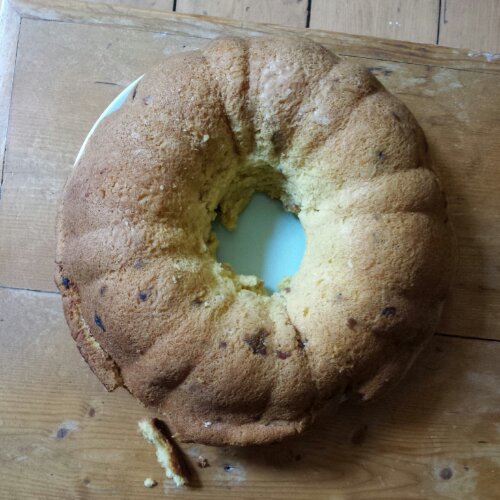
A slightly dishevelled Latvian Golden Coffee Cake

My slightly dishevelled Latvian Golden Coffee Cake

You can be excused for assuming this cake contains coffee. That’s the first of many surprises that this rather unusual cake bestows. It contains NO coffee but incorporates saffron, cake and a yeasted dough. It’s part cake part bread and mainly liquid!? Golden Coffee cake has intrigued me for months, with it’s promise of a saffron scented pretzel shaped traditional Latvian birthday cake. (I do love a good pretzel) I have been saving this recipe for a special occasion and didn’t realise until I began, just how unusual and complicated it really is.

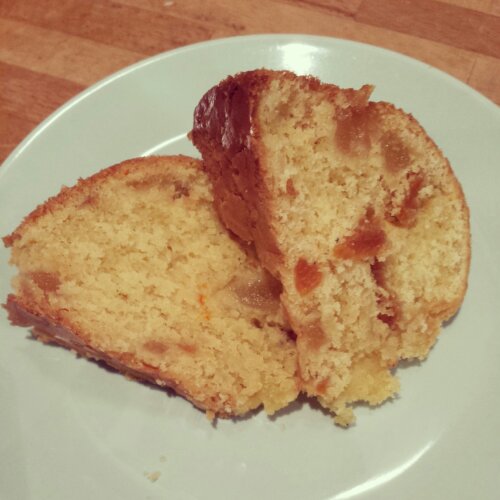
Golden slices

Golden slices

Not many recipes measure flour in litres or require you to combine an enriched dough with creamed butter and sugar. It was a test of my baking skill and intuition as every part of my brain questioned each step of the recipe. I fear I made a right mess of the recipe and something definitely got lost in the translation. Nevertheless I carried on regardless and produced one very interesting cake…

Is this how it's supposed to look?

Is this how it’s supposed to look?

The Latvian Golden Coffee Cake begins life as more of a bread dough than a cake. Kneading together flour, yeast and milk together to create a supple and springy dough.

A supple dough

A supple dough

Whilst your busy kneading the dough together steep the saffron threads in a little boiling water to infuse the liquid with the lovely golden hue and save it to one side for later on.

Steeping saffron strands

Steeping saffron strands

Then to cream together butter and sugar until light and fluffy, whilst the dough rests and proves. Once the butter and sugar are fluffy you then beat the egg yolks in gradually one at a time. I did wonder if I had misread the recipe here as a whole block of butter seems like rather a lot to try to fit into one bread/cake…

Creamed butter and sugar

Creamed butter and sugar

This is where I think it all started to fall apart. In an attempt to save on washing up and effort I used my Kitchenaid to knead the dough and creamed butter together. I also forgot to buy cream so substituted it for milk, which is far more liquid than cream. I adjusted the recipe slightly hoping to compensate for this substitution, but I’m not convinced I did! It took a long time to knead the butter into the dough. They just didn’t want to combine! After a good 10 minutes of kneading the gloopy mess smoothed out into a very fluid (!) and smooth bread/cake dough.

Gloopy mess of dough and butter

Gloopy mess of dough and butter

It took a good 10 minutes of mixing to get the dough to smooth out and look more appealing. And just when it was all going so well the recipe called for the the juice of 1 lemon and (I guessed as it wasn’t mentioned) the saffron and infused water. All this liquid along with the ground cardamom and zests of 1 orange and 1 lemon made for an even wetter dough…

The proven dough

The proven dough

Leaving the liquid dough to prove in the bowl for a couple of hours, it quickly increased in size and almost overflowed the bowl! The yeast was definitely working. The next tricky stage was to attempt to knead the chopped golden cherries (I didn’t have golden raisins but had randomly picked up some golden cherries on a whim, which were a good alternative) and apricots (the only other golden-ish dried fruit that I had in my cupboard).

Chopped dried golden fruits

Chopped dried golden fruits

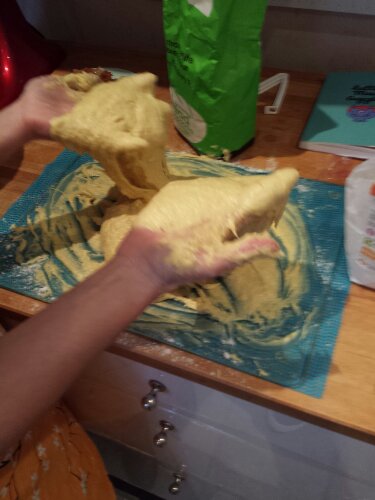
I could clearly see that this dough was destined to never blossom into a beautiful pretzel shape despite the instruction to knead it on a floured board. There was not enough flour in my house to get this into a malleable dough state. Yet I found myself pouring it onto my worksurface and racing to catch it before it ran onto the floor. It was more like kneading treacle than bread dough. I resorted to stirring the chopped fruit in on the worksurface and scooping the mixture into a well greased bundt tin instead.

What do I do with this?

What do I do with this?

Covering the budnt tin with greased cling film I left the dough to prove for a full hour to allow the yeast to do it’s magic. Then into the oven for a good bake 35-45 minutes at 180 degrees c.

resorting to a budnt tin to encase the Latvian Golden Coffee Cake instead...

resorting to a budnt tin to encase the Latvian Golden Coffee Cake instead…

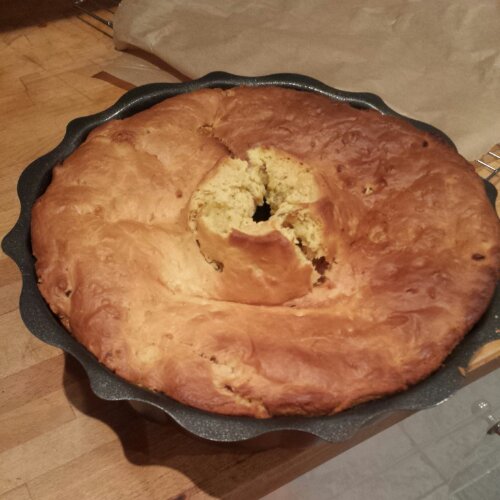
The bundt tin worked surprisingly well to bake the Golden Coffee Cake in. I think having the hole in the middle helps to ensure a cake is cooked all the way through. It expanded so much during baking, you could hardly see the hole in the middle any more! It sure is a yeasty cake.

The ever expanding Golden Coffee Cake

The ever expanding Golden Coffee Cake

I still managed to make a hash of it however, tipping the cake out too soon, whilst it was still hot. I panicked as it sank further into the tin as it cooled. In my haste to turn it out the cake collapsed even further and bits broke off… I did check that the cake was cooked thoroughly by using a cocktail stick. The dough seemed to be evenly baked as the skewer came out clean, but I felt the cake was still a little too moist to hold it’s own weight. Perhaps 5 more minutes in the oven and 10 more minutes cooling in the tin afterwards would have given it the extra strength to hold it’s own shape a little better.

Tipped out too soon...

Tipped out too soon…

My Golden Coffee Cake has a slightly rugged edge to it which isn’t necessarily a bad thing. As the cake had expanded enormously there were bits of overhang, that had to break off to get it out of the tin. This means that you get to sample the cake before everyone else! Super Hans and I shared the scraps. He thoroughly enjoyed it which is always a good sign,

The opened cake

The opened cake

I was a bit nervous about presenting this cake to my friends at the Clandestine Cake Club. It really hadn’t gone to plan, despite the many hours of planning and preparation that had gone into this cake. Saffron tends to also be an acquired taste especially when combined with the strong yeast, it’s quite the unusual flavour combination.

The beautiful collection of cakes at The Clandestine Cake Club

The beautiful collection of cakes at The Clandestine Cake Club – my emergency blackberry heart is on the right

The original recipe called for icing too, which frankly I couldn’t be bothered to make as I decided to bake an emergency alternative blackberry and almond cake to take to cake club instead. I didn’t want to waste my Golden Coffee Cake, I still took it along repeatedly apologising for it’s dishevelled appearance.

The Golden Coffee Cake

The Golden Coffee Cake

The verdict? Golden Coffee Cake reminds me of a stronger flavoured Hot Cross Bun. A spicy and fruity bread rather than a traditional sponge cake. It’s similar to an Italian Panetonne, so would be a lovely Christmas bake. The taste definitely improves with age so it’s best baked in advance to allow the flavours to develop and mellow. On the third day, it tasted pretty good! The wet enriched yeast dough gave the cake the moisture it required to create a light aerated texture, with an even crumb I’m sure Paul Hollywood would be proud of.

Golden and fruit filled

Golden and fruit filled

It was a rather moist cake, so a slightly longer baking time wouldn’t do it any harm. It may have been even better if I had got round to icing the cake too! The feedback from my cake club friends was very positive too. Perhaps I had been too hasty in my judgement of this cake, dismissing it as a failure.

Golden Coffee Cake

Golden Coffee Cake

The Latvian Golden Coffee Cake is an exotic cake that I’m very pleased I got to experiment with. I love the defined bundt shape of this bake. The dough really holds the grooves of the bundt well and once you slice into the cake it’s beautiful golden saffron interior is revealed. You get a lovely waft of cardamom from the cake too with every slice, bringing it’s own festive cheer to the table.  The sharpness of the citrus fruits cuts through the yeast and spice and gives the cake a light tang. This cake isn’t a cheap to make, once you’ve purchased your precious saffron, cardamom, butter and eggs so I can see why the Latvians save it for special occasions. I fear I may never learn my lesson and continue to substitute ingredients on a whim, so I take the blame for my own additions to this recipe! Don’t add too much liquid if you do try this at home and you may actually get to shape it into a pretzel!

Things that I used to make my Latvian Golden Coffee Cake

  • 1/2 tsp Spanish saffron – steeped in
  • 1/4 cup boiling water

Knead together

  • 570g strong white flour
  • 20g instant dried yeast
  • 400ml warm milk ( I would use much less! maybe 300ml if using milk or 400ml of double cream)
  • 1 tsp sugar
  • 1 tsp salt
  • The water infused with saffron and the strands

Cream together in a separate bowl

  • 250g butter
  • 3/4 cup sugar

Then beat in

  • 3 egg yolks
  • zest of 1 orange
  • zest of 1 lemon
  • 1/2  tsp ground cardamom

Knead the butter mixture together and dough

Prove dough for 1 hour

Knead in

  • 300g of dried chopped fruit (golden cherries/raisins/apricots)

(Shape like a pretzel if you can! and bake on a greased sheet.)

Pour into a greased bundt cover and prove for 1 hour

Bake for 35-45 minutes at 180 degrees C

Allow to cool in the tin for around 30 minutes

Ice with a sugar glaze if you like! (Mix icing sugar and water together until gloopy and pour over your cake) or leave plain if you prefer.

Golden slices

Golden slices

Enjoy a slice with a nice strong coffee, hence the name Golden Coffee Cake!

This recipe was adapted from the www.latvianstuff.com/Kringel.html. Thank you for the inspiration and my apologies if I’ve ruined your recipe! Any tips on how to improve my technique would be very welcome.

55. Giant Punschrulle – Swedish Green Marizpan Rolls

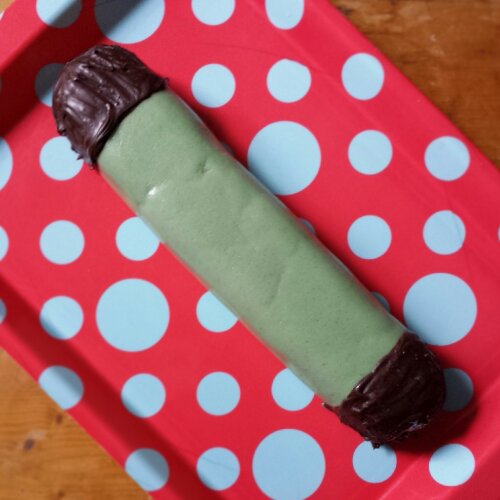
too long for a normal plate - the giant prunschelle

too long for a normal plate – the giant punschelle

The Prince family love marzipan. In every shape, form and colour. There is a a rather well known Swedish shop that sells these amazing little green marzipan rolls called Punschrulle and everytime I go I stock up, mainly on food ignoring all the other homeware options.

A slice of giant Punschrulle cake

A slice of giant Punschrulle cake

I have been looking for a recipe for Punschrulle or Punsch-rolls forever and was unable to find one that reflected the ingredients described on the back of the packet. The key ingredient was always missing, oats! So in the end I made up my own recipe and tasted it along the way to make sure I had got it as close to the original as possible.

A birds eye view of a giant Punschrulle cake

A birds eye view of a giant Punschrulle cake

The Punschrulle is also known as dammsugare which in English means rather oddly, “vacuum cleaner”. I think this is related to it’s tube like appearance, like a vacuum cleaner’s hose perhaps? But also because this cake gives you the opportunity to use up leftover cakes and cookies, hoovering up the crumbs from yesterday’s baking. What an efficient little cake this is.

6 Earl Grey Cupcakes just begging to be mashed up

6 Earl Grey Cupcakes just begging to be beaten up

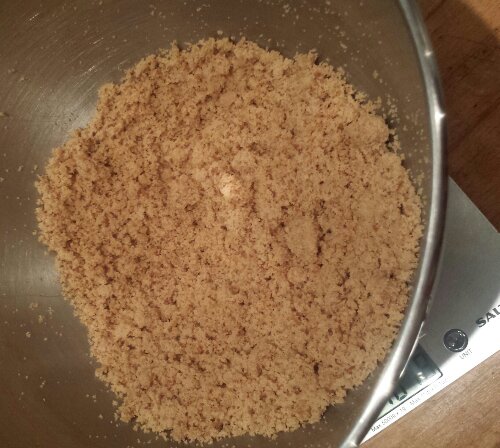
I was lucky to have 6 earl grey cupcakes waiting patiently to be eaten in my freezer from a rather large baking frenzy I had whipped myself into. now was there time to shine. I defrosted the 6 cupcakes and blended them in my kitchenaid (using the beater attachment) to a fine crumb. You could also use a hand blender or food processor if you wish. I simply couldn’t be bothered to unpack my food processor so used the kitchen aid, which does a pretty good job of beating things to a fine crumb, particularly if you break it up a little by hand first.

cake crumbs

cake crumbs

Chocolate and marzipan are my favourite combination. I could merrily eat a block dipped in dark chocolate all to myself, but tried to resist as far as possible. Punschrulle rolls are filled with a rich chocolatey, oaty cake. Further investigation also indicates that they are a rather boozy cake too, with punsch liquor. However I wanted to make a child friendly recipe, not get my little nephew hammered, so I omitted the booze from my recipe. But feel free to whack a bit in if you prefer your cakes alcoholic. I’m not entirely sure where you purchase punsch liquor from in the UK, but I think brandy , vodka or rum would be a good substitute!

The classic storecupboard essential- digestive biscuits

The classic storecupboard essential- digestive biscuits

Sieving cocoa powder and sugar into the mix I realsied that I needed something more to bulk the cake crumbs up and balance out the cocoa powder. Rooting around in my cupboards I found some digestive biscuits which were perfect for this purpose. Again I crumbled them into the mixer bowl by hand and let the mixer do the work for me.

Chuck in the rest of the cocoa powder and sugar

Chuck in the rest of the cocoa powder and sugar

I was worried that the oats would be a bit too large in this mixture so introduced my hand (stick blender) to blitz the mixture to a much finer crumb. As this cake is uncooked, the oats needed a little time to soften in the mixture, you want texture to the cake, but not to make your friends feel like they have oats stuck in their throat.

Beat in the butter

Beat in the butter

It’s such a simple cake to make, having completed the baking when I made the cupcakes a few months ago. All that’s left to do is to rub in the butter and shape the mixture into a roll! I wanted to make my punschrulle for my sisters birthday and envisaged a giant punschrulle roll, rather than making individual rolls.

Beat the mixture together until it sticks in one nice lump

Beat the mixture together until it sticks in one nice chocolatey lump

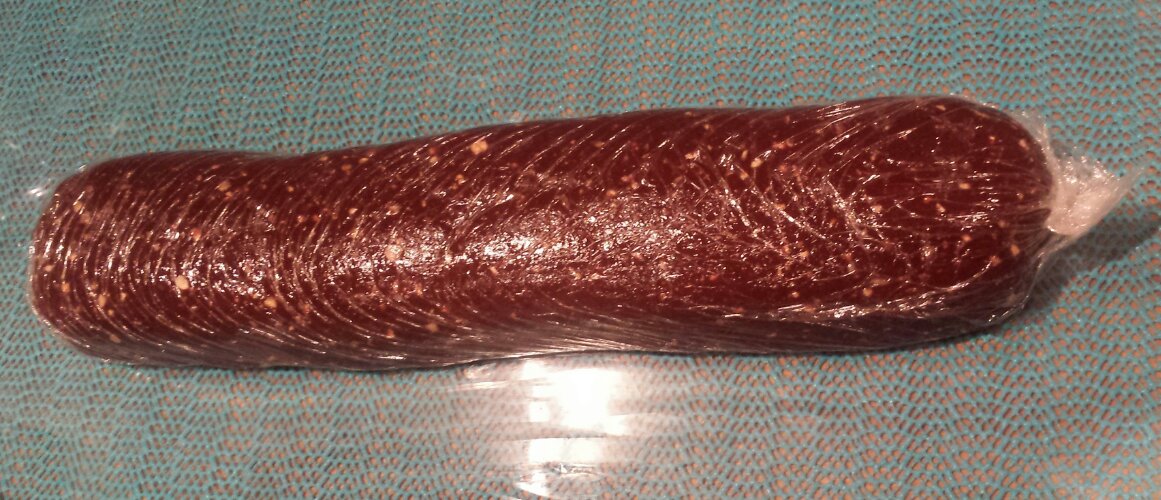
I used cling film to roll the mixture up and flatten at the ends, whilst smoothing the top.

Plonk your buttery cake crumb lump onto some clingfilm and roll

Plonk your buttery cake crumb lump onto some clingfilm and roll

Sealing the ends of the cling film, the roll can then be transferred easily to the fridge to set, while you get busy colouring the marzipan and rolling it out.

a cling film wrapped chocolate sausage

a cling film wrapped chocolate sausage

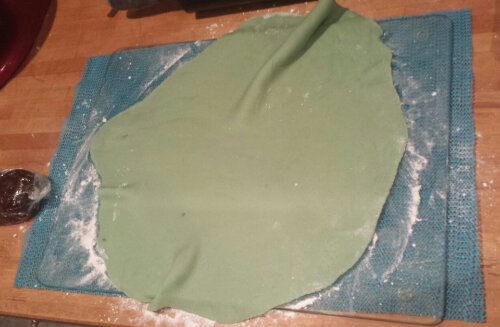
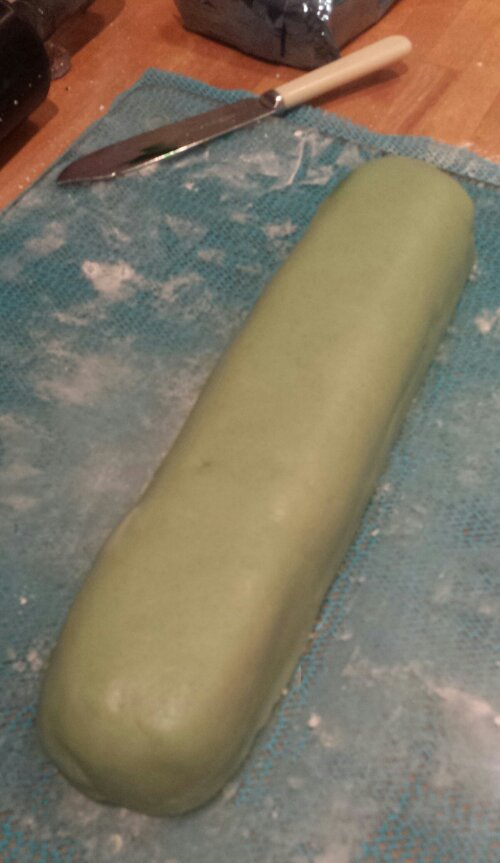
Traditionally Punschrulle rolls are bright green and each end is dipped in dark chocolate. I used a little green gel food colouring and kneaded it thoroughly into the marzipan. dousing the worksurface in icing sugar stops the marzipan sticking and means you can roll it out into a thin rectangle, just enough to cover the entire cake.

Turn your marzipan green and roll out

Turn your marzipan green and roll out

Making sure the marzipan was loose enough to remove it from the worksurface, (The last thing you want is to realise half way through icing you cake is that the marzipan is welded on to the worksurface.)

Chocolate Sausage ready to be wrapped in marzipan

Chocolate Sausage ready to be wrapped in marzipan

I plonked the roll face down (the smooth side which is to be the top of the cake) face down on to the marzipan and folded the marzipan over to envelope the cake fully. Strategically folding the marzipan to hide the join underneath the cake and tuck the folds along the edges underneath.

Wrap up and tuck in the edges

Wrap up and tuck in the edges

Whilst the bottom of the cake is facing upwards, I melted a bar of dark chocolate in the microwave, reserving one third of the chocolate and stirring every 30 seconds to avoid it burning. Once the chocolate is melted pour in the final third of the chocolate and stir until fully melted. This helps to reduce the temperature of the chocolate and temper it, so it retains a glossy finish and doesn’t look like a sweaty mess when you’re finished.

One chocolate cake sausage encased in marzipan

One chocolate cake sausage encased in marzipan

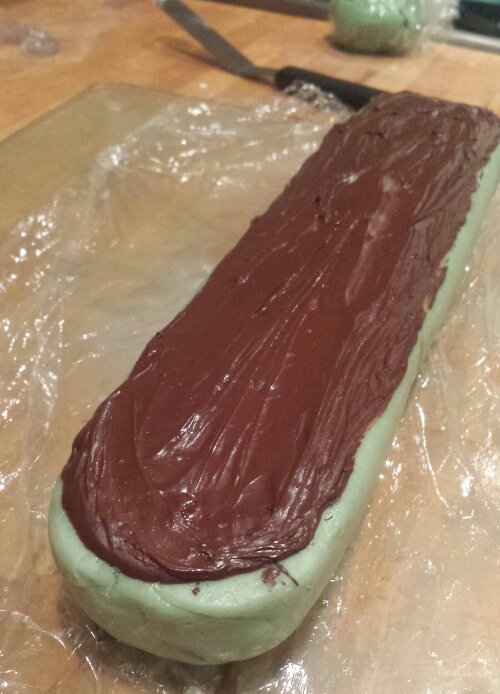
I smeared melted chocolate all over the bottom of the cake in a thin layer and allowed it to set. This means each slice has a layer of chocolate, not just the lucky people who get the end pieces! It also helps to lift the cake when you need to move it later on…

Smear melted chocolate all over the bottom of the roll

Smear melted chocolate all over the bottom of the roll

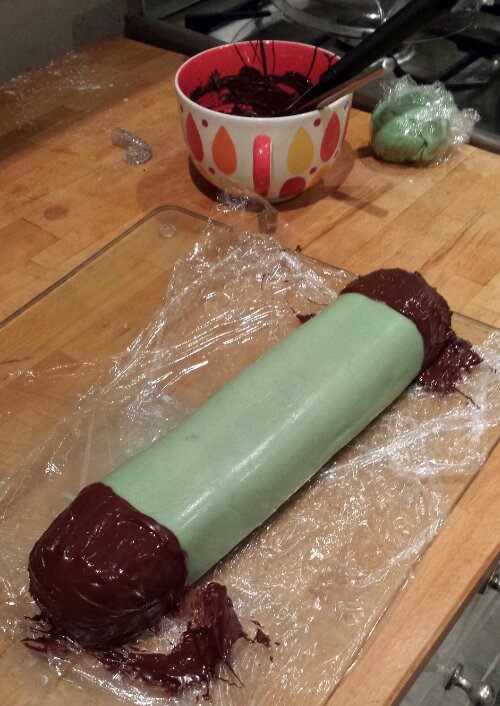
Once the bottom layer of chocolate has set fully, turn the cake face up and paint the ends of the cake with a thick layer of chocolate. Et voila, you have created a giant Punschrulle cake!

Paint each end with melted chocolate

Paint each end with melted chocolate

Now this is when I realised that you have to be a member of my family to think this cake looks pretty. On a giant scale, the Punschrulle looks a bit odd… but it tastes great! (Even if I do say so myself.) I don’t own a plate or chopping board long enough to house such an enormous cake, so I had to resort to using a colourful serving tray.

too long for a normal plate - the giant Punschrulle

too long for a normal plate – the giant Punschrulle

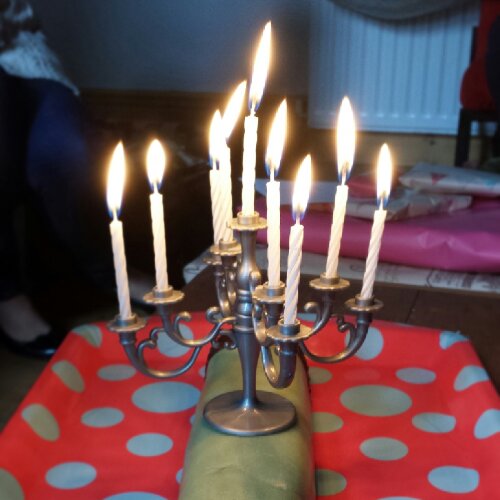
The addition of a giant candleabra birthday candle  gave the cake somewhat of an eccentric finish. What Giant Punschrulle cake would be complete without a birthday candleabra? This cake didn’t last long in our house. Despite it’s chocolatey richness, it’s very moreish and disappears very quickly when served with a hot cup of tea. I could easily eat 2 slices in one sitting. The crunch of the dark chocolate is there with every bite, balancing out the marzipan and dense oaty filling.  It’s a great way to use up any leftover cakes and biscuits in your house, so it’s a rather economical and unusual birthday cake. If you want to see how the individual Punschrulle rolls should look, have a pop over to www.nearof.com for a review of the cakes I based my recipe on.

What giant prunschelle cake would be complete without a birthday candleabra?

What giant prunschelle cake would be complete without a birthday candleabra?

Happy Birthday to my wonderful sister! Here’s a interesting interpretation of the Punschrulle cake just for you!

Giant Punschrulle Cake

Giant Punschrulle Cake

Things that I used to make my Giant Punschrulle Cake

  • 6 cupcakes (you could use whatever cake crumbs you have available, chocolate or vannila would probably work best)
  • 10 digestive biscuits (plain biscuits again work well in this cake, rich teas, shortbread or digestives would be good)
  • Sugar
  • Butter
  • Vanilla

Icing

  • 300g marzipan
  • green food colouring
  • icing sugar (for dusting the board)

Chocolate 

  • 100g dark chocolate

How to churn your own Butter and make Buttermilk – Back to Basics

image

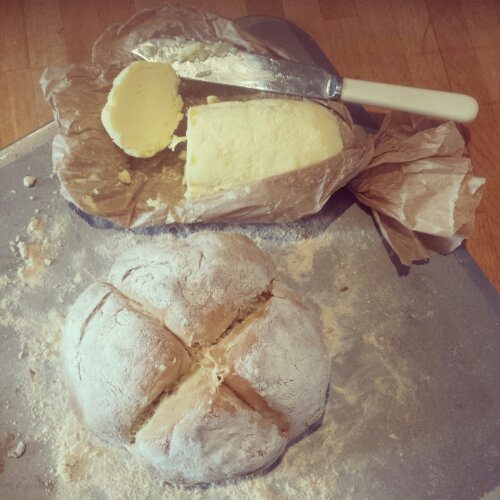
Homemade soda bread and butter at the ready!

Homemade Butter

Homemade Butter

Not wanting to let any food go to waste I realised I had a pot of double cream sitting in the fridge almost ready to be thrown away. So what to do with left over cream?? Why not teach myself how to churn butter at home?

Bread and butter. The perfect combination

Bread and butter. The perfect combination

Having a kitchenaid stand mixer makes this so easy, however I know you can make your own butter by sloshing cream around in a jar too. One guy attached a sealed jar of cream to his very active toddlers back and as the child frolicked he churned butter as he went. Now that’s multi tasking.

image

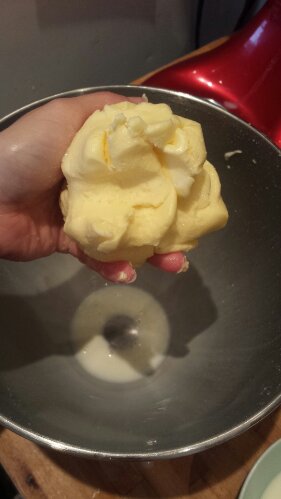
I didn’t employ any small children in the making of this butter. Rather I set my kitchenaid to work for less than 20 minutes and produced a patty of butter and a bowl of buttermilk. Magic.

There’s 6 clear stages in the butter development which is quite exciting to watch.  Starting with 350ml of double (or heavy) cream just whack it in your mixer with the beater attachment and let it go.

Double cream at the ready

Double cream at the ready

As it’s quite liquid to start with I gradually increased the speed working my way up to high and left it running whilst I made myself a cup of tea and treat Super Hans to a dollop of leftover cream. I could then marvel at the wonder of butter making, stopping only to sip my tea and take photos.

If you start off too high the liquid will escape from the bowl and not end up in your butter. I want to maximise my butter intake so slow and steady it goes. The cream will thicken as it fluffs up with air.

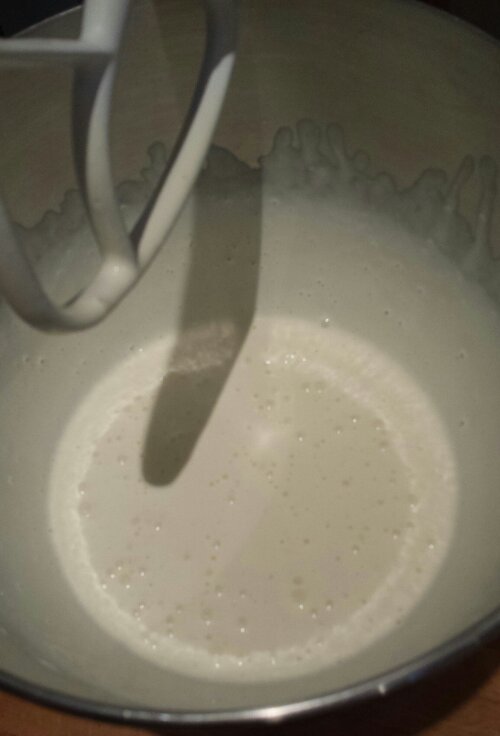
Stage 1: Bubbly Cream

Stage 1: Bubbly Cream

Stage 1. White bubbly cream.

Whipped cream! Keep going

Whipped cream! Keep going

Stage 2. Thick whipped cream. Delicious on scones but not what we’re looking for.

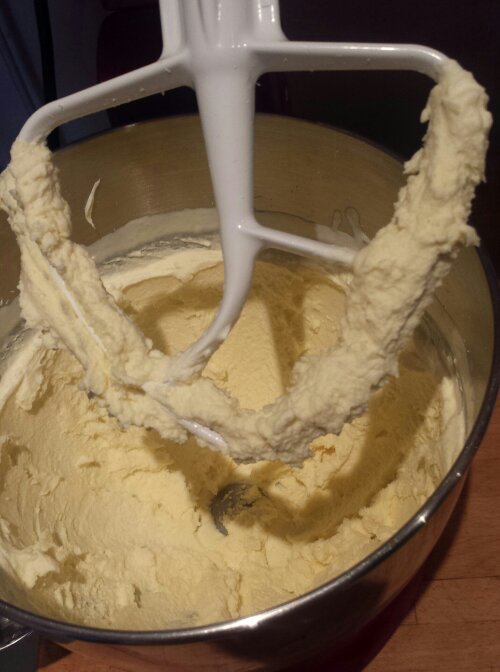
Not quite ready... starting to become yellow and thick

Not quite ready… starting to become yellow and thick

Stage 3. It’s getting exciting. The cream takes on a yellow hue and is very thick.

Starting to separate into butter and milk

Starting to separate into butter and milk

Stage 4. It starts to look a bit scrambled as the cream begins to separate into butter and milk. Don’t worry it’s meant to look a bit grainy!

Ready!

Ready! We have Butter!

Stage 5. WE HAVE BUTTER! And a beautiful buttermilk by product.  It separates fully into a lump of butter sloshing around the bowl with buttermilk. Take it easy at this stage as you’ll lose the precious buttermilk if you beat the butter too vigorously.  Once the butter comes together in a patty it’s ready to drain.

Squish out the excess buttermilk

Squish out the excess buttermilk

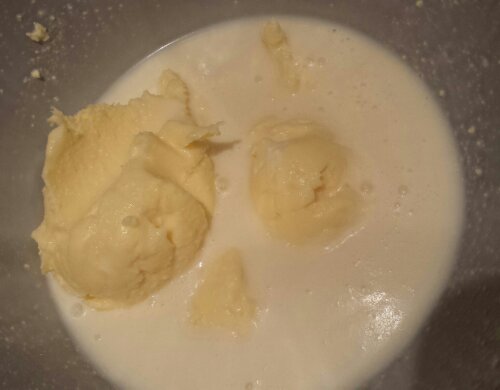
Stage 6. Drain the buttermilk out of the bowl and save it for later. (This is a triumph. I’ve not been able to find real buttermilk in the shops so now I have genuine buttermilk to work with and make proper Soda Bread!) Squish the butter by hand to remove the excess milk and hey presto your butter is ready. You can also leave it drain in a sieve over a bowl.

And as if by magic we have Butter and Buttermilk

And as if by magic we have Butter and Buttermilk

Stage 7. Roll into a nice patty shape inside some greaseproof paper and pop it in the fridge to set. You could add flavourings at this stage too if you fancy, herbs, garlic, salt. As I’m going to use this in a pie crust I’m keeping mine pure and simple.

Butter me up

Butter me up

Before even starting the washing up I calculated the ratio of flour needed for the amount of buttermilk I had made (162ml of buttermilk to be exact) to whip up a quick soda bread!

Butter patty at the ready with Soda Bread for the oven

Butter patty at the ready with Soda Bread for the oven

I just threw all the flour back into the mixing bowl and made a half size loaf. I guessed just under half the amount of flour was needed. Now we have a full on snack from one pot of cream that was just going to be thrown in the bin. Using every single bit of the ingredient so nothing goes to waste. Economical and environmentally friendly baking. Now that’s my kind of cooking.

Homemade butter and soda bread!

Homemade butter and soda bread!

Things I used to make my butter

  • 350ml double or heavy cream (any amount would do, but the more cream you have the greater the amount of butter you will make with better value for your time and electricity bill…)
  • Kitchenaid (or you could shake it up in a jar or use a hand whisk if you’re feeling energetic)
  • You coud add herbs, garlic or salt to flavour your butter)

After 20 minutes of beating I made

52. Armenian Orange and Almond Cake (incidentally also Gluten Free)

Armenian Orange and Almond Cake

Armenian Orange and Almond Cake

This Armenian Orange and Almond cake almost screams health (in a rather pretty way). It contains 2 whole oranges! (yes that’s right the pith and peel and everything), no butter, a relatively small amount of sugar and a whole bunch of almonds. Of course almonds are full of minerals and vitamins (vitamin E and Bs) and healthy fats that you need to live a lovely life, so surely this is a cake that you should be eating as part of you balanced healthy lifestyle! Oh and I did I mention it’s also gluten free? No flour required so even better for those with gluten intolerances/allergies too.

A very moist slice of Armenian Orange and Almond Cake

A very moist slice of Armenian Orange and Almond Cake

We’re flying into the final 28 bakes of my aroundtheworldin80bakes adventure now and what a cake to take us up to bake 52. This recipe was very kindly given to me by a fantastic lady that I work with who is from Armenia. I asked if she had any traditional cake recipes that I could try as it’s another country that I’m still yet to visit and she produced this from her repertoire.

I Heart Cake. Do you?

I Heart Cake. Do you? You could win a lovely cake mould if so!

I lovingly recreated the handwritten recipe in my kitchen using a pretty heart shaped mould that Mustard Gifts sent me to try. Thank you very much! I love my heart shaped cake mould. Next on my list of things to try is a heart shaped jelly. Not only does it look pretty whole (part of me wanted to decorate it like a flower!) but when you cut yourself a nice wedge it comes out as a perfect heart shape. The cake will make 6 heart shaped slices or 12 finger shaped sliced (depends on how much you love your friends and family as to how big a slice you’d like to give them…) You could also win one of these gorgeous cake moulds worth £15! (Competition has now closed.)

My orangey bakey heart

My orangey bakey heart

I knew I had to bake this cake to take along with me to the Clandestine Cake Club gathering this week, at the Knit Studio at Blackfriars. Our theme this week was history. I thought the Armenian Orange Cake would be a great recipe for me to use, full of Armenian tradition and handed down to my friend through her family. It did not disappoint. I managed to work my through the entire cake collection sampling a wonderful array of cakes along the way. I love Cake Club!

Clandestine Cake Club Newcastle - History theme

A fine selection of cakes at our History themed Clandestine Cake Club Newcastle, at the Knit Studio, Blackfriars

One of my favourite things about this cake is that it’s really quick to make. Boiling the whole oranges is the most time consuming part of this entire cake. They need to be boiled for 2 hours, covered in water and with a  lid on the pan to help retain the heat. I boiled my oranges the day before so I was extra prepared.

Boil 2 whole oranges for 2 hours. Simple

Boil 2 whole oranges for 2 hours. Simple

Once the oranges have reached boiling point allow them to simmer on a low heat for the full 2 hours. The oranges smell amazing, and it floats around the house carried by the steam from the pan. Leave them to cool (so you don’t burn yourself) and then blend them up to a pulp.

Soft boiled oranges

Soft boiled oranges

They’re so soft and tender they pretty much fall apart in your hands. I used a stick blender to blitz mine into a thick smooth orange paste. You could also use a food processor.

Blitz the boiled oranges to a smooth paste

Blitz the boiled oranges to a smooth paste

Next thing is to basically whisk all of the eggs together with the sugar until frothy and a little air is incorporated. Then whisk in the ground almonds and baking powder. Then whisk in the orange paste. No fuss, just whisk the entire thing in one bowl. Even better there’s not a lot of washing up involved in this cake!

Whisking up all the eggs

Whisking up all the eggs and sugar

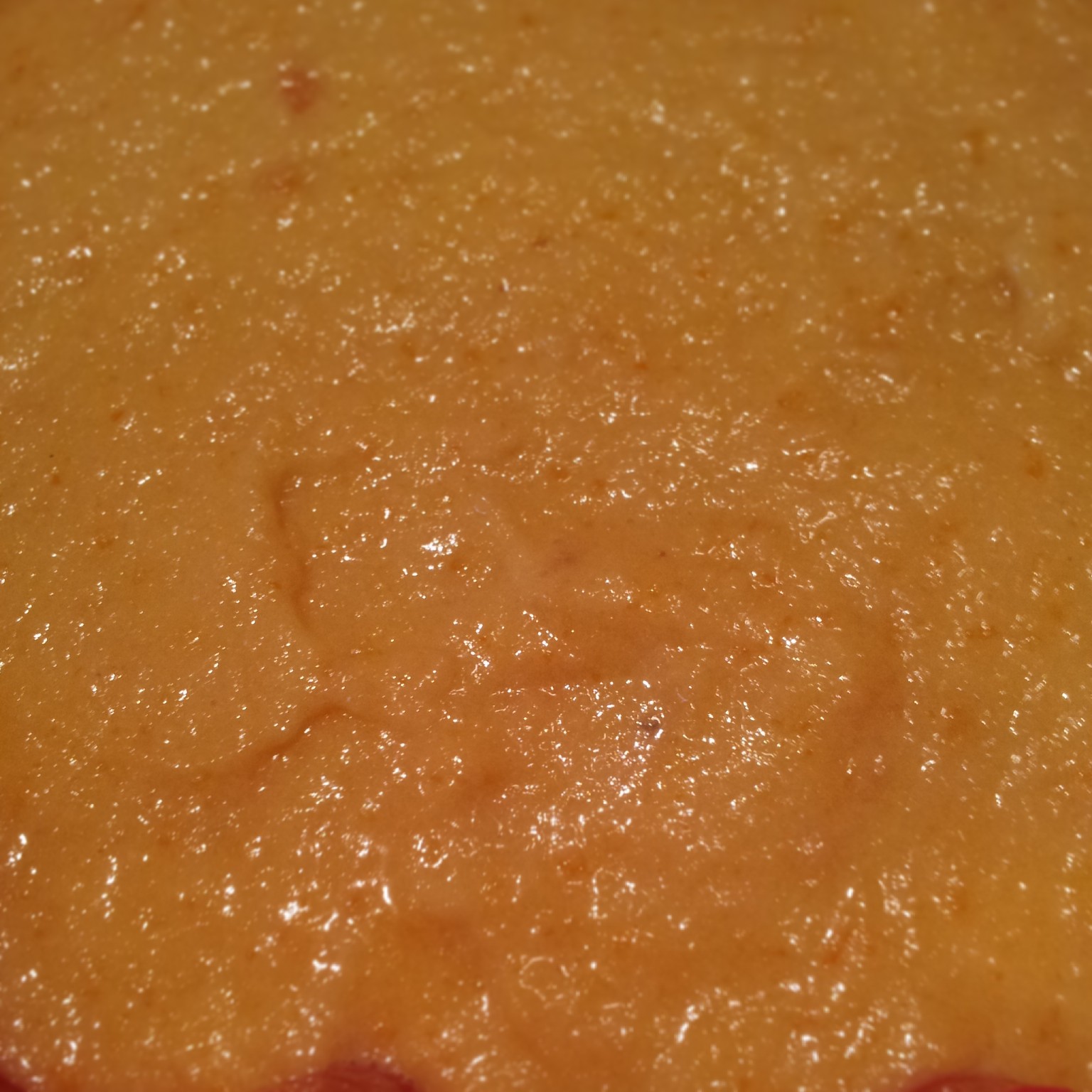
The cake batter doesn’t take long to whisk together. Whisk it until it is a beautifully smooth, thick and glossy. You will see the gorgeous orange flecks throughout the batter. It’s very easy to pour and spread into the shapely mould.

A thick, glossy smooth orange flecked batter. Easy to pour and spread into the shapely mould

A thick, glossy smooth orange flecked batter. Easy to pour and spread into the shapely mould

Once everything is fully incorporated simply pour it into your greased baking tin/mould and bake in a preheated oven for 30-45 minutes at 200 degrees C /400F

Thoroughly greased I Heart Cake Mould

Thoroughly greased I Heart Cake Mould

I like to use spray on cake release to grease my cake tins and having not had much success with silicon bakeware in the past I may have gone a tad overboard with the old grease spray here. The I Heart Cake mould worked like a dream, the cake baked evenly and not a single bit of the cake stuck to the mould. Success!

Ready for the oven

Ready for the oven on a pre heated baking tray

One way to ensure your silicon mould is supported and heated evenly I’ve found, is to pop it directly on to a baking tray that has been heated as the oven warms. This makes it even easier to lift the supple mould in and out of the oven and ensures the heat touches the mould evenly.

Fresh from the oven - Armenian Orange and Almond Cake

Fresh from the oven – Armenian Orange and Almond Cake

Now I did think when I read the recipe that 200 degrees C is rather a high temperature for a cake, normally a sponge with baking powder might bake at 180 C as a maximum. 200 C is more like a bread baking temperature which can take that kind of heat, however I wanted to follow the recipe to the letter. I was slightly alarmed to see how dark the cake had turned in the oven however it didn’t make the slightest bit of difference, it tasted perfect and was moist all the way through. Not a dry edge in sight, but just for peace of mind I might reduce the heat next time to 180 after the first 15 minutes of baking.

Cooling gently on a greaseproof covered cooling rack

Cooling gently on a greaseproof covered cooling rack

I left the cake to cool slightly in the mould to retain it’s shape and merely tipped it out onto a greaseproof covered wire cooling rack (to stop the cake marking or falling through the gaps). It’s quite a robust cake with all of the almonds in so it can take a bit of handling. The cake slid smoothly out of the mould and looked impressive before I even added a layer of icing to it.

A good layer of Orange blossom icing

A good layer of Orange Blossom Water sugar icing

I’ve never really been successful with making my own glaze icing and yet I continue to persevere. I decided to add a layer of icing to the cake to add a little more sweetness. I clearly got the measurements wrong (yet again when will I learn!) as the icing wouldn’t set despite being left over night!) so I ended up scraping it off and leaving the cake with the syrupy goodness from the icing seeping into every pore instead. This made one extremely moist cake. Similar to some of my other Arabic creations Baklava and Basboosa.

One orange blossom water syrup soaked Armenian Orange Cake

One orange blossom water syrup soaked Armenian Orange Cake

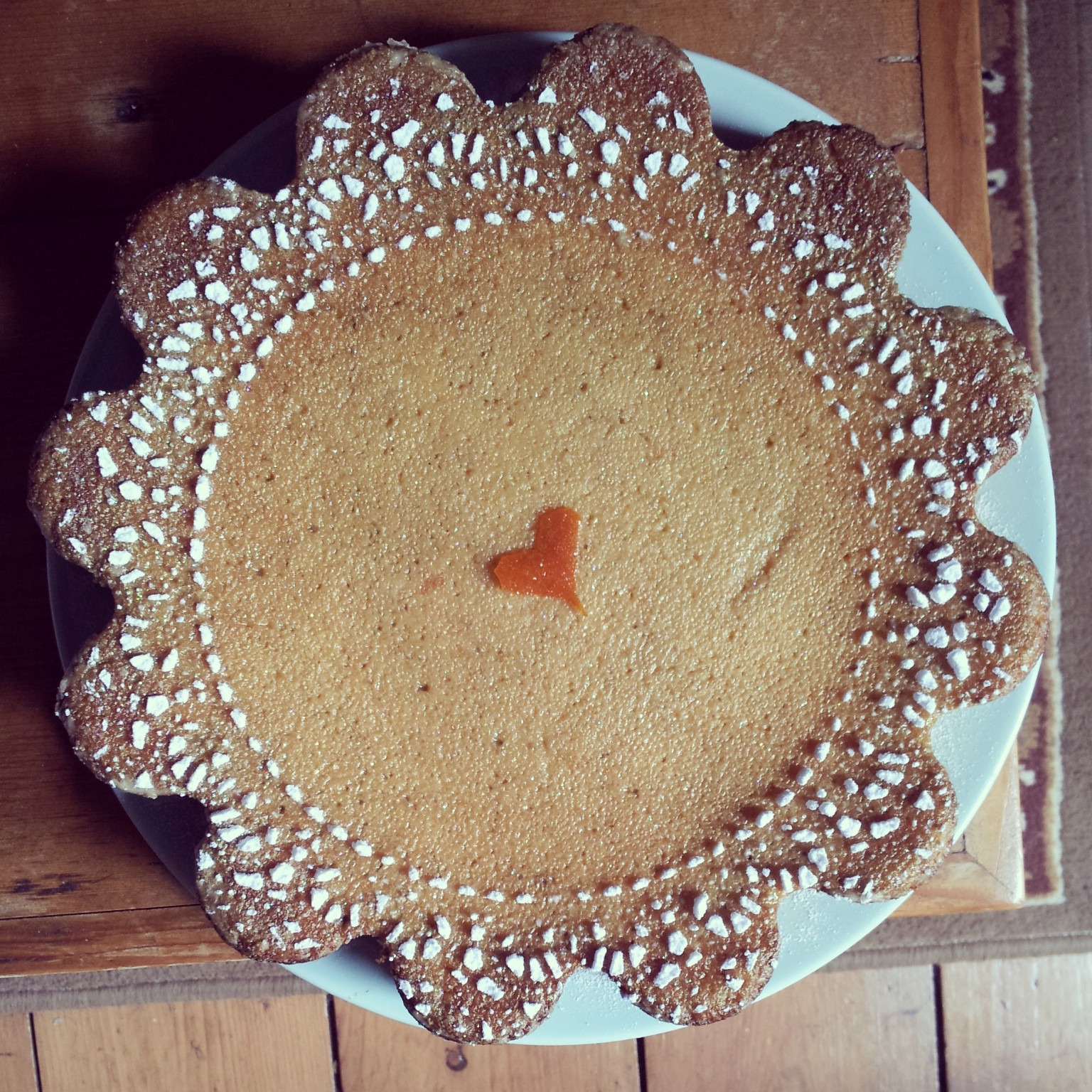
Icing sugar is probably not the best choice of decorative tool when dealing with a syrup soaked cake, however I wanted a quick white decoration to contrast with the golden sponge. Armed with a paper doily, icing sugar and my trusty tea strainer I placed the doily on the cake and dusted it liberally to ensure the cake got a good coating. I think its a brilliant (and cheap!) way to create an impressive decoration. I think I may be a little obsessed with this now as you can see with my Crack Pie stencilling

Armenian Orange and Almond Cake

Doily decorations all round – Armenian Orange and Almond Cake (ps. no one will notice the dent I put in the top of the cake when scrapping off the icing with a spoon will they…)

To continue the heart theme I sliced up some homemade candied orange peel into dinky heart shapes and placed one in the centre. As Mary Berry always says it’s good to decorate your cake with a little of what’s on the inside to give a hint of what it’s offering

Practice makes perfect - slicing candied peel into hearts

Practice makes perfect – slicing candied peel into hearts. No fingers were lost in this process

Armenian Orange cake is the most intensely orange cake I’ve ever tasted. Perfect if you like a fruity cake that’s not too sweet. The almonds give it a wonderful texture and the added sweetness from the icing lifts the slightly bitter tang of the orange peel.  An interesting cake with a healthy twist, it’s a wonderfully moist and light summery bake. The full oranges give the cake a whole other level of moisture and depth of flavour. Another cake that would be perfect with a strong cup of tea or an espresso. This is great cake for those who enjoy a good pound cake and who aren’t a great fan of buttercream icing. Although you could ice this in any which way you prefer if you’re a buttercream fan go for it. I heart all cake! Yum!

Armenian Orange and Almond Cake
A perfect piece of my heart - armenian orange and almond cake
Armenian Orange and Almond Cake

Armenian Orange and Almond Cake

Things that I used to make my Armenian Orange and Almond Cake

  • 2 oranges
  • 6 eggs
  • 230g sugar
  • 230g almonds
  • 1 tsp baking powder
  1. Boil the oranges for 2 hours
  2. Blend the soft oranges into a paste
  3. Whisk the eggs and sugar until frothy
  4. whisk in the almonds and baking powder
  5. Whisk in the orange paste until all is combined
  6. Bake for 30-45 minutes in a 9 inch tin at 200 degrees C or 400F

Icing

  • 150g icing sugar
  • 2 tbs orange blossom water
  • the zest of one orange
  • a little water to thin the icing if need

Mix it all together until smooth and thick. Pour over the cake.

*Or dust with icing sugar! The choice is all yours


That icing sugar sure disappears fast!


51. The Legendary Crack Pie (concocted the lazy way)

Legendary Crack Pie - no actual crack is involved in this baking process

Legendary Crack Pie – no actual crack is involved in this baking process

Crack Pie the most addictive pie you’re ever going to eat. It even sounds legendary before you even know what’s actually inside it. It hails from New York so apologies this is yet another American bake in my around the world adventures. But I’m sure you will understand why I just HAD to bake this. It was originally invented by Momofuku Milk Bar’s very talented pastry chefs and coined Crack Pie due to it’s extremely moreish quality.

A slice of gooey Crack Pie

A slice of gooey Crack Pie

I’ve been waiting for an excuse to bake this pie. This excuse came in the form of the Private Pie Club. The theme for this months Private Pie was Film Pie. I managed to shoehorn my Crack Pie in under the banner of ‘Fear and Loathing in Las Vegas’ as the most drug fuelled film I could think of , although with it’s final dusting of floral icing sugar the pie appears much more sweet and innocent than it’s name suggests… (If you like pie you should also come along to Private Pie club and meet other pie enthusiasts!)

Fully iced Crack Pie

Fully iced Crack Pie

The original epic recipe is merely concocted from a few store cupboard essentials. This means you will probably have all of the ingredients ready to hand to bake this pie. So what are you waiting for?? Get baking! Although there is a LOT of everything in it so you may need to invest in a few more eggs…

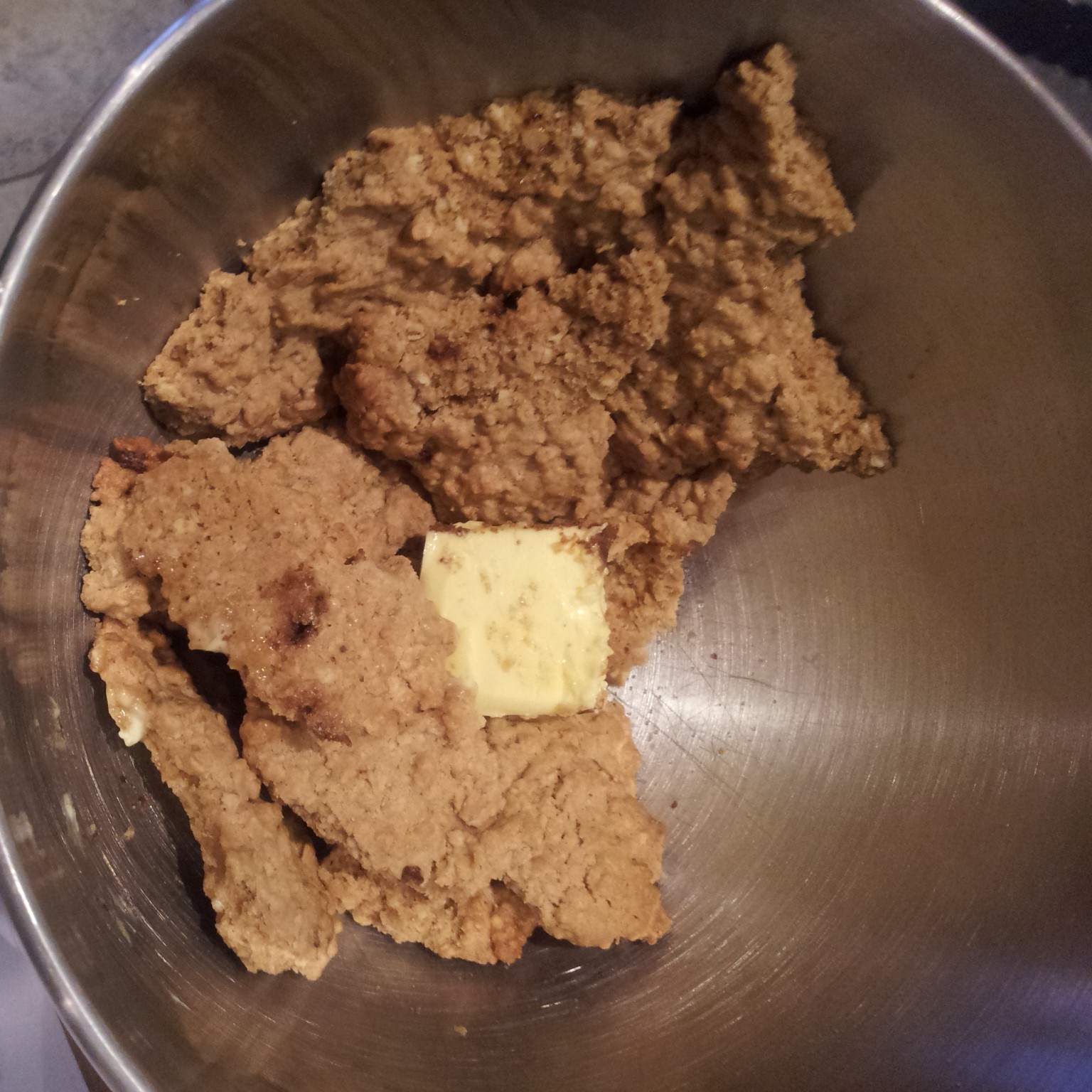
Blending sugar, salt and flour together the lazy way

Blending sugar, salt and flour together the lazy way

The homemade oat cookie base is well worth the extra effort of making a cookie just to crumble it up and reconstitute it into a pie crust. The pie in total consists of an entire block of butter, almost 500g of sugar (brown and white) 8 egg yolks and cream! This is a gloriously decadent pie for the hungry. It’s so popular I’ve heard that they sell for $45 a pop and are couriered across the states to feed the Crack Pie habit of the nation.

Beat in the butter

Beat in the butter and egg

To start with I got the method a bit backwards. Despite my lack of reading ability it turned out pretty well so you too can follow my lazy method. I forgot to cream the butter and sugar together and instead whacked all of the dry ingredients together into the mixer and beat them until crumbly.

Then beat in the butter and egg to make a thick cookie batter.

Splodge the cookie batter roughly onto a baking sheet and smooth down

Splodge the cookie batter roughly onto a baking sheet and smooth down

The best bit about baking this kind of cookie is it doesn’t need to be pretty and you don’t even have to bother rolling and cutting it out! Music to my lazy baking ears. Basically whack it all onto a greased baking sheet, press it down with your fingers and bake it for 20 minutes. Job done.

The baked cookie base

The baked cookie base

The rough cookie will be a lovely golden hue after 20 minutes in the oven at 160 degrees C. Technically you should let it cool down before crumbling up the cookie but I couldn’t wait.

Blend the crumbled cookie together with even more butter and sugar

Blend the crumbled cookie together with even more butter and sugar

All of the other recipes I’ve found instruct you to blitz up the cookie in a food processor, but frankly that involves unpacking my food processor from the jenga game that is my kitchen cupboard and even more washing up , so I didn’t bother. I threw the roughly crumbled cookie into my mixer and beat it into submission along with an additional 55g butter, 20g brown sugar and 1/2 tsp salt.

This is how the cookie crumbles

This is how the cookie crumbles

After a quick blitz with the mizer (I’m sure you could just use a spoon or an electric handwhisk if you’re feeling the strain) the cookie turn to glossy crumbs. Just moist enough to shape it into a pie crust in your 2 pie tins.

Cookie Pie Crusts

Cookie Pie Crusts

Divide the cookie crumbs into 2 and squash them into 2 pie tins giving a thin and even crust along the bottom of the tin and up the sides. If it’s not sticking you can always blend in a little more butter to moisten the crumbs. I used a 9 inch tart tin and an 8 inch round cake tin. It’s handy to use a tin with a loose bottom to help remove the pie when it’s ready for eating. But feel free to use a solid pie dish, it’ll all taste amazing anyway. Pop the crusts in the fridge to set.

Blend together your sugars

Starting the filling: Blend together your sugars and salt

Now here’s the bit where I ad lib even further from the original recipe. I admit the one store cupboard essential I don’t own is powdered milk. So I just left it out of the filling. I’m not sure what impact this had on the final flavour of the pie but to be honest I didn’t miss it. Looking for a substitute all things suggested just adding actual milk. A splash of milk and a dollop of speculoos butter later and we have one tasty Crack Pie!

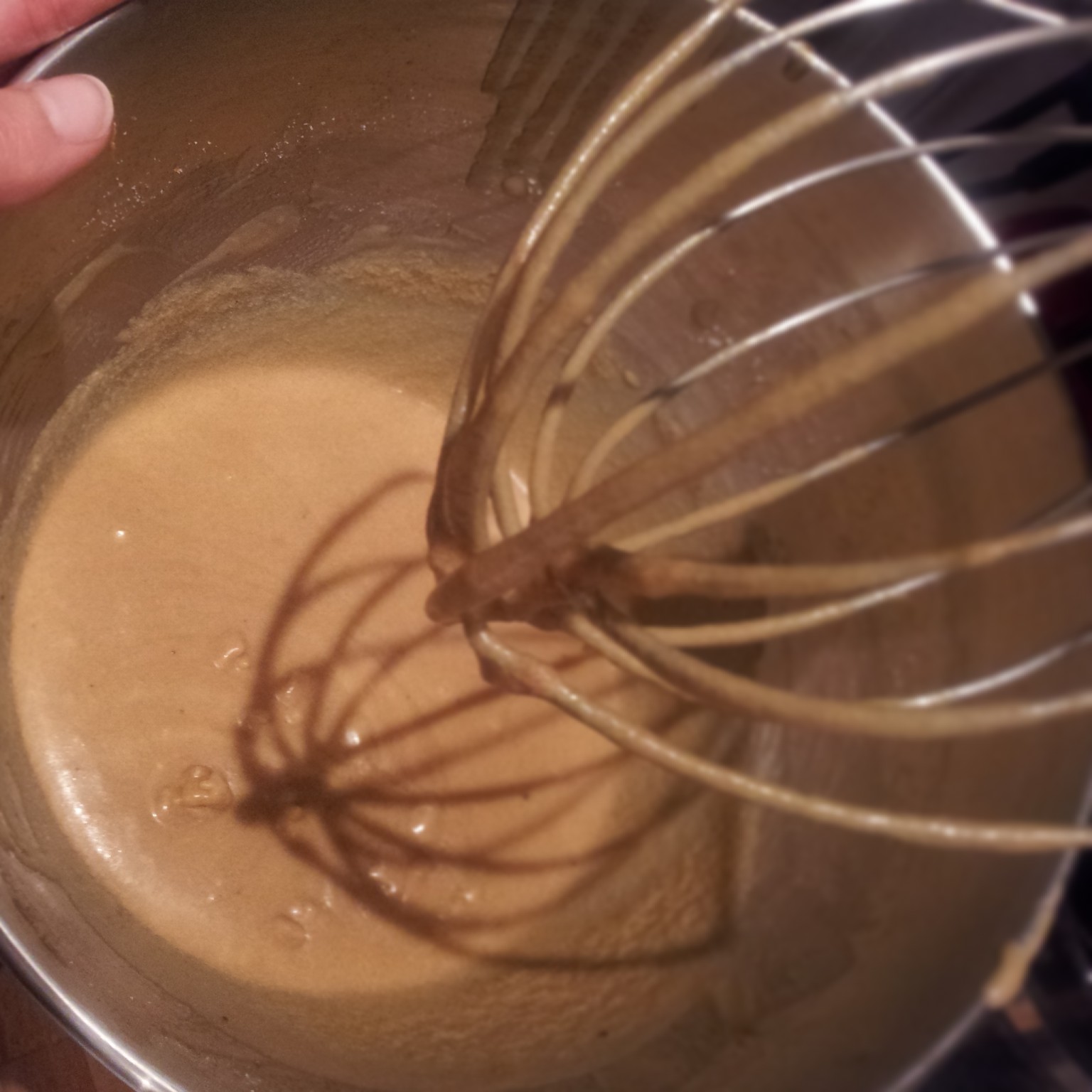
Whisk into the sugar, the melted butter, double cream, vanilla, speculoos butter and a splosh of milk

Whisk into the sugar, the melted butter, double cream, vanilla, speculoos butter and a splosh of milk

I love the fact that you just have to keep adding to the one pot to make each stage of this pie. After blending together the white and brown sugar, all that’s left to do is to whisk in to the sugar the melted butter, the double cream, a splash of vanilla, a splosh of milk, and a dollop of speculoos butter. You don’t need to incorporate lots of air into this caramel custard so just whisk it until it’s smooth and everything is incorporated.

Pour the caramel custard into onto the cookie crusts

Pour the caramel custard into onto the cookie crusts

The caramel custard will be shiny and smooth taking on the hue of the brown sugar. Simply pour half of the custard onto each pie crust and bake for 15 minutes at 170 degrees C. Then turn down the oven to 160 and bake for a further 10 minutes. I baked both pies side by side, but the larger of the pies needed an extra 10 -15 minutes of solitary baking time. The pies are clearly cooked when golden all over and only a little jiggly (like a good custard tart should be!)

The just baked Crack Pie

The just baked Crack Pie

A good tip from Mary Berry to achieve an even bake is to place your pies onto a hot baking sheet. It also means your loose bottomed tin will keep it’s bottom when lifting it in and out of the oven (I have had issues in the past with my tart tin). Also if it leaks any butter (and let’s face it with all of the butter in this pie it’s going to ooze a little) you will save a lot of oven cleaning by having your pie on a baking sheet instead.

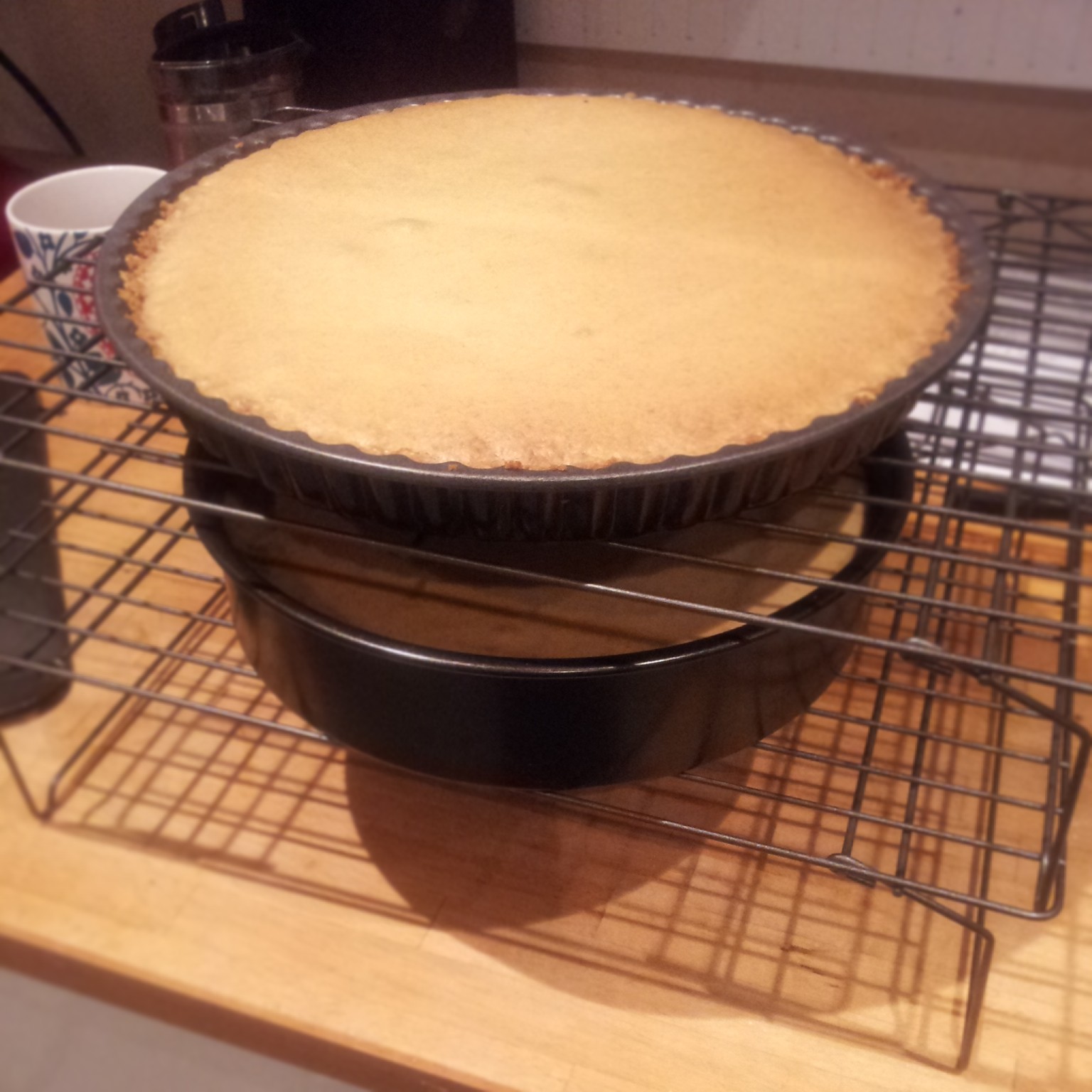
A pair of Crack Pies cooling

A pair of Crack Pies cooling

The filling will rise slightly whilst baking but maintains a lovely smooth and flat top. Once baked leave your Crack Pies to cool down in their tins. They will keep well for about a week in the fridge and I hear it tastes even better the longer it lasts… (if you can reserve yourself that is!). When I took that first bite of Crack Pie I actually ‘yummed’ out loud. In public! It’s so moist, the cookie crust almost disappears into the gooey caramel filling with the edges giving that much needed bite. It’s a perfect combination of smooth, sweet caramel and oaty crumble, with a hint of spice (from the speculoos) and a tang of salt. The slice quickly disappeared before my eyes and the whole pie was gone within minutes. Without doubt a wonderful sign of an excellent pie.

Extreme Close up of the Crack Pie. Check out that caramel custard

Extreme Close up of the Crack Pie. Check out that caramel custard

As this is a recipe for 2 Crack Pies, you could scale it back to make just the one. But I fear one will never be enough! If you have the ingredients you may as well make two and share with friends (if you like anyone enough to share your Crack Pie with them) or alternatively gorge yourself on all of the pie. (Please eat your Crack Pie responsibly) Or even more sensibly you could freeze your second Crack Pie for a special occasion. I have my Crack Pie resting carefully in the freezer, wrapped diligently in greaseproof paper and tin foil (still in it’s tin) to prevent freezerburn and   that distinctive ‘freezer flavour’ contamination. I literally can’t wait to defrost it.

How to decorate a Crack Pie?

How to dress a Crack Pie?

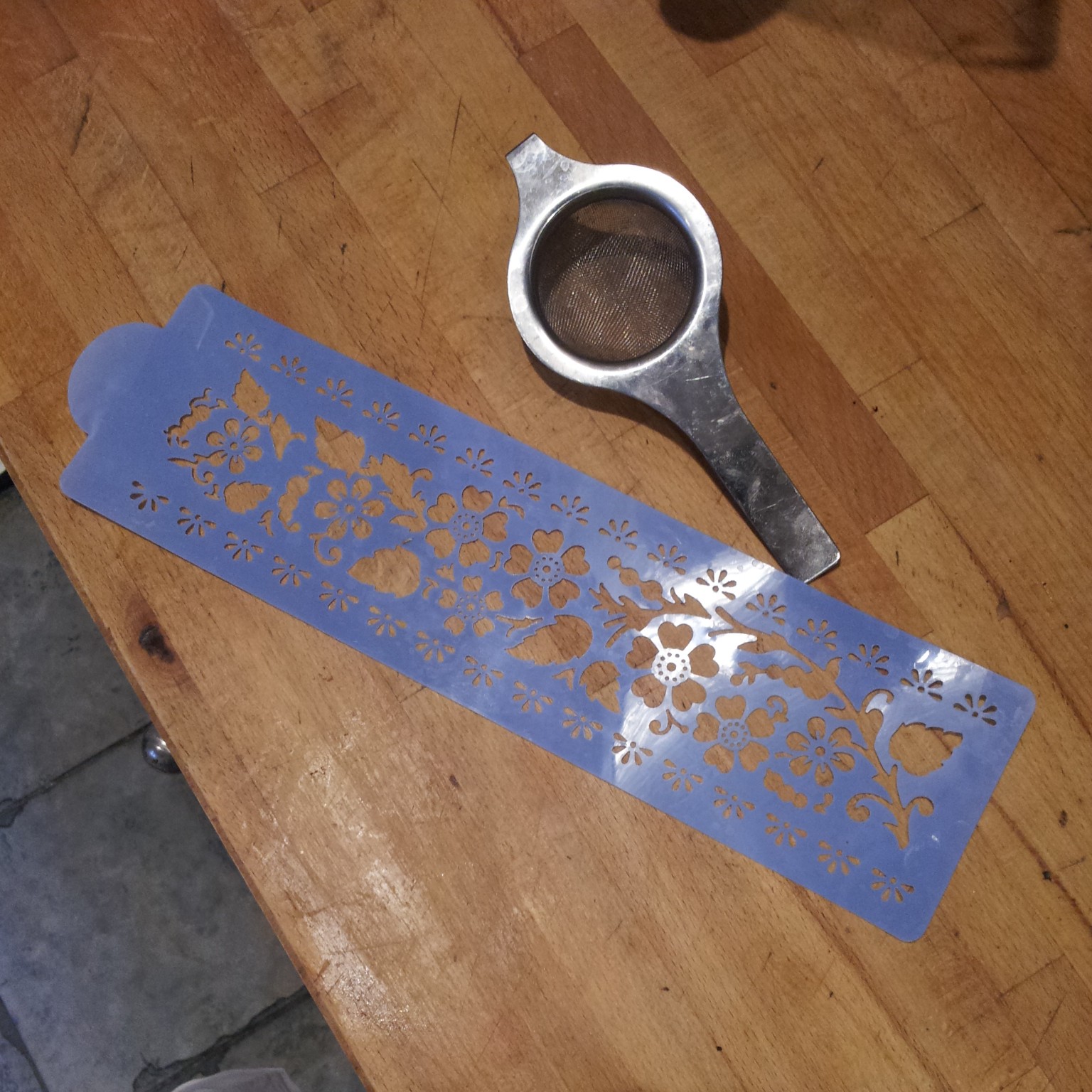
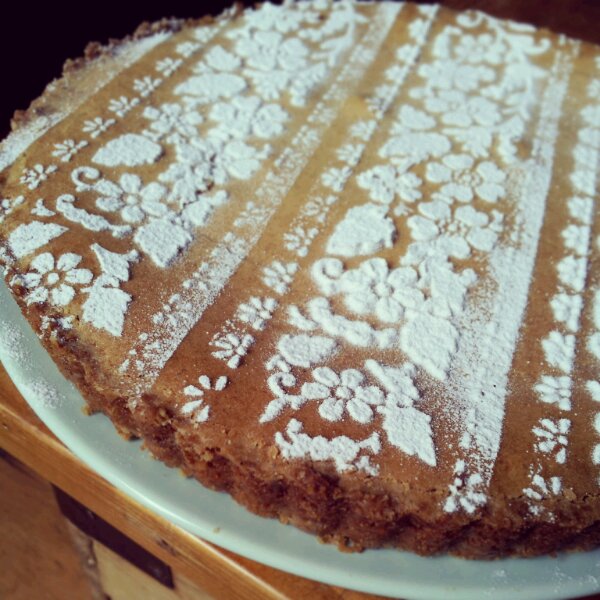
Now you don’t have to dress your Crack Pie, if you don’t want to. You could leave it naked as the day it was born if you prefer, but I wanted to make it look pretty (and hide a few of the little cracks that had appeared on the delicate crust in the process of forcibly removing it from the tin) Armed with a cake stencil, tea strainer and a box of icing sugar I liberally dusted on a floral pattern, covering the entire pie. It’s the first time I’ve ever managed to stencil anything successfully! Hurrah! Cue many self indulgent shots of stencilled Crack Pie…

The Fully Dressed Crack Pie

The Fully Dressed Crack Pie

Things that I used to make The Legendary Crack Pie 

Oat Cookie (for the crust)

  • 150g plain flour (2/3 cup plus 1 tablespoon)
  • 1g baking powder (1/8 teaspoon)
  • 1g Cream of tartar (1/8 teaspoon) – This should actually be bicarbonate of soda however I got the pots mixed up! It didn’t seem to do any harm so I will be using cream of tartar in the future.
  • 2g salt (1/4 teaspoon)
  • 115g softened butter (1/2 cup)
  • 60g dark brown sugar (1/3 cup )
  • 40g  caster sugar (3 tablespoons)

Step 1: Beat all of the above together until fully incorporated

  • 1 egg

Step 2: Beat in the egg

  • 90g oats (1 cup)

Step 3: Stir in the oats

Step 4: Spread onto greased baking tray and bake in preheated oven for 20 minutes at 160 degrees C (375F)

Pie Crust

Step 5: Crumble up the baked cookie and beat in

  • 55g butter (1/4 cup)
  • 20g brown sugar (1 and 1/2 tablespoons)
  • 1g salt (1/8 teaspoon)

Step 6: Split the crumbs in half and press firmly and evenly into 2 (approximately 9 inch) pie tins all over the base and up the sides to form a thin crust.  Pop the crusts in the fridge to set.

The Caramel Custard Filling

  • 270g caster sugar (1 and 1/2 cups)
  • 130g dark brown sugar (3/4 cup and a scant 3 tablespoons)
  • 1g salt (1/4 teaspoon)
  • (I left the milk powder out but if you want to put it in use 1/3 cup plus 1 teaspoon)
  • 113g melted butter  (1 cup)
  • 285ml double cream (3/4 cup)
  • 1 teaspoon vanilla extract
  • Splash of milk (to make up for the lack of milk powder)
  • 50g speculoos butter (to make up for the lack of milk powder – you could leave this out if you prefer or even use peanut butter instead)

Step 7: Whisk all of the above together

  • 8 egg yolks

Step 8: Whisk in the egg yolks one at a time until the mixture is smooth, shiny and thick

Step 9: Pour half of the caramel custard onto each pie crust

Step 10: Bake the pies side by side in a preheated oven on a hot baking sheet for 15 minutes at 17o degrees C (350F) then turn the oven down to 160 degrees C (325F) and bake for a further 10 minutes. When golden all over and only ever so slightly jiggly your Crack Pie is ready! 

Step 11:  Allow your pies to cool and dress with icing sugar. Then reward yourself for all of your efforts with a slab of pie. Enjoy!
*The Momofuku Recipe was published by the LA Times recently if you want to see it in all it’s glory

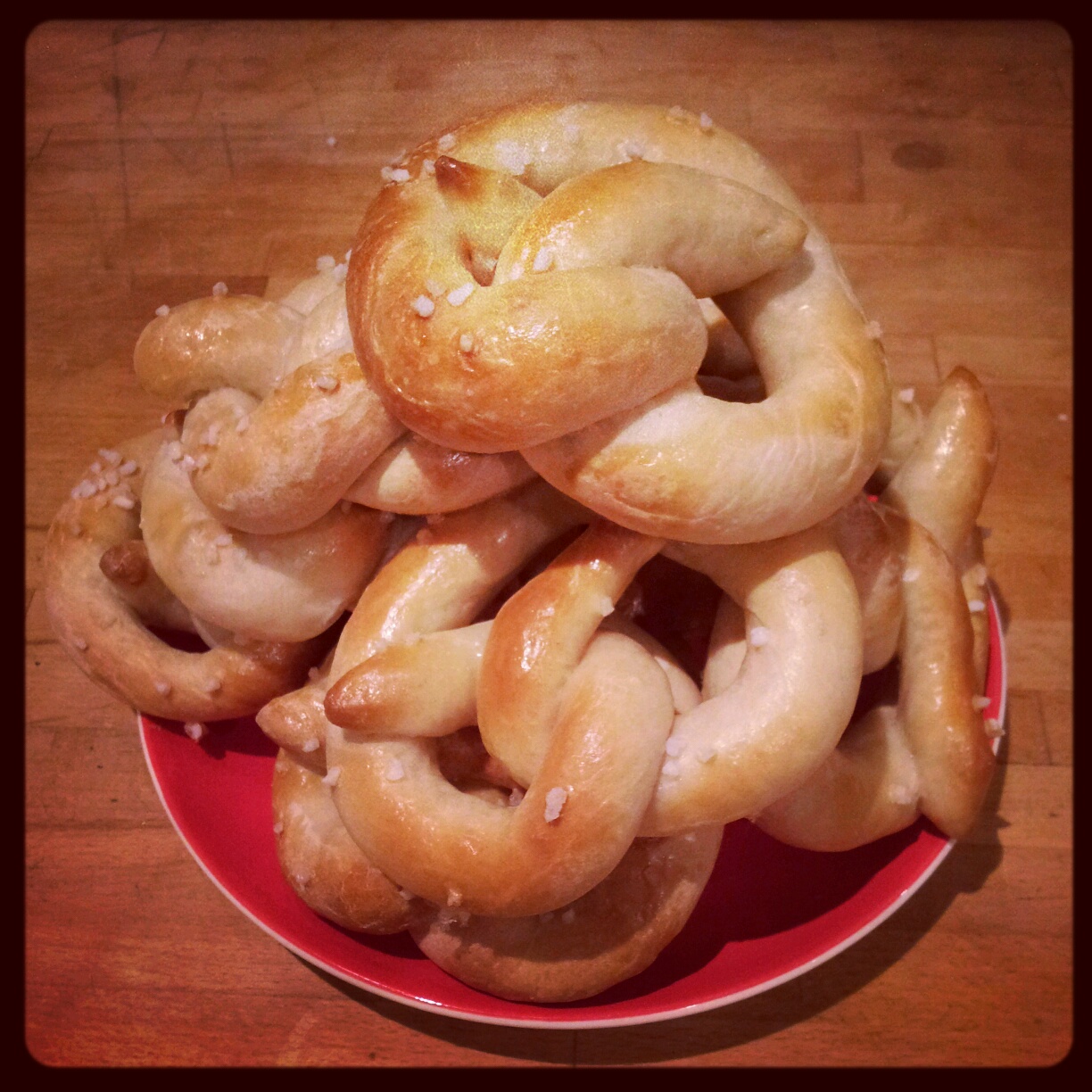
49. German Pretzel Playtime

Pretzels, Pretzels, Pretzels!

Pretzels, Pretzels, Pretzels!

I discovered that I have a slight obsession with Pretzels on our recent visit to Berlin, where I bought many delicious chewy pretzels the size of my head. I really rather enjoyed Berlin, my first venture into German cusine! Traditionally Preztels are a savoury German snack, dipped in a rather caustic solution of lye to achieve the dark brown coating with the distinctive chewy texture.

In amongst the Curry Wursts, Strudels and Pork Knuckle I filled my self up on pretzels as often as I could. We explored the historic sites and the bohemian avenues in the post Christmas and wedding drizzle. Berlin was a very welcome change of scenery, with pickled herring and salmon for breakfast. I went all in with the Germanic food. My instagram feed became awash with a vast array of wonderful and interesting food. Nothing went undocumented!

Dough ready for some good kneading

Dough ready for some good kneading

Upon returning home I wanted to recreate some pretzel perfection, preferably without the hazardous solutions. No chemical burns for me please! Pretzels are made from a basic soft white bread dough recipe. The flour, yeast, oil and water should be mixed together in a big bowl until it can then be kneaded on a oiled board for 10 minutes. Once the dough is smooth and bounces back when pressed your kneading is done.

Kneaded dough ready to prove

Kneaded dough ready to prove

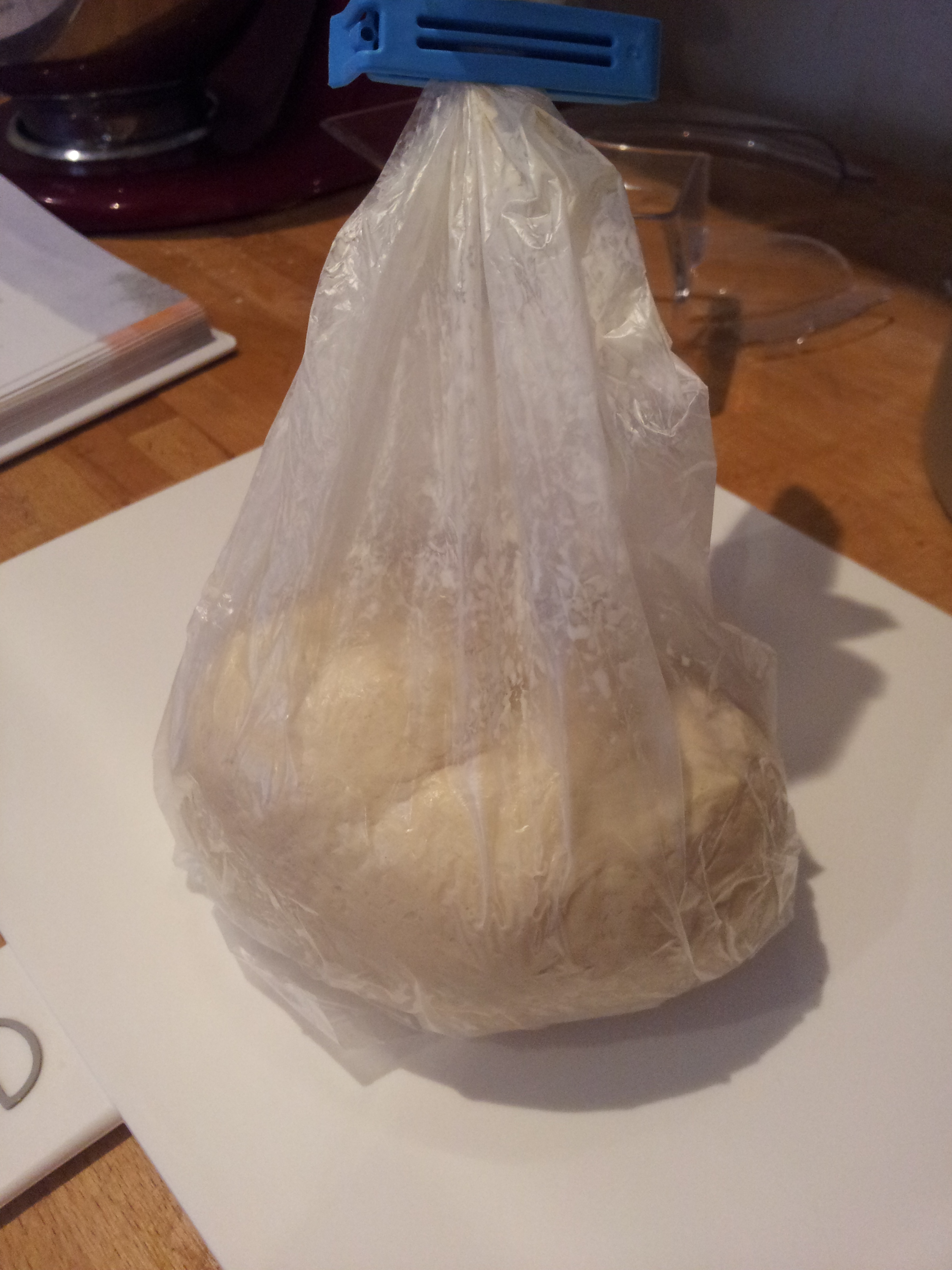
The dough can then be left to prove in a warm place in a greased plastic bag, for about an hour or two.

The proven preztzel dough

The proven pretzel dough

When the dough has doubled in size it’s ready to shape. This is probably the most complicated and time consuming bit of the entire pretzel making process. But it’s not as difficult as it may seem! I shall demonstrate in 10 easy steps…

Stage 1. Roll your dough to a sausage shape and cut into 12 equal pieces

Stage 1. Roll your dough to a sausage shape and cut into 12 equal pieces

Stage 1: Roll your dough to a sausage shape and cut into 12 equal pieces

Stage 2. Roll your 12 pieces into balls (check that they're all roughly the same size)

Stage 2. Roll your 12 pieces into balls (check that they’re all roughly the same size)

Stage 2: Roll your 12 pieces into balls (check that they’re all roughly the same size). Redistribute the dough to make sure you have equal sized dough balls here if needed.

Stage 3. Take one dough ball and leave the others covered with cling film in a greased bowl to stop them drying out. Roll your dough into the longest thinnest sausage you can make

Stage 3. Roll one dough ball into the longest thinnest sausage you can make

Stage 3: Take one dough ball at a time leaving the others covered with cling film in a greased bowl to stop them drying out. Roll your dough into the longest thinnest sausage you can make. Give the dough a good slap if you spot any air bubbles along the way. You need to pop any air bubbles to get a good even bake and to maintain your lovely pretzel shape.

Stage 4. Start shaping you sausage. Curl the dough into a circle but don't close the ends.

Stage 4. Start shaping you sausage. Curl the dough into a semi circle but don’t close the ends.

Stage 4: Start shaping your sausage. Curl the dough into a semi circle but don’t close the ends. You need those loose ends to finish your pretzel shape.

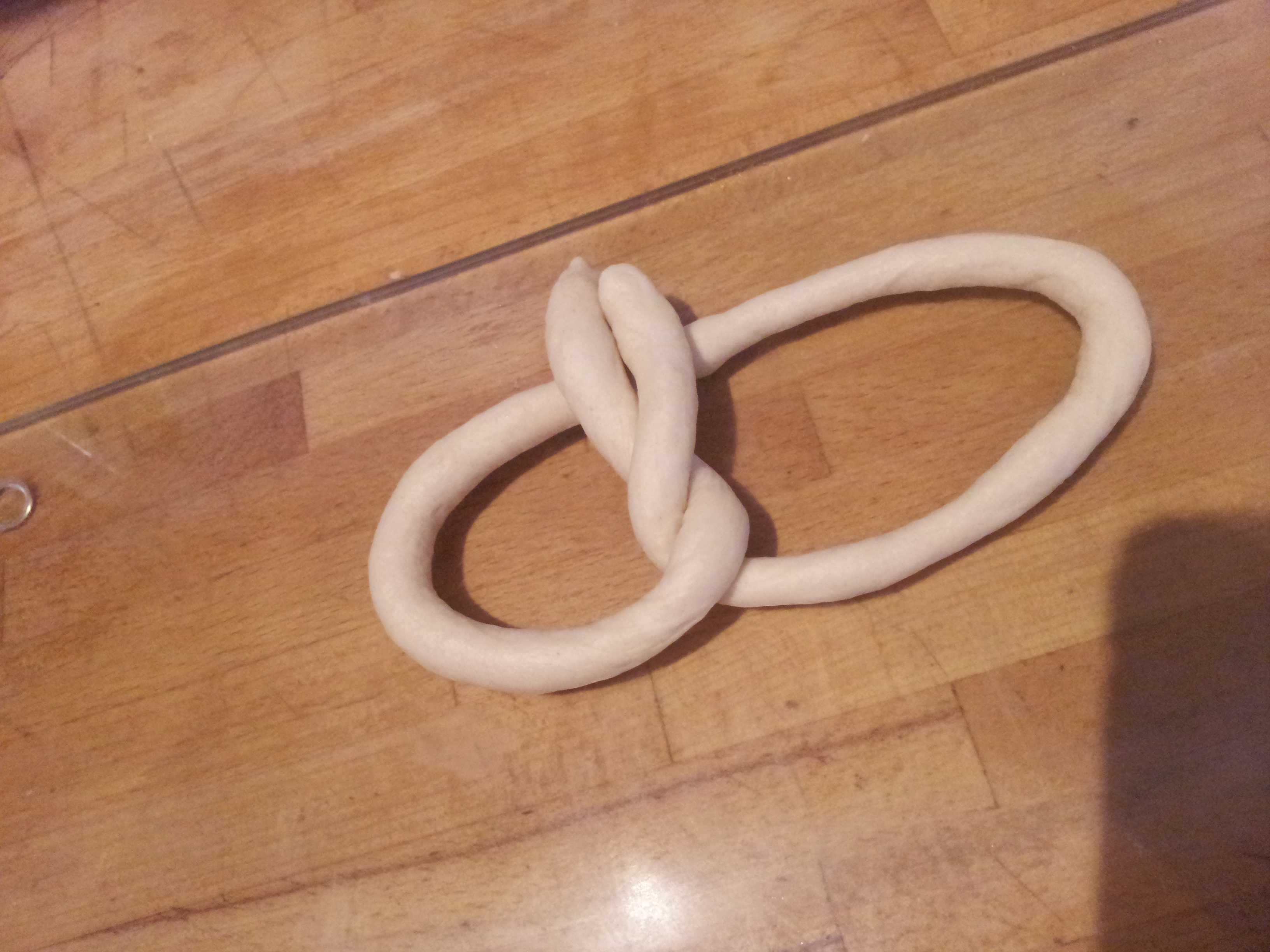
Stage 5. Bring the loose ends of the dough together and twist them up the centre of the circle

Stage 5. Bring the loose ends of the dough together and twist them up the centre of the circle

Stage 5: Take the loose ends of the dough and twist the strands together, one under the other up the centre of the pretzel circle.

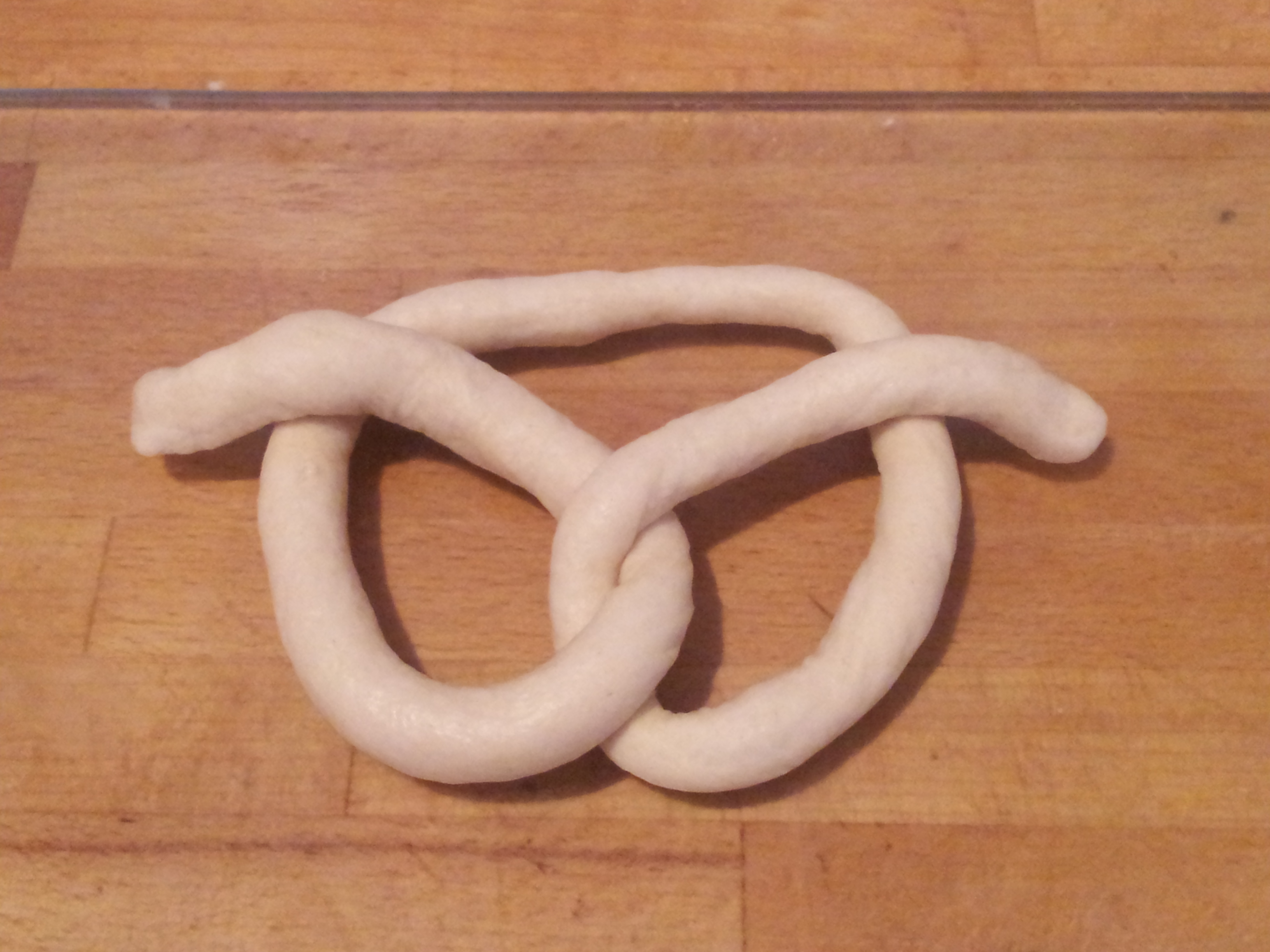
Stage 6. Bring the loose ends two thirds of the way up the sides of the pretzel like arms

Stage 6. Bring the loose ends two thirds of the way up the sides of the pretzel like arms

Stage 6: Bring the loose ends two thirds of the way up the sides of the pretzel like arms. Reshape the circle of the pretzel as you go to keep the even shape.

Stage 7: Gently press the 'arms' of the pretzel into the dough to fix it in place.

Stage 7: Gently press the ‘arms’ of the pretzel into the dough to fix it in place.

Stage 7: Gently wrap the ‘arms’ of the pretzel around the pretzel. Gently press the arms into the dough to fix them in place.

Stage 8. Carefully line up your pretzels on a greased and lined baking tray

Stage 8. Carefully line up your pretzels on a greased and lined baking tray

Stage 8: Carefully line up your pretzels on a greased and lined baking tray. Cover them with greased cling film and leave them to prove again for another hour.

Stage 9: Give each pretzel a good coat of egg wash and water and sprinkle with rock salt before baking

Stage 9: Give each pretzel a good coat of egg wash and water and sprinkle with rock salt before baking

Stage 9: Give each pretzel a good coat of egg wash and water and sprinkle with rock salt before baking. In hindsight I went a bit mad with the rock salt. It kind of burns the tongue when you put that much on! I might in the future smash up the rock salt with a pestle and mortar to get smaller chunks and sprinkle a much smaller amount on!

The baked pretzels

The baked pretzels

Stage 10: Give the pretzels a good baking in the oven for 15 -20 minutes at 200 degrees C. These are snack sized rather than the extra large pretzels that I was eating in Berlin, which could probably constitute a main meal. So if you wanted to make yours larger you could divide your dough into 6 lumps rather than 12 and shape them to your hearts content.

The golden pretzel

The golden pretzel

After a quick bake in the oven these mini pretzels beauties are ready to be devoured! The most complicated bit of the entire process is the shaping and after a couple of goes you soon get used to the technique. I’m sure you will end up developing your own pretzel twisting style too. I adore these pretty bread shapes and will most definitely be making them again. They look impressive, so you can wow your friends with your technical know how and let them imagine you’ve spent countless hours in the kitchen preparing treats for them.

Piles of Pretzels

Piles of Pretzels

They also taste amazing with their glistening golden crust. White bread can sometimes be a bit plain, but as the pretzel is thin it takes on the depth of flavour from the egg yolk and salt. Combined with the chewy texture, they are like a plaited bit of bread heaven.  You could even make sweet pretzels if you prefer, with cinnamon and sugar coatings, or add sesame seeds or poppy seeds for a bit of variation. Then you can enjoy them for breakfast lunch and dinner! I may attempt some wholemeal pretzels too to inject some health into my bread products. I will also be attempting extra large pretzels with the distinctive slash as soon as possible! Things I used to create Mini Pretzels Pretzel Dough Recipe

  • 350g strong white flour
  • 1 tsp instant dried yeast
  • 1 tsp salt
  • 1/2 tsp sugar
  • 215ml of luke warmwater
  • 10ml olive oil

Egg Wash Topping

  • 1 egg yolk mixed with a tbsp of water
  • A sprinkling of rock salt to decorate
  • (Or you could dust them in cinnamon sugar, poppy seeds, or sesame seeds if you wish!)

Bake for 15-20mins until golden brown at 200 degrees C

48. Oh Canada! Oh Nanaimo Bars!

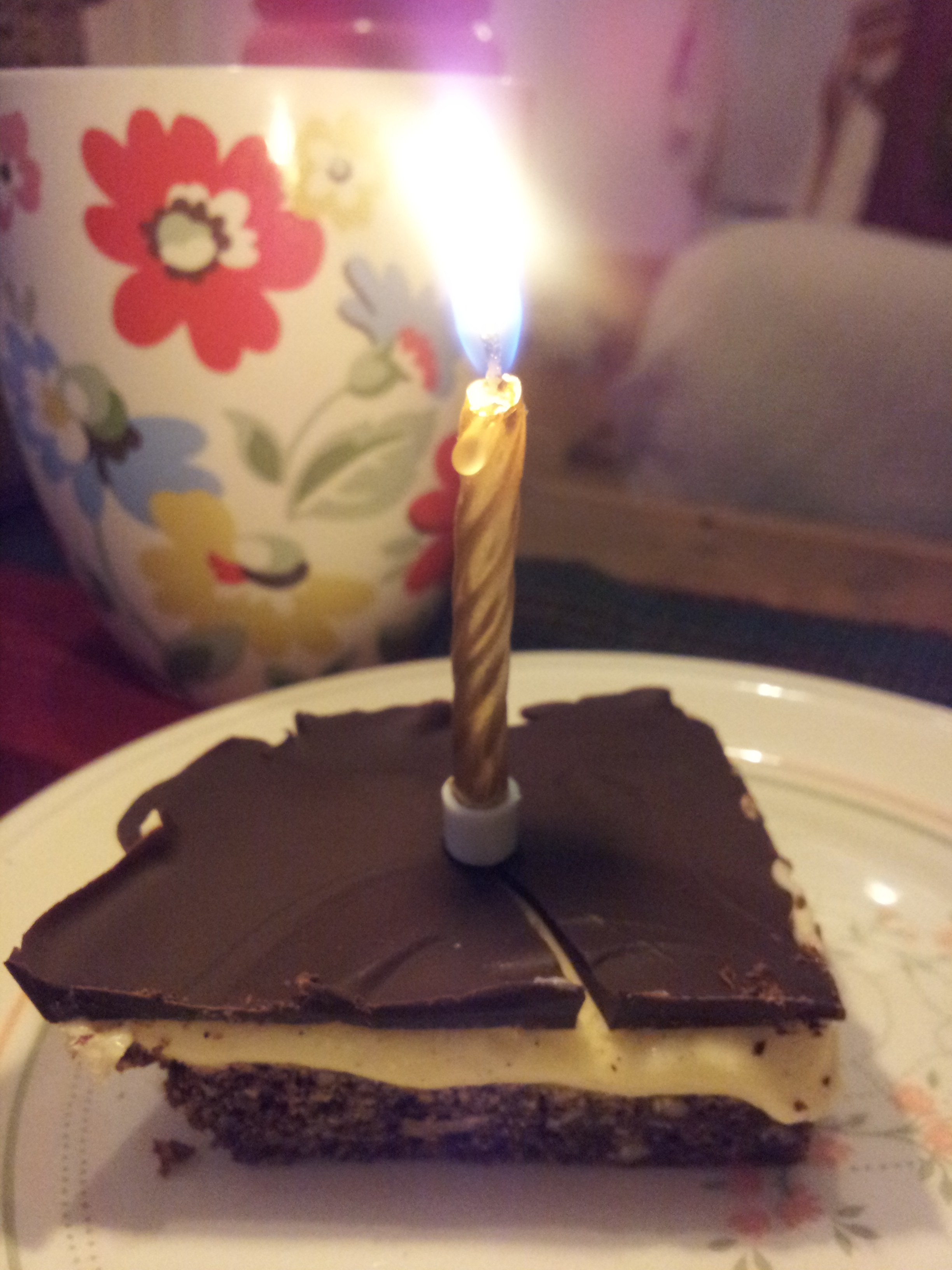
Happy Birthday to Chris  Nanaimo Bar

Happy Birthday to Chris – your own personal Nanaimo Bar

This blog has been a looooong time coming. I wanted to recreate a special treat from our Canadian travels for Chris’s birthday (last October…). My Aunty Carol in Canada recommended the quintessentially Canadian Nanaimo bar to satisfy my Canadian cravings.

Hike up Mount Doug

Hike up Mount Doug

We spent a glorious week with my family on Vancouver island. Taking in all the sites, hiking up Mount Doug, whale watching, exploring the ski slopes and of course meeting a Mountie or two.

Mountie Meeting

Mountie Meeting

Ziplining through the forests in Whistler

Ziplining through the forests in Whistler

So many beautiful sights to take in

So many beautiful sights to take in

Nanaimo bars are as popular in Canada as Tim Horton’s coffee shop. I still dream of those bear claw doughnuts. Unfortunately in England we don’t seem to know what Graham Crackers are or sell them in any shops… and they are an essential ingredient in Nanaimo Bars.

Smash up your biscuits with whatever's handy in a sandwich bag

Smash up your biscuits with whatever’s handy in a sandwich bag

My educated guess is that it’s some sort of spiced caramelised rich tea biscuit. So I did what I do best with limited store cupboard. I improvised. Smashing up a load of rich tea biscuits and adding in a combination of ginger and cinnamon to the mix.

The beginnings of the biscuit base

The beginnings of the biscuit base – combine sugar, butter, egg, biscuit crumbs, nuts and coconut

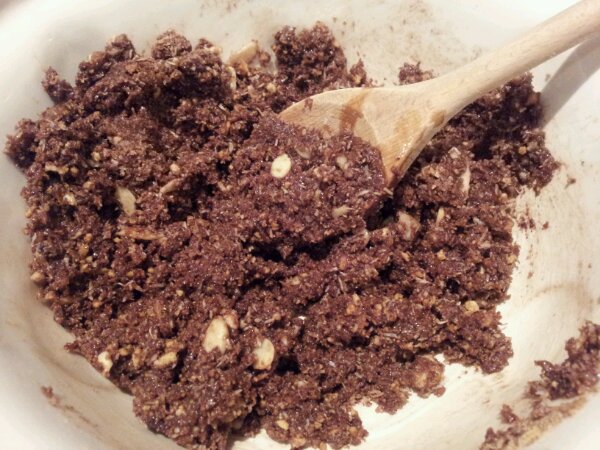
The base required a tasty combination of biscuits, melted butter, sugar, egg, cocoa powder, almonds, and coconut. It’s really quick to mix it all together. A 20 second blast in the microwave is all the butter needs to be fully runny.

Stir it all together until fully combined

Stir it all together until fully combined

Stir it all together until fully combined and comes together into a stiff mixture.

Biscuit base ready to be baked

Biscuit base ready to be baked

Once combined press the mixture firmly and evenly into all of the corners of a flat lined and greased 9 inch baking tray. Bake the biscuit base in the oven for about 10 minutes at 180 degrees C.

Whipping up the custard filling

Heating up the cream, milk and vanilla to make the custard filling

The next decadent layer is a lovely custard cream. At this point in my baking repertoire I was still yet to attempt custard concocting. Daunted yet undeterred I proceeded to my cupboard to retrieve the custard powder the recipe requires. Disaster struck when I discovered the custard powder was over a year out of date! Not wanting to poison Chris on his birthday I decided I had gone too far and didn’t have time to make another cake so I would have to proceed and whip up my own custard instead.

Thickening up the custard

Whisking up the eggs, sugar and cornflour

I decided a full custard recipe would be far too much for a small Nanaimo bar recipe so I adapted a Mary Berry recipe to make up my own sweet filling. As with gelato or ice cream you start off heating the cream and milk with a vanilla pod to infuse the custard. Then you whisk the eggs until fluffy with the sugar. Taking the cream off the heat and pour over the eggs. Continue to whisk until it thickens. Then return the custard to the pan and whisk over a low heat until it thickens.

Keeping whisking til the custard thickens

Keeping whisking til the custard thickens

The Nanaimo bar is quite a firm cake so I knew I would have to adapt the rather runny custard to make this work. I added the butter, vanilla extract and a lot of powdered (icing) sugar to the custard. Continuing to whisk it over the low heat until it reached the right thick consistency. You may need to add more powdered sugar to make your custard set firmly. It will end up a much paler custard due to the white icing sugar.

The baked biscuit base - nanaimo bar recipe

The baked biscuit base – look at those nuts!

Take the biscuit base out of the oven and let it cool fully. Once the custard has cooled you can then happily pour the custard over the biscuit and let it set in the fridge whilst you whip up the chocolate topping.

The custard layer setting - nanaimo bar recipe

The custard layer setting

Using a bain marie, pop the chocolate in a bowl suspended over a bowl of boiling water to allow the chocolate to melt gently. Save the last third of the chocolate back to add to the melted chocolate to help reduce the temperature of the chocolate. This tempering of the chocolate stops it from blooming or sweating when it’s cooling. It helps to keep your fingers slightly less sticky.

Gloriously gooey melted chocolate

Gloriously gooey melted chocolate

Pour the glossy melted chocolate all over the custard layer and simply let it cool and set.

The chocolate layer

The chocolate layer

But… just before it’s fully set quickly score the chocolate with a sharp knife to mark out the bar squares. You’ll thank me later. Once the chocolate sets fully it’s really difficult to cut through the chocolate and get properly portioned slices, as the chocolate cracks. (I wish I’d known this when I made Millionaire’s Shortbread!)

The scored Nanaimo Bar

The scored Nanaimo Bar

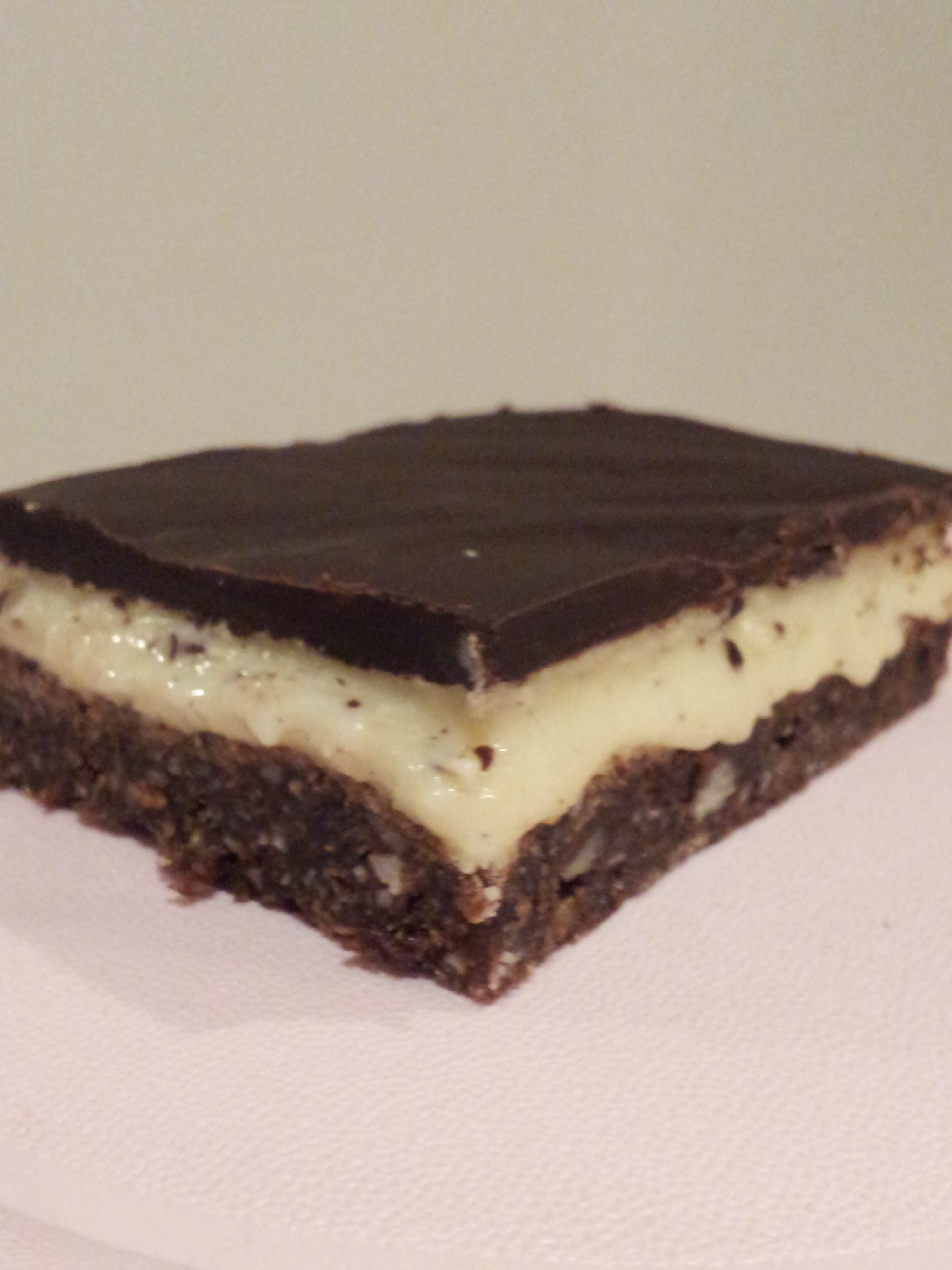
Then once it’s fully set you can take it out of the tin, chop it up and tuck in! I served Chris his for a special birthday breakfast. In hindsight it might not be the best breakfast food, but you can eat whatever you like on your birthday. That’s the rules. It’s a wonderfully sweet treat.  The coconut, custard and chocolate are a brilliant combination. That’s 3 of my most favourite ingredients all wrapped up into one cake. And even better,  it doesn’t take an age to make. I can see why the Canadians love it so.

Nanaimo Bar recipe

Nanaimo Bar

Thank you so much for the wonderful memories and for showing us the sights Aunty Carol, Uncle Malcolm , Kelly and David!

At the top - Whistler

At the top – Whistler

Things I used to make Nanaimo Bars

  • 1 cup or 250g rich tea biscuits smashed to fine crumbs (or if you have access to graham crackers go for it!)
  • 1 tsp ginger
  • 1tsp cinnamon
  • 1/2 cup or 125g desicated coconut
  • 1/3 cup or 75 g of flaked almonds
  • 1/4 cup or 60g cocoa powder
  • 1/4 cup or 60g sugar
  • 1/3 cup or 75g  melted butter
  • 1 egg

Custard Cream Filling

Custard

  • 285ml milk
  • 25ml cream
  • 1 vanilla pod
  • 2 egg yolks
  • 15g sugar
  • 1 tsp cornflour

*Or alternatively use 2tbsp custard powder if you have it!

  • 1/4 cup or 60g butter
  • 1 tsp vanilla
  • 2 cups 500g icing sugar

*add 30ml milk if you’re not using home made custard

Chocolate Topping

  • 200g plain dark chocolate
  • 1 tbsp butter

47. A Thousand Layer Cake – Indonesian Spekkoek Spice Cake

Indonesian Thousand Layer Cake

Indonesian Thousand Layer Cake

I’ve had my eye on this gorgeous Indonesian Thousand Layer Cake (Spekkoek) for quite some time. With it’s perfectly symmetrical stripes of spice interwoven with ribbons of vanilla. Spekkoek or lapis legit is a rich layered cake and is very expensive to buy due to the amount of time it takes to create it, so it’s normally eaten at special occasions and celebrations such as Christmas, weddings or festivals in Indonesian.

Layers and layers and layers

Layers and layers and layers

It requires a bit of planning and preparation and a lot of hitting the pause button if you choose to watch a film whilst trying to bake it, as each layer is baked individually for 11 minutes precisely. But it’s well worth the effort.

Most recipes for a Thousand Layer cake ask for up to 30 eggs! I thought this was a bit extreme and not the most healthy of cakes so scaled it back to a mere 10 eggs. Much more affordable too. It’s definitely a special cake lavished with lots of love and attention it had to taste wonderful.

If you’re going to attempt this cake I recommend

  • You own an electric whisk – this would be quite an ordeal to whisk by hand!
  • You have at least 2 large bowls to whisk the eggs in
  • You add lots of spice!
Beat the egg yolks and 100g sugar together

Beat the egg yolks and 100g sugar together

I’m lucky that I own a Kitchenaid and it could take the strain of whisking the egg whites for me whilst I busied myself whisking the yolks. But you could do it in 3 separate stages if you like. You don’t have to multi task to the extreme if you don’t want to. Me, I enjoy adding a bit of danger to my bakes. Doing everything at once. I’ll balance my bowls on top of many ingredients on the work surfaces and hope for the best, like spinning plates, but in my case it’s batter.

Whilst whisking the egg whites with about 100g of the sugar with a hand held electric whisk I set the Kitchenaid away to whisk the egg whites until fluffy.

Whisking the egg whites until they start to stiffen

Whisking the egg whites until they start to stiffen

Once the whites start to stiffen add 100g of sugar (bit by bit) and continue to whisk until they reach stiff peaks and look glossy.

Beat together the butter, vanilla and sugar

Beat together the butter, vanilla and sugar

Then as if you’re not busy enough, beat together the remaining sugar, with the butter and vanilla extract until light and fluffy.

Mix together the butter and egg yolk mixtures in one large bowl

Mix together the butter and egg yolk mixtures in one large bowl

You’re going to need the biggest bowl that you own to incorporate all of the ingredients together. Start with mixing the egg yolk batter and the butter/sugar paste together.

All together now - butter, sugar, and egg yolks batter

Butter, sugar, and egg yolks batter all together

Once all of the ingredients are mixed well (I used my electric hand whisk) the delicate process of folding in the egg whites to the batter can begin. Using a metal spoon fold in gently the egg whites to preserve the air in the batter.

There's a lot of egg whites to fold in!

There’s a lot of egg whites to fold in!

It will start to look like scrambled eggs but persevere until the batter looks smooth.

Yum scrambled eggs!

Yum scrambled eggs! Keep going with the folding

Next up is the relatively small amount of plain flour considering how much egg and butter is in this cake! It also needs to be folded in carefully to the batter with a metal spoon.

Fold in the flour

Fold in the flour

To achieve the two tone and two flavour effect half of the batter needs to be flavoured with spices and the other half left to be as it is, with a hint of vanilla.

Fold in a vast quantity of spice

Fold in a vast quantity of spice to half the batter

Split the batter in half (you’re going to need yet another bowl here!) and fold the spices into half of the batter.

Leave the other half of the batter as it is in a separate bowl

Vanilla batter – Leave the other half of the batter as it is in a separate bowl

The spiced batter should look slightly browner in colour. this will help you to remember which layer you’re up to when it comes to cooking the cake!

Spiced batter

Spiced batter

With your two bowls of batter ready, it’s time to spoon a thin layer (about 5mm) into greased and lined baking tin. I used my new extra long German loaf tin 30cm x 10cm. Make sure you push the batter into all of the corners and smooth it down. Give it a very gentle tap on the worksurface to remove any air bubbles and pop it in the oven for 11 minutes. Some recipes say to follow this bake with a minute under the grill, however my oven doesn’t have a separate grill and oven.  The grill would have to be warmed up each time which to me seemed a bit too laborious. Instead I added an extra minute to the baking time to compensate for the lack of grilling and it worked a treat.

The first layer in the extra long loaf tin

The first vanilla batter layer in the extra long loaf tin

It’s a bit tricky to get the first layer into all of the corners as the batter is quite stiff. I wiped the inside edges of the tin round with a clean finger to remove any extra batter to avoid any smudging of the layers later on. The last thing you want is a smear of burnt batter up the sides your beautiful layer cake.

The first baked layer in the extra long loaf tin

The first baked layer in the extra long loaf tin

After 11 minutes in the oven the first layer should be slightly golden brown and evenly baked. Ready for the addition of the next layer straight on top of the hot cake. The heat from the first layer helps to melt the butter and spread the batter evenly around the tin. Remember to alternate your batters! One layer vanilla, one layer spice and repeat.

Raw spiced batter straight on top of the cooked cake below

Raw spiced batter straight on top of the cooked cake below

As your cake bakes it will probably shrink back from the sides of the tin a little, so don’t be alarmed if some of the raw batter disappears down the sides of the cake and into the layer below. A liberal dusting of icing sugar hides all manner of mishaps to a finished cake!

The second spiced layer

The second spiced layer, smooth and ready for the oven

Keep alternating the batters. Repeating the layering, spreading, baking and even more layering until you’ve no more batter left. This process is not for the time restricted or feint hearted. Baking the cake took at least 4 hours, but it’s almost like a work out, leaping up off the sofa to take the cake out of the oven every 11 minutes.

I grilled the final layer a bit for extra authenticity... It looks a bit burnt but tasted good!

I grilled the final layer a bit for extra authenticity… It looks a bit burnt but tasted good!

Let the cake cool in the tin for about 2o minutes before gently loosening the cake from the tin with a palette knife and attempting to remove it from the tin. I grilled the final layer a bit for extra authenticity… It looks a bit burnt but tasted good!

The final long layered cake out of it's tin

The final long layered cake out of it’s tin

I must admit I was a tad alarmed at how dark the cake was when I removed it from the tin. I did wonder how the initial layers would hold up after being baked time and time again. Would they be burnt and tough? I baked at least 18 layers into my cake, that’s a whole lot of oven time for the first few cms of the cake.

Indonesian Layer Cake

Indonesian Layer Cake

The liquid batter did seep under the greaseproof paper inside the tin. The cake had baked around the paper which made it a his made it a bit difficult remove, but not impossible. However this meant the top was a little uneven, so I trimmed it slightly and dusted it with icing sugar! (shh no one will know!)

Trimmed and dusted to reveal the lovely layers inside

Trimmed and dusted to reveal the lovely layers inside

The white icing sugar gave the layers an extra lift against the contrasting spice. I baked my Indonesian Thousand  Layer Cake for a special Clandestine Cake Club ‘Here comes the sun’ themed event. I was hurrying along to the cakey gathering but just had enough time to slice up some homemade candied orange and lemon citrus peel (Thank you Sharyn at The Kale Chronicles for the how to!) in long thin strips to create my very own sunburst effect, adding a trio of star anise (one of the key spices in the cake) to bring the summery spicey cake to life. As Mary Berry always says, you should include a bit of what’s inside the cake, outside the cake to whet people’s appetites.

Here comes the sun - Indonesian Layer Cake

Here comes the sun – Indonesian Layer Cake

As the tin that I used is supposed to be for bread, I don’t own a cake stand or plate big enough to house such a lengthy cake. I resorted to carrying the cake ,open topped on a chopping board instead. Note to self, icing sugar sitting on a cake will not stay there for long on a windy day. Precariously seated on my passenger seat and me also liberally coated in icing sugar we made our way to the Clandestine Cake Club!

Indonesian Thousand Layer Cake

Indonesian Thousand Layer Cake

I’m so pleased I took the time to attempt the Indonesian Thousand Layer Cake cake although technically not exactly 1000 layers it feels close enough! A challenge of the patience and my washing up ability it may be but this cake promises so much more than a frustrating time in the kitchen. It is such an unusual tasting cake, quite delicate and surprisingly light, I guess due to the sparse amount of flour and the endless whisking.

Layers and layers and layers

Layers and layers and layers

This cake is magic. There must be something in the enormous amounts of eggs that go into the batter that prevent the layers from burning or drying up to a miserable shrivelled mess. It’s moist, spicy and sweet, although not too sweet. It’s a proper grown up cake, sophisticated in it’s beautiful layers and exotic taste. It also improves with age. I had half a piece left from the Cake Club which I shared with Chris 4 days after baking it and it was delicious not dry in the slightest. I think spice cake always deepens in flavour with time. If you want to savour the cake you can even peel each individual layer and eat them separately. I enjoyed devouring it with a strong coffee. I will be baking this again when I have an afternoon to spare and maybe attempting more stripey cakes in the future. I think I’m hooked!

Things I used to make my Indonesian Layer Cake

  • 375g sugar (100g added to egg whites, 100g added to egg yolks, and 175g added to butter mixture)
  • 10 egg whites
  • 8 egg yolks
  • 2 tsp cinnamon
  • 1 tsp ground cassia bark
  • 1 tsp ground cardamom
  • 1/2 tsp ground star anise
  • 1/4 of a grated fresh nutmeg
  • 250g butter
  • 185g plain flour
  • 2 tsp vanilla extract
  1. In separate bowl – Whisk egg whites til fluffy add 100g sugar gradually. Whisk til shiny and stiff
  2. In separate bowl – Cream 175g sugar and the butter together til light and fluffy
  3. In separate bowl – Whisk egg yolks and 100g sugar together til fluffy
  4. In a big bowl – Whisk egg mixture and butter mixture together
  5. Fold in egg whites
  6. Fold in flour
  7. Split the batter in half
  8. Fold the spices into one half of the batter
  9. Pour a thin 5mm layer of vanilla batter into tin
  10. Bake for 11 minutes at 160 degrees C.
  11. Pour a thin layer of spiced batter onto cooked layer
  12. Bake
  13. Repeat alternating the batters until all the batter is cooked.
  14. Cool, remove from tin, decorate and eat!

The Final Frontier – Decorating and Assembling my 5 Tier Wedding Cake

The decorated wedding cake in my kitchen

The decorated wedding cake in my kitchen

When I engaged in creating hundreds of Hydrangea blossoms to adorn the wedding cake with I didn’t really stop to think too hard about how I was going to get them on the cake… It can’t be that hard right? I purchased a pot of edible glue (amongst many other things from the lovely cake shop) and trotted off to carry on baking, pushing all thoughts to the back of mind about how edible glue works.

Some of the cakes resting nicely in my kitchen cupboards

Some of the cakes resting nicely in my kitchen cupboards

Fast forward 3 months to December 2012 and I have now 5 iced wedding cakes resting nicely in their cardboard cake boxes, up on some book shelves in our spare  room/wedding dumping ground. I have 1 extra iced cake just in case of any disasters and 2 naked fruit cakes leftover from the epic baking stage of this cake.

We were going to celebrate Christmas early this year, what with the wedding being on 30th December. So I started wrapping all of my presents very early. I was wrapping until 11 one night and popped everything under the tree only to look up and discover yellow stuff running down the walls, behind the tree. I showed Chris and he discovered that I had also placed all of my freshly wrapped presents into a quickly mounting pool of water gathering under the tree.

The wall was quickly turning into a water feature in our house. It also joins onto the spare room. A spot of investigating further revealed that the flood had started in the spare room, saturated the wall and then seeped into the living room and across the floor! Thank god my dress was at my parents house and thank god for Kate’s cake boxes! They were the perfect protection against any damp that was lingering in the air (there was a lot!). Luckily the shelves weren’t up against the soaked wall too and lucky that I had been wrapping presents to discover the leak as I wouldn’t have noticed it until we were swimming in our sitting room.

We're all having a dehumifier party

We’re all having a dehumidifier party

One emergency cake evacuation later and removal of everything out of my kitchen cupboards, the 8 cakes had a new dry home!  Our landlord delivered a dehumidifier to get rid of the damp and the stink and we were good to go. Although further calamities were awaiting me whilst Chris was away for his stag do and I had friends round for festive fizz, mulled cider and spare wedding cake tasters. The dehumidifier started to leak! I then flooded the toilet trying to mop it up and broke a handle off the door just before everyone arrived. I think it was best to get all the bad luck out of the way before the wedding.

Sticking a milliong sugar flowers in place

Sticking  millions of sugar flowers in place

To give myself plenty of time to glue the flowers on to the cakes I set aside a Saturday the week before Christmas to give them a chance to dry fully and me to repair any breakages/falling offs. This happened to coincide with the painter coming to repair our flooded flat. It made for an interesting 5 hours of glueing flowers whilst directing decorators to dust pans, brushes and keeping the cat at bay.

Edible glue takes a ridiculously long time to dry! In hindsight I think royal icing would have been a MUCH better idea… I used a cocktail stick to smear a little spot of glue onto the back of each flower (which had become really rigid and quite fragile so had to be handled extremely carefully). The moulded reverse of each flower results in grooves and ridges that the glue disappears into. It needs a bit more glue so that the it can actually touch the cake.

The glue should be tacky before attempting to apply it to the cake… If you try to stick it on while the glue is still runny you will have a happy game of chase the flowers as they fall off the cake leaving a trail of glue which has now taken on some of the blue food colouring all down the cake. Many of the flowers fell on the floor and smashed this way but I also realised that I have quick reflexes, almost a cake decorating ninja.

The painters were highly amused by my antics in the kitchen where I didn’t even stop for a cup of tea for 5 hours whilst contorting myself into all shapes to catch the falling flowers and hold 4 flowers in place with each hand until the glue dried enough to support their weight. Patience and flexibility were useful qualities to have a this stage in the cake decorating process. It’s a good job I do yoga.

Almost there but not quite yet...

Almost there but not quite yet… have a look at the varied blue hues in the hydrangea

Zoe Clark’s original design for this cake uses buttercream icing to cover all of the cakes. The sugar flowers can then simply just sit on the buttercream and be held in place. No glue required. The fondant icing that I used, had now hardened and had no give to it to help hold on to the flowers, so it really was the glue doing all of the hard work.

I realised after about an hour of catching and reapplying flowers that I needed to paint the flowers with glue, leave them for about 5 minutes and then the glue would be just about right to stick it onto the cake. Some flowers also had to be rejected as when they dried they hardened into such a curly shape that they lacked a flat area on the back where I could paint the glue on.

I wanted the flowers to appear as natural as possible cascading down the cake.  I chose a combination of hues of the blue hydrangea blooms and applied them randomly at different angles to the cake to give a more varied finish. Tapering off towards the bottom of the cake.

The decorated wedding cake in my kitchen

The decorated wedding cake in my kitchen

With most of the flowers stuck into place, reserving a gap down the back of the cake, so I had some space to pick each cake up and stack it back together later on. I retired for an essential lie down.

A couple of hours later the glue was really dry and the flowers were stable enough so the cakes could be returned to their boxes and shelf for safe keeping.

One Tier - complete with a full round of dowls - how to ice a wedding cake

Back in it’s box. One Boxed Tier – note the gap down the back – no flowers here yet so it can be handled without damaging the decoration.

I arranged to deposit and arrange the cake at Jesmond Dene House the day before the wedding. It was an exciting and cautious trip in the car trying to keep all the flowers on the cake and intact.

I hired a cake stand to add extra height to the cake and whipped up a batch of royal icing to glue the cakes together and popped it in a icing bag so pipe it easily into place in situ.

All together now in Jesmond Dene House. The day before the big day! (please excuse the lack of make up and scraped back hair it was a busy day! BUt the cake is almost as tall as me!)

All together now in Jesmond Dene House. The day before the big day! (please excuse the lack of make up and scraped back hair it was a busy day! But the cake is almost as tall as me!)

Each tier of the cake required a generous dose of royal icing to hold it in place but not too much so it oozes out the sides. When royal icing dries it’s rock solid. That cakes wasn’t going to be moving anywhere!

With all 5 tiers stacked and arranged with the floral cascade running down the front and the joins in the ribbons running down the back I could then add more flowers to fill in the gap that I left to pick the cake up down the back. Amazingly only 2 flowers fell off in the process! Royal icing was a perfect glue and each flower didn’t need to be held in place for hours!

The final result was everything that I had hoped for. The 5 tiers of fruit cake ontop of the cake stand made it almost as tall as me! Please excuse the lack of make up and scraped back hair.

Birds eye view of the cake in place in the great hall at Jesmond Dene House

Birds eye view of the cake in place in the great hall at Jesmond Dene House

I have no idea how the wonderful staff at Jesmond Dene House managed to manoeuvre the gargantuian cake upstairs. The 12 inch tier by itself was just about all I could carry!

The Final Result! The Wedding Cake

The Final Result! The Wedding Cake

When we arrived at JDH after the ceremony it was amazing to see everything all together. I loved it. The flowers, the cake, the vintage glass, the real fire, and the sweets and treats I’d made. It was a dream come true with all of my most favourite people in the world together in one room! It was the most perfect day.

Cutting the cake!

Cutting the cake!

And then we got to cut the cake and the dancing began. I didn’t sit down all night but I managed to squeeze in a sneaky slice of wedding cake and it was truly my best ever cake. Rich, extremely fruity and moist, with not too much of an alcoholic burn. The 3 months of maturing were a really good idea! I love the amaretto and cherries. I will definitely be using this recipe again in the future.

What an adventure. This is without doubt my most epic bake yet. Exciting and exhausting in equal measures. I daresn’t even think how much time and energy I spent on the whole cake process, in fact I’m not even going to consider it (or how much I spent on eveything along the way) as it would detract from the very happy memories. I’m so proud that I could make my own wedding cake. Who would have thought a year ago when I hadn’t even made pastry before that I’d be baking and icing a 5 tier wedding cake?  I’m very grateful for the help I’ve had along the way too. It was all the more special that I made it myself and that I could share with all of our family and friends. I even posted some to my Aunty Carol in Canada. Cutting the wedding cake is supposed to bring good luck to the marriage. I wonder if making it yourself gives you extra kudos in the luck stakes?

I’ve saved one naked cake for a special occasion and I still have enough cake left for one last slice. I’m saving that one for a rainy day. I’ll even get the wedding photos back out and relive it all just one more time…


This is part 4 of the 4 stages of wedding cake baking! You can read more about my epic wedding cake adventures here…

Part 1 – My 5 tiers of fruit wedding cake – My biggest booziest cake yet 

Part 2 – How many sugar flowers does it take to make a wedding cake?

Part 3 – Where to start icing a 5 tier wedding cake?

Part 4 -The Final Frontier – Decorating & assembling my 5 Tier wedding cake