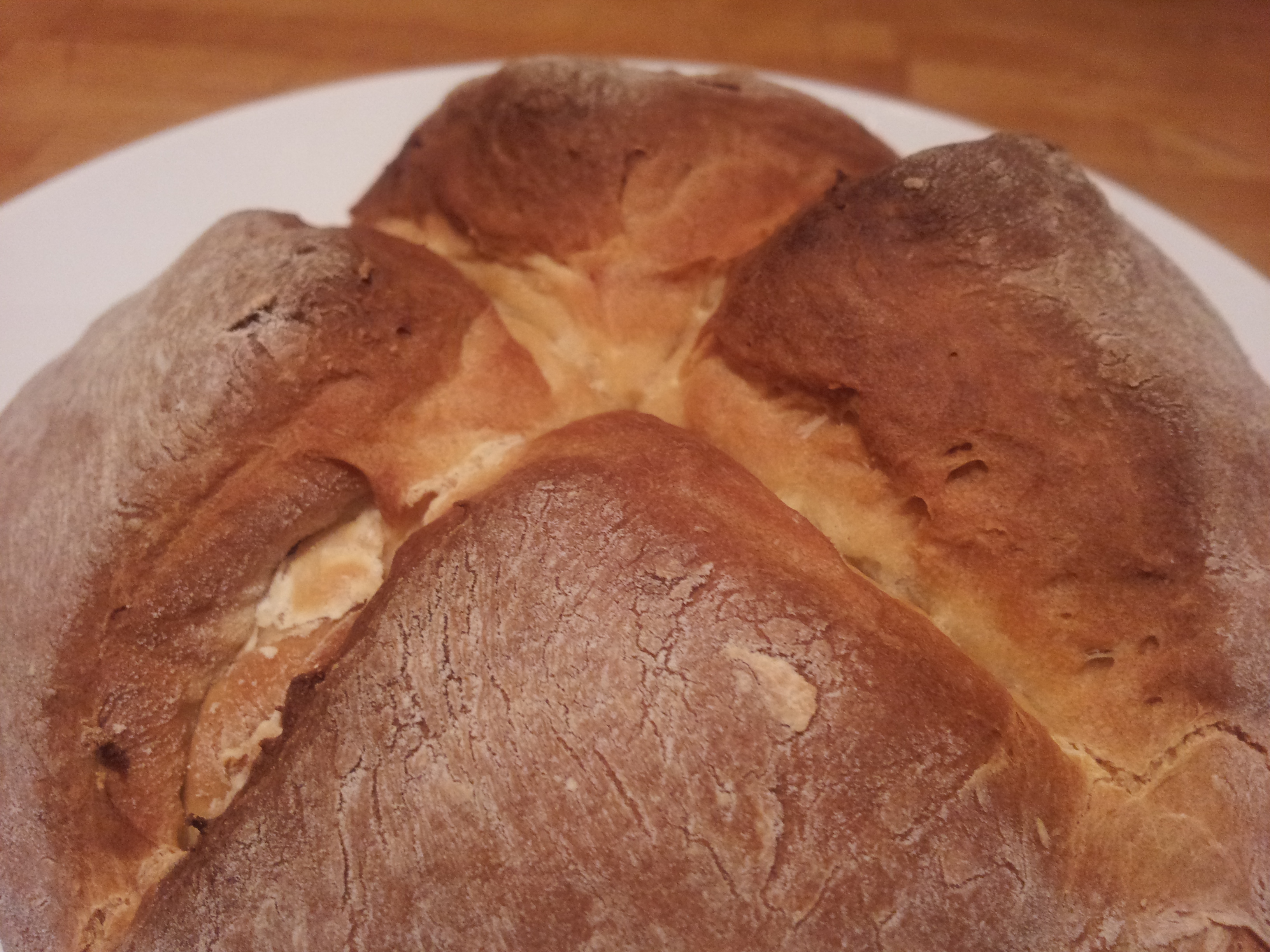
26. The 10 Minute Irish Soda Bread Challenge – Ireland

Soda Bread

I’ve heard pretty good things about soda bread but never have I attempted to make it myself. I discovered a recipe from Ballymaloe House in Ireland, in my food processor cookbook that appeared to be very straight forward. Promising to only require 10 minutes preparation and 40 minutes cooking! I took on the 10 minute soda bread challenge and set to work.

This was actually very quick and dare I say it… Easy to bake! With very little kneading or washing up required. Hurrah!!

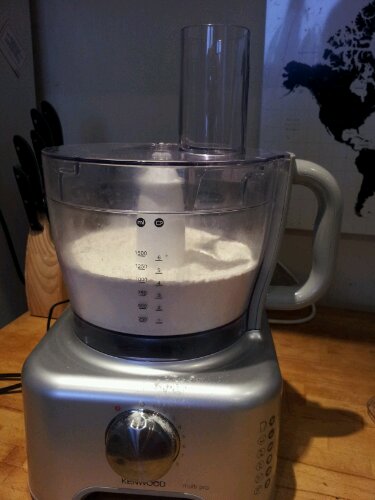
I literally whacked everything in the food processor…

  • 450g of plain flour (not bread or strong flour)
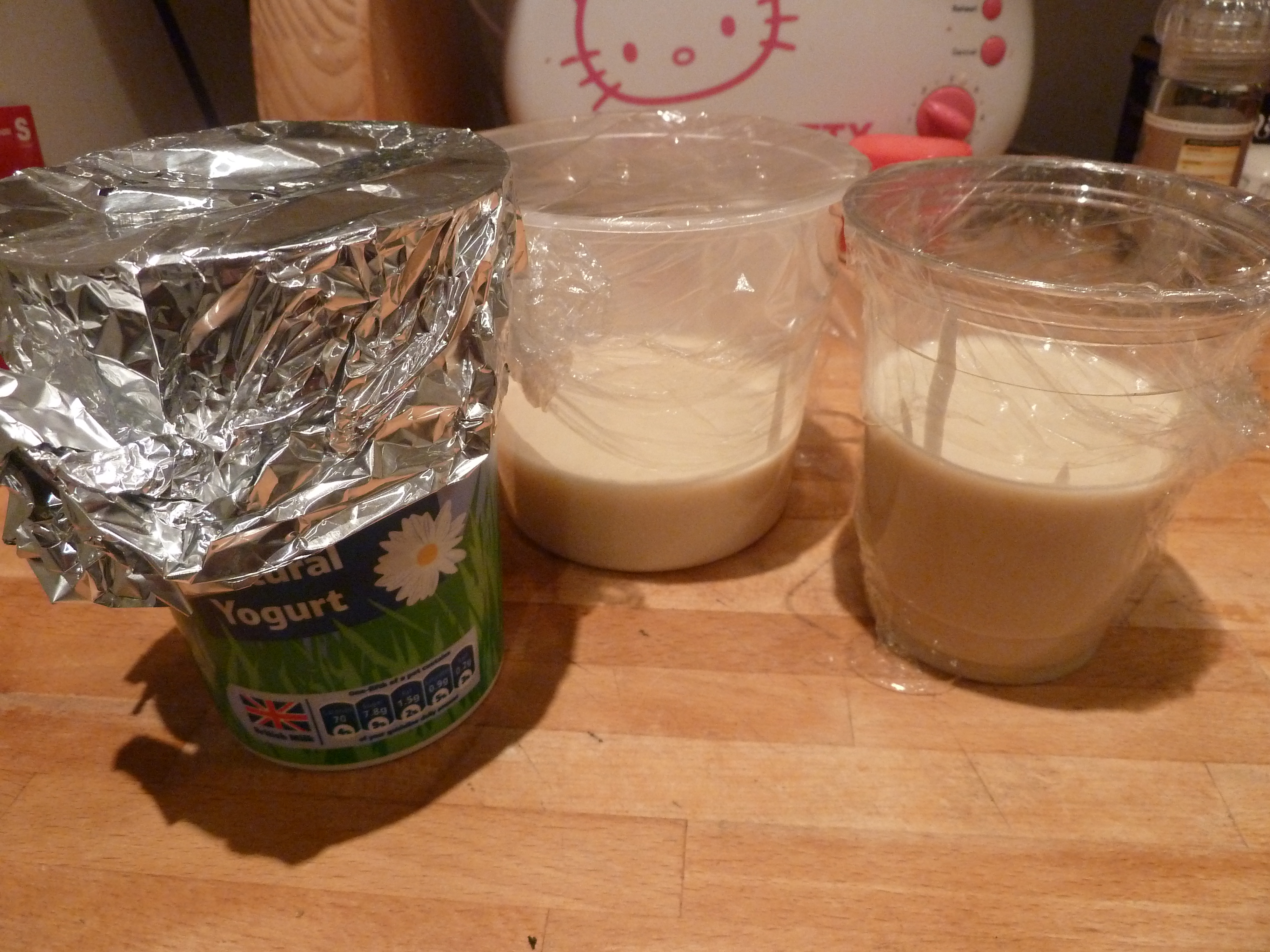
  • 500g of plain live (active/cultured) yoghurt (or alternatively you can use 350-425ml of buttermilk)
  • 1tsp Bicarbonate of Soda
  • 1tsp salt
  • 1tsp sugar
  • A glug of double cream (just because I needed to use it up)

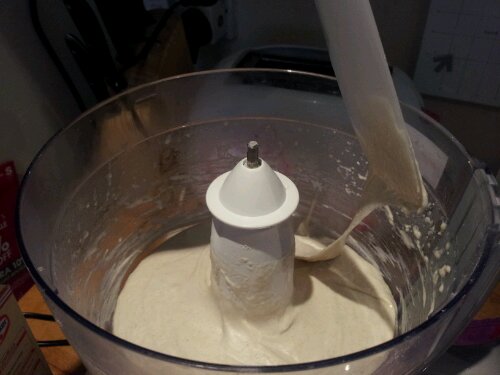
… and set it to high for a couple of minutes using the dough hook attachment. You could use a bowl and a spoon or even just your hands to combine it all together into a runny, floury mixture.

Once it all comes together the challenge is to remove the sticky mess from the bowl in one swoop and not get coated in runny flour mess. I failed on this count and had to deploy a spatula to encourage the mix out of the bowl.

I tipped it out onto a lightly floured surface (also known as my glass worktop protector thing). Adding more plain flour to the board until I could bring the dough together without it adhering to my hands.

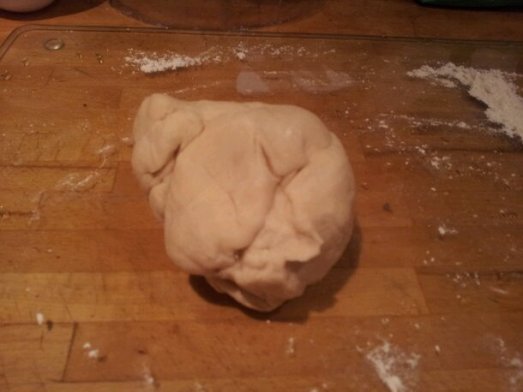
Once it starts to take shape all it needs is some encouragement, folding and lightly kneading the edges into the middle to form a round dough shape about 4 cm deep.
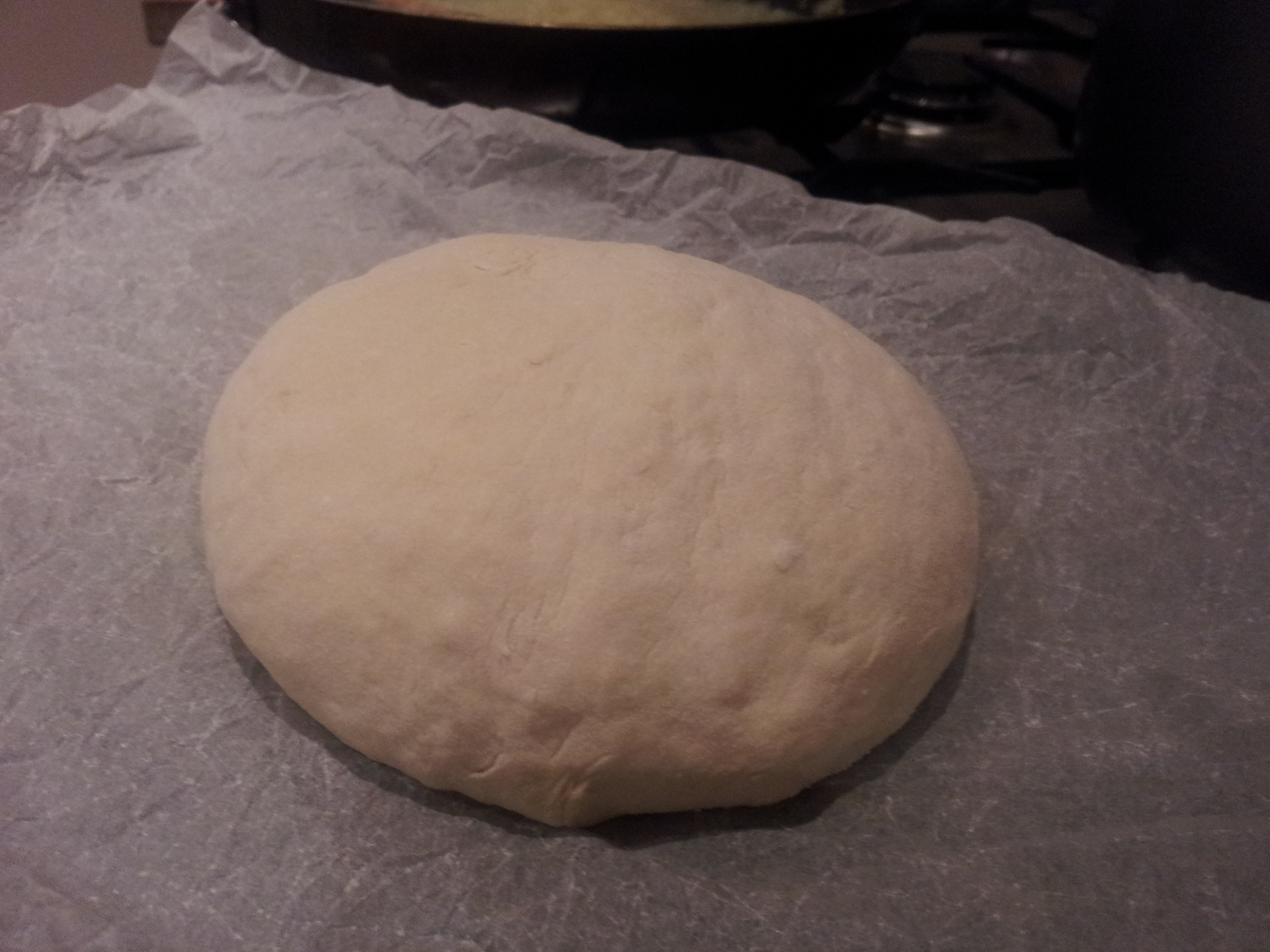
Flattened circle

I greased and floured a flat baking sheet and plopped the smooth circle of dough (folded edge down) onto the sheet.

Challenge complete in less than 10 minutes!! Taking my sharpest knife I cut a shallow cross into the top of the loaf and teased the edges out slightly so the cross was more defined. The cross helps the heat penetrate the loaf and cook evenly throughout. Irish folklore also says that that the cross lets the evil spirits out. Good to know.
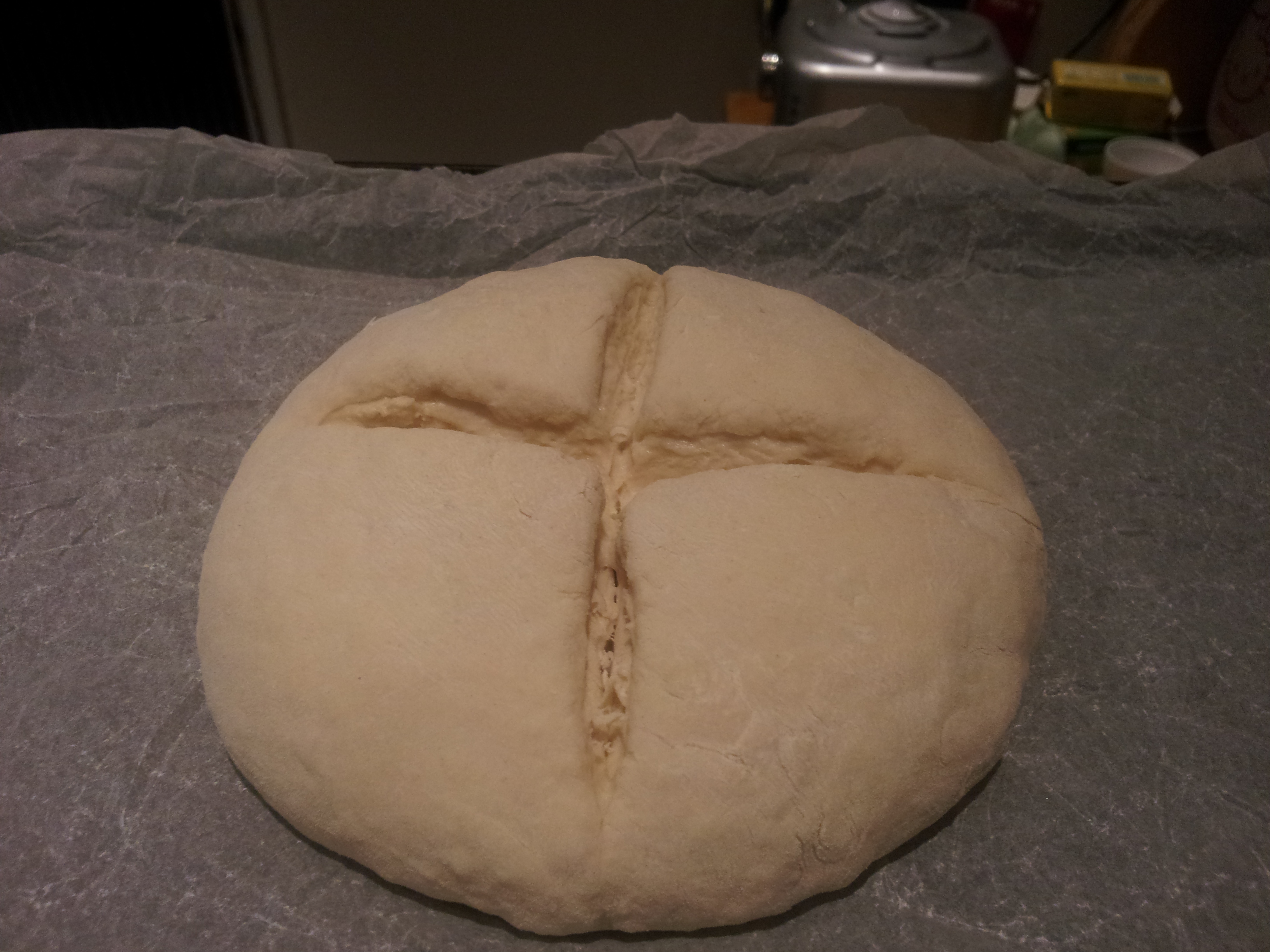
Criss Cross

Into the oven it went for 10 minutes at 230 degrees c. (gas mark 8). While the oven was heating up I popped a roasting pan in the bottom to get really hot. Then just before shutting the oven door I threw a cup of cold water into the pan to create some steam and a soft crust on the bread. Perfect! (I love this tip – thank you Holly Bell)

After 10 minutes I turned the oven down to 200degrees C (gas mark6) and baked for 30 more minutes until the crust was golden brown and the loaf sounded hollow when tapped on the bottom.
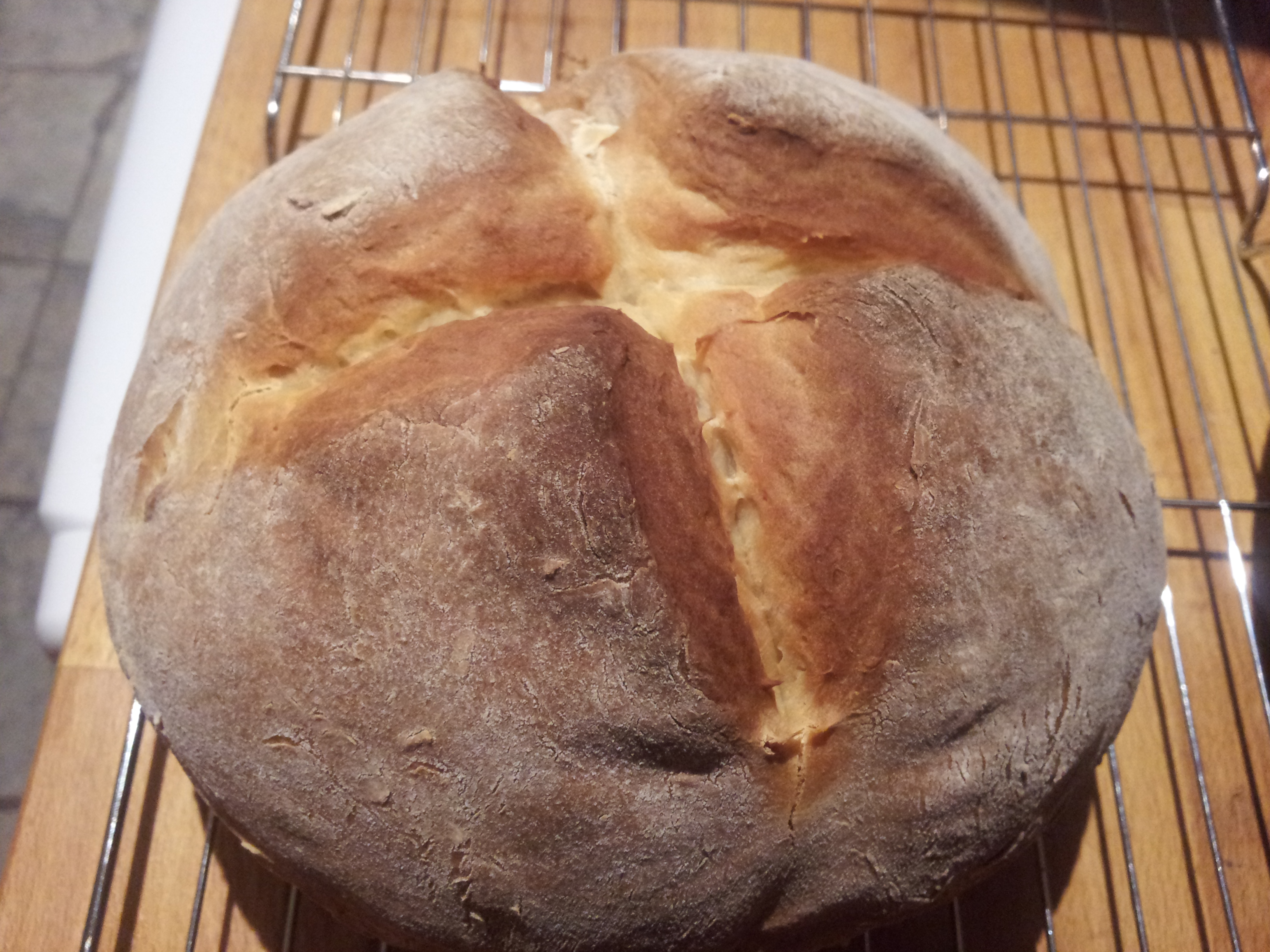
Risen

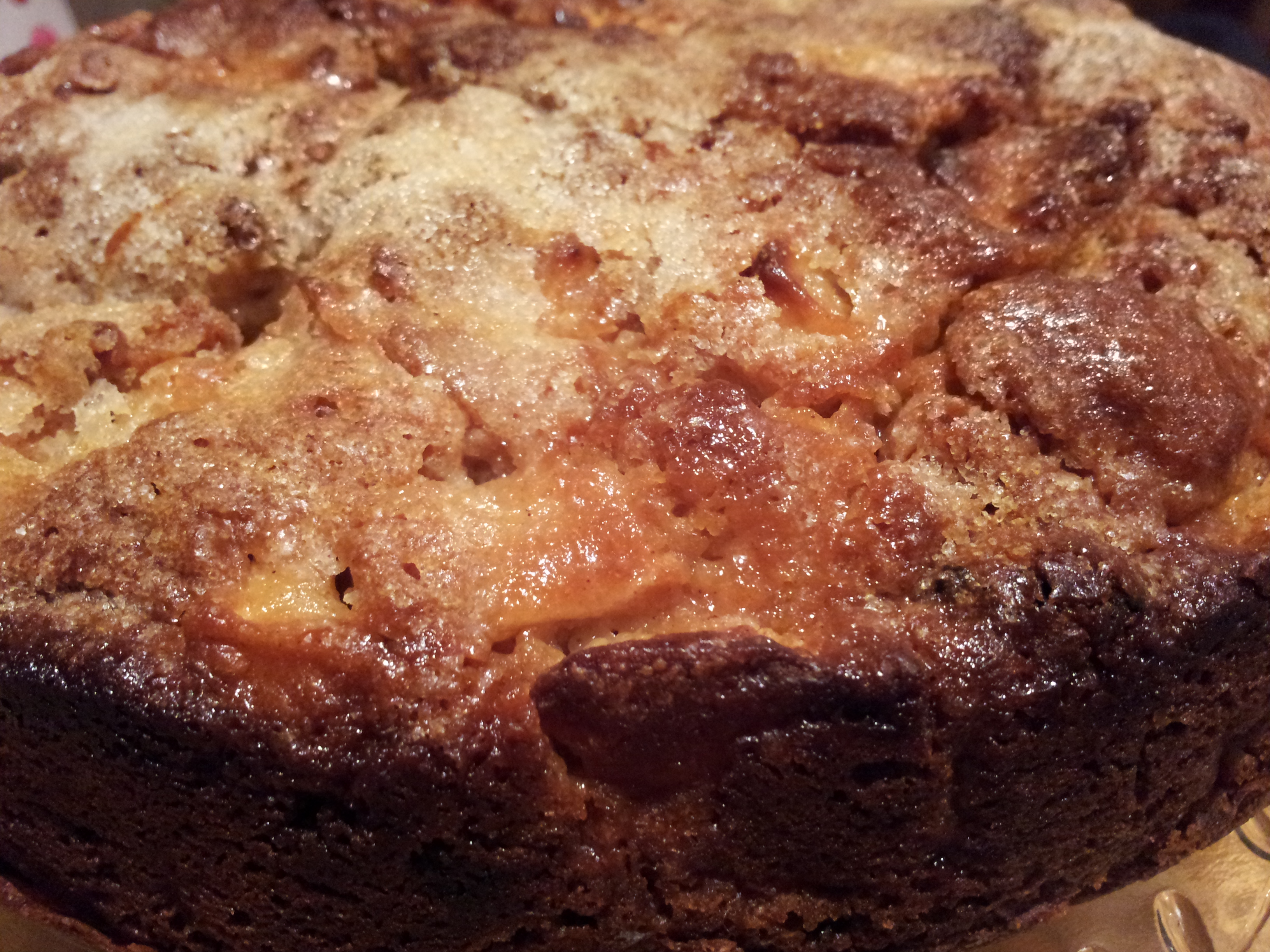
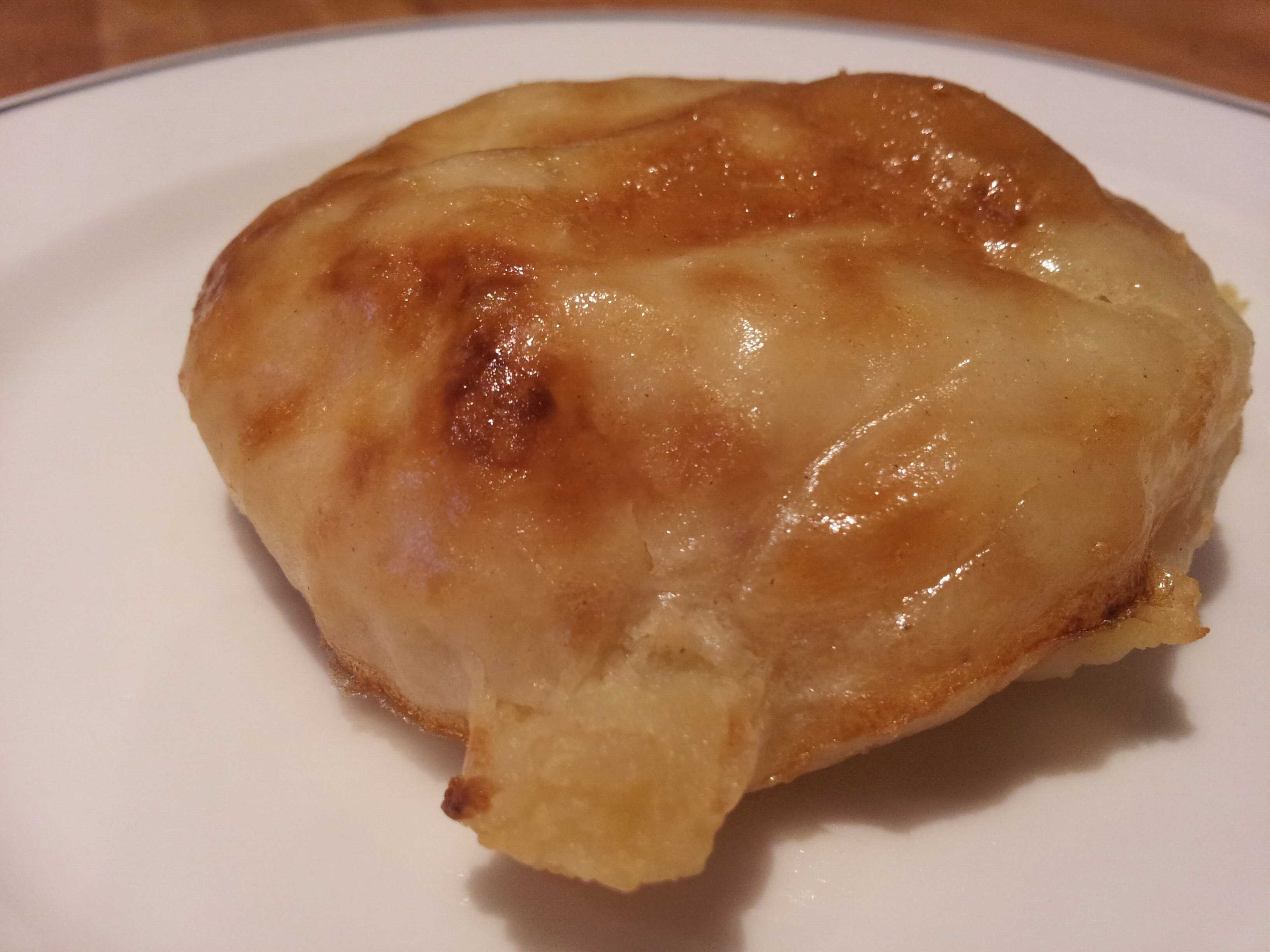
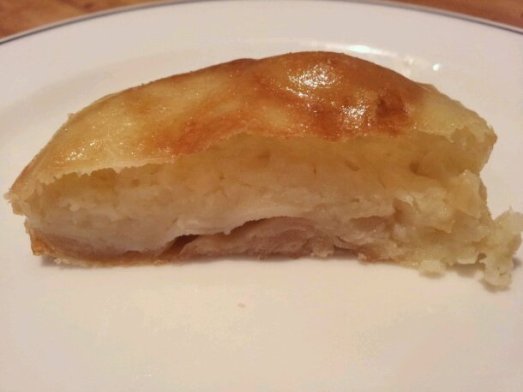
What a result!! I was astounded that a yeast free bread rose so much! It doubled in size and didn’t need any proving or strenuous kneading either! Amazing result for so little effort. It smelt amazing and tasted a bit like a cake too. What could be better than a bread/cake hybrid?!
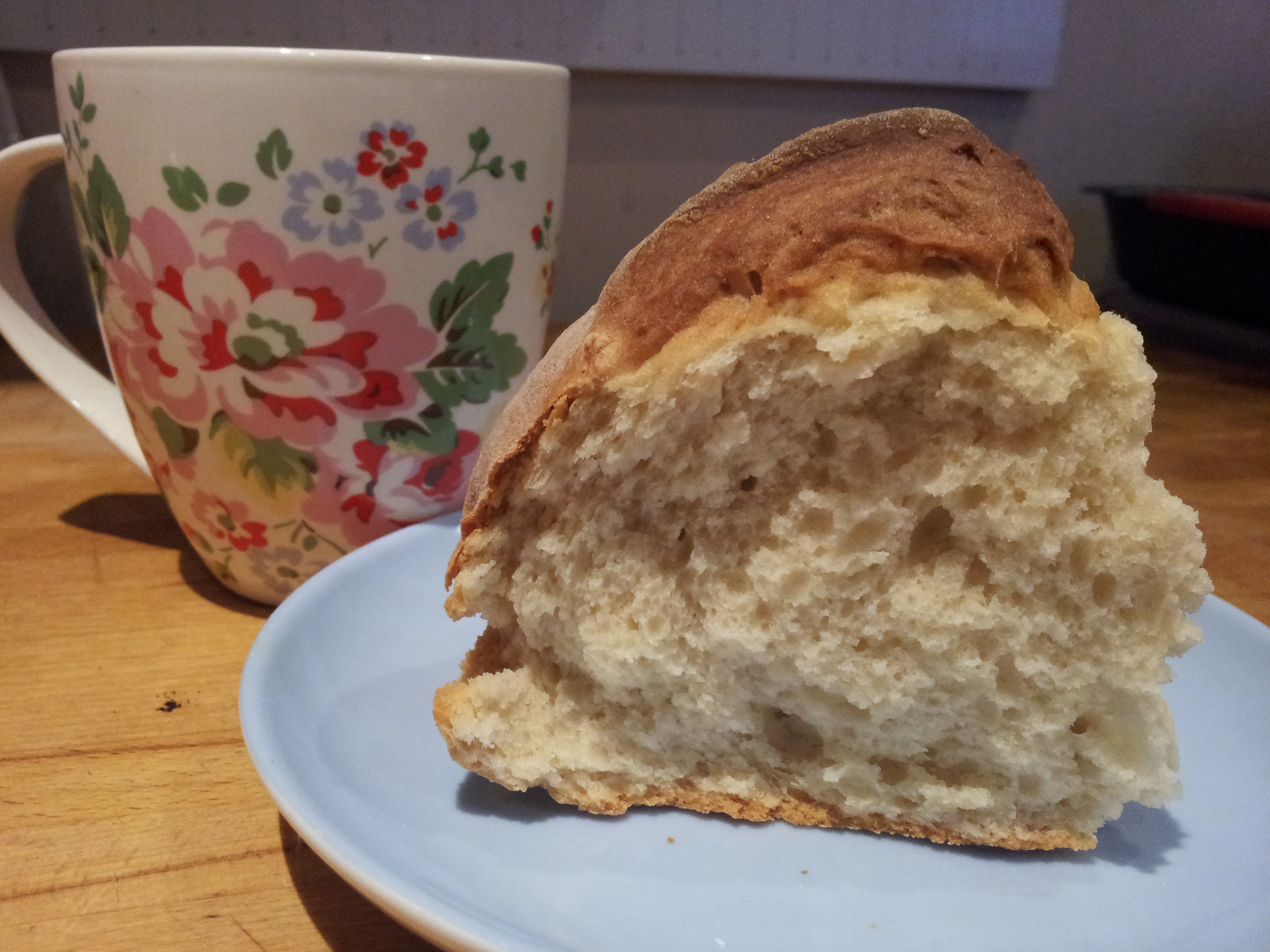
One hunk of Soda Bread

We ate this for breakfast one weekend and I loved it. I could happily eat it without any butter as it’s so moist, but I did put nutella on it (it was Saturday after all). This loaf should serve 4 and is best eaten fresh which is a good thing as I devoured a quarter of the loaf chunk in one sitting.
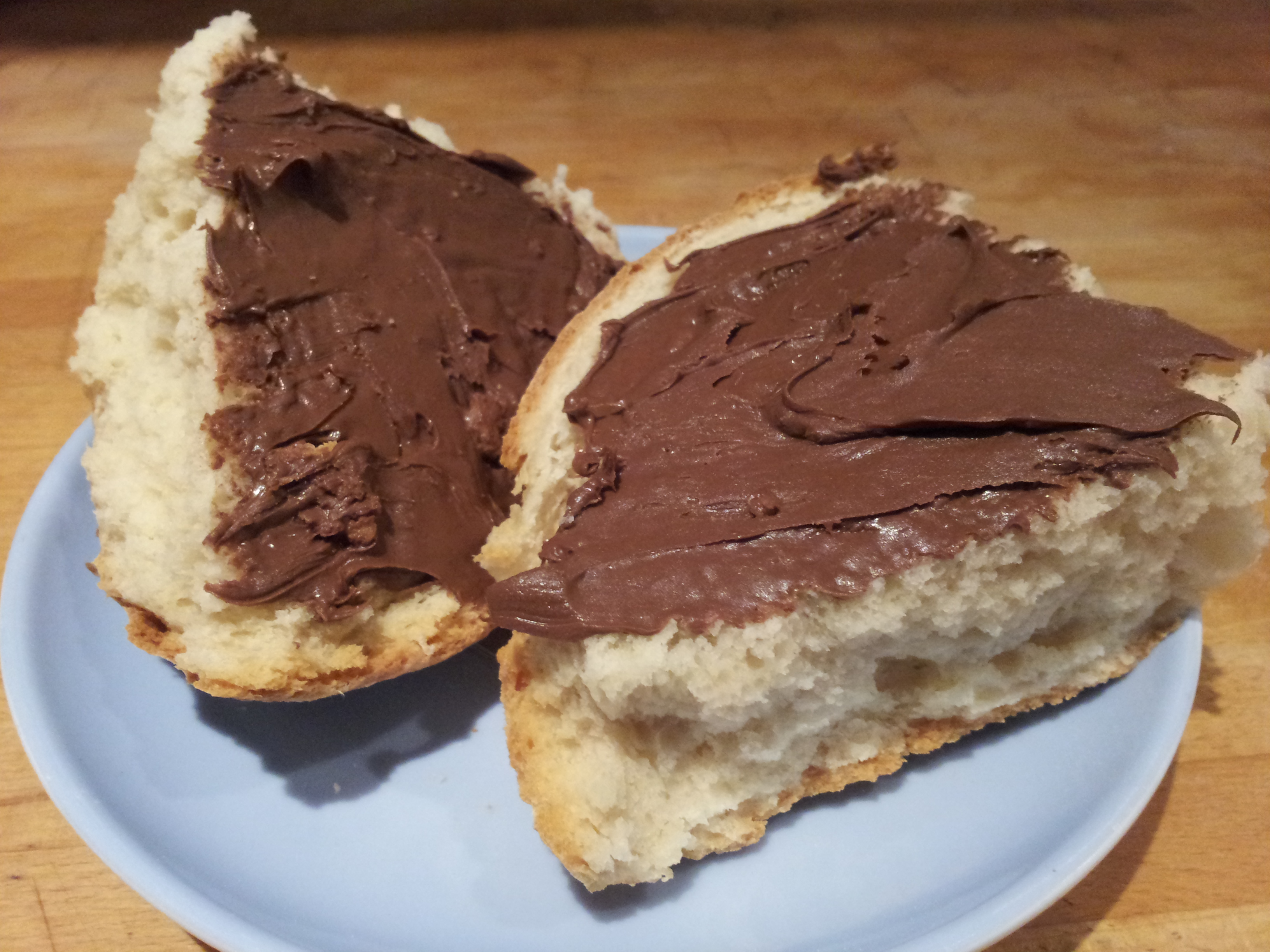
with lashings of Nutella?

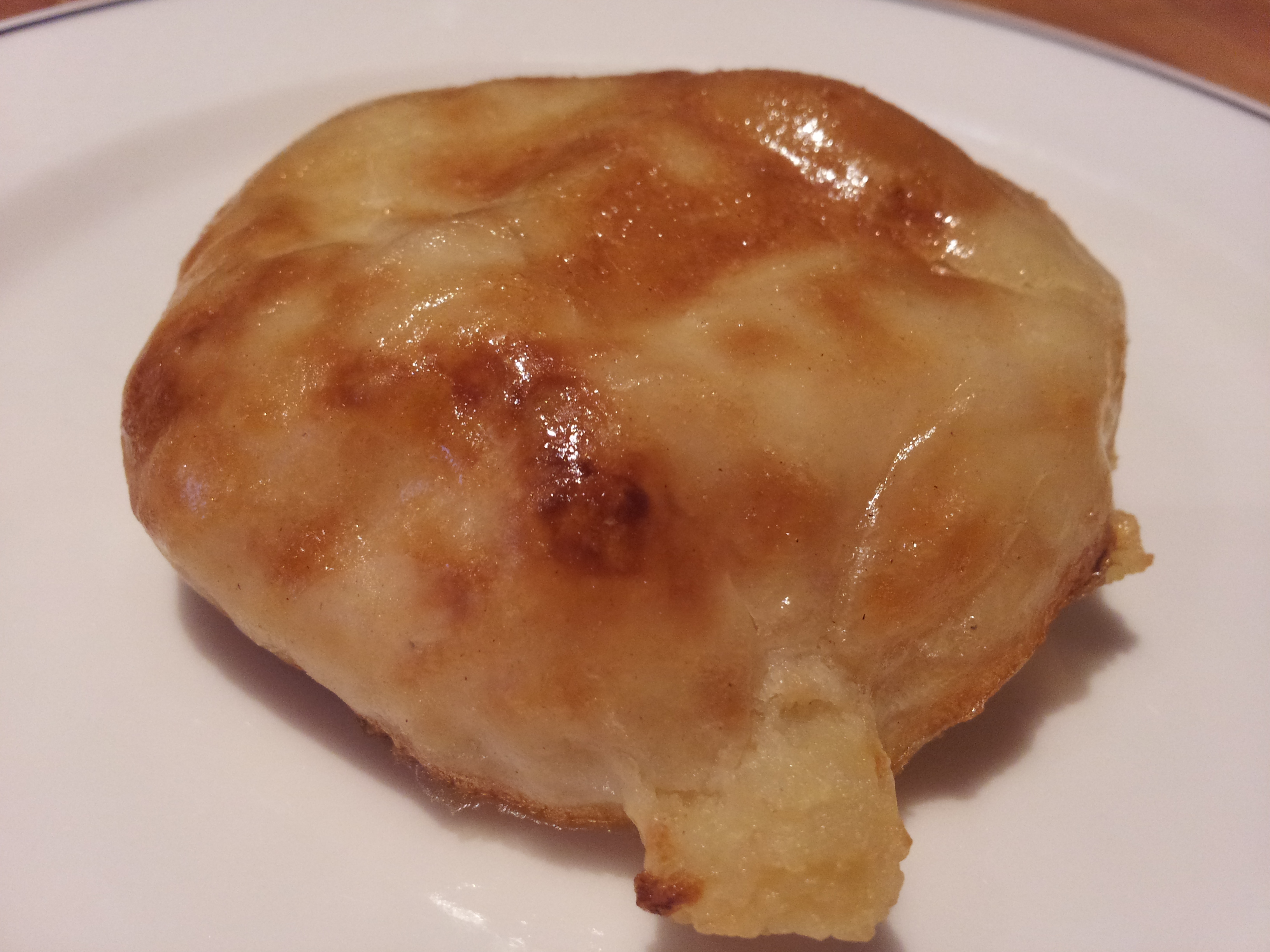
I loved it so much I made it again however I was obviously a bit complacent after my initial success. I used plain yoghurt which wasn’t active but a little past it’s best, assuming this would mean it had grown some cultures. I guessed wrong as this time it didn’t expand as impressively and I was a little disappointed by its lack of height. I will be baking it again but following the recipe properly next time! If you haven’t baked it before I really recommend it! And please let me know how you get on!
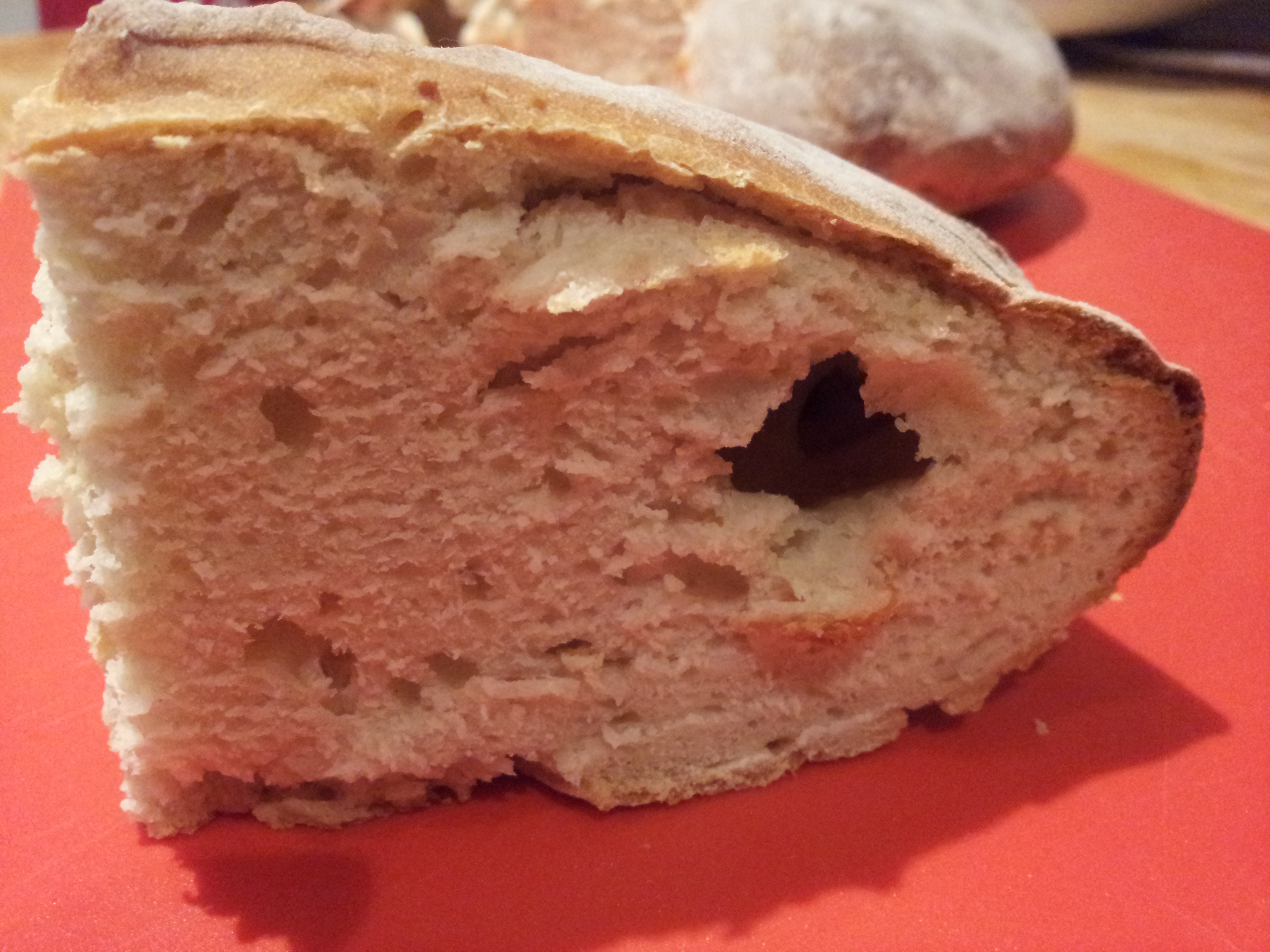
The slightly deflated second attempt…

*Recipe taken from Kenwood Creative Food Processor Cooking Book, by Becky Johnson. Thanks!
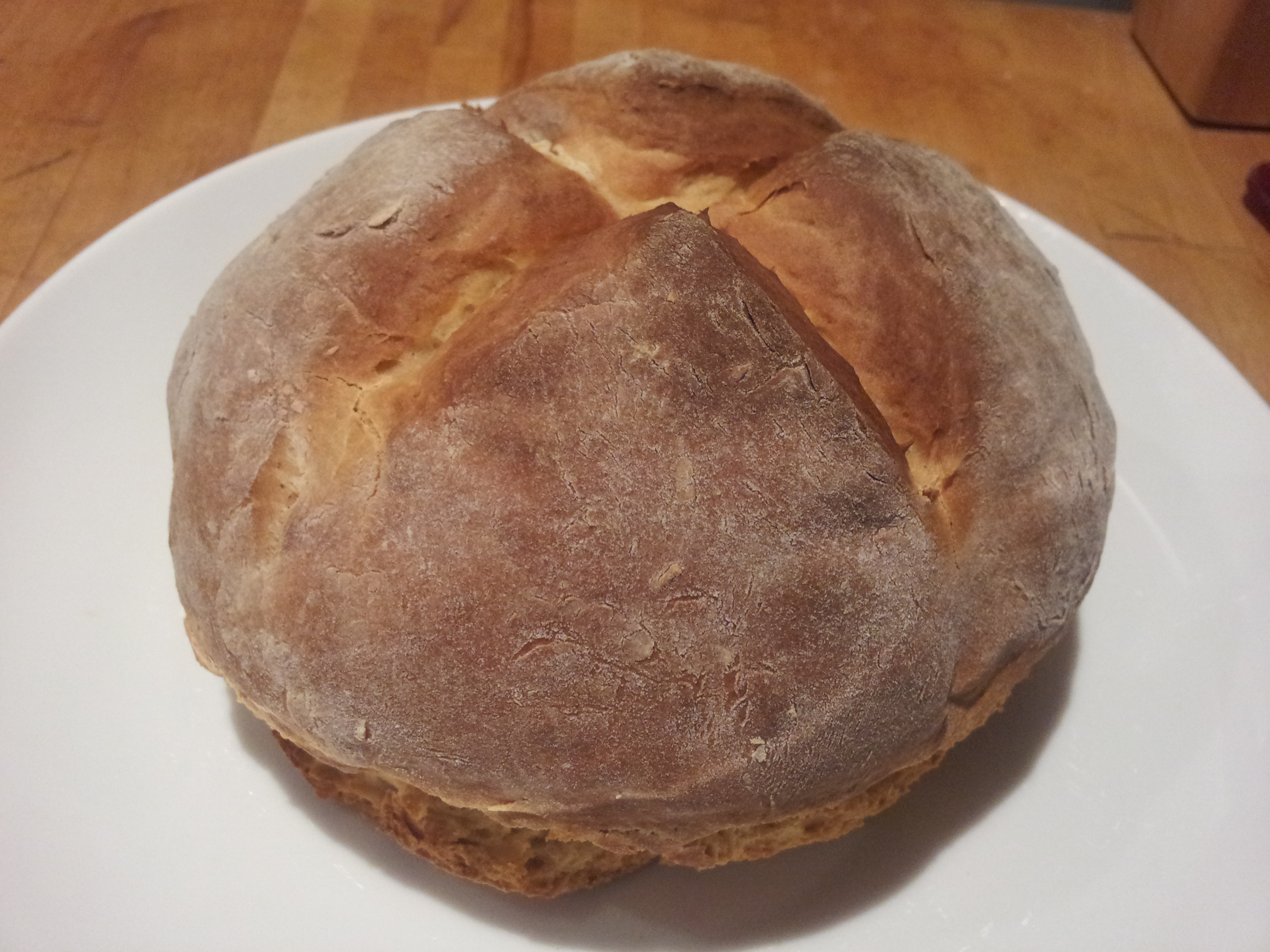
Irish Soda Bread

<!– Include ONCE for ALL buttons in the page –>

(function() {     window.PinIt = window.PinIt || { loaded:false };     if (window.PinIt.loaded) return;     window.PinIt.loaded = true;     function async_load(){         var s = document.createElement(“script”);         s.type = “text/javascript”;         s.async = true;         if (window.location.protocol == “https:”)             s.src = “https://assets.pinterest.com/js/pinit.js“;         else             s.src = “http://assets.pinterest.com/js/pinit.js“;         var x = document.getElementsByTagName(“script”)[0];         x.parentNode.insertBefore(s, x);     }     if (window.attachEvent)         window.attachEvent(“onload”, async_load);     else         window.addEventListener(“load”, async_load, false); })();

<!– Customize and include for EACH button in the page –> <a href=”http://pinterest.com/pin/create/button/?url=http%3A%2F%2Fprinceproductions.wordpress.com&amp;description=Around%20the%20World%20in%20Eighty%20Bakes%20“>Pin It</a>
Jill and Johnny’s Wedding Day Brownies – Hummingbird Bakery

image

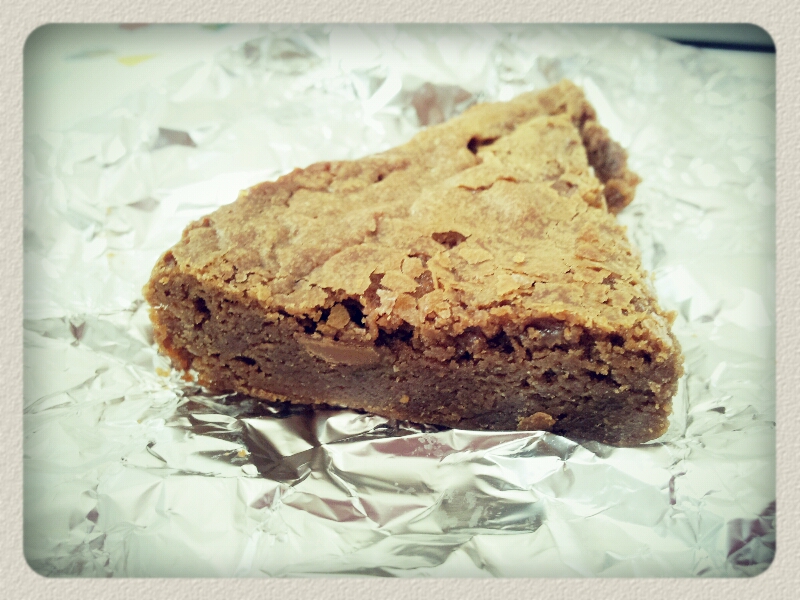
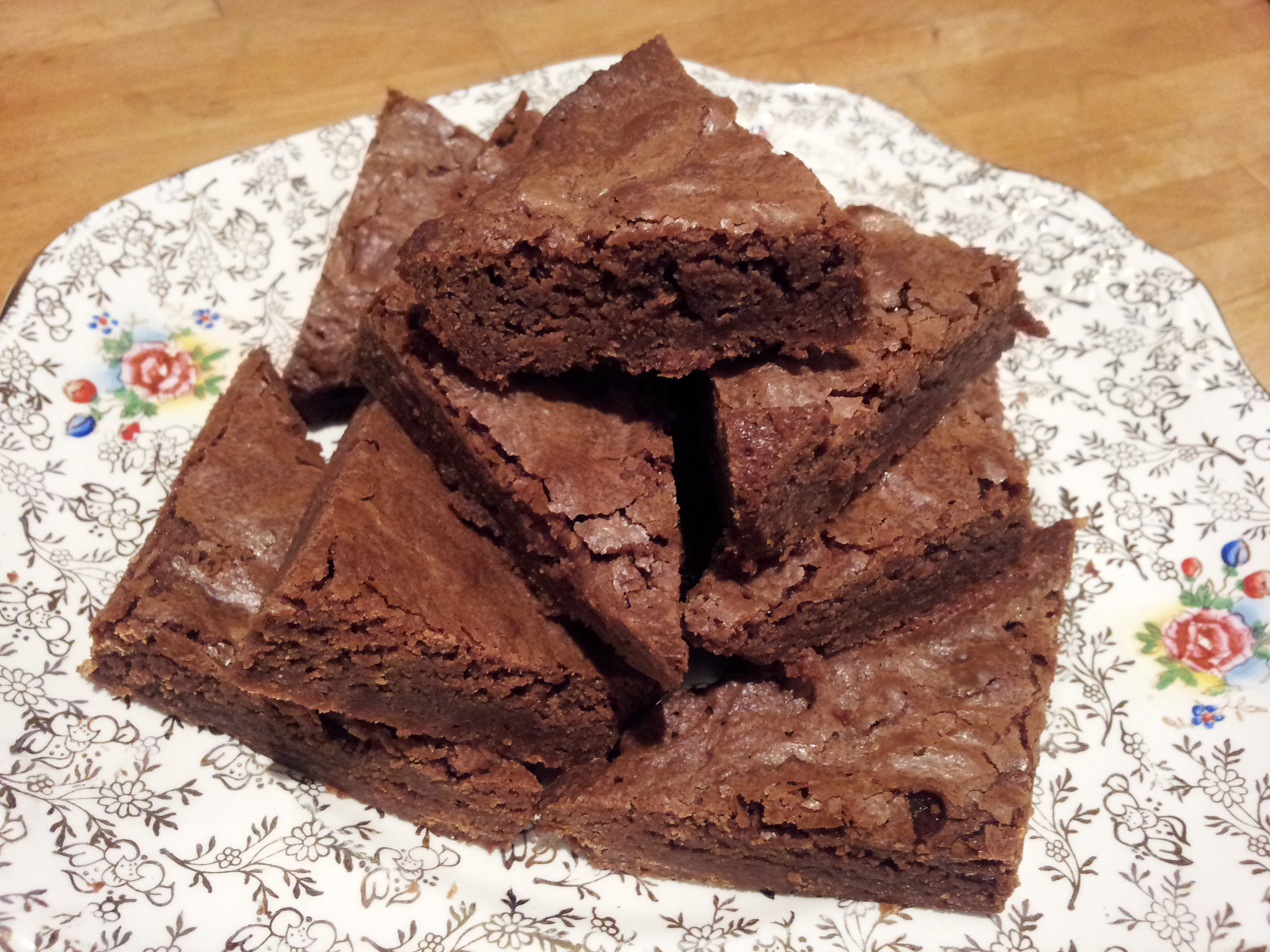
Jill and Johnny's Wedding Day Brownies

I’m baking a little something for my friends’  wedding day. Something that can be piled high and shared. I have baked rather a few Hummingbird Bakery things now from America but this is definitely my favourite brownie recipe. Nevertheless I still wanted to do a trial run to make sure they work (and taste good). When better to try them than at Jill’s hen weekend, this weekend.

The trial run went so well Chris requested a second batch! These Hummingbird Bakery Chocolate Brownies are rich, sweet and chewy with a delicate crumbly top. Perfect with a strong cup of coffee. A good sugar boost too to keep those energy levels up for wedding dancefloor action.
image

This recipe is so quick I made the first batch in less time than it took me to ruin two lots of pancake batter. The longest bit was waiting for the chocolate to melt.

I love how this recipe requires no whisking or sifting. Simply stirring everything in one bowl with a wooden spoon means hardly any washing up too! You couldn’t even whip these up and freeze them for brownie emergencies.

image

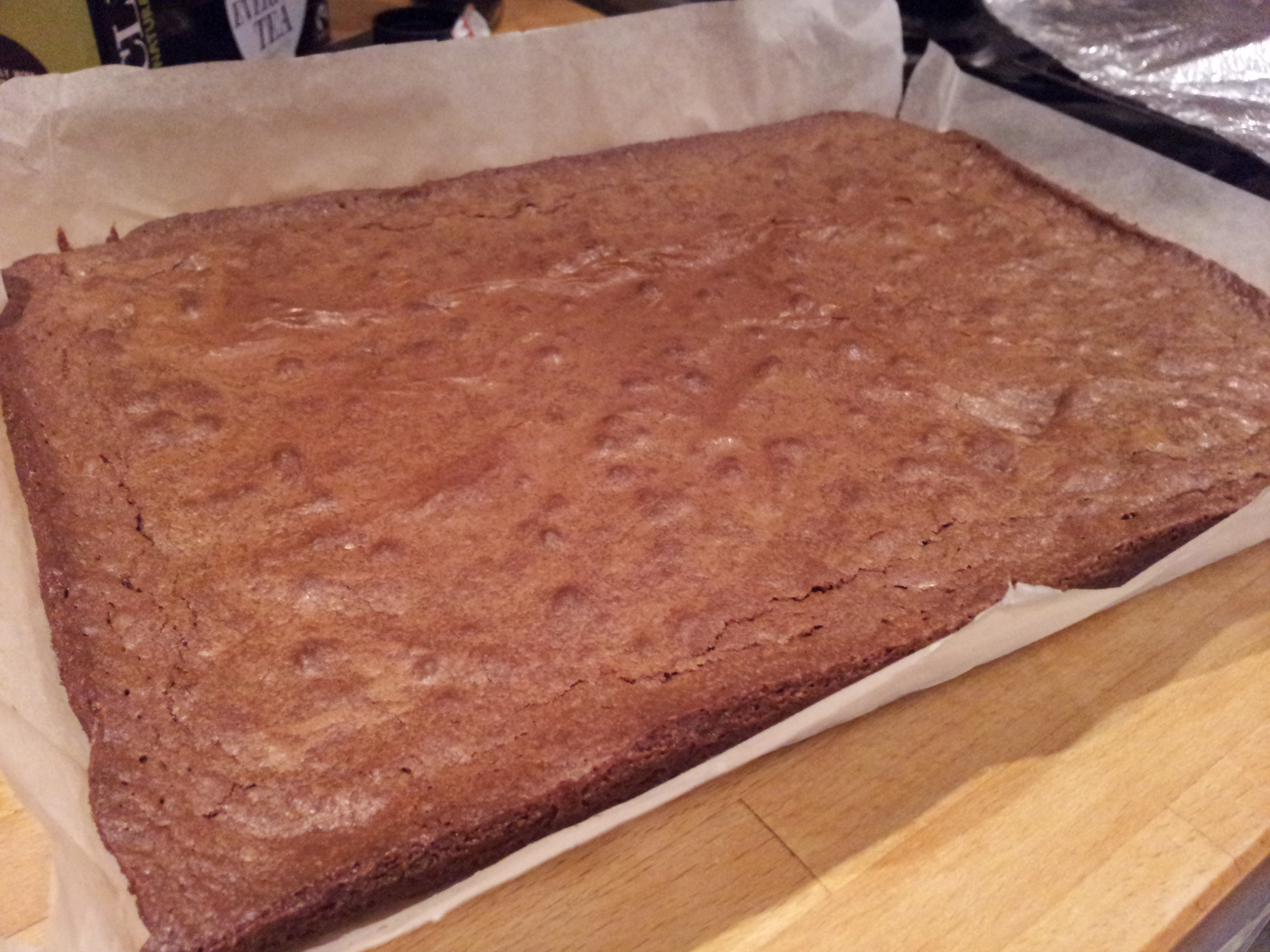
The entire brownie

1. Melt 200 grams of good quality dark chocolate in a bain marie along with 175 grams of butter.
2. Make a cup of tea while this melts gently over a low heat.
3. Once melted stir in 325grams of sugar until it’s all combined.
4. Then stir in 125grams if plain flour.
5. Stir in 3 largest eggs until you have a smooth paste.
6. For extra decadence stir in some chunks of chocolate. I used more dark chocolate. (Whatever amount was left in the cupboard probably about 50grams but I reckon the more chocolate the better as you get gorgeous melty chocolate surprises when you bite in to the brownies.)
7. Pour all the gooey batter into a rectangular baking tin about 23cm by 13cm
8. Bake for 30 mins at 175 degrees
9. Try to wait (if you can resist tucking into the tray with a spoon) until its cooled to chop it up and eat it as it tends to fall apart while it’s still warm… But this might be a good thing especially if you’re eating it with ice cream!

Enjoy!

image

Piles of Brownies

This recipe is supposed to be for 12 portions but I chopped it into smaller triangles and made about 30 servings.

Recipe taken from the Hummingbird Bakery Cookbook.

25. Happy Birthday to me! Triple Lemon, Triple Layer Victoria Sponge – Extravagana – England

image

Triple Lemon, Triple Layer Victoria Sponge

Ok, ok I’ve baked rather a few things already from good old England so it may not be that exotic to choose a Traditional Victoria Sponge. However! I know a true test of baking skill lies in the creation of a perfect sponge. I’ve never made one of these before but I sure have eaten my fair share of them. I have pondered over baking a layered cake for quite some time and debated over experimenting with a Hummingbird Bakery venture delicious although it would have been it involved too many ingredients that I couldn’t find so back to Marguerite Patten! Always wanting to try something a little bit different, and having rather a lot of home made lemon curd still to use up, I made mine a triple lemon triple layered Victoria Sponge…
image

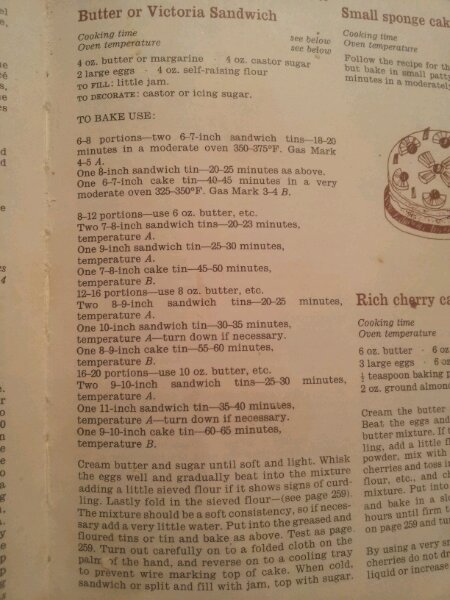
The Marguerite Patten recipe for Victoria Sponge has so many variations I think you need a Home Economics degree to put it all together! After engaging my non mathematical brain I managed to measure out in ounces (reading my scales correctly this time- I recently realised that I’ve been reading Llbs instead of ounces… This may explain why my last sponge cake went SO very wrong…)

The Many Variations of Marguerite

I used the variation for one 10 inch cake tin, the plan being that I would simply split my one cake in half and fill it with buttercream and my lemon curd.

image

Whisking the eggs well

As I was making probably the biggest cake in Marguerite’s recipe options I had to increase all the ingredients from 4oz to 6oz. Simple?

image

Creaming the butter, sugar and lemon zest together

I simplified the method for myself: 6oz of butter and 6 of sugar creamed together. 2 medium eggs to be whisked ‘well’. 2 lemons zest and half a lemons juice added to the butter then beat the eggs gradually into the butter being careful not to curdle the lot.

image

Scrambled eggs?

Then to fold in the 6oz of plain flour and ta da we have a cake mix!

image

Folding in the flour

Careful not to knock the air out of the mixture I lovingly spread it as flat as I could get it into the greased and lined tin. 35minutes at 180 degrees and I had one slightly thinner than I expected lemon sponge.

image

Spread as even as possible in the tin

image

One slightly sad looking thin lemon sponge

This rather sad looking sponge would be impossible split down the middle and ice. So I just had to bake another 2 layers!! It would have been a bit of a disappointing cake had I not. To speed up the process I doubled the ingredients to make enough for 2 cakes in one go. I wasn’t entirely sure this was technically the best thing to do but hey I didn’t want to be on all night. The problem being I only have one round cake tin so I had to bake one sponge at a time in order to re use the tin. This meant cooling the cake quickly and hoping the last sponge wouldn’t be airless and dry after the sponge mix had sat around waiting to be plopped into the tin.

image

Citrus buttercream

Throwing an unmeasured amount of butter and icing sugar into the food processor, (probably around 1 and a half packs of butter and enough icing sugar to make a good smooth sweet texture) I whizzed it all up with a splash of orange extract and vanilla too. I ran out of lemons by this point so thought any citrus would be a good move…

I am not very good at icing cakes with buttercream. My cupcakes always look a bit sad so this was a bit of a trial by fire. I’ve watched Lorraine Pascale ice cakes and it looks easy so I do what I do best and make it up as I go along. Lorraine made a mint sugar syrup and spread it on to her layered sponge cakes before icing, so I thought this must be a good idea although it did mean deviating from Marguerite’s recipe somewhat.

Lemon Syrup

Using what I had left over from the sponges I simmered the juice from all of the zested lemons with some sugar (enough to cover the bottom of the pan) to make a lemon drizzle. When it and the cakes had cooled slightly I spread a generous sticky coating on all 3 sponge layers to add to the lemony flavour and to help keep it moist.

The Terrible Trio

The exciting bit was then whacking on a thick layer of lemon curd followed by buttercream then smushing on a sponge layer (and it cracked slightly but no one will see this once I coat the entire thing in buttercream. The problem was the lemon curd started to dribble out everywhere! For the second layer I put buttercream first then lemon curd which helped hold it in place a bit better.

Layer 1! Lashings of Buttercream

Layer 2. I could stop here for a traditional Victoria Sponge…

Lemon Curding it up

Layer 3! Looking a bit rustic

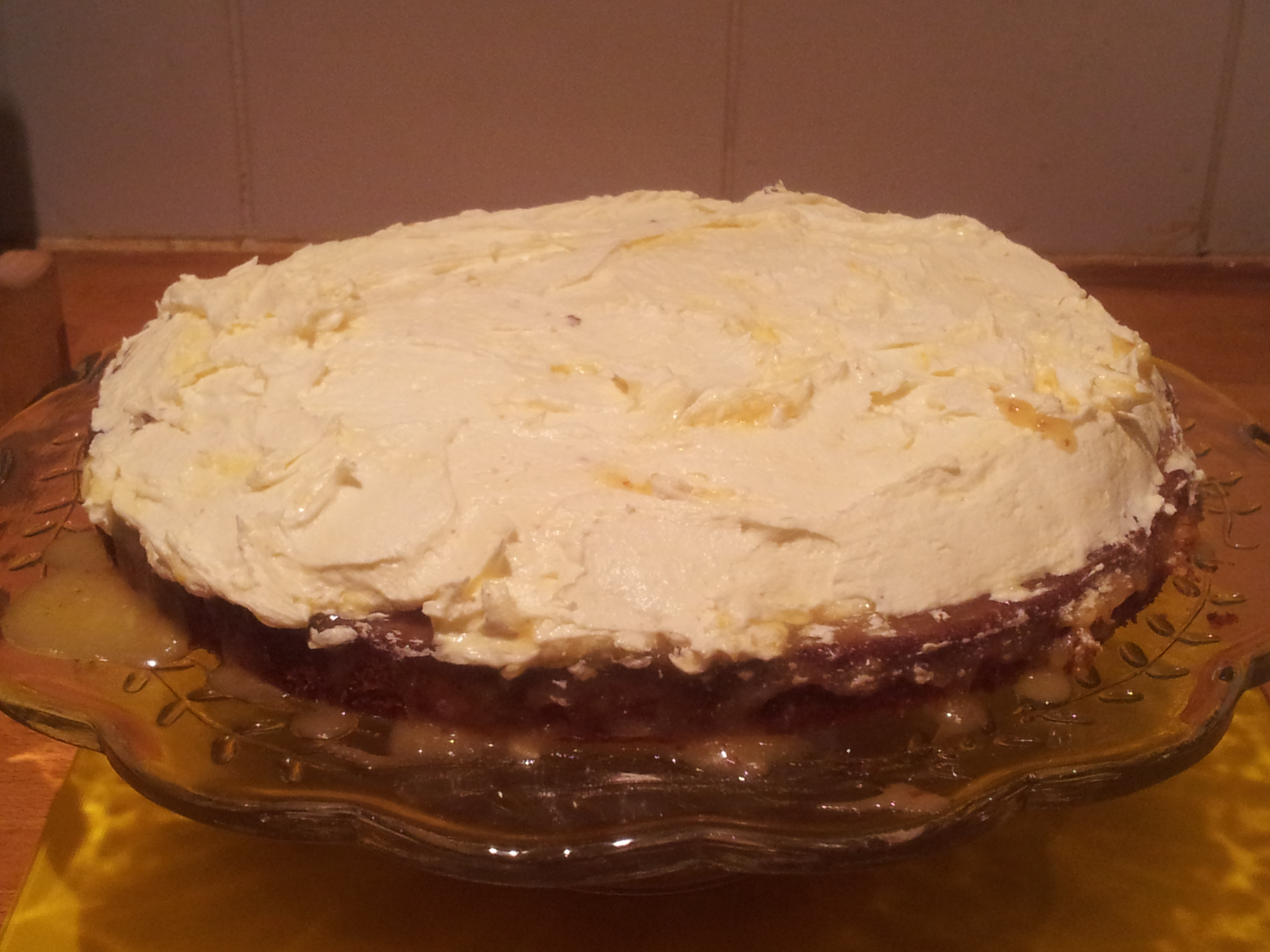
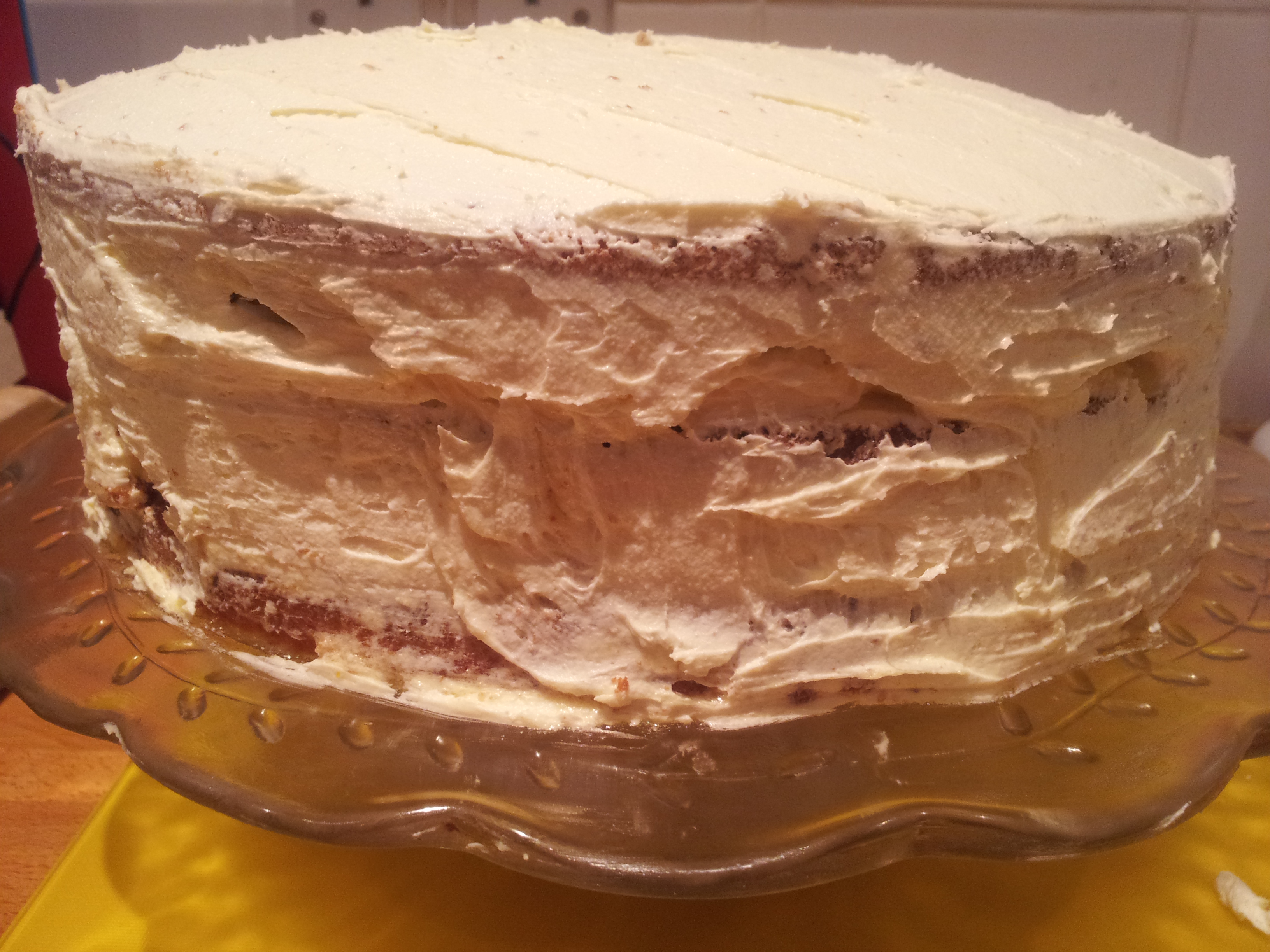
It was looking enormous and slightly lopsided. I had obviously not spread the buttercream evenly but the leaning tower of Pisa look is so in right now (I tell myself). Once the third sponge layer was added I spread the remaining butter cream, around the sides of the cake, sealing all 3 layers in. Smoothing the cream round with a palette knife. I saved a little buttercream to finish it off after the entire cake had a little rest in the fridge to ‘set’.

All 3 leaning layers encased in buttercream

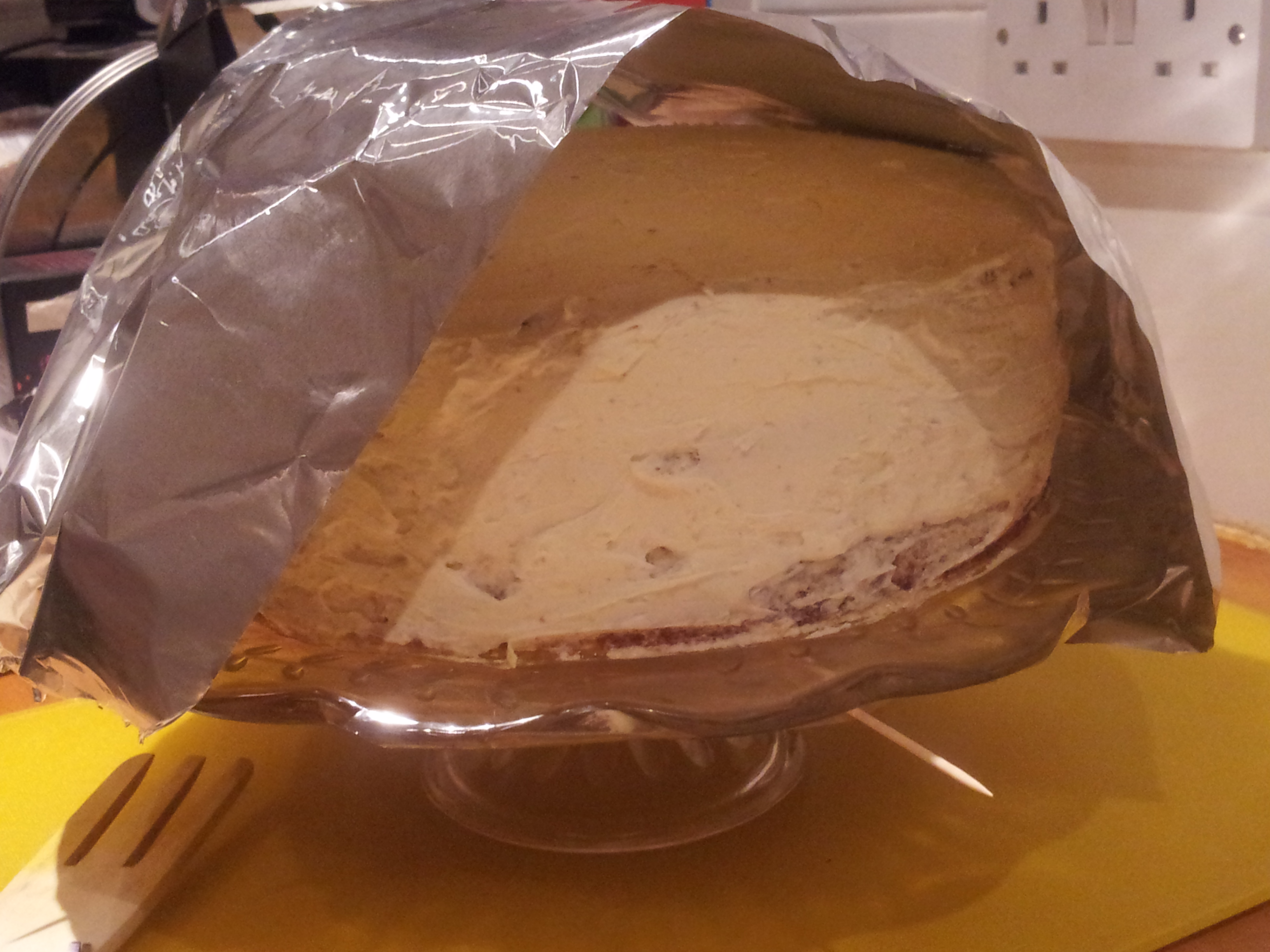
The cake was so massive I had to take some shelves out of the fridge just to squeeze it in! Once I smoothed on the final finishing touches of buttercream in an attempt to hide some of the crumbs that had broken off the sponges and worked their way into the cream I faced a little challenge. How to cover the leaning tower of cake up to keep it fresh in the fridge?! It was too big for any of my cake boxes and I had welded it to my glass cake stand with buttercream so it wasn’t possible to move it.

Cake Tent

I fashioned a rudimentary cake tent by selotaping cocktail sticks underneath the glass cake stand and gently folding 2 sheets of tin foil around the cake and skewering them onto the sticks. The cocktail sticks meant the tin foil didn’t touch the buttercream but would stop it all drying out in the fridge. Perfect!

Triple Lemon, Triple Layer Victoria Sponge

Once you start you can’t stop

This cake was immense!! I loved the sharp lemon flavour of the Curd combined with the gentle citrus buttercream. The sponge was probably a bit dry around the edges (hence the loose crumbs) so I would probably take it out the oven a little sooner if I was making it again. But hey for a first attempt at a layered cake I was happy. The tilt definitely gives it a certain je nais sais quais. I enjoyed the quirky take on the traditional Victoria Sponge. I took some to work and one comment was “that is the best cake that I have ever tasted’ which is high praise indeed!

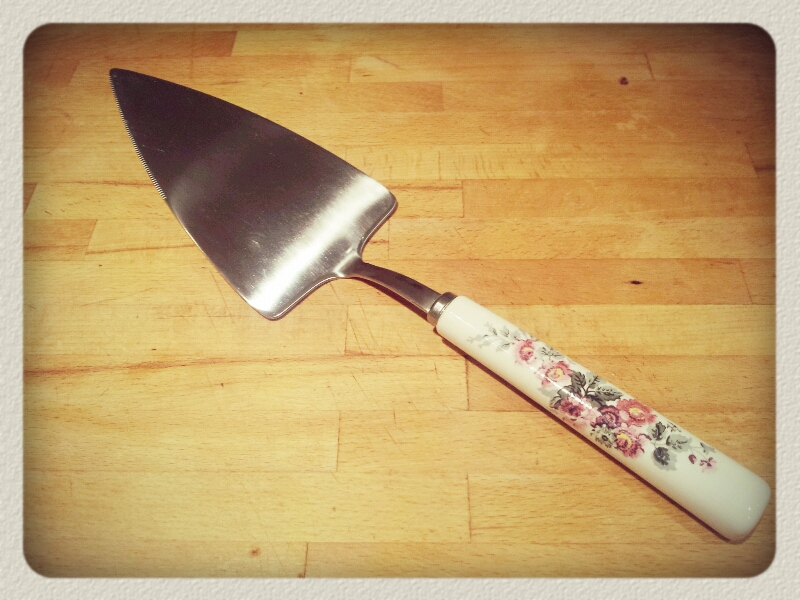
Ps. This cake was perfect for trying out my lovely new cake slice!

From Herman with Love – Herman the German Friendship Cake

From Herman with Love

After many days of feeding and stirring good old Herman II it was time to mix him up into a sourdough frenzy. After halving the original starter and sharing the other half I was at the correct level of Herman to pretend that I had been given a starter by a friend and follow the instructions to create the cake…

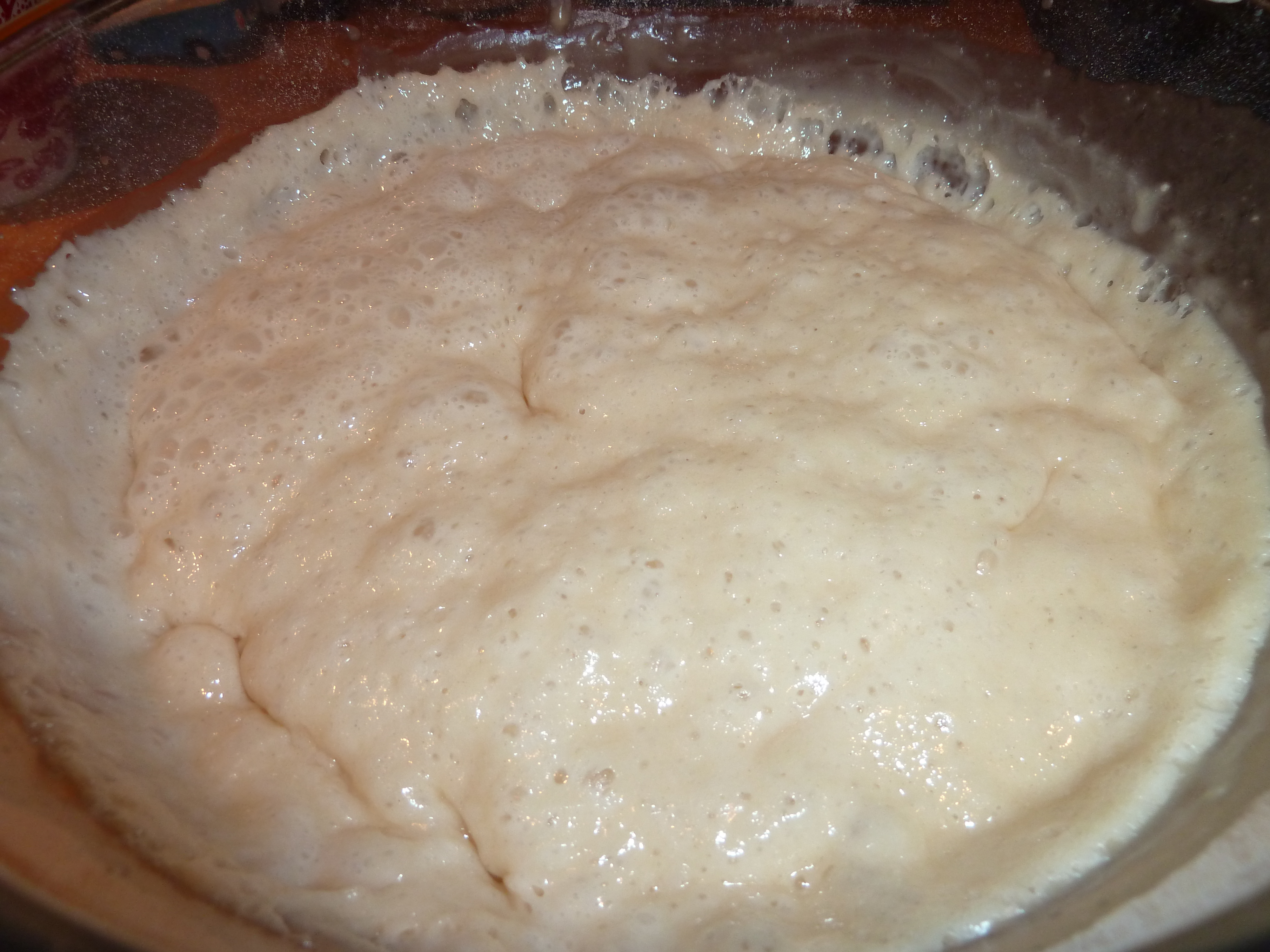
Bubbling along nicely

Place Herman in a big bowl, leave him somewhere warm wearing a tea towel (check)
Day 1 – Stir Herman (I used a wooden spoon as I’m sure I read that its bad to mix sourdough with metal but I may have dreamt this.)
Day 2 – Stir Herman
Day 3 – Stir Herman
Day 4 – Feed Herman (I found I had to use a hand whisk to mix in 1 cup of warm milk, 1 cup of flour, 1 cup of sugar and stir well)
Day 5 – Stir Herman (you get the picture…)
Day 6 – Stir Herman
Day 7 – Feed Herman (same as before)
Day 8 – Stir Herman
Day 9 – Stir Herman

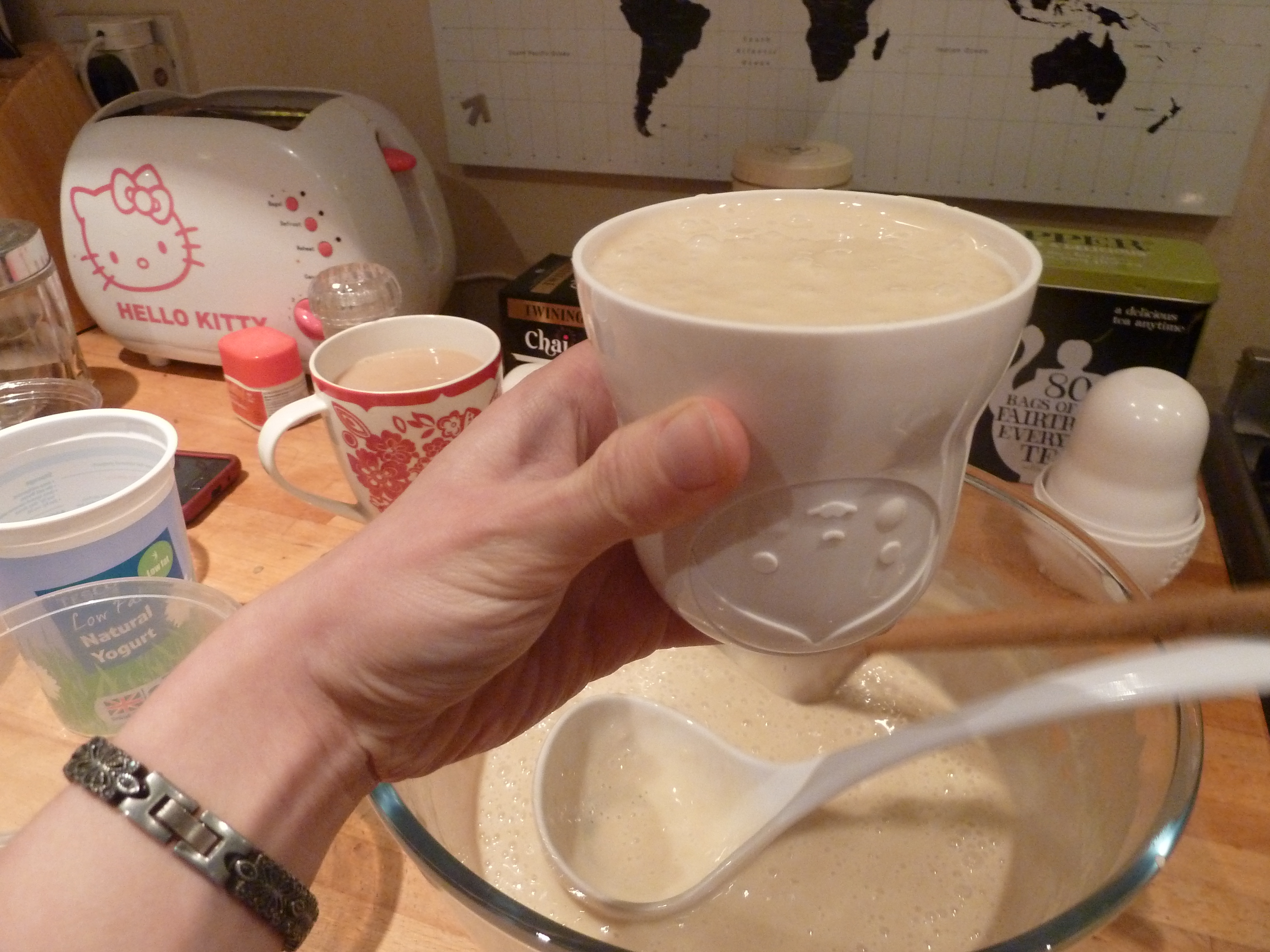
Russian Doll measuring cups

Day 10 – Divide Herman into quarters (about 1 cup per quarter) keep one for yourself. Share the other 3 with your friends . (You probably want to give them the instructions too otherwise they might think you don’t like them very much, giving them the gift of smelly fermenting goop)

Recycling every pot in the house

Now I can’t lie and pretend that I followed these instructions exactly as I forgot to stir him somedays, which I don’t think he was very happy about, as he became a bit solid and lumpy, in a sourdough huff I reckon. Nevertheless I don’t think it did him any real harm.

I did keep him near the radiator which perfumed the kitchen with a hint of brewery. (Lovely if you like beer?) I’m sure this will be the next big thing in parfum from Paris.

Pre stirring - this is what Herman looked like bubbles that rise to the surface and pop (if the surface is flat and still I'm afraid Herman has passed away)

I did worry that I killed him (again) as he looked a little flat and bubbless one day. I thought perhaps sugar would help? (It always helps me when I’m feeling a bit flat) I think it did the trick to revive him somewhat. Then following his first feed he perked up no end! All froth and bubbles. Apparently yeast needs flour to eat so it saved HermanII from a sink funeral.

All of the ingredients!

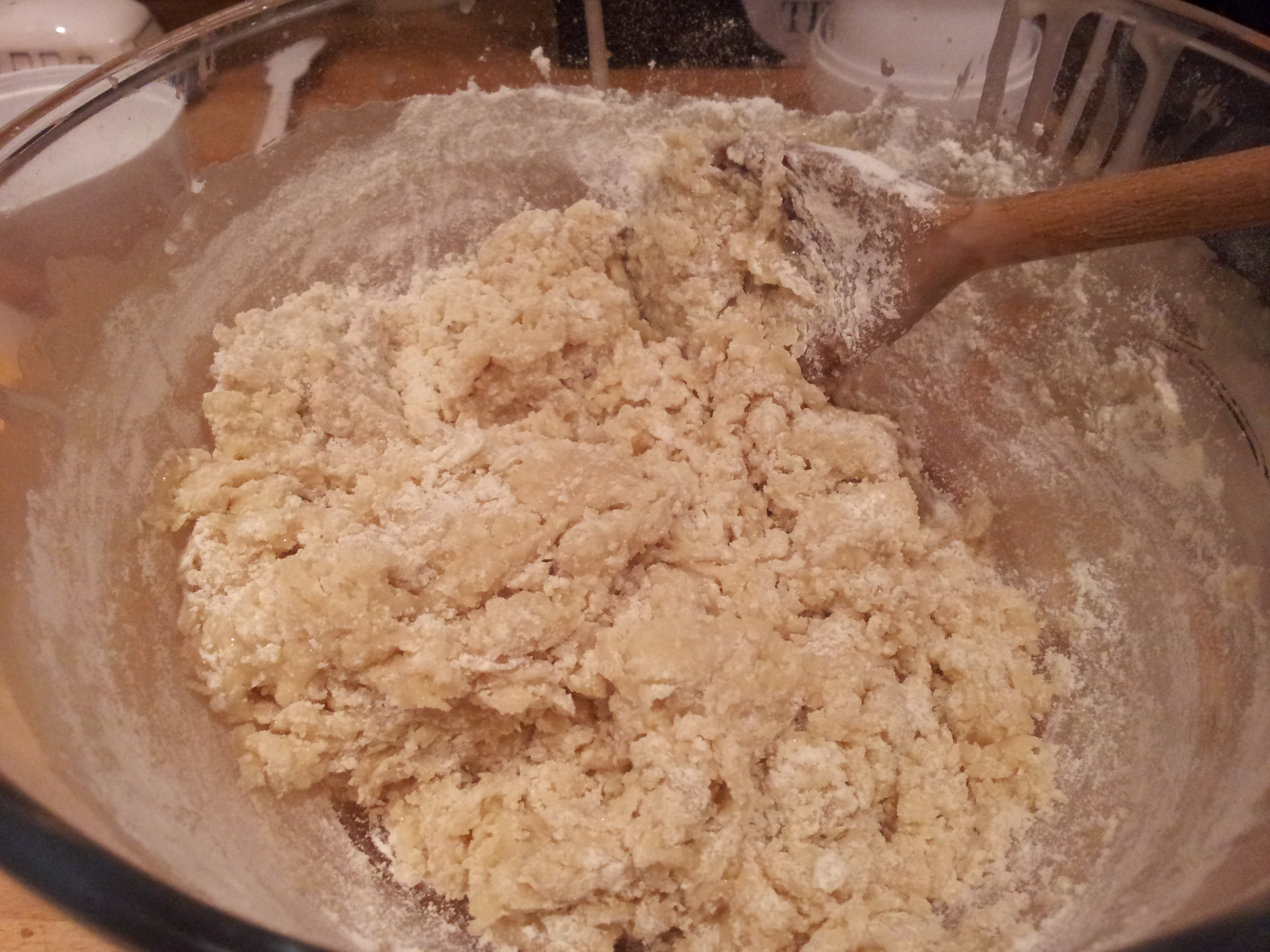
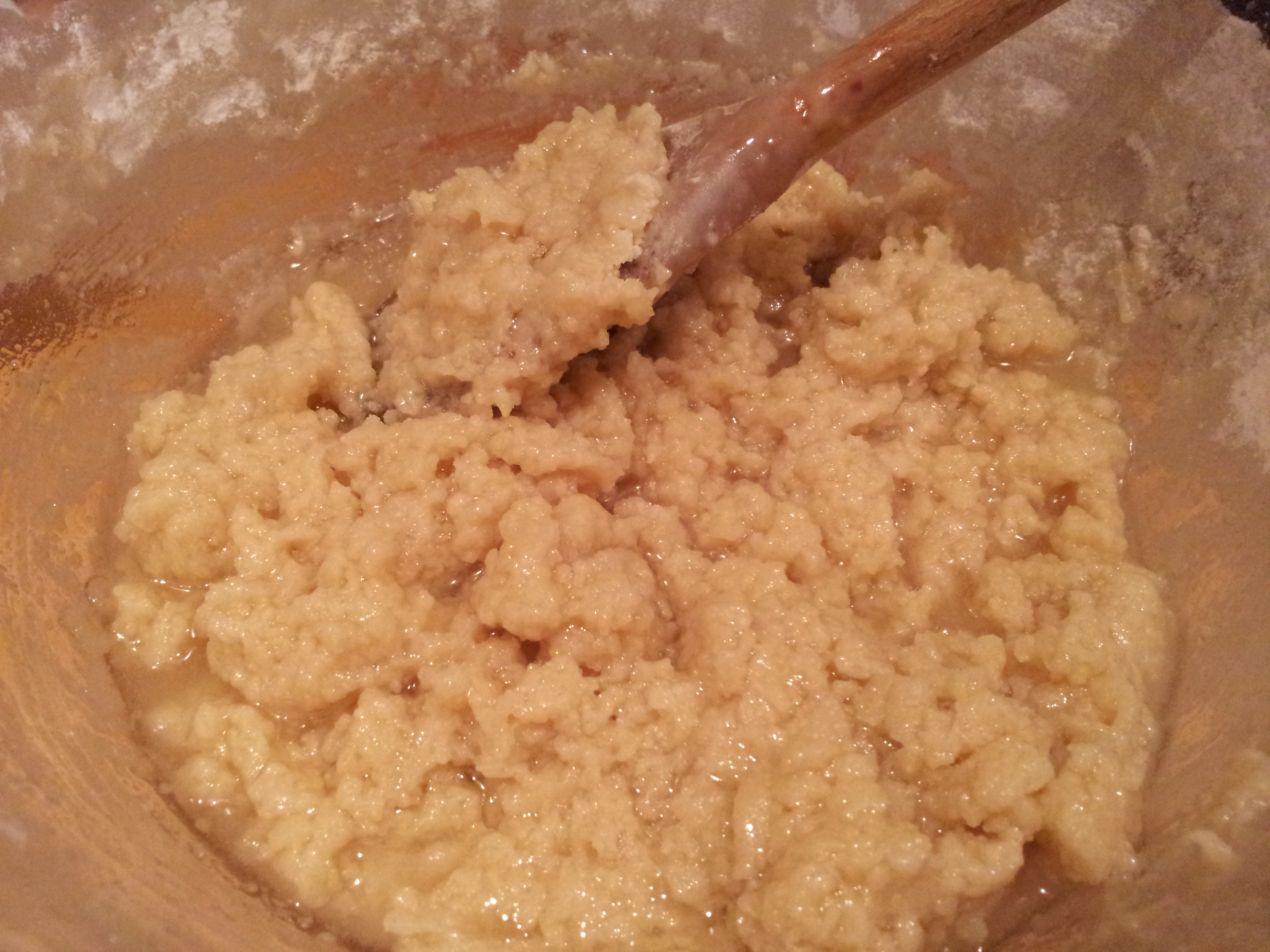
Then for the cake building! This seemed pretty straight forward. The recipe simply lists the ingredients and says mix it altogether. In reality this produces a tough scrambled egg bowl of sourdough cement.

Worringly solid

Worringly solid (Herman + flour + sugar)

Scrambled Herman - after adding the oil

I had thought “Ooh wonderful I’m going to be all traditional and use a Amish recipe and no electrical gadgets. Just me my bowl and a wooden spoon.” Wrong. I had to resort to the electric whisk to beat the lumps out of the mix. I probably shouldn’t have dumped all the flour in at once!

There's no shame in bringing out the whisk

This is the most scientific yet vague recipe I’ve tried to follow. I do enjoy using my Russian doll measuring cups wherever possible but can’t help but feel that its not very precise. How much is 2/3 of a cup of melted butter? Do you measure it out solid or melted? Am I supposed to squash a solid pat of butter into the cup to measure it out? I’m confused, therefore I guess.

Butter?

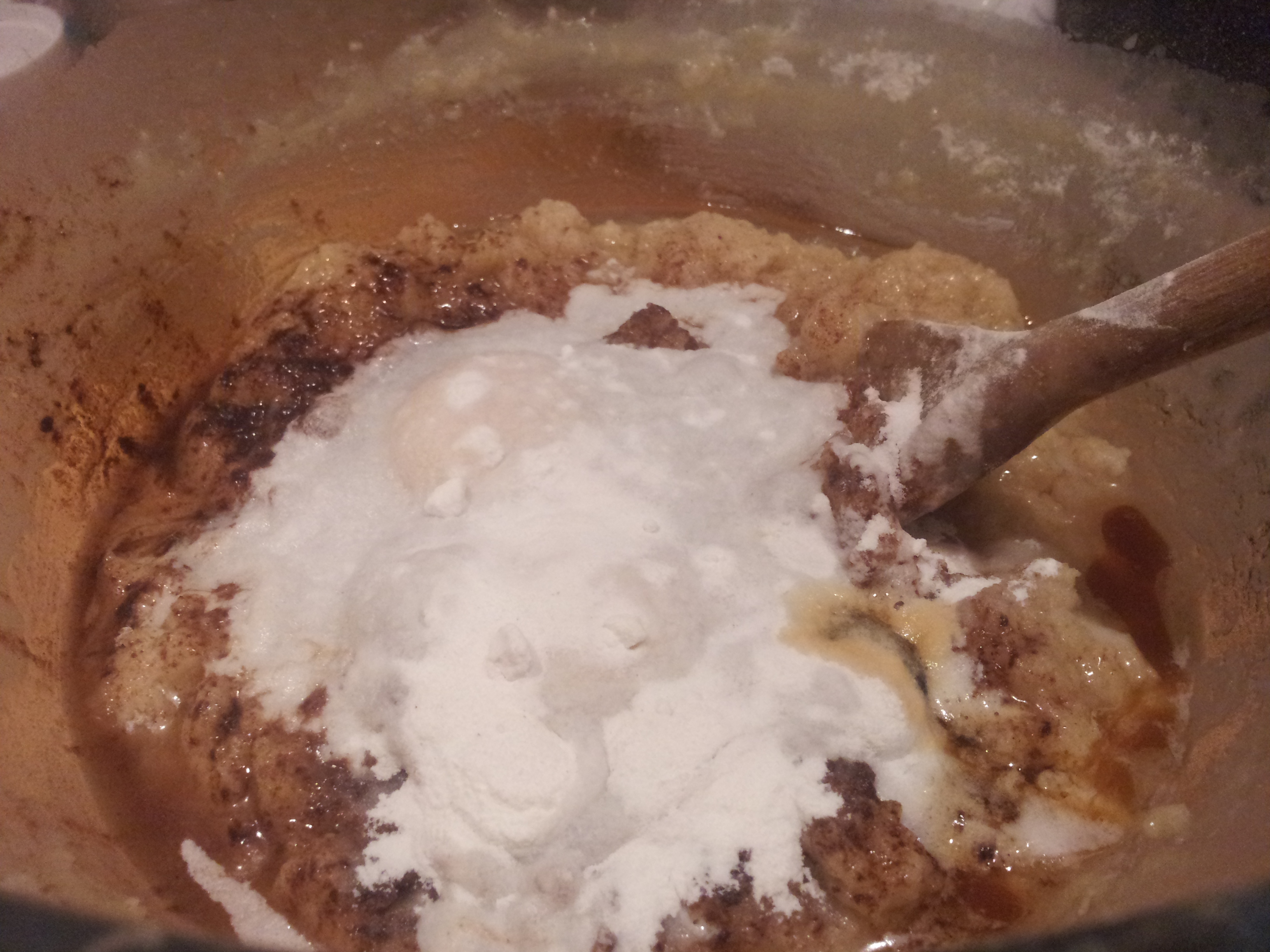
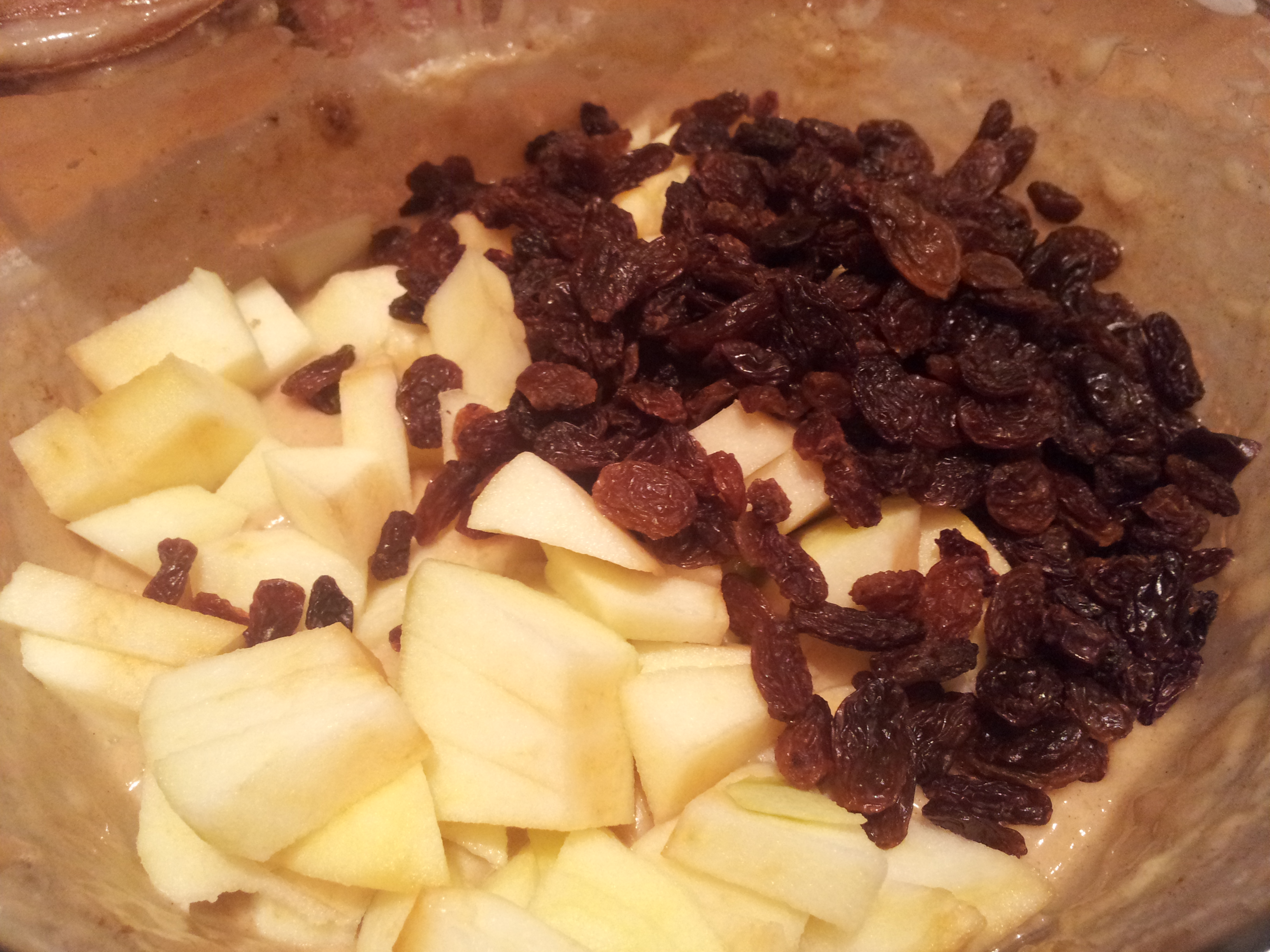
Once I worked out the lumps of flour and managed to combine the oil, eggs, cinnamon, vanilla, sugar, and baking powder into my cup of Herman starter I could chop up the 2 apples into bits (definitely the technical term) and stir it in along with a cup of sultanas.

Generous helping of cinnamon

Chunks of apple and raisins

Combining everything together (no whisk required)

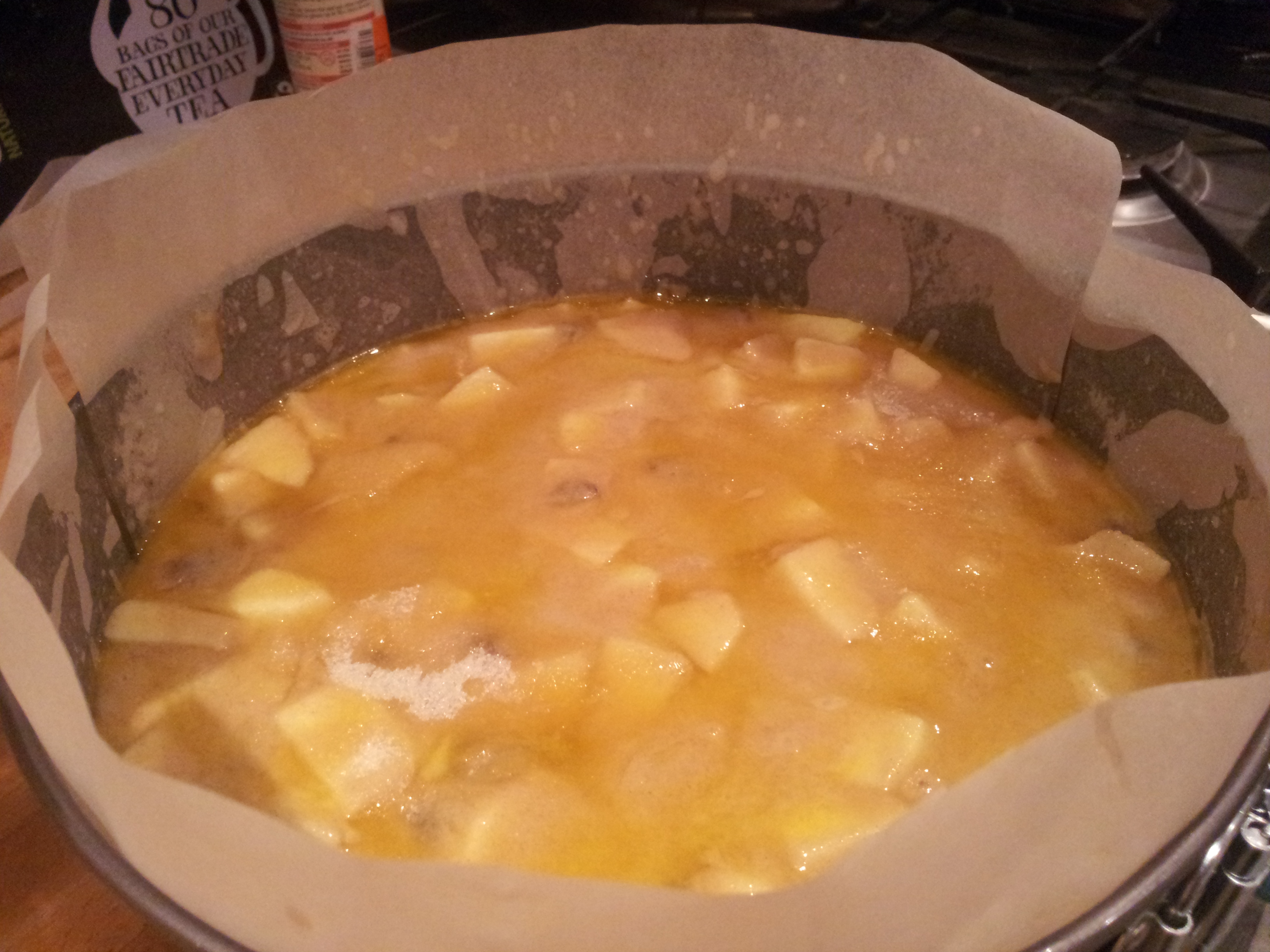
Again the recipe was beautifully non specific. “Pour the mixture into a LARGE greased and lined tin” What shape? I hear you cry? (someone already stumbled across my blog having looked unsuccessfully, I’m sure cos I don’t have the answer, for ‘how big a tin do I need to bake Herman cake?’) I selected my second from biggest round tin merely because I’ve used the biggest one before and it doesn’t fit inside my cake box. See that planning ahead? Excellent logic. It maybe about 20cms in diameter. (But then again I am guessing.)

Now I’ve never poured 2 thirds of a cup of melted butter on top of a raw cake before. It felt a bit wrong. But hey that could be because I guessed how much butter to melt, I just chopped a chunk off and melted it in the microwave. Then sprinkled on some golden caster sugar.

Buttery top

Then for the baking. The recipe says 45mins at 180 degrees C. I reckon this varies quite a bit on what size tin you use as mine took at least 30 mins more until the skewers came out clean and made the kitchen smell all lovely and cinnamony. Very Christmassy just in time for the February snow.

Mini Hermans - ready for adopting

It seems like Herman has been a long time in the making and has taken on a personality of his own. After potting up the mini Hermans and they sat looking at me in a row I started to feel like I was in The Little Shop of Horrors, Seymour feeding Audrey II only to discover at the end he’s multiplied and lurking in the garden, waiting for the next unsuspecting human to feed him…

I don’t want to burden my lovely friends with a Herman. He’s no Audrey II that’s for sure, just a harmless sourdough! I do have 3 Hermans looking for a good home but I’m also quite tempted to keep one to experiment with, perhaps a chocolate chip Herman or Herman sourdough bread?

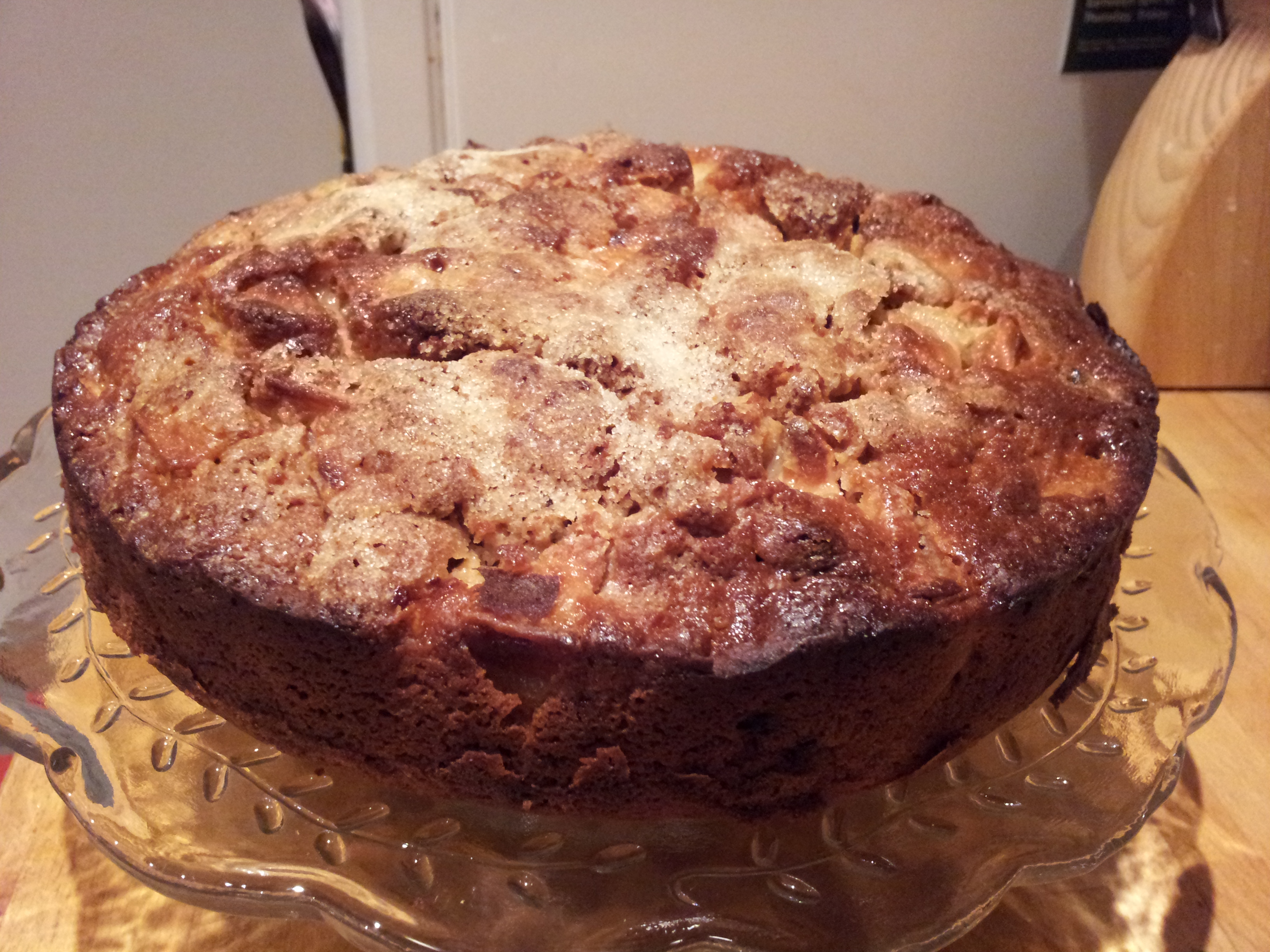
Crumbly and moist

What’s not to love about a cake called Herman? A cake with a story! A cake with a real history! A cake with heart and steeped in tradition. Sure it might seem a bit weird taking that first bite of Herman. But he actually tastes really good! There’s a slightly sour initial taste, which makes sense and then a lovely apple and cinnamon sponge. It’s really moist yet crumbly on the top. I will never doubt pouring butter on the top of a cake again! Very good served with ice cream or just with a cup of tea! If someone loves you enough to offer you a share of their Herman take it with both hands and pass it on to generations to come!

Crackled effect

It has been a bit of a commitment tending to a cake over the past 20 days (counting the creation of the starter, killing it and starting again). But what a life! Devoting himself to pleasing others. That’s my kind of cake. It feels like I’ve been writing The Herman Diaries and soon there will be a film with Johnny Deep as Herman… yet I digress once more. If you’re given the chance of a Herman give it a go! What have you got to lose?! Embrace the Herman. You know you want to.

image

A slice of Herman

Things that I used…

1 cup (quarter) of the original Herman Starter

2 cups plain flour

2/3 cup of vegetable oil

2 eggs

2 apples

1 cup raisins

2 tsp baking powder

1 cup sugar

2 tsp vanilla extract

50g butter (melted)

a generous sprinkling of golden caster sugar for the top

1 “Large” round cake tin (9 inch)

1 hour 15 baking time at 180 degrees C

Herman’s Big Night Out!

image I’m very sad to announce the death of Herman the German Friendship Cake. He made it through 2 days and then alas Poor Herman was not bubbling anymore.

He was a brave sourdough soldier. After a brief mourning period I tipped him down the sink and started again. This time using real sugar not honey as a substitute, which meant I had to make a trip to the shops.

image

4 days on Herman the German II is doing well. So well infact I’ve split him in half and delivered him to Karen who, so committed tot he Herman, travelled all the way from Middlesbrough. Now she too can spread the Herman Joy.

image

Herman off on his holidays after a morning by the heater at work. In his own travel bag and hot water bottle combo.

Only 5more days of feeding til I can split him again and share 3 quarters out. Please let me know if you would like a Herman starter and I will try to get one to you. Then the baking shall commence!

Or alternatively you can make your own starter by following these intructions

Want to see how Herman turned out??Clcik on to the next post From Herman with Love for the grand finale!

24. Knished! – Eastern Europe

After watching a Woody Allan film ‘Whatever Works’, I was intrigued to find out exactly what a Knish is , the food that Larry David’s character loves so much.

image

It turns out that it's a traditionally Jewish Pastry usually filled with oniony mashed potato. Curious, I signed myself up to the Knish challenge.

All of the recipes online varied massively. One site gave a recipe for 5 dozen or 58 knishes. This would be a bit excessive for me and my 5 friends to eat. I settled for a more basic version and (yes you guessed it) modified it slightly.

image

I peeled and boiled 3 large baking potatoes but then proceeded to drop lots of them (and the glass pan lid) into the sink. So after disposing of the sink potatoes I guess I actually had about 2 and a half potatoes mashed up in the end.

image

The chopped onions had to be fried in rather a lot of vegetable oil until soft and translucent whilst I messed around with pastry making.

image

Its a very simple recipe with flour, oil and water. Again I threw it in the food processor to bring all the ingredients together but you could use a spoon instead 🙂

image

needed kneading

It needed kneading until smooth then it needed a rest in the fridge for 30 minutes. Enough time for a cup of tea and to stir the onions.

The pastry seemed a bit dry. This might be because the recipe that didn’t include an egg, where as some of the other put 1 or 2 eggs in the pastry. To remedy this I kneaded a little more water in until I was happy with it.

image

Divided

/>

I chopped the dough into 12 pieces and rolled each piece into a thin circle about 7 inches in diameter.

image

Then a quick slick of vegetable oil on the pastry before dolloping a lot of oniony mashed potato in the middle. There is no way I accurately measured this. Perhaps a handful of potato? (I’m sure this is how the professionals do it.)

I tucked up the edges and spread a little egg wash where pastry met pastry to help it seal shut (in theory).

12 Knish balls later and they were ready for a generous egg wash and the oven.

image

In hindsight I should have popped a little air vent in the top of each Knish to avoid this Knish mass explosion. There was more mashed potato on the tray rather than in the Knish. This is another danger of making it up as you go along after catching a fleeting glimpse of what it should look like in a film.

image
Knish Catastrophe

Nevertheless they tasted pretty good. If I’m being a little critical perhaps a tad on the greasy side, but I bet it would be a  perfect hangover cure!

image
If you ignore the mashed potato hanging out the sides of the Knish it looks exactly like how I imagined it would…

There are other flavour variations you can try too if you’re not a mashed potato fan, like meat. I thinkimage its a bit like a pasty so you can have fun with it!

image

Sideways Knish

Things I used:

Pastry:
1 and half cups of plain flour
1 top baking powder
Half a cup of water ( and more as needed)
1 tbsp vegetable oil

Filling:
2 and a half large baking potatoes
2 large white onions
Salt
Cracked black pepper (to season)
A cup of vegetable oil

1 egg to seal and wash pastry with

23. Herman the German Friendship Cake – shhhh he’s only sleeping

I have never ever heard of such a cake until my friend Rebecca sent me a link to a recipe. However I have met a German by the name of Herman but that’s an entirely different story. Involving me winning the gold medal in the 2011 Garden Olympics taking the women’s record for in “The Hang” event. Who knew I could hang by my arms from a metal pole for over 2 minutes? Any ways I digress…

London 2012 here I come

So Herman the German is apparently a sourdough cake that you ‘start’ and tend to for about 10 days before dividing it up and giving 3 quarters away to your friends, along with a recipe so they can make their own Herman cake too, keeping one quarter for yourself.

*friends beware you may have a Herman the German cake heading your way very soon.

I couldn’t resist such a wonderful story and it fits with my whole international baking adventure so into my new Russian doll bowl its all gone this evening.

imageLets hope I don’t kill my new friend before he’s even started…

imageimageimageI’ll keep you posted on his progress! Click here for more…

22. Blood, Sweat and Baklava – Greece

This is without doubt the most epic bake that I have ever attempted. I’ve eaten Baklava in Greece, Turkey and Morocco. It is divine and very moreish with its honey soaked pastry. It’s one of my favourite sweet treats. I’ve been planning on attempting it for a while but was a bit hesitant to attempt Filo pastry from scratch as every book, including my Greek cookery book, said to buy it ready made pastry!

image

Baklava

Undeterred I asked my foodie friends for some advice on Twitter and was very kindly assisted by @bakingelements who sent me a Michel Roux Filo recipe from his ‘Pastry’ book. Thank you so much for your help. Without those photos I couldn’t have done it!!

Filo requires a lot of time and patience. It’s really not for the faint hearted. The dough itself is quite a basic concoction, flour, water, salt mixed in the food processor with a dough hook. Seems simple enough…

image

Then pour in oil while its mixing and wait until its all combined.

image

It becomes rather sticky and stringy at this point.

image

My new food processor was thoroughly christened in sticky dough in the process too… Cotton buds to the rescue!

image

Then it required about 5 minutes of extra working on a cornfloured board. I had to add a lot of extra flour as it was SO incredibly sticky

image

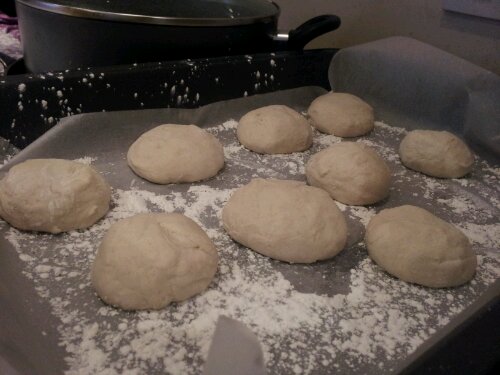
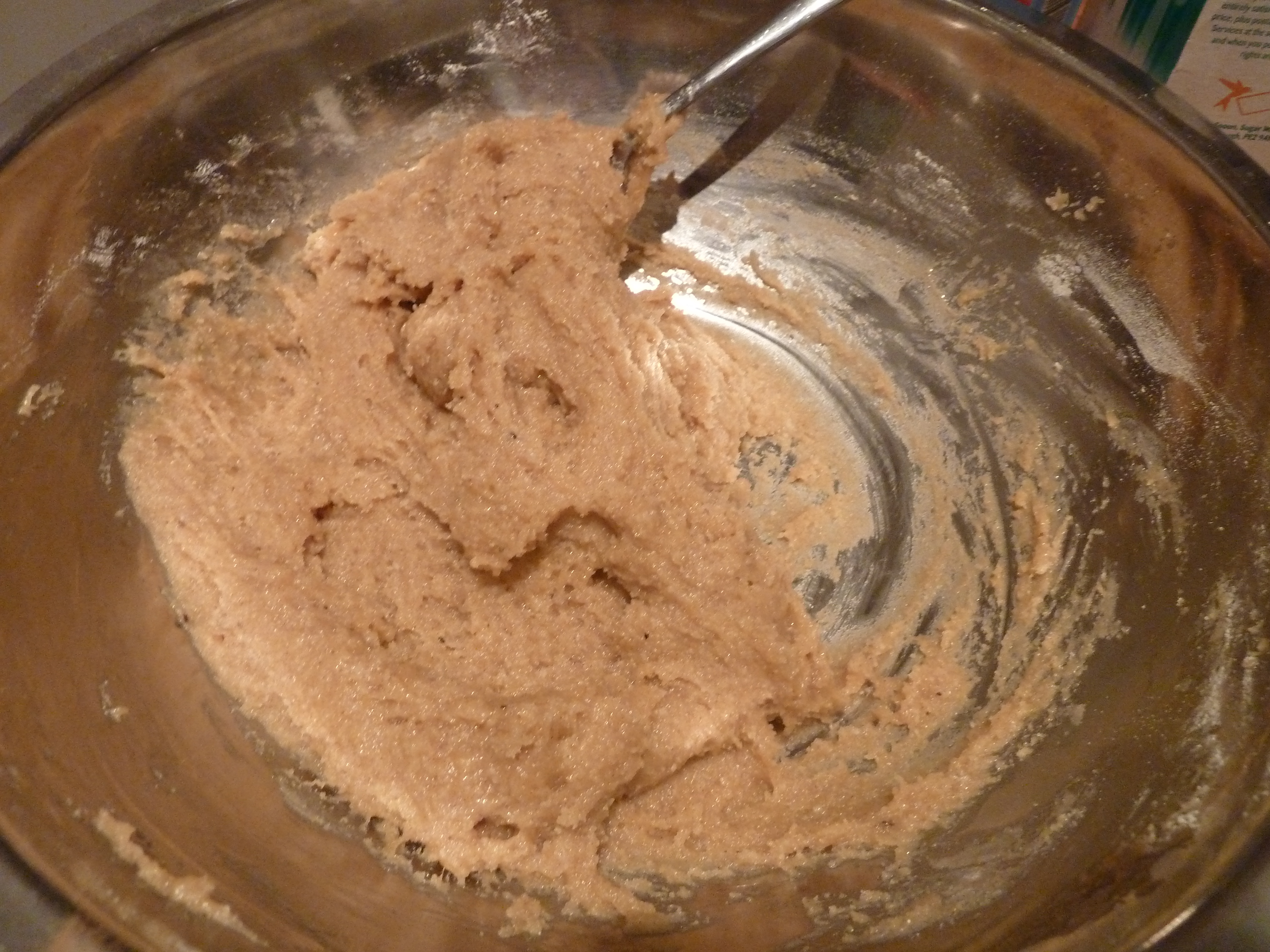
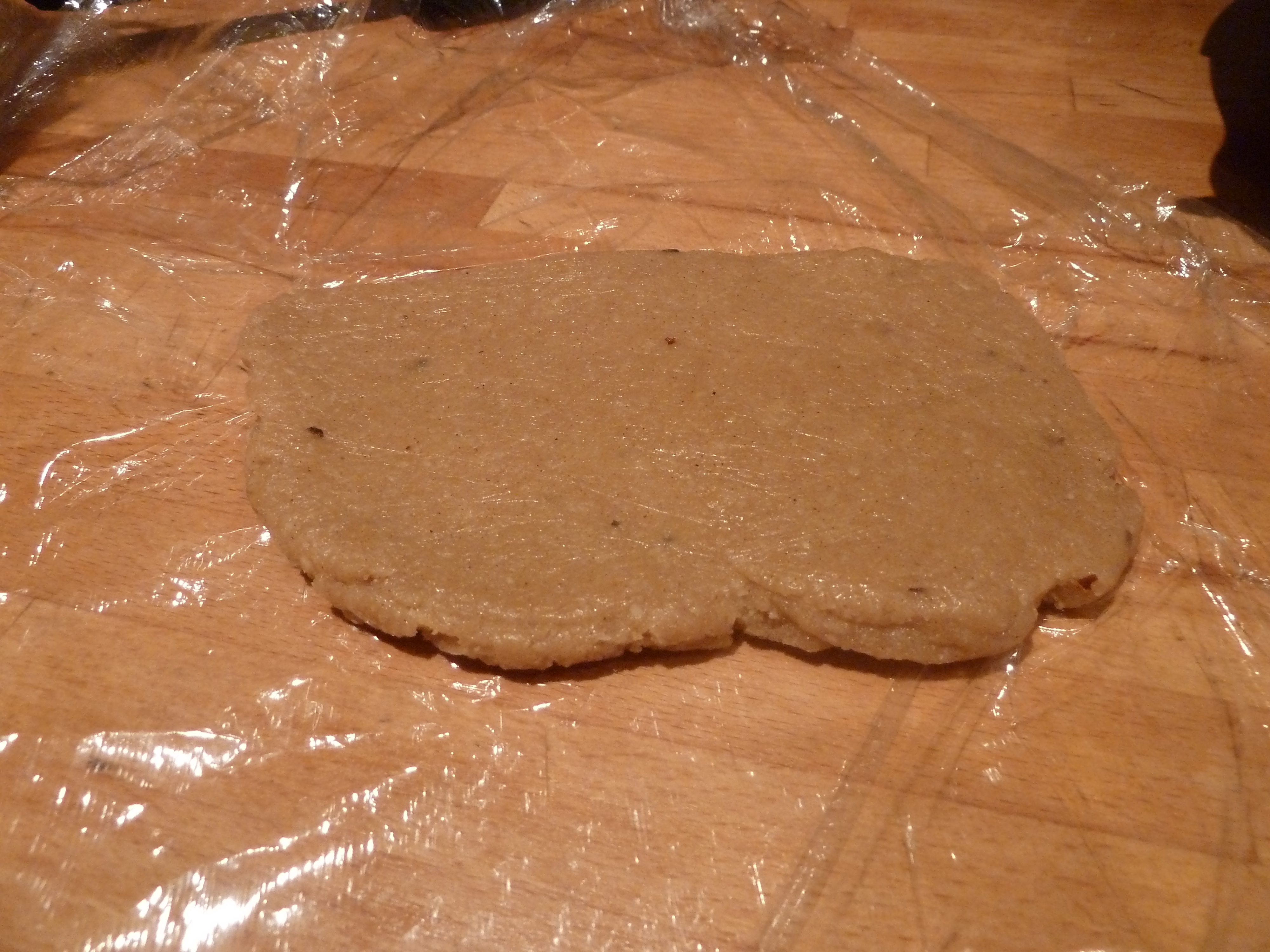
When it was worked sufficiently I measured it precisely (can you believe it? With scales and everything!) into 60g chunks. They had to rest in a cool place for 2hours on a floured tray covered in cling film so it didn’t dry out.

image

Pain in the pistachios

This gave me enough time to de shell and husk a whole bag of pistachio nuts. (Note to self. Please buy nuts without their shells in the future.) This is 45minutes of my life I will never, EVER get back. I broke a couple of nails and showered the kitchen in shells when in desperation I smashed the nuts with the stick bit of the pestle and mortar. Not to mention the nips and cuts the little blighters gave me.

image

Mixed Nuts

Into the food processor 1lb of mixed nuts I threw, the damn pistachios, whole almonds and walnuts. A quick whizz to chop them up and I added sugar, cloves, cinnamon and some pre chopped almonds.

image

To help speed up the chilling process I popped the pastry into the fridge for a bit whilst prepping the pastry board and a vast supply of cornflour.

Now for the tricky and even more time consuming bit. Michel Roux had sensibly instructed me to prepare 60g balls of dough so I had manageable chunks to roll out. However I was also working with 2 separate Baklava recipes which suggested working with a round cake tin and a rectangular tray. Whilst trying to stretch this delicate pastry out I realised there was no way on earth I was ever going to get it to the length and width needed to fit such a long tray and of course roll it to the required 0.5mm thinness!!

image

Still a bit too thick...

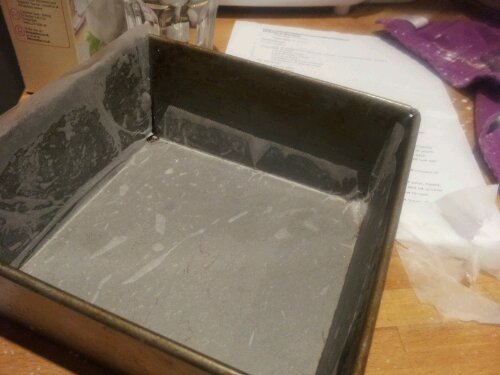
I decided to use a smaller square tin and ad lib from all 3 recipes that I was following. I greased and lined the tin in preparation.

image

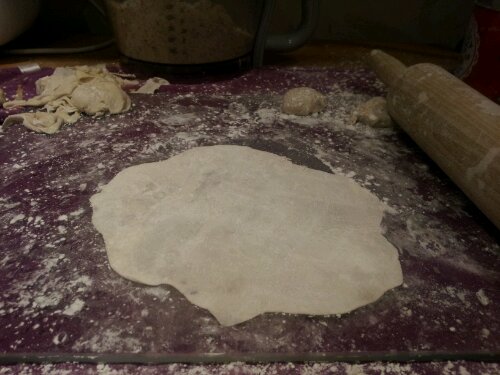
The first piece of rolling was lovely, dusting it with flour and gently rolling it out. I can’t believe I actually thought ‘brilliant this is going to be fun’. I lost count of how many sheets of Filo I rolled but as soon as you kind of get it to the right size and try to pick it up, it stretches, so its too big for the tin! Then it tears! And somehow your supposed to brush it with butter evenly too whilst it crinkles up and become more of a patchwork quilt. I had to trim bit here and there and add extra bits to cover the holes but I got there in the end.

image

The first fantastically even and smooth layer. Look it reaches the edges (almost)!

I realised that 60g was too much per layer so had to divide each chunk into 4 to get the right thinness and to ensure I had enough layers to go round. I have feeling you’re supposed to let the pastry rest after rolling it but I didn’t have the time. I also had to stretch each piece to fit inside the tin so it was really practicable either.

image

The actual amount of dough per layer pre rolling

image

Post rolling (not quite a square...)

I also missed the step in the recipe that said you’re supposed to start with 8 layers of pastry on the bottom before you add any layers of nuts and sugar. I had 2 bottom layers and there was no going back. I was in Baklava lasagna mania and only had 2 hours to finish the whole thing.

image

So so thin

I’m not sure how much butter I used but I had to refill the pan 3 times along the way.

image

Excuse the messy Filo jigsaw

My theory was 2 layers of pastry then a layer of nuts. I attempted to butter both sides of the Filo that was to sit on top of the nuts, which is probably totally unnecessary but the paranoia of dry Filo was setting in. Each time I added a layer I had to cover the pan in cling film too to stop it drying out too.

image

The top layer with 8 layers of Filo and a generous butter coating!!

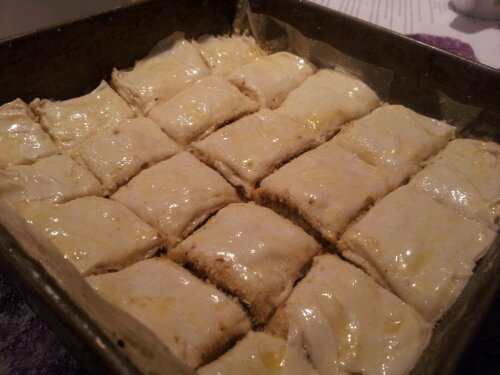
Before cooking it I took my sharpest knife and cut it into cubes

image

Precarious cutting through many layers.

I popped it in the fridge (but forgot the cling film!!) then set about simmering the syrup of honey, lemon juice, sugar, water and cinnamon. I added some rose water too.

image

Start of syrup.

The Baklava needed 35mins of baking while the pan simmered. I almost burnt the syrup as I wanted to reduce it further and salvaged it by dunking the hot pan into cold water to stop it cooking.

image

Nicely caramalised... Definitely not burnt.

Once the Baklava was crisp and golden it was ready to be drown in thick syrup.

image

Crisp and golden Baklava

image

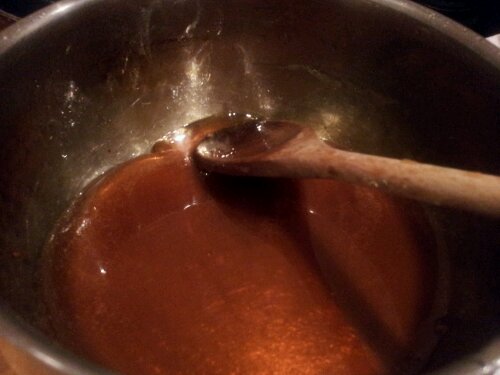
Syrup soaked

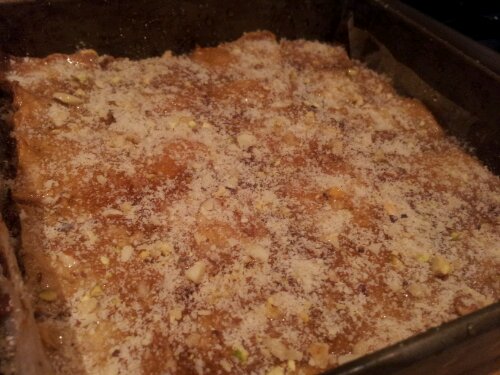
I added a garnish of chopped nuts (I still have a bag left over so probably wouldn’t make as much next time) and some more syrup to top it off. Apparently it needs 4 hours to cool so I wrapped it in a towel and carried it to my friends house for our pudding. It definitely didn’t last long enough to cool for 4 hours!!

image

Toppings

image

Baklava Heaven

I was hoping after all the time and effort it would be ok and it really really was. The syrup soaked into every layer making a gorgeously sticky delight! Even with less pastry on the bottom it held together and cooked all the way through!

image

Piles and piles of Baklava

I’m happy with my Filo experiment. I generally hate making pastry and this almost killed me. There was a lot of energy spent in making this so I don’t feel guilty in the slightest that I ate 2 massive pieces in one go. It did take an entire day to make but what an achievement! Now I’ve made Filo once I know I can do it but perhaps I might buy some ready made if I was going to attempt it again.

I’m now going for a lie down 🙂

*Recipes taken from:

Filo Pastry Michel Roux – Pastry Requires: 400g plain flour; 6g fine salt; 330ml water heated to 50 degrees C; 30ml olive oil; cornflour to dust

Baklava Recipe  Requires: 1 quantity of Filo Pastry; 1lb chopped nuts, cloves, cinnamon, 1 cup of butter, 1/3 cup of sugar

Syrup: 1 cup water; 1 cup sugar; 1/2 cup honey; 1 cinnamon stick; (I added an extra sprinkle of ground cinnamon); 2 tablespoons of lemon juice and I added 1 tablespoon of essence of rose water too.

The Traditional Greek Cookery Book Toubis Edition 2006


<a href=”http://www.bloglovin.com/blog/3326777/around-the-world-in-eighty-bakes?claim=mngmk6jv65c”>Follow my blog with Bloglovin</a>
21. Whatcha cooking Lebkucken – Germany

Lebkuchen

I’ve always loved lebkuchen. It always seem like Christmas when the shops start selling these chewy and crunchy pink and white sugar coated cookies. This year seemed the right time to attempt to make my own. I’ve not visited Germany (yet) but if the continental Christmas markets are anything to go by I know that I will love it.

A quick google later and I came up with a simple yet effective BBC Good Food Recipe. (I seem to use this website a lot for my continental recipes!) They seemed fairly easy to make with honey, eggs, spices (cloves, ginger, nutmeg and cinnamon)  ground almonds, a bit of flour, black pepper and butter. Simple! Although in my case I had nothing to smash up the cloves with, so improvising with a sandwich bag and a jam jar I hammered them into rough chunks. It kind of did the job, but some biscuits were definitely more clovey than others…

Spicy Stuff

This is definitely a different type of gingerbread to the Sunderland Gingerbread, very rich and sweet. But like Sunderland Gingerbread you throw this all in a pan and melt it together! Fantastic!

Butter, honey and sugar

Then throw in the dry stuff and spice

It needs quite a good stir to mix it all together..

Seemed a bit sticky but trust in the recipe

At this point I started to get a bit worried as it seemed a bit on the sticky side and I couldn’t imagine how on earth I was a) going to roll the dough out or b) cut it into Christmassy shapes… Nevertheless I continued and read the recipe through again and realised it needed some time to cool down. Throwing it into the fridge I popped the kettle on and had a well deserved rest (whilst starting the washing up!)

Now that's more like it!

In a bid to speed things up I divided the dough in half and froze half for other Christmas baking emergencies. I then folded cling film around the dough to roll it out without needing my pastry board and to prevent it sticking to the rolling pin.

Cling Film Queen

Choosing my most Christmassy cookie cutters I cut out the festive shapes and popped them into the oven for a mere 15 minutes.

Off to the oven with you

Then all they needed was a glossy sugary coating once they cooled down enough. Whisking an egg white up with some icing sugar to create a glaze is something that I’ve never done before. There’s another first to cross off my list.

Glazing

I drizzled it over the biscuits and let them drip dry onto kitchen roll. Once they hardened slightly they were ready for eating and the biscuit tin! They were lovely and chewy on the inside. They aren’t overwhelmingly spicy but rich and I enjoy the kick of the black pepper and cloves. I will be baking these every year from now on. I may even try some new variations. I’ve seen some with a much more crispy coating and with a little jam in the middle too to make them extra gooey!

Glazed

I did whip up the second batch in a baking emergency, during a Christmas baking marathon, so didn’t cut them into shapes but made a dough roll (using cling flm to roll it up of course)  and chopped it up… very quick and easy!

Dough roll (not to be mistaken for a sausage)

Lebkuchen Quick Chunks

Food Bloggers Unplugged and The Versatile Blogger Award

Thank you so much to lauralovescakes for tagging me in the Food Bloggers Unplugged game and also to Sharyn from The Kale Chronicles for kindly nominating me for the Versatile Blogger Award!

This means I get to share a little bit more about myself with you and then tag some of my other favourite bloggers to tell us a little more about themselves and their inspiration too.

So where to start? For the Versatile Blogger Award I am supposed to reveal 7 little known things about myself and tag 10 other bloggers, but I realised that I could answer the 10 questions from Food Bloggers Unplugged and thereby reveal more. (Hope that makes sense!)

1.   What, or who inspired you to start a blog?

I’m not entirely sure where it came from to be honest. I hadn’t even read a lot of blogs before I started blogging myself. I had however watched Julia and Julia and loved it. Then out of the blue one day the idea of baking my way around the world in eighty bakes hit me whilst on my way to work and I downloaded the wordpress app on my phone and that was that.

2.   Who is your foodie inspiration?

Oh so many! I just found out that my great grandma worked as a baker so I guess its been in the family for quite some time now, but I have always enjoyed baking. I baked with my mam as a child and have carried on since then. I do seem to have amassed rather a lot of cook books now too ranging from Marguerite Patten, Mary Berry, Delia, Nigella, The Hummingbird Bakery and a few more!

3.   Your greasiest, batter – splattered food/drink book is?

Most definitely my mam’s copy of Marguerite Patten’s Everyday Cooking, although I seem to spill something on every book as soon as they enter the kitchen. I quite like it when they have medals of honour on them, with a splash of batter here and a stripe of food colouring there. Each stain is a memory of baking something lovely.

4.   Tell us all about the best thing you have ever eaten in another country, where was it, what was it?

Dear me. This is tough. I’ve eaten lots of amazing meals in a few countries but one thing that stands out is Dim Sum in Hong Kong, or grilled eel in Japan, or the fresh fish we had in Fiji, so dense it was more like meat. (I have no idea what type of fish it was but the guys on the island had just caught it that day.)

5.   Another food bloggers table you’d like to eat at is?

I would love to dine at quite a few of my fellow food bloggers tables. I’m often disguising a rumbling tummy as I read their posts! I think Urvashi (The Botanical Baker) makes wonderful food, I’m still thinking about her chilli chocolate loaf and also Sharyn (The Kale Chronicles) cooks lots of healthy and wholesome things! I’d love to try her sour dough bread! or She Cooks and He Eats makes a mean full of meat lasagne! I would love to eat with my friend Julie in Australia who is baking up a storm at Sweetgum Bakery.

 6.   What is the one kitchen gadget you would ask Santa for this year (money no object of course)?

Santa has been and gone and I got a lovely Kenwood Food Processor 🙂

7.   Who taught you how to cook?

My mam definitely taught me a lot and then I’ve improvised my way through a few books since, especially now I’m baking so many different things. I’m suprised I’ve only set the kitchen on fire once so far to be honest…

8.   I’m coming to you for dinner what’s your signature dish?

If I’m making something savoury I will probably throw together what ever I put my hands on from the cupboard and make it up as I go along. Whenever I try to follow a recipe it goes horribly wrong (don’t ever mention the spicy lentil roasted butternut squash). So it would probably be a big bowl of miso ramen with chicken and chilli, lime and corriander. Or a chickpea curry with sweet potato and puy lentils. Or if all else fails turkey, mashed potato and baked beans 🙂 Then for the grand finale it would have to be something that is a little challenging that I’m still yet to attempt, perhaps a mousse cake or genoise sponge or profiteroles.

9.   What is your guilty food pleasure?

Ummm see above… turkey, mashed potato and baked beans! The best boxing day tradition EVER. Try it if you don’t believe me. It’s even better if you mash up some carrots and turnip too.

10. Reveal something about yourself that others would be surprised to learn?

Hmmm I was thrown out of guitar lessons when I was 14 and told never to come back. Apparently I didn’t take it seriously enough, but then again I did arrive with a mini guitar, with only 1 string attached. I still cannot read music or play any musical instrument.

Finally…tag 5 other food bloggers with these questions…like a hot baked potato…pass it on!

I would like to tag some of my favourite bloggers who share amazing food and bakes. I lvoe reading their blogs and definitely recommend checking them out.

1. Sweetgum Bakery 

2. The Botanical Baker

3. The Kale Chronicles

4. Kenyerek kalácsok és gyönyörű állatok A Hungarian lady who bakes beautiful bread!

5. I am Simpy Tia who has been making some fantastic cocktails recently!

6. She Cooks and He Eats

Now feel free to copy and paste the questions into your blog and answer the questions too. Looking forward to reading more about you!