51. The Legendary Crack Pie (concocted the lazy way)

Legendary Crack Pie - no actual crack is involved in this baking process

Legendary Crack Pie – no actual crack is involved in this baking process

Crack Pie the most addictive pie you’re ever going to eat. It even sounds legendary before you even know what’s actually inside it. It hails from New York so apologies this is yet another American bake in my around the world adventures. But I’m sure you will understand why I just HAD to bake this. It was originally invented by Momofuku Milk Bar’s very talented pastry chefs and coined Crack Pie due to it’s extremely moreish quality.

A slice of gooey Crack Pie

A slice of gooey Crack Pie

I’ve been waiting for an excuse to bake this pie. This excuse came in the form of the Private Pie Club. The theme for this months Private Pie was Film Pie. I managed to shoehorn my Crack Pie in under the banner of ‘Fear and Loathing in Las Vegas’ as the most drug fuelled film I could think of , although with it’s final dusting of floral icing sugar the pie appears much more sweet and innocent than it’s name suggests… (If you like pie you should also come along to Private Pie club and meet other pie enthusiasts!)

Fully iced Crack Pie

Fully iced Crack Pie

The original epic recipe is merely concocted from a few store cupboard essentials. This means you will probably have all of the ingredients ready to hand to bake this pie. So what are you waiting for?? Get baking! Although there is a LOT of everything in it so you may need to invest in a few more eggs…

Blending sugar, salt and flour together the lazy way

Blending sugar, salt and flour together the lazy way

The homemade oat cookie base is well worth the extra effort of making a cookie just to crumble it up and reconstitute it into a pie crust. The pie in total consists of an entire block of butter, almost 500g of sugar (brown and white) 8 egg yolks and cream! This is a gloriously decadent pie for the hungry. It’s so popular I’ve heard that they sell for $45 a pop and are couriered across the states to feed the Crack Pie habit of the nation.
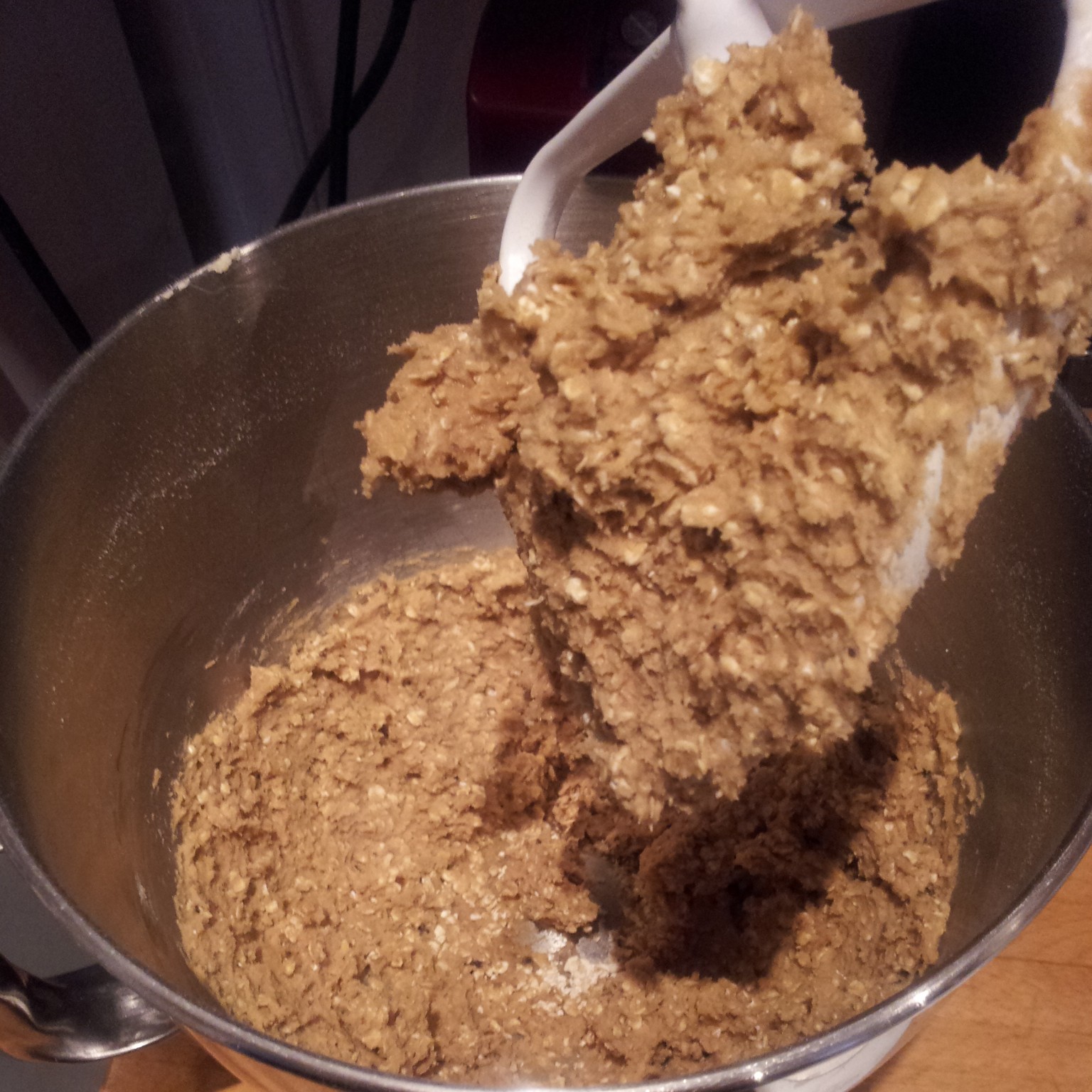
Beat in the butter

Beat in the butter and egg

To start with I got the method a bit backwards. Despite my lack of reading ability it turned out pretty well so you too can follow my lazy method. I forgot to cream the butter and sugar together and instead whacked all of the dry ingredients together into the mixer and beat them until crumbly.

Then beat in the butter and egg to make a thick cookie batter.
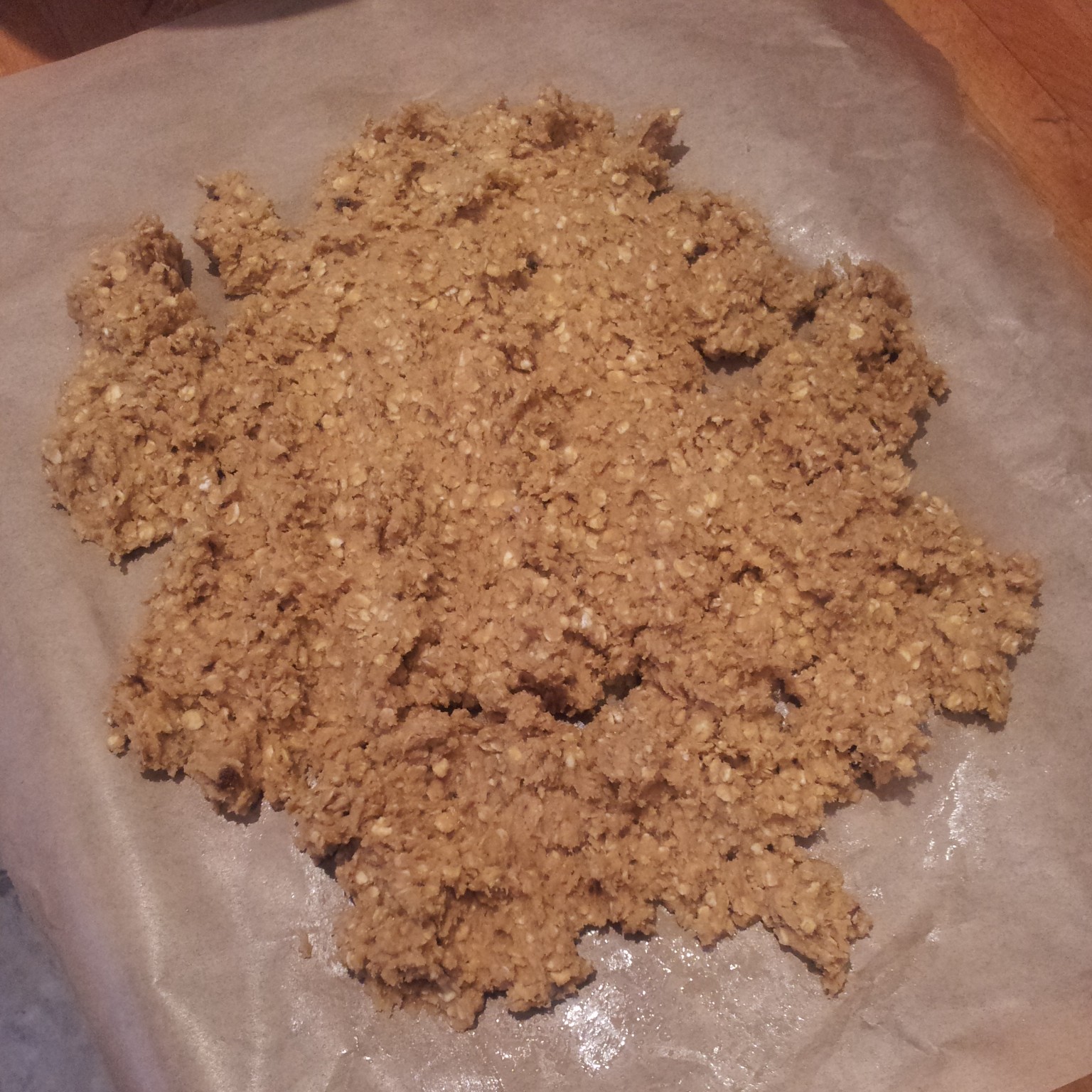
Splodge the cookie batter roughly onto a baking sheet and smooth down

Splodge the cookie batter roughly onto a baking sheet and smooth down

The best bit about baking this kind of cookie is it doesn’t need to be pretty and you don’t even have to bother rolling and cutting it out! Music to my lazy baking ears. Basically whack it all onto a greased baking sheet, press it down with your fingers and bake it for 20 minutes. Job done.

The baked cookie base

The baked cookie base

The rough cookie will be a lovely golden hue after 20 minutes in the oven at 160 degrees C. Technically you should let it cool down before crumbling up the cookie but I couldn’t wait.
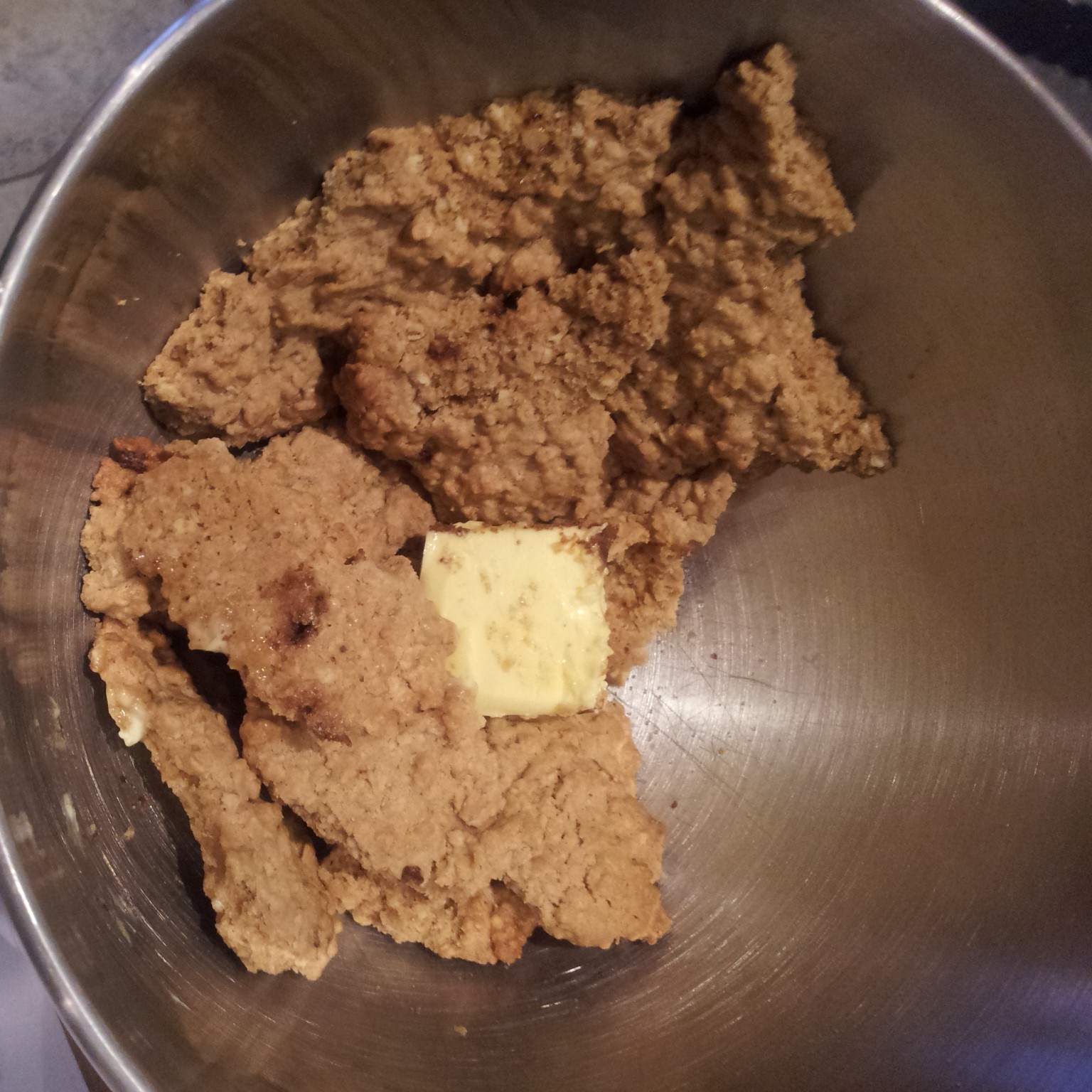
Blend the crumbled cookie together with even more butter and sugar

Blend the crumbled cookie together with even more butter and sugar

All of the other recipes I’ve found instruct you to blitz up the cookie in a food processor, but frankly that involves unpacking my food processor from the jenga game that is my kitchen cupboard and even more washing up , so I didn’t bother. I threw the roughly crumbled cookie into my mixer and beat it into submission along with an additional 55g butter, 20g brown sugar and 1/2 tsp salt.

This is how the cookie crumbles

This is how the cookie crumbles

After a quick blitz with the mizer (I’m sure you could just use a spoon or an electric handwhisk if you’re feeling the strain) the cookie turn to glossy crumbs. Just moist enough to shape it into a pie crust in your 2 pie tins.

Cookie Pie Crusts

Cookie Pie Crusts

Divide the cookie crumbs into 2 and squash them into 2 pie tins giving a thin and even crust along the bottom of the tin and up the sides. If it’s not sticking you can always blend in a little more butter to moisten the crumbs. I used a 9 inch tart tin and an 8 inch round cake tin. It’s handy to use a tin with a loose bottom to help remove the pie when it’s ready for eating. But feel free to use a solid pie dish, it’ll all taste amazing anyway. Pop the crusts in the fridge to set.

Blend together your sugars

Starting the filling: Blend together your sugars and salt

Now here’s the bit where I ad lib even further from the original recipe. I admit the one store cupboard essential I don’t own is powdered milk. So I just left it out of the filling. I’m not sure what impact this had on the final flavour of the pie but to be honest I didn’t miss it. Looking for a substitute all things suggested just adding actual milk. A splash of milk and a dollop of speculoos butter later and we have one tasty Crack Pie!
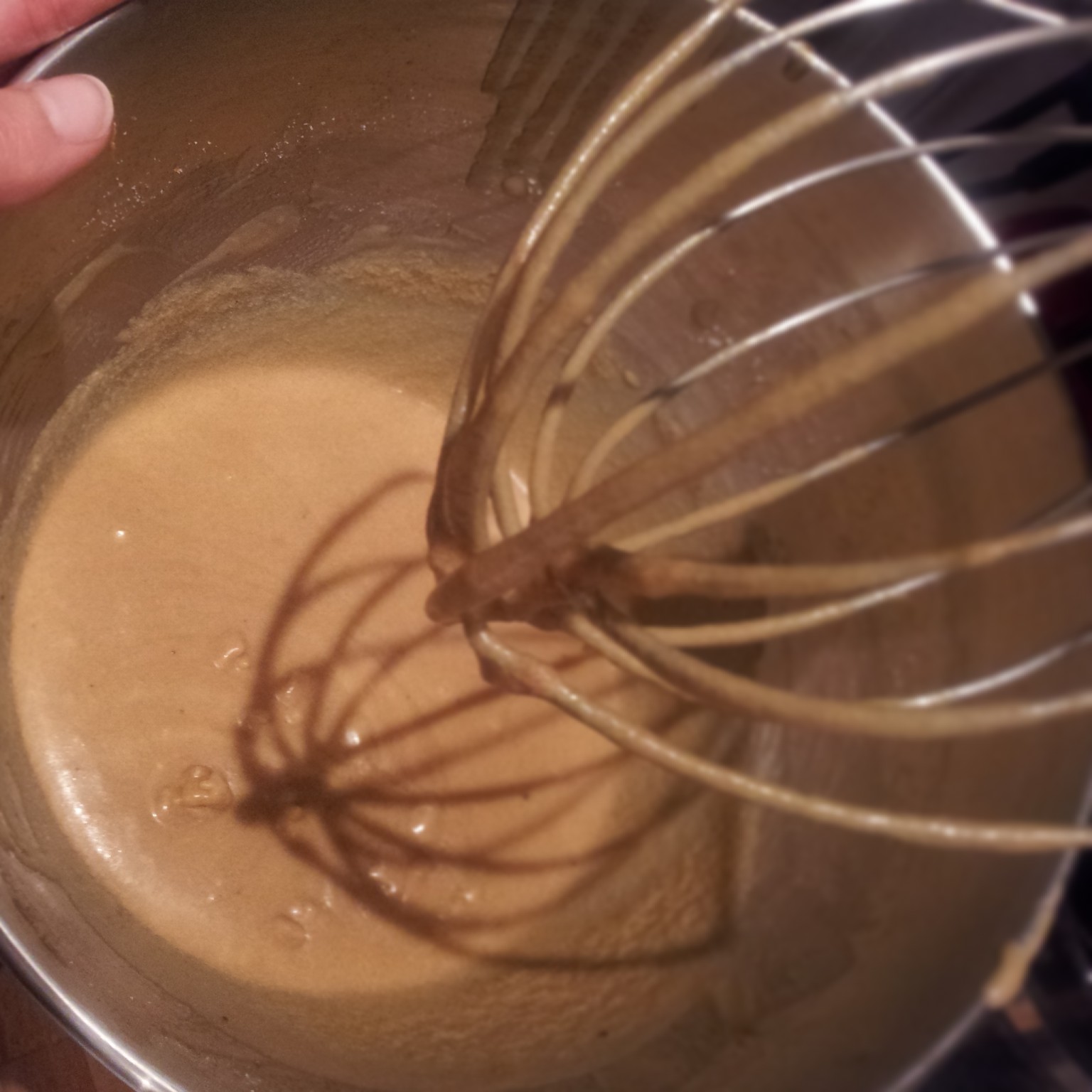
Whisk into the sugar, the melted butter, double cream, vanilla, speculoos butter and a splosh of milk

Whisk into the sugar, the melted butter, double cream, vanilla, speculoos butter and a splosh of milk

I love the fact that you just have to keep adding to the one pot to make each stage of this pie. After blending together the white and brown sugar, all that’s left to do is to whisk in to the sugar the melted butter, the double cream, a splash of vanilla, a splosh of milk, and a dollop of speculoos butter. You don’t need to incorporate lots of air into this caramel custard so just whisk it until it’s smooth and everything is incorporated.

Pour the caramel custard into onto the cookie crusts

Pour the caramel custard into onto the cookie crusts

The caramel custard will be shiny and smooth taking on the hue of the brown sugar. Simply pour half of the custard onto each pie crust and bake for 15 minutes at 170 degrees C. Then turn down the oven to 160 and bake for a further 10 minutes. I baked both pies side by side, but the larger of the pies needed an extra 10 -15 minutes of solitary baking time. The pies are clearly cooked when golden all over and only a little jiggly (like a good custard tart should be!)

The just baked Crack Pie

The just baked Crack Pie

A good tip from Mary Berry to achieve an even bake is to place your pies onto a hot baking sheet. It also means your loose bottomed tin will keep it’s bottom when lifting it in and out of the oven (I have had issues in the past with my tart tin). Also if it leaks any butter (and let’s face it with all of the butter in this pie it’s going to ooze a little) you will save a lot of oven cleaning by having your pie on a baking sheet instead.
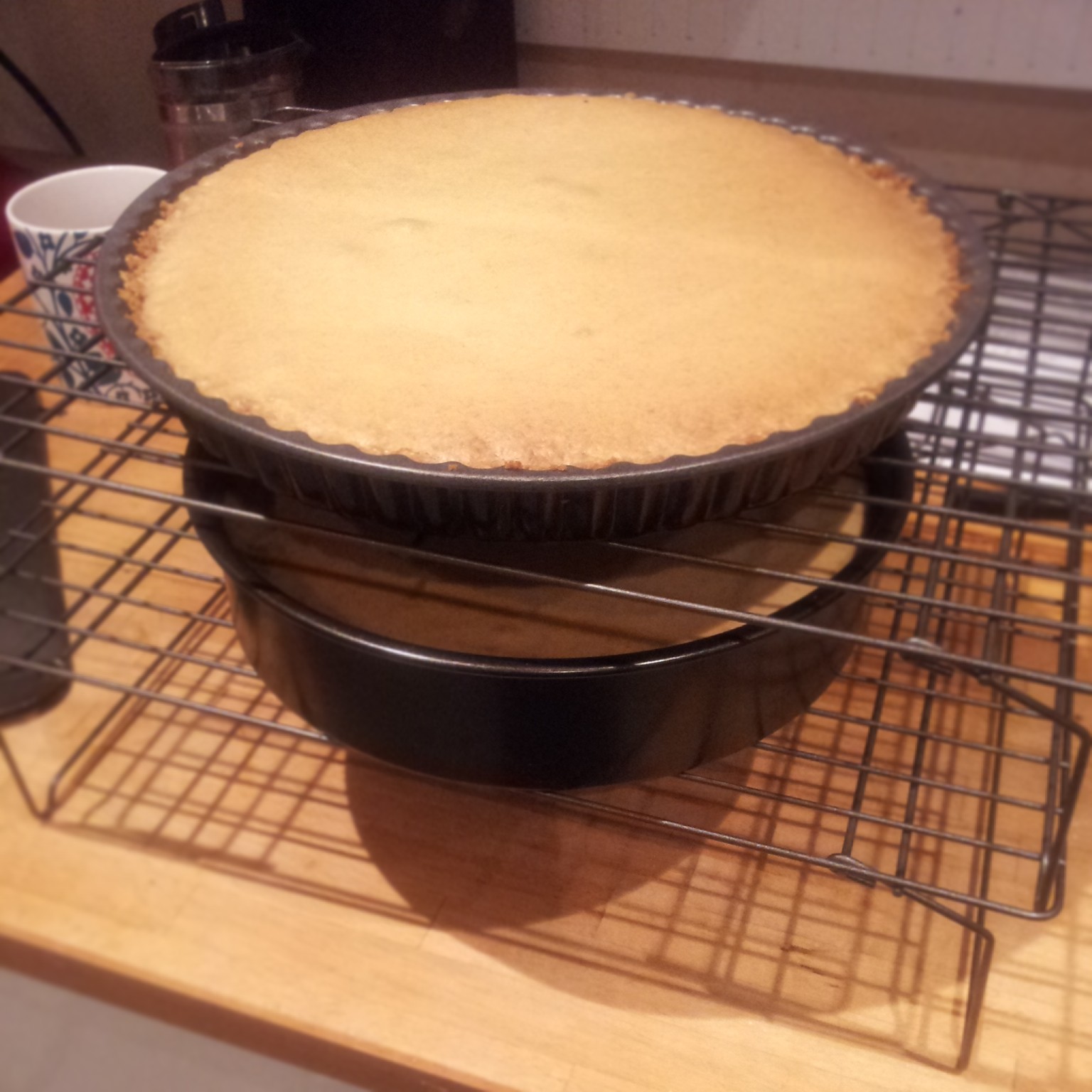
A pair of Crack Pies cooling

A pair of Crack Pies cooling

The filling will rise slightly whilst baking but maintains a lovely smooth and flat top. Once baked leave your Crack Pies to cool down in their tins. They will keep well for about a week in the fridge and I hear it tastes even better the longer it lasts… (if you can reserve yourself that is!). When I took that first bite of Crack Pie I actually ‘yummed’ out loud. In public! It’s so moist, the cookie crust almost disappears into the gooey caramel filling with the edges giving that much needed bite. It’s a perfect combination of smooth, sweet caramel and oaty crumble, with a hint of spice (from the speculoos) and a tang of salt. The slice quickly disappeared before my eyes and the whole pie was gone within minutes. Without doubt a wonderful sign of an excellent pie.

Extreme Close up of the Crack Pie. Check out that caramel custard

Extreme Close up of the Crack Pie. Check out that caramel custard

As this is a recipe for 2 Crack Pies, you could scale it back to make just the one. But I fear one will never be enough! If you have the ingredients you may as well make two and share with friends (if you like anyone enough to share your Crack Pie with them) or alternatively gorge yourself on all of the pie. (Please eat your Crack Pie responsibly) Or even more sensibly you could freeze your second Crack Pie for a special occasion. I have my Crack Pie resting carefully in the freezer, wrapped diligently in greaseproof paper and tin foil (still in it’s tin) to prevent freezerburn and   that distinctive ‘freezer flavour’ contamination. I literally can’t wait to defrost it.
How to decorate a Crack Pie?

How to dress a Crack Pie?

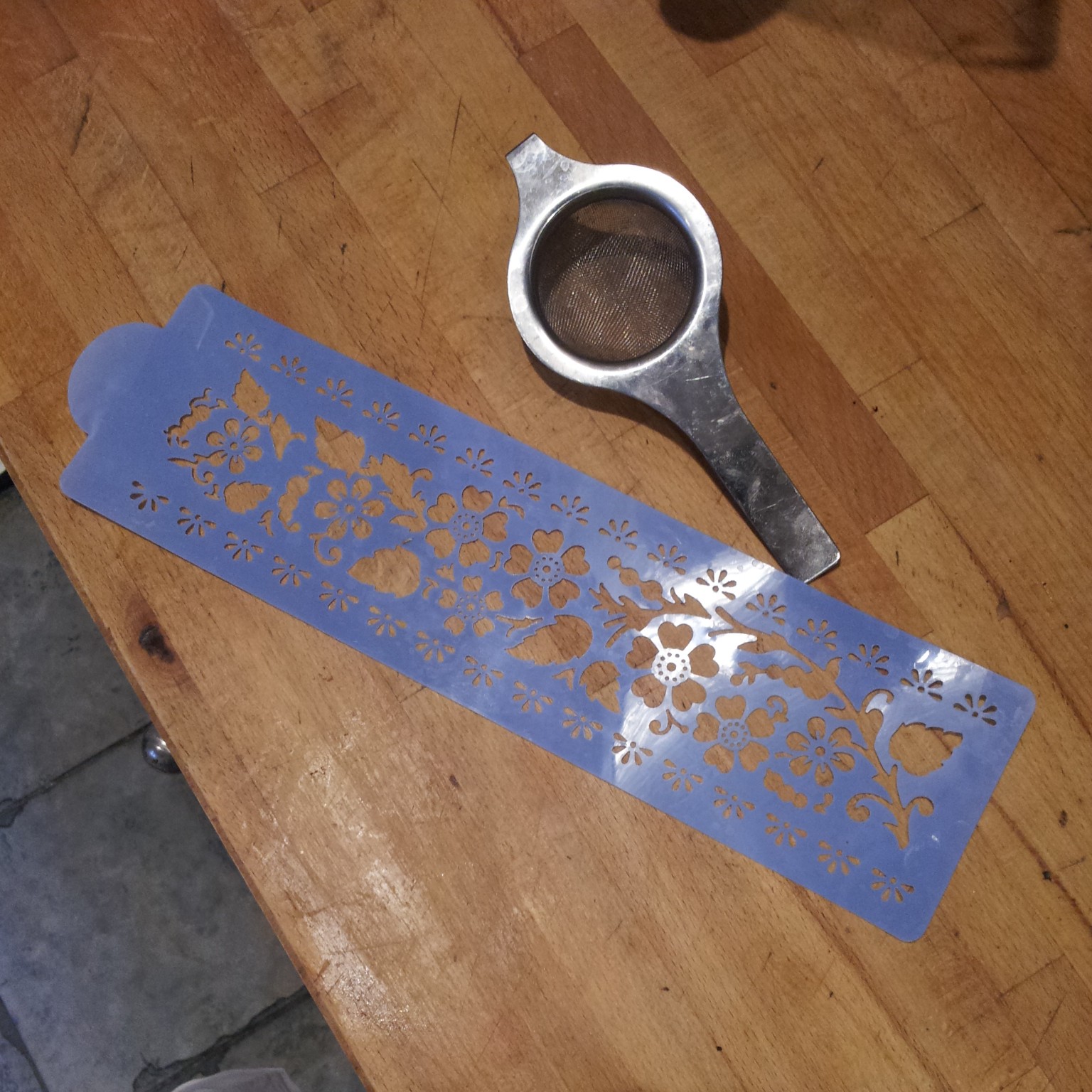
Now you don’t have to dress your Crack Pie, if you don’t want to. You could leave it naked as the day it was born if you prefer, but I wanted to make it look pretty (and hide a few of the little cracks that had appeared on the delicate crust in the process of forcibly removing it from the tin) Armed with a cake stencil, tea strainer and a box of icing sugar I liberally dusted on a floral pattern, covering the entire pie. It’s the first time I’ve ever managed to stencil anything successfully! Hurrah! Cue many self indulgent shots of stencilled Crack Pie…
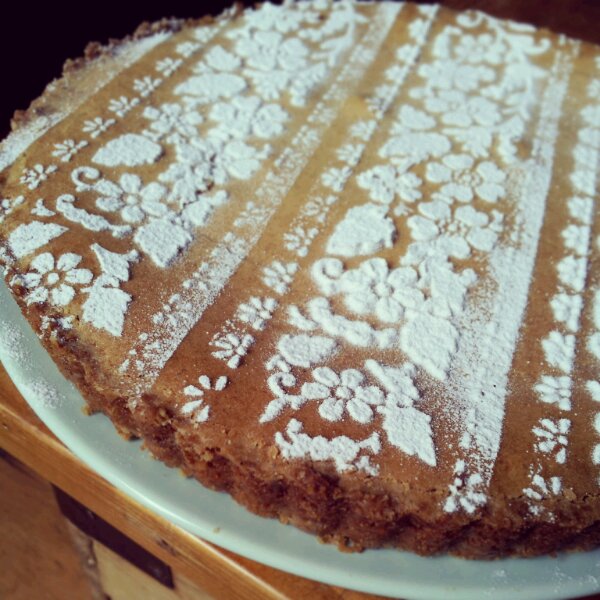
The Fully Dressed Crack Pie

The Fully Dressed Crack Pie

Things that I used to make The Legendary Crack Pie 

Oat Cookie (for the crust)

  • 150g plain flour (2/3 cup plus 1 tablespoon)
  • 1g baking powder (1/8 teaspoon)
  • 1g Cream of tartar (1/8 teaspoon) – This should actually be bicarbonate of soda however I got the pots mixed up! It didn’t seem to do any harm so I will be using cream of tartar in the future.
  • 2g salt (1/4 teaspoon)
  • 115g softened butter (1/2 cup)
  • 60g dark brown sugar (1/3 cup )
  • 40g  caster sugar (3 tablespoons)

Step 1: Beat all of the above together until fully incorporated

  • 1 egg

Step 2: Beat in the egg

  • 90g oats (1 cup)

Step 3: Stir in the oats

Step 4: Spread onto greased baking tray and bake in preheated oven for 20 minutes at 160 degrees C (375F)

Pie Crust

Step 5: Crumble up the baked cookie and beat in

  • 55g butter (1/4 cup)
  • 20g brown sugar (1 and 1/2 tablespoons)
  • 1g salt (1/8 teaspoon)

Step 6: Split the crumbs in half and press firmly and evenly into 2 (approximately 9 inch) pie tins all over the base and up the sides to form a thin crust.  Pop the crusts in the fridge to set.

The Caramel Custard Filling

  • 270g caster sugar (1 and 1/2 cups)
  • 130g dark brown sugar (3/4 cup and a scant 3 tablespoons)
  • 1g salt (1/4 teaspoon)
  • (I left the milk powder out but if you want to put it in use 1/3 cup plus 1 teaspoon)
  • 113g melted butter  (1 cup)
  • 285ml double cream (3/4 cup)
  • 1 teaspoon vanilla extract
  • Splash of milk (to make up for the lack of milk powder)
  • 50g speculoos butter (to make up for the lack of milk powder – you could leave this out if you prefer or even use peanut butter instead)

Step 7: Whisk all of the above together

  • 8 egg yolks

Step 8: Whisk in the egg yolks one at a time until the mixture is smooth, shiny and thick

Step 9: Pour half of the caramel custard onto each pie crust

Step 10: Bake the pies side by side in a preheated oven on a hot baking sheet for 15 minutes at 17o degrees C (350F) then turn the oven down to 160 degrees C (325F) and bake for a further 10 minutes. When golden all over and only ever so slightly jiggly your Crack Pie is ready! 

Step 11:  Allow your pies to cool and dress with icing sugar. Then reward yourself for all of your efforts with a slab of pie. Enjoy!

*The Momofuku Recipe was published by the LA Times recently if you want to see it in all it’s glory

Buttercup Babycakes

Buttercup Babycakes

Buttercup Babycakes

It’s no secret I’m not the best sugar crafter or cake decorator. I’m still finding my feet when it comes to making pretty cakes. I’m more at home pouring loads of ganache over a cake and hoping for the best. So why on earth did I decide to attempt to cover a bundt cake with fondant icing you may wonder?! I’m always up for  a challenge and this really was a test of my cake decorating abilities.

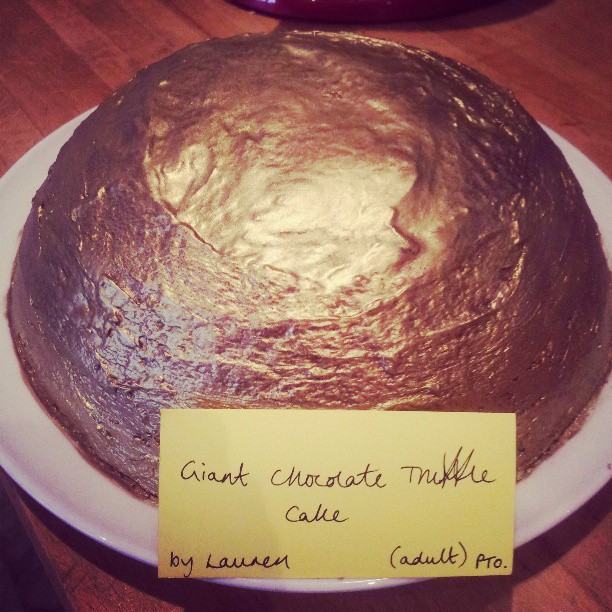
A recent cake experiment - I won the Church Chocolate Cake Competition (for taste, not presentation!)

A recent cake experiment My Giant Chocolate Truffle Cake – I won the Church Chocolate Cake Competition (for taste, not presentation!)

I was invited to participate in Renshaws Baking Competition. The challenge? To bake and decorate a cake fit for the next heir to the throne, to welcome Baby Windsor into the world. My initial idea was to make a 3D crown, hence the bundt cake. however it seems my imagination is far more advanced than my sugarcrafting skills.

Lavender Bundt Baking

Lavender Bundt Baking

What flavour cake do you bake for the royals? Well, I know Kate enjoyed a few Lavender shortbreads during her pregnancy, so a Lavender Madeira Bundt Cake I baked. Hoping that she hasn’t since developed an aversion to lavender. Not that Kate’s ever going to actually eat this cake, but you know it’s the thought that counts.

image

Roll roll roll your fondant gently off the table

One of the reasons I don’t venture into sugarcraft very often is that there isn’t a lot of space in my kitchen. Attempting to roll my crown out meant there was a bit of droppage on the floor. I rolled the fondant as thin as I could manage in one rectangular piece.

image

Pizza cutter at the ready – crown creating

I don’t own any proper sugar crafting knives so wielding the pizza cutter I attempted to fashion some crown shapes. Cutting triangles out of the fondant.

Hoping the crown sets safely with a tin foil support

Hoping the sugar crown sets safely with a tin foil support

Once I had my basic crown shape I gently lifted it onto a cling film covered bundt tin. and held the pointy ends in place with a crumpled horseshoes of tin foil. Unfortunately the bundt tin then needed to have a cake baked into it, so it all went to hell. The crown ended up as a crumpled mess, so I made another. This crown snapped after it dried. Admitting defeat I returned to the drawing board.

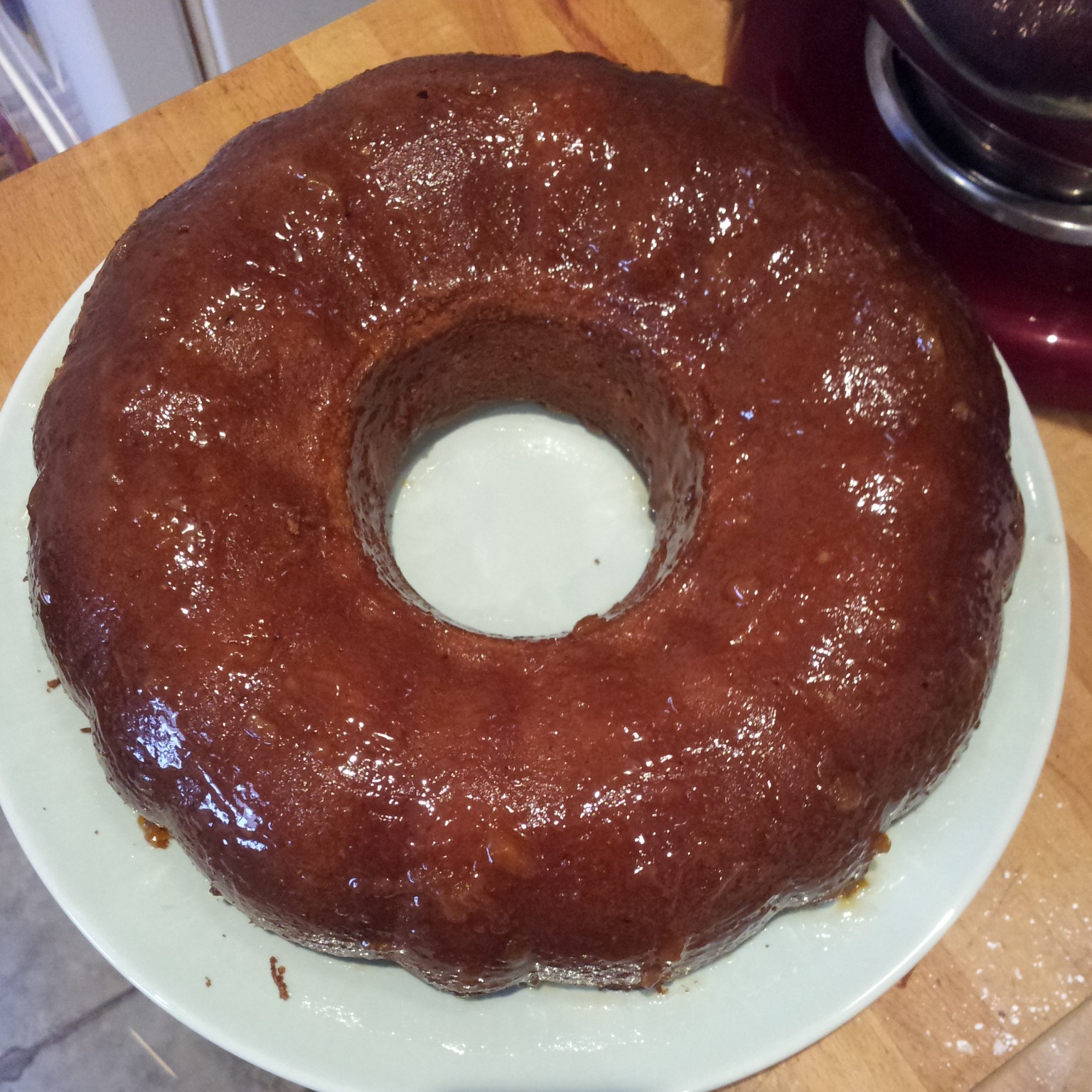
jam up the bundt

jam up the bundt

To help spur on my creativity I decided to apply a layer of marzipan to the lavender bundt. Applying a liberal coating of apricot jam to make it all stick.

A layer of marzipan

A lovely layer of marzipan

Bundts are not usually iced in this way and I can now see why. Pouring a whole lot of chocolate over a bundt is a much easier option. This traditional style of icing is best suited to a more circular cake with flat edges, like with my wedding cake. Anyway who said I had to be traditional! Undeterred I threw a thin layer of marizpan over the bundt and poked a hole in the marzipan, coaxing it into the inner ring and under the moulded edges of the cake.

Marzipaned bundt

Marzipaned bundt

Surprisingly the marzipan worked exceedingly well. I filled in a few gaps with some extra bits of marzipan as no one will know about the messy joins. If you won’t tell I won’t either. AND only a small bit of the extra marzipan fell into my mouth whilst rolling this out, honest. (Did I mention that I have a marzipan obsession?? It is manna from the heavens!)

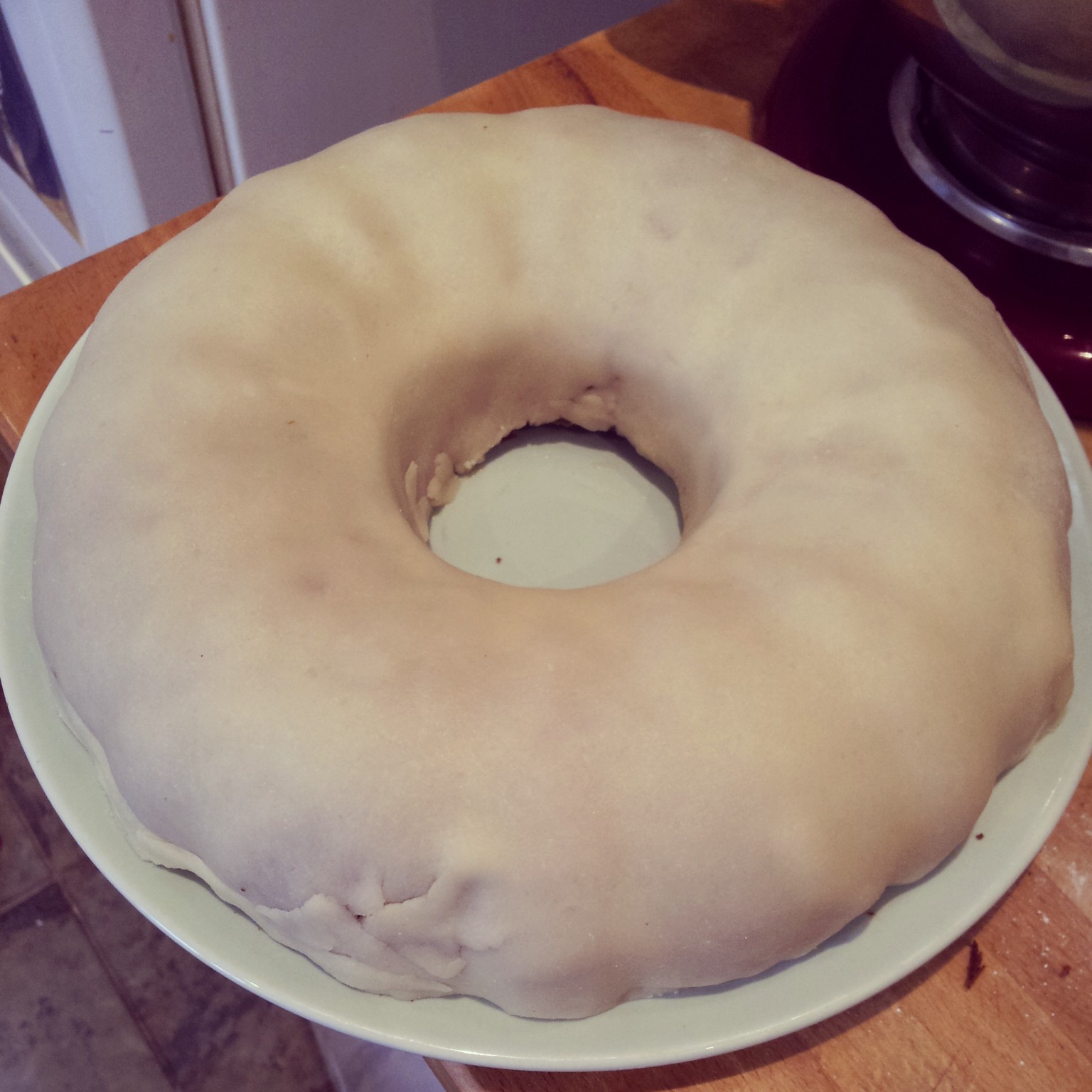
Smooth fondant finish

Smooth fondant finish

The most tricky bit is trying to get a thin layer of smooth white fondant icing to cover the bundt. The Renshaw white fondant is really lovely to work with, so soft and smooth, but I had to add a lot of icing sugar to stop it sticking to the worksurface so I could lift it all up in one go over the rolling pin. I didn’t have the courage to pop a hole in the middle of the white icing once I eventually got it on to the cake. I couldn’t have faced more rolling after it took me a good few goes to get it the right size to fit the cake. It took a bit of manoeuvring in my little kitchen to get it to work but once in place it worked a treat! Using the palm of my hand I smoothed the fondant and buffed it to a nice sheen so a hint of the moulding of the bundt can be seen through the icing.

Terrible crown attempt number 2.

Terrible crown attempt number 2.

In a bid to create a royal crown for my baby cake I cracked open a pack of yellow fondant. I clearly had to give up on my crown idea, as this looked more like a wonky chimney. A new approach was needed.

I give up on the crowns let's make flowers instead!

I give up on the crowns let’s make flowers instead!

And that approach is always flowers! I have a few sugar craft tools in my kitchen, most of which tend to be flowers or stars. The yellow sugar paste was really easy to handle. As it was so soft it didn’t really require any kneading to make it more pliable. It was good to go straight from the packet. As we don’t know if the baby is a girl or a boy (yet) I chose the gender neutral buttercup yellow.

whack a load of flowers all over the bundt

whack a load of flowers all over the bundt

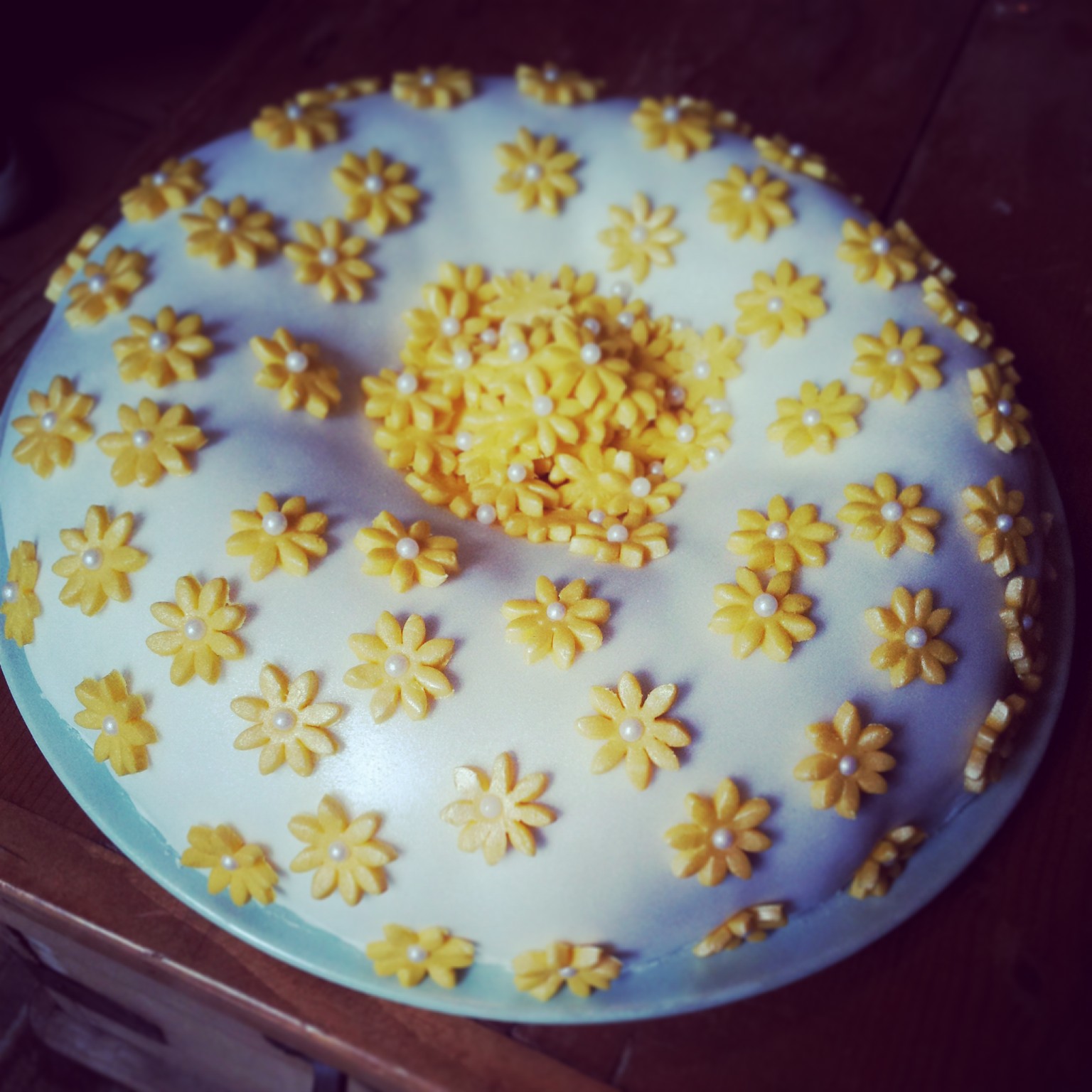
I whacked a whole load of yellow buttercups randomly all over the bundt straight from the cutter. As the white fondant and the yellow sugar paste were still moist no edible glue was needed to hold the flowers in place. You could add some for extra security if you like, but the fondants bonded instantly and let me crack on with cutting as many flowers as possible.

image

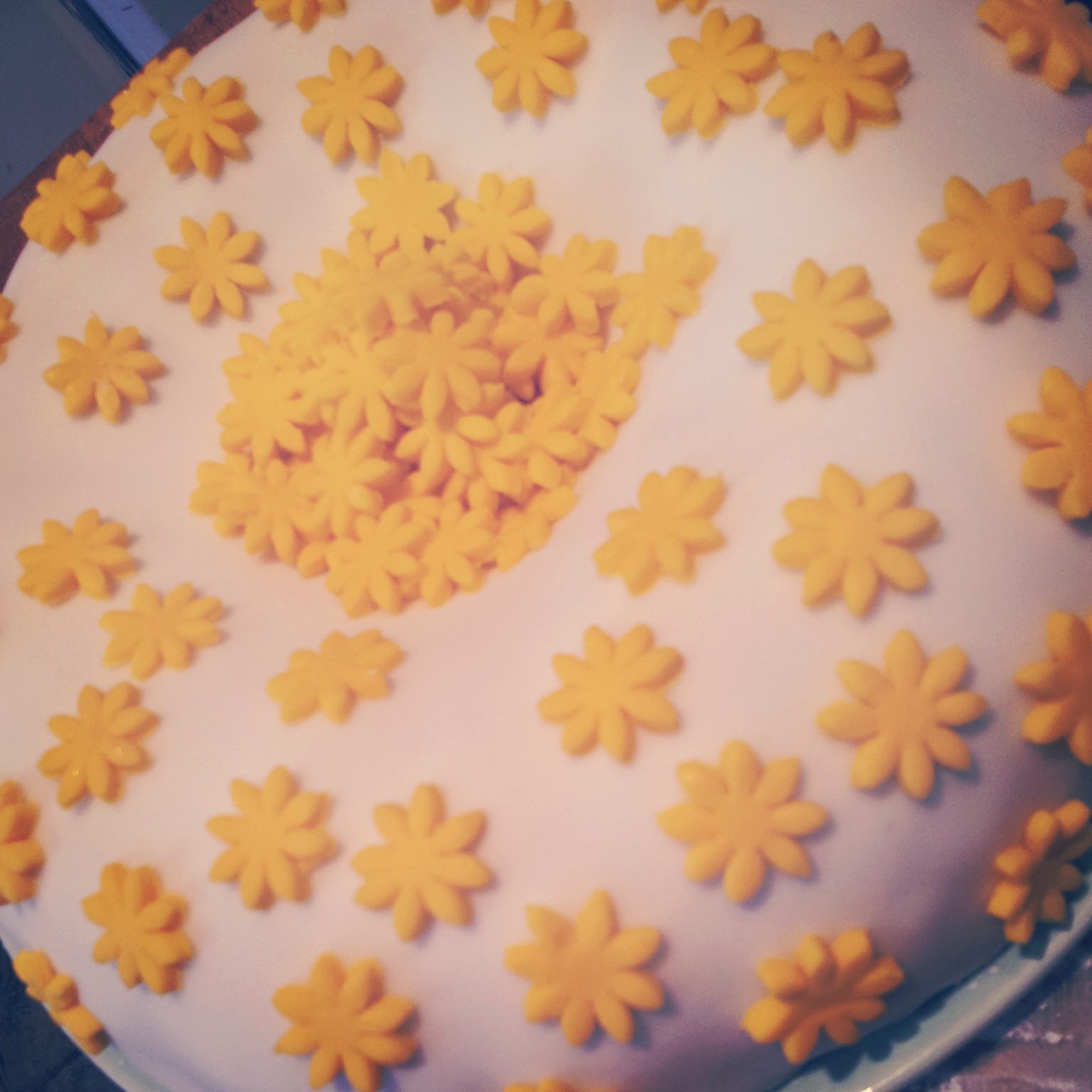
Just when you’re think you’re done… keep going

Just when I started to think I was almost finished, I kept on cutting flowers and piling them up in the centre of the bundt to create a bouquet of buttercups fit for the Duchess.

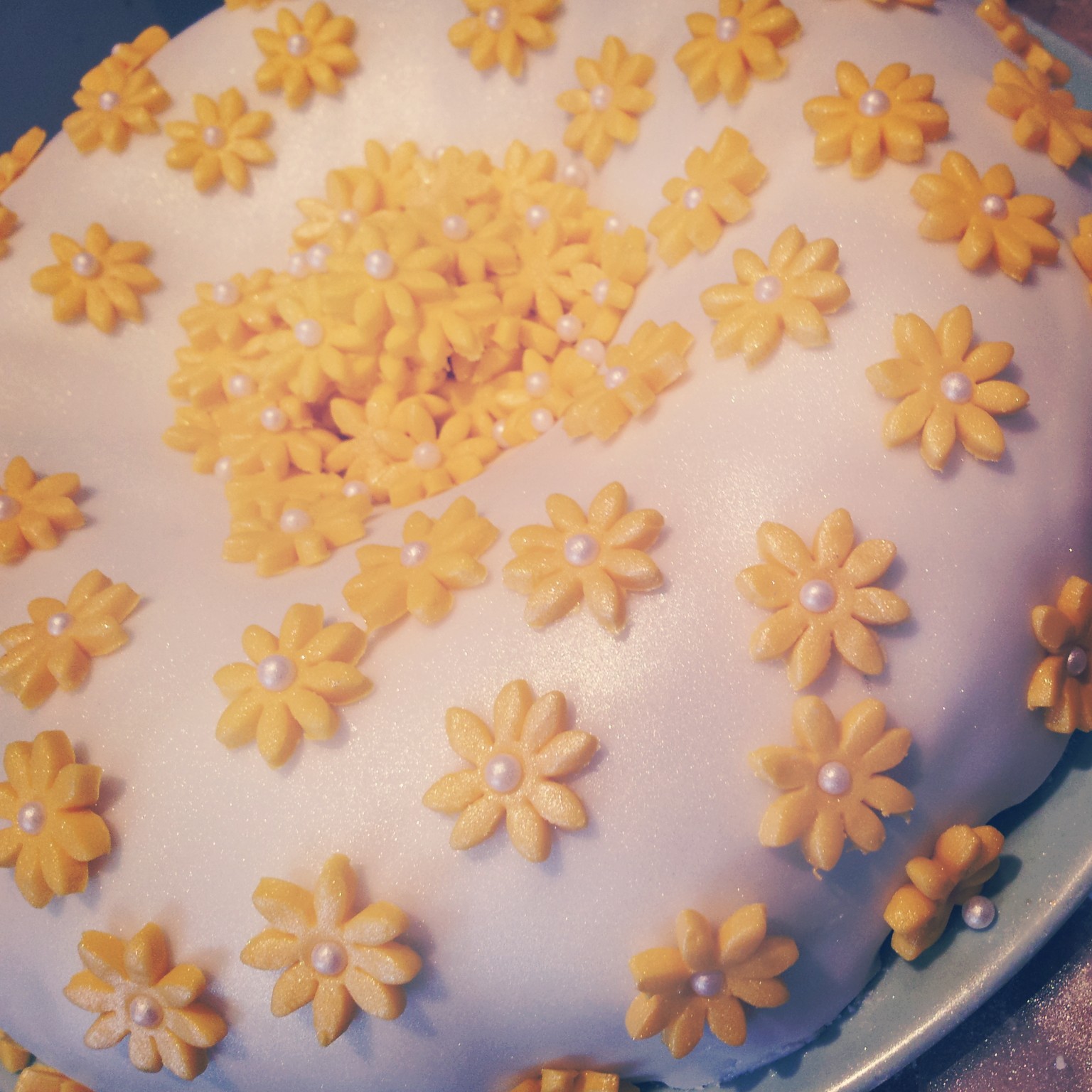
Spray liberally with sparkle and stud each daisy with a pearl

Spray liberally with sparkle and stud each daisy with a pearl

I realised that my bundt was starting to resemble a 1970s swimming cap. I was going for a vintage look but no one wants to eat a swimming cap, especially not Kate Middleton and Wills. The flowers required a lift. Spray on silver lustre is always my go to when cakes need a little something extra. It’s my pièce de résistance. And yet it still wasn’t enough. Back to my cupboard and I discovered a pot of edible pink pearls. Terrific! I studded the still supple yellow fondant flowers with a pearl in the centre. This (in my opinion) makes all the difference.

image

Birds eye bundt view – Welcome to the World Baby Windsor

Pushing the pearls carefully into the centre of each flower added variance to the flowers, giving a more natural look and lifting the petals slightly from the cake. The added pressure also encouraged the bond between the fondants to help hold the flowers on to the cake.

image

I love a bit of lavender in my baking, you can probably tell from all of the other cakes I’ve made. Lavender keeps coming back. Infusing caster sugar with lavender is so easy to do and gives you a naturally wonderful flavour that enhances any cake, shortbread, meringue, Madeleine or cupcake that takes your fancy. It’s subtle floral scent perfumes the house and soothes the soul (and tummy). A nice hunk of lavender Madeira cake is best served with a strong cup of proper tea. The marzipan and fondant gives you an extra flavour dimension and sweetness. That sugar boost a new mammy needs. Welcome to the World Baby Windsor.

Baby Bundt Cake

Build me up Buttercup – Baby Bundt Cake

Things that I used to make this Baby Bundt Cake

  • 115g Self Raising Flour
  • 115g Plain Flour
  • 175g Margarine
  • 175g Lavender infused sugar
  • 3 eggs
  • splash of milk
  • 500g Renshaw white fondant icing
  • 500g Natural Marzipan
  • 40g yellow sugar paste
  1. Beat sugar and butter together until light and fluffy
  2. Beat eggs in, one at a time until fully incorporated
  3. Fold in the flours
  4. Fold in enough milk to get a good dropping consitency
  5. Pour into a bundt tin and smooth down, filling all of the gaps
  6. Bake for 50 minutes at 170 degrees C
  7. Cool
  8. Coat with apricot jam
  9. Apply a layer of marzipan
  10. Apply a layer of fondant icing
  11. Apply flowers, lustre and pearls!
  12. Present to your new parent friends.
Buttercup Bouquet

Buttercup Bouquet

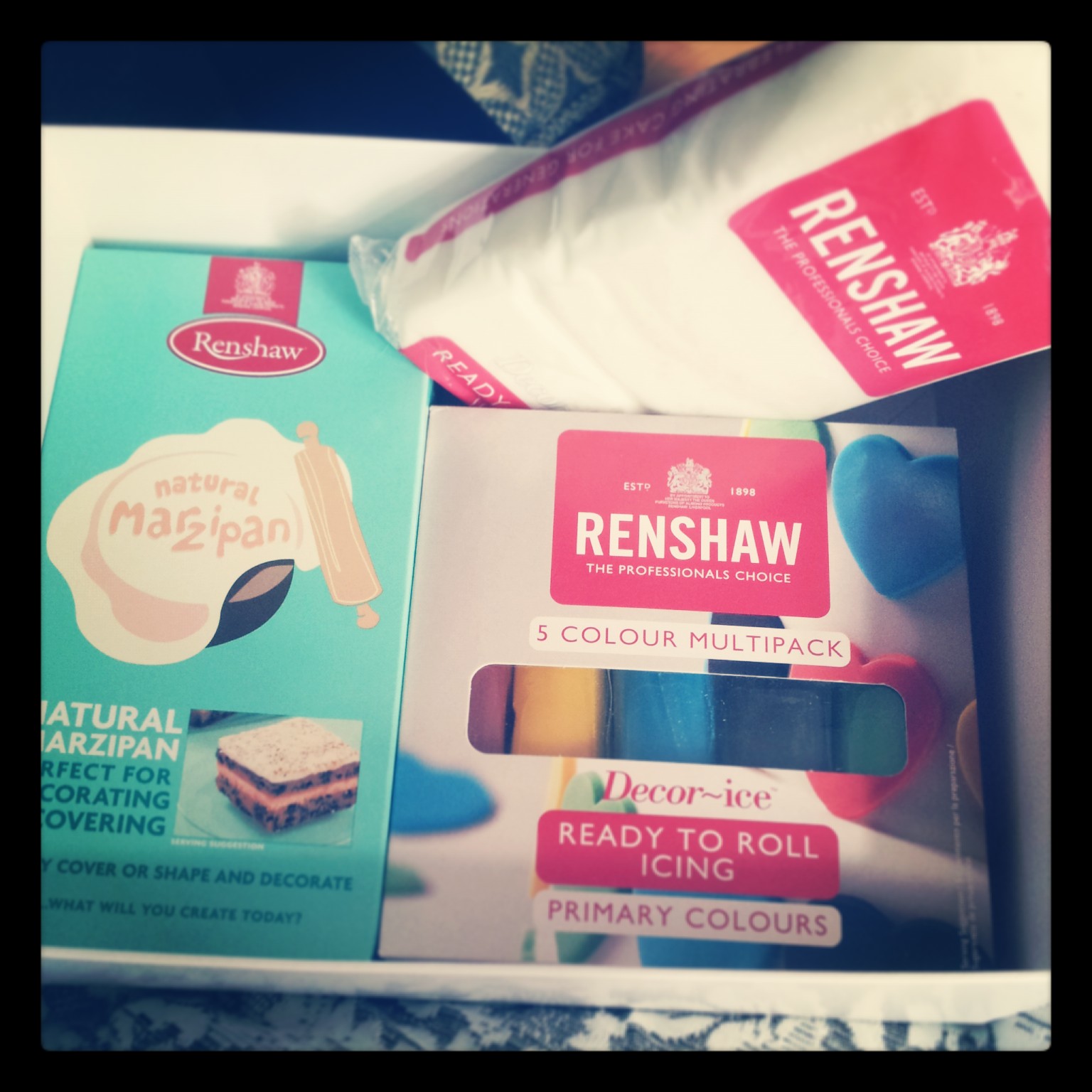
Thank you to Renshaw for sending me this lovely box of icing and marzipan. I loved getting creative with the icing and it’s really easy to work with. I shall have to practice my cake decorating skills more often! Now who needs a celebration cake??

My box of Renshaw Icing Goodies

My box of Renshaw Icing Goodies

If you’d like to see the other entries in the Royal baby cake competiton head on over to www.renshawbaking.com


50. Authentic Danish Rye Bread – Rugbrød

Danish Rye Bread

Danish Rye Bread

My wonderful friends Josh and Mark shared their genuine Danish Rye Bread recipe with me months ago and I’ve been dying to try it! I was going to visit them in Manchester and thought it the perfect occasion to take them some freshly baked Rye bread too to say thank you for letting me stay!

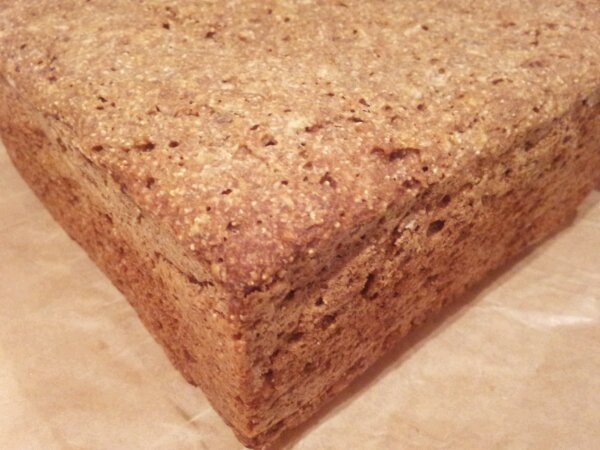
A cross section of Danish Rye Bread

A cross section of Danish Rye Bread

The recipe arrived in 3 photos of hand written sheets so I knew it was going to be good and truly authentic. It requires rather a lot of flour as it is enough for 3 loaves. My brain couldn’t calculate the maths to scale this recipe down so 3 loaves it is!

The Rye Bread Sourdough Starter

The Rye Bread Sourdough Starter – porridgey

The recipe calls for a homemade sourdough base. I have attempted to make my own sourdough starter from scratch before following the Fabulous Baker Brothers method of capturing the yeast from the air in flour and water and letting it ferment. Perhaps my house is not particularly yeasty, I’m not sure but for whatever reason I couldn’t get it to bubble. Having made a successful Herman the German Sourdough starter and cake before I know that adding instant yeast is a sure fire success. Therefore, I admit it, I deviated from the rules immediately, before I even began baking pouring in a little cheating instant yeast to get the sourdough started.

Starting the Rye Bread in my massive cake tin

Starting the Rye Bread in my massive cake tin

I don’t own a bowl big enough to stir this vast amount of flour in so wielding my largest cake tin I set to work… and consequently ruined said cake tin, bending it out of shape with the cement like dough!

If you were making your own sourdough starter, you could keep some back and carry on feeding it so you can make many more beautiful loves in the future. I was making just enough for this recipe, but may attempt to make my own sourdough rye starter again.

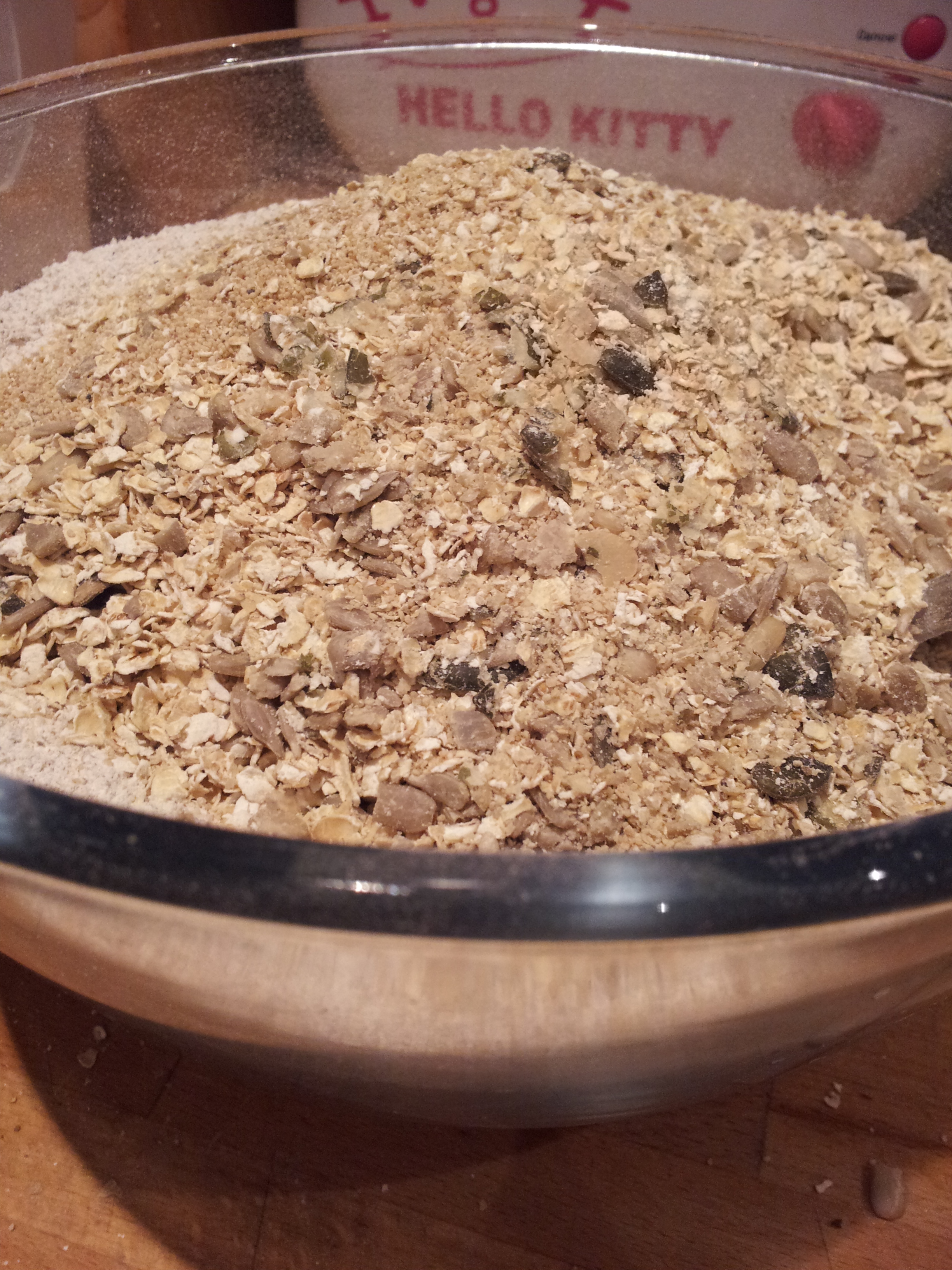
There's a lot of flour in this Rye Bread

There’s a whole lot of flour, seeds and grains in this Rye Bread

Rye is quite the healthy flour, full of wholesome goodness, as opposed to refined white flour. This means that it has quite a distinct flavour and it is much heavier than white flour. It creates a rather dense loaf. Mixing rye flour with white flour lifts the texture and colour of the bread slightly. The addition of seeds, nuts and grains give it extra texture and nutritious value!  This bread is perfect for applying lashings of cream cheese and smoked salmon to. I love the traditional Smørrebrød, or Danish open sandwiches. Rye bread is an essential part of proper Danish sandwich making.

If you plan this in advance you will have plenty of time to allow the starter to ferment. I however did not. You should mix the flour and water together, stirring it into a smooth, thick paste and leave for at least 12 hours to let it bubble. I made my starter but needed it to be ready to go asap so I cheekily added 7g of instant yeast to make sure it rose fully.

Adding the flour and seeds to the sourdough start mix

Adding the flour and seeds to the sourdough start mix

Once your starter is ready you can save a cup back for future sourdough creations or, whack it all in to the mix like me. The beauty of rye bread is that it doesn’t require kneading! However you do need strong arms for the mixing. My weapon of choice was a wooden spoon to battle the heavy dough with. Combining the sourdough starter with the rest of the rye bread mixture, alternating between the dry ingredients and the water is hard work but you must keep on stirring until everything is combined, including the seeds and grains. Prepare yourself for a good 10 minutes of elbow grease.

How to fit all of this in one bowl... water, flour, seeds and sourdough starter

How to fit all of this in one bowl… water, flour, seeds and sourdough starter

Unfortunately there were a few ingredients that I didn’t have to hand so improvising to my hearts content, I chose sunflower and sesame seeds to add to the dough. I haven’t been able to find malt powder so I just left it out of the mix, but I bet you can get it in healthfood shops. Rye/barley/wheat grains don’t really feature in my cupboards (other than broth mix and I’m pretty sure dried barley and split lentil is not what we’re looking for here) but oats were an excellent emergency substitute!

Thick and porridgey just how the best Rye breads should be

Thick and porridgey just how the best Rye breads should be

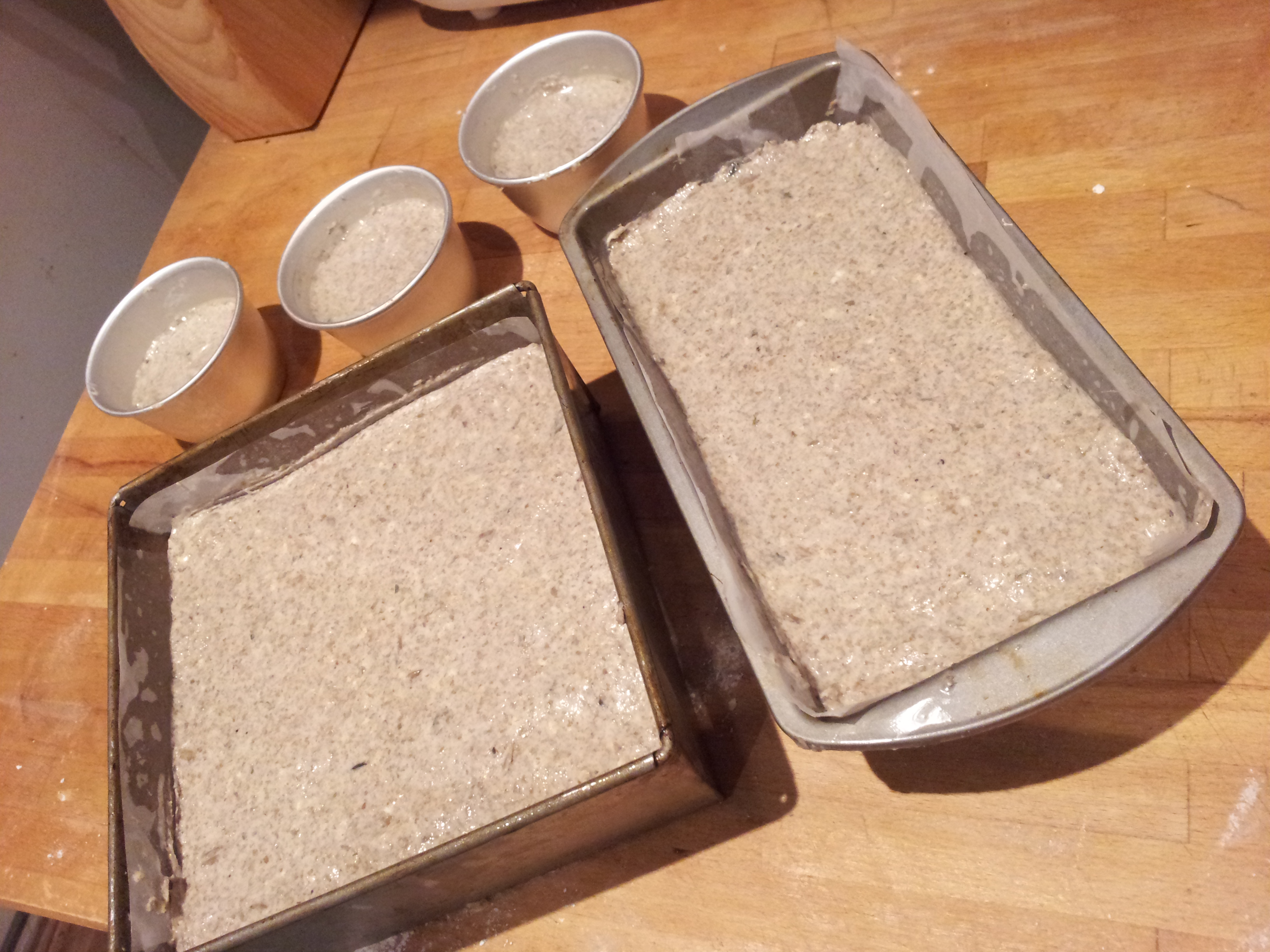
Once the dough is the consistency of thick porridge (lumpy in a good way) it’s ready to pour/scoop into your greased and floured loaf tins. It is quite a stiff liquid so your have to encourage the dough as you pour it into the corners of the tins. Pour in enough dough fill two thirds of the tin, so there’s still space for the dough to expand without overflowing the tin. I had to resort to baking one loaf in a square cake tin (the same size as 2 normal loaf tins) and some mini pudding tins as I only have the one small (500g) loaf  tin!  Coat each loaf with a nice wash of oil and sprinkle a few oats/seeds on the top. Cover the loaves with greased cling film and leave to prove/mature for 8-12 hours. This time allows the sourdough to mature further and add a deeper tangy flavour to the bread.

Pour your rye bread dough into all of your loaf tins (and every other container you can find...)

Pour your rye bread dough into all of your loaf tins (and every other container you can find…)

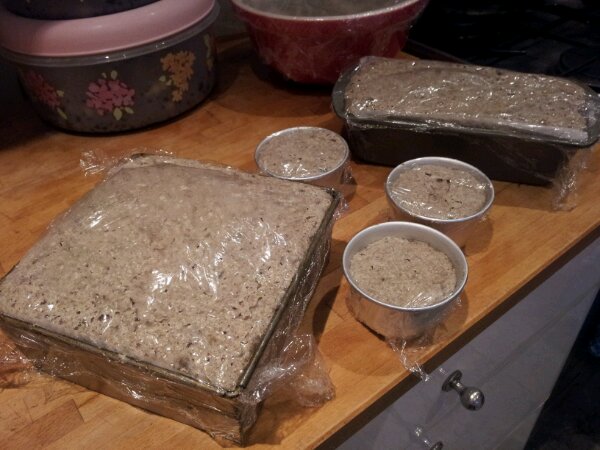
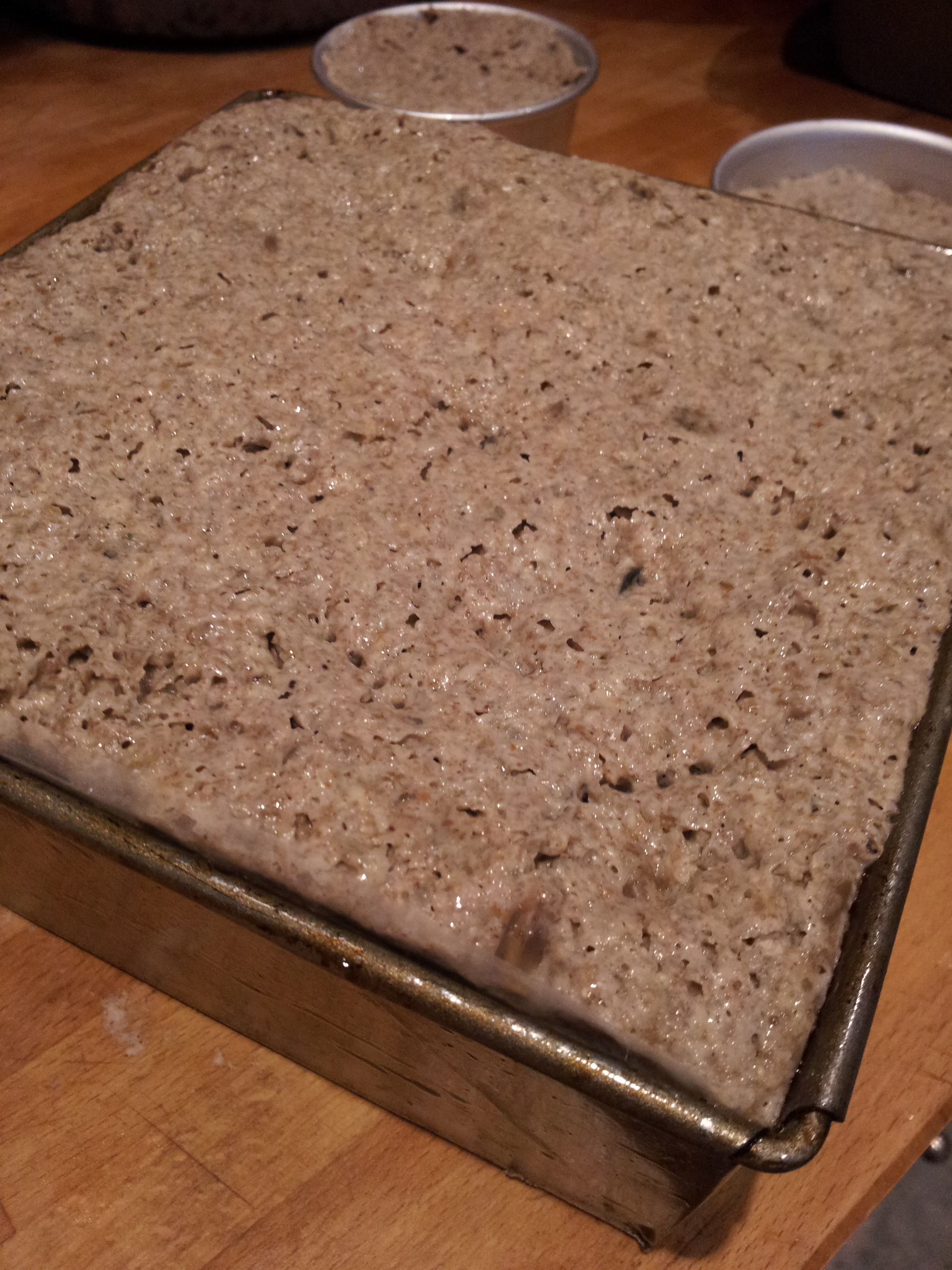
When proved the dough will not double in size like other breads but it will increase in volume and should reach the top of your loaf tins. Prick the tops of the proven loaves all over with a fork, this will help keep your crust intact as it may fall off if left un perforated. It also prevents the loaves from rising and cracking in the oven, maintaining that distinctly symmetrical Danish Rye bread oblong shape.

The cling film covered and proving loaves

The cling film covered and proving loaves

Pre heat your oven to 220 degrees C. Bake the loaves at 220 degrees for 10 minutes. This initial blast of heat helps to force the bread to rise and the crust to develop. Lower the temperature to 175 degrees C and bake for a further 75  minutes.

Sometimes pegs come in handy to keep the cling film in place...

Sometimes pegs come in handy to keep the cling film in place…

If your loaves can be removed easily from the tins at this point do so. if not, leave for another 5-10minutes until they can be removed. Bake the bread for a further 5-10 minutes without the tin directly on the oven shelf to allow the crust to become extra crunchy.

The forked loaf ready for the oven

The forked loaf ready for the oven

Once they’ve cooled they’re ready to eat! You should be able to keep them at room temperature for 1-2 weeks or they freeze really well too.

Danish Rye Bread fresh from the oven

Danish Rye Bread fresh from the oven

I always know when I’ve baked something especially tasty as Super Hans will go out of his way to steal it from me. He was desperate for a bit of my Danish Rye Bread. I love the depth of the flavour in this bread. It radiates health and wellbeing. It’s also rather filling, so thin slices are a must. The sourdough tang cuts through the fantastic texture of the seeds and nuts. Now that I have the Kitchenaid I can dispense with the cake tin mixing method, so I will be purchasing more rye flour very soon and having another go. I would also love to try other dark breads. I can see me attempting many more in the future. Thank you Josh and Mark for sharing your fantastic recipe with me!

Extreme close up of the crunchy crust

Extreme close up of the crunchy crust

Things that I used to make Danish Rye Bread

Sourdough Starter

  • 300ml luke warm water
  • 250ml rye flour
  • 7g of instant yeast (if you’re in a hurry)

Mix together to a thick smooth paste and leave to ferment until bubbly (12-24 hours) or if you’re impatient add 7g of instant yeast to your starter…

Rye Dough

  • 1 litre of warm water
  • (if you can find it add 1 tablespoon of ground malt -I didn’t)
  • 200g sunflower seeds
  • 200g sesame seeds
  • 400g oats (or whole rye, barley/wheat grains)
  • 2 tablespoons salt
  • 1 tablespoon honey
  • 300g strong white flour
  • 900g rye flour
A slice of rye

A slice of rye

My pair of rye loaves

My pair of rye loaves

48. Oh Canada! Oh Nanaimo Bars!

Happy Birthday to Chris  Nanaimo Bar

Happy Birthday to Chris – your own personal Nanaimo Bar

This blog has been a looooong time coming. I wanted to recreate a special treat from our Canadian travels for Chris’s birthday (last October…). My Aunty Carol in Canada recommended the quintessentially Canadian Nanaimo bar to satisfy my Canadian cravings.

Hike up Mount Doug

Hike up Mount Doug

We spent a glorious week with my family on Vancouver island. Taking in all the sites, hiking up Mount Doug, whale watching, exploring the ski slopes and of course meeting a Mountie or two.

Mountie Meeting

Mountie Meeting

Ziplining through the forests in Whistler

Ziplining through the forests in Whistler

So many beautiful sights to take in

So many beautiful sights to take in

Nanaimo bars are as popular in Canada as Tim Horton’s coffee shop. I still dream of those bear claw doughnuts. Unfortunately in England we don’t seem to know what Graham Crackers are or sell them in any shops… and they are an essential ingredient in Nanaimo Bars.

Smash up your biscuits with whatever's handy in a sandwich bag

Smash up your biscuits with whatever’s handy in a sandwich bag

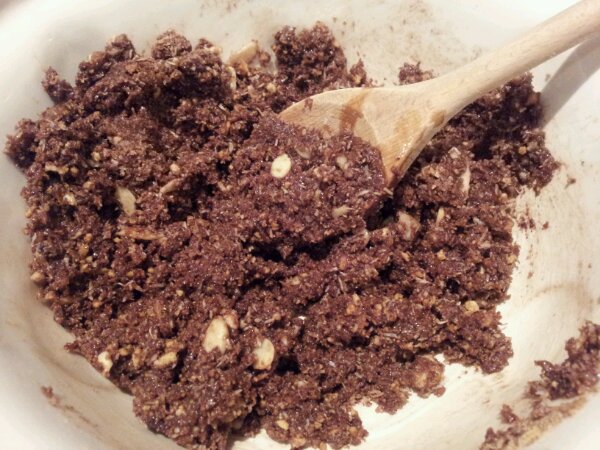
My educated guess is that it’s some sort of spiced caramelised rich tea biscuit. So I did what I do best with limited store cupboard. I improvised. Smashing up a load of rich tea biscuits and adding in a combination of ginger and cinnamon to the mix.

The beginnings of the biscuit base

The beginnings of the biscuit base – combine sugar, butter, egg, biscuit crumbs, nuts and coconut

The base required a tasty combination of biscuits, melted butter, sugar, egg, cocoa powder, almonds, and coconut. It’s really quick to mix it all together. A 20 second blast in the microwave is all the butter needs to be fully runny.

Stir it all together until fully combined

Stir it all together until fully combined

Stir it all together until fully combined and comes together into a stiff mixture.

Biscuit base ready to be baked

Biscuit base ready to be baked

Once combined press the mixture firmly and evenly into all of the corners of a flat lined and greased 9 inch baking tray. Bake the biscuit base in the oven for about 10 minutes at 180 degrees C.

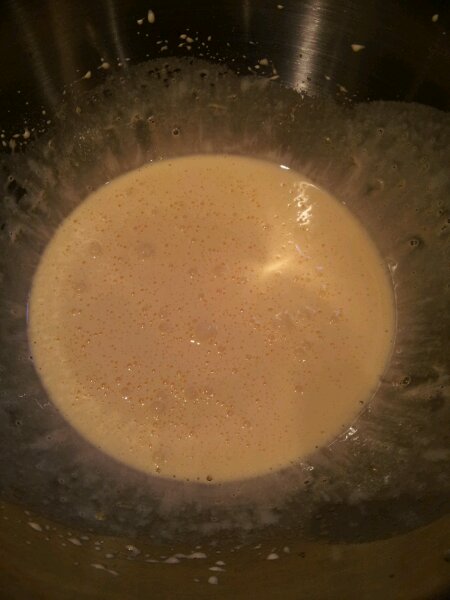
Whipping up the custard filling

Heating up the cream, milk and vanilla to make the custard filling

The next decadent layer is a lovely custard cream. At this point in my baking repertoire I was still yet to attempt custard concocting. Daunted yet undeterred I proceeded to my cupboard to retrieve the custard powder the recipe requires. Disaster struck when I discovered the custard powder was over a year out of date! Not wanting to poison Chris on his birthday I decided I had gone too far and didn’t have time to make another cake so I would have to proceed and whip up my own custard instead.

Thickening up the custard

Whisking up the eggs, sugar and cornflour

I decided a full custard recipe would be far too much for a small Nanaimo bar recipe so I adapted a Mary Berry recipe to make up my own sweet filling. As with gelato or ice cream you start off heating the cream and milk with a vanilla pod to infuse the custard. Then you whisk the eggs until fluffy with the sugar. Taking the cream off the heat and pour over the eggs. Continue to whisk until it thickens. Then return the custard to the pan and whisk over a low heat until it thickens.

Keeping whisking til the custard thickens

Keeping whisking til the custard thickens

The Nanaimo bar is quite a firm cake so I knew I would have to adapt the rather runny custard to make this work. I added the butter, vanilla extract and a lot of powdered (icing) sugar to the custard. Continuing to whisk it over the low heat until it reached the right thick consistency. You may need to add more powdered sugar to make your custard set firmly. It will end up a much paler custard due to the white icing sugar.

The baked biscuit base - nanaimo bar recipe

The baked biscuit base – look at those nuts!

Take the biscuit base out of the oven and let it cool fully. Once the custard has cooled you can then happily pour the custard over the biscuit and let it set in the fridge whilst you whip up the chocolate topping.

The custard layer setting - nanaimo bar recipe

The custard layer setting

Using a bain marie, pop the chocolate in a bowl suspended over a bowl of boiling water to allow the chocolate to melt gently. Save the last third of the chocolate back to add to the melted chocolate to help reduce the temperature of the chocolate. This tempering of the chocolate stops it from blooming or sweating when it’s cooling. It helps to keep your fingers slightly less sticky.

Gloriously gooey melted chocolate

Gloriously gooey melted chocolate

Pour the glossy melted chocolate all over the custard layer and simply let it cool and set.

The chocolate layer

The chocolate layer

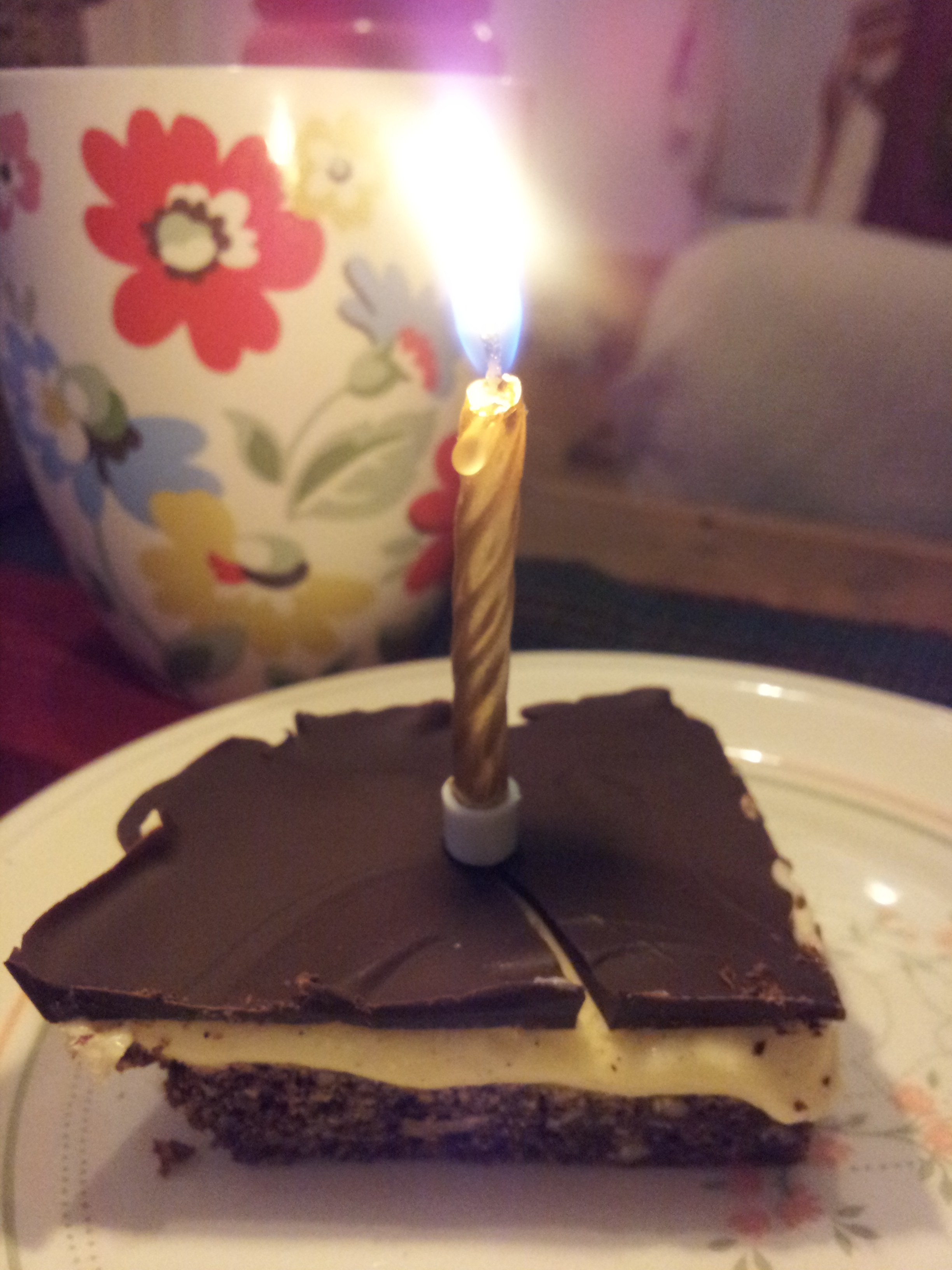
But… just before it’s fully set quickly score the chocolate with a sharp knife to mark out the bar squares. You’ll thank me later. Once the chocolate sets fully it’s really difficult to cut through the chocolate and get properly portioned slices, as the chocolate cracks. (I wish I’d known this when I made Millionaire’s Shortbread!)

The scored Nanaimo Bar

The scored Nanaimo Bar

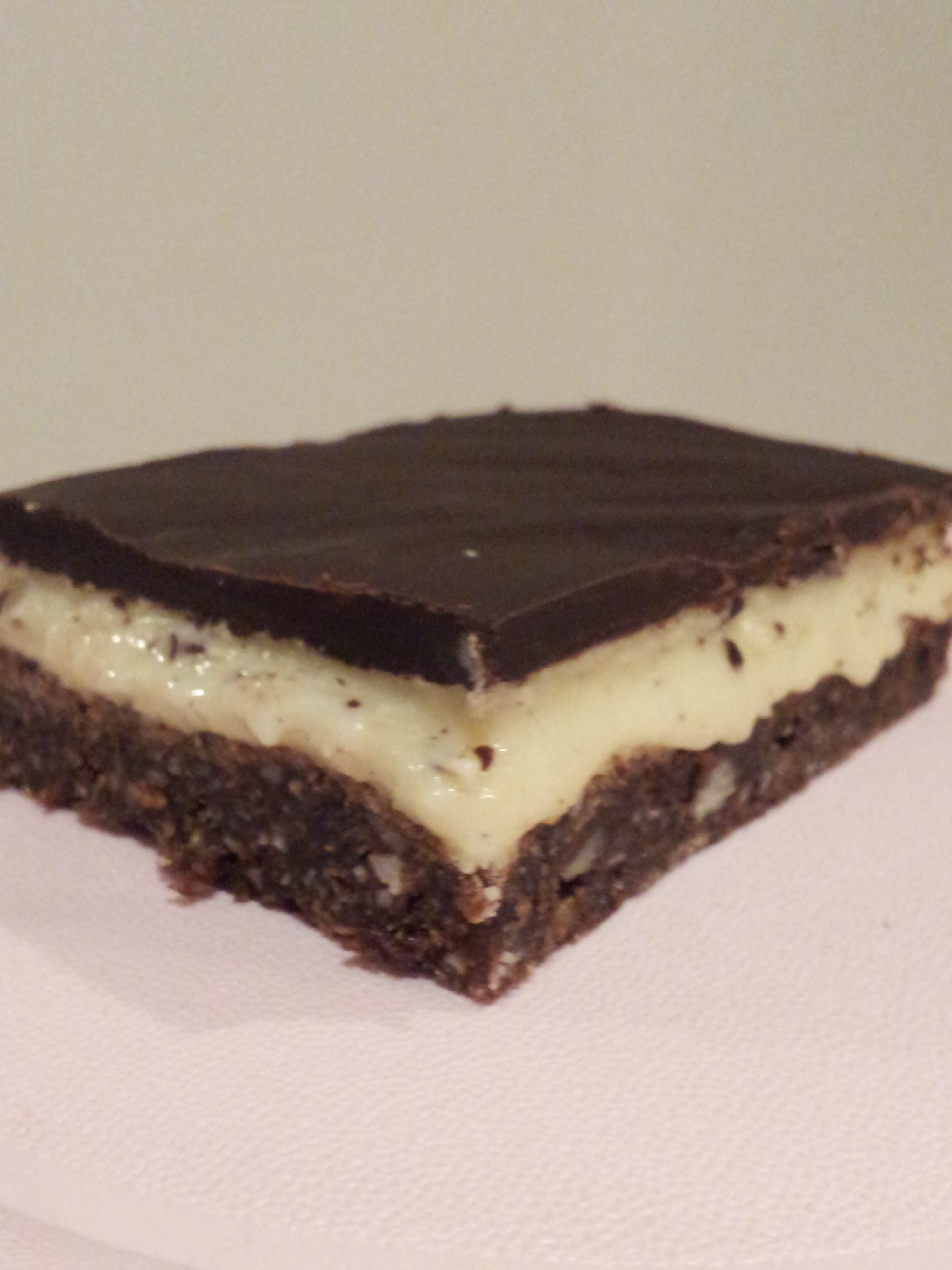
Then once it’s fully set you can take it out of the tin, chop it up and tuck in! I served Chris his for a special birthday breakfast. In hindsight it might not be the best breakfast food, but you can eat whatever you like on your birthday. That’s the rules. It’s a wonderfully sweet treat.  The coconut, custard and chocolate are a brilliant combination. That’s 3 of my most favourite ingredients all wrapped up into one cake. And even better,  it doesn’t take an age to make. I can see why the Canadians love it so.

Nanaimo Bar recipe

Nanaimo Bar

Thank you so much for the wonderful memories and for showing us the sights Aunty Carol, Uncle Malcolm , Kelly and David!

At the top - Whistler

At the top – Whistler

Things I used to make Nanaimo Bars

  • 1 cup or 250g rich tea biscuits smashed to fine crumbs (or if you have access to graham crackers go for it!)
  • 1 tsp ginger
  • 1tsp cinnamon
  • 1/2 cup or 125g desicated coconut
  • 1/3 cup or 75 g of flaked almonds
  • 1/4 cup or 60g cocoa powder
  • 1/4 cup or 60g sugar
  • 1/3 cup or 75g  melted butter
  • 1 egg

Custard Cream Filling

Custard

  • 285ml milk
  • 25ml cream
  • 1 vanilla pod
  • 2 egg yolks
  • 15g sugar
  • 1 tsp cornflour

*Or alternatively use 2tbsp custard powder if you have it!

  • 1/4 cup or 60g butter
  • 1 tsp vanilla
  • 2 cups 500g icing sugar

*add 30ml milk if you’re not using home made custard

Chocolate Topping

  • 200g plain dark chocolate
  • 1 tbsp butter

47. A Thousand Layer Cake – Indonesian Spekkoek Spice Cake

Indonesian Thousand Layer Cake

Indonesian Thousand Layer Cake

I’ve had my eye on this gorgeous Indonesian Thousand Layer Cake (Spekkoek) for quite some time. With it’s perfectly symmetrical stripes of spice interwoven with ribbons of vanilla. Spekkoek or lapis legit is a rich layered cake and is very expensive to buy due to the amount of time it takes to create it, so it’s normally eaten at special occasions and celebrations such as Christmas, weddings or festivals in Indonesian.

Layers and layers and layers

Layers and layers and layers

It requires a bit of planning and preparation and a lot of hitting the pause button if you choose to watch a film whilst trying to bake it, as each layer is baked individually for 11 minutes precisely. But it’s well worth the effort.

Most recipes for a Thousand Layer cake ask for up to 30 eggs! I thought this was a bit extreme and not the most healthy of cakes so scaled it back to a mere 10 eggs. Much more affordable too. It’s definitely a special cake lavished with lots of love and attention it had to taste wonderful.

If you’re going to attempt this cake I recommend

  • You own an electric whisk – this would be quite an ordeal to whisk by hand!
  • You have at least 2 large bowls to whisk the eggs in
  • You add lots of spice!
Beat the egg yolks and 100g sugar together

Beat the egg yolks and 100g sugar together

I’m lucky that I own a Kitchenaid and it could take the strain of whisking the egg whites for me whilst I busied myself whisking the yolks. But you could do it in 3 separate stages if you like. You don’t have to multi task to the extreme if you don’t want to. Me, I enjoy adding a bit of danger to my bakes. Doing everything at once. I’ll balance my bowls on top of many ingredients on the work surfaces and hope for the best, like spinning plates, but in my case it’s batter.

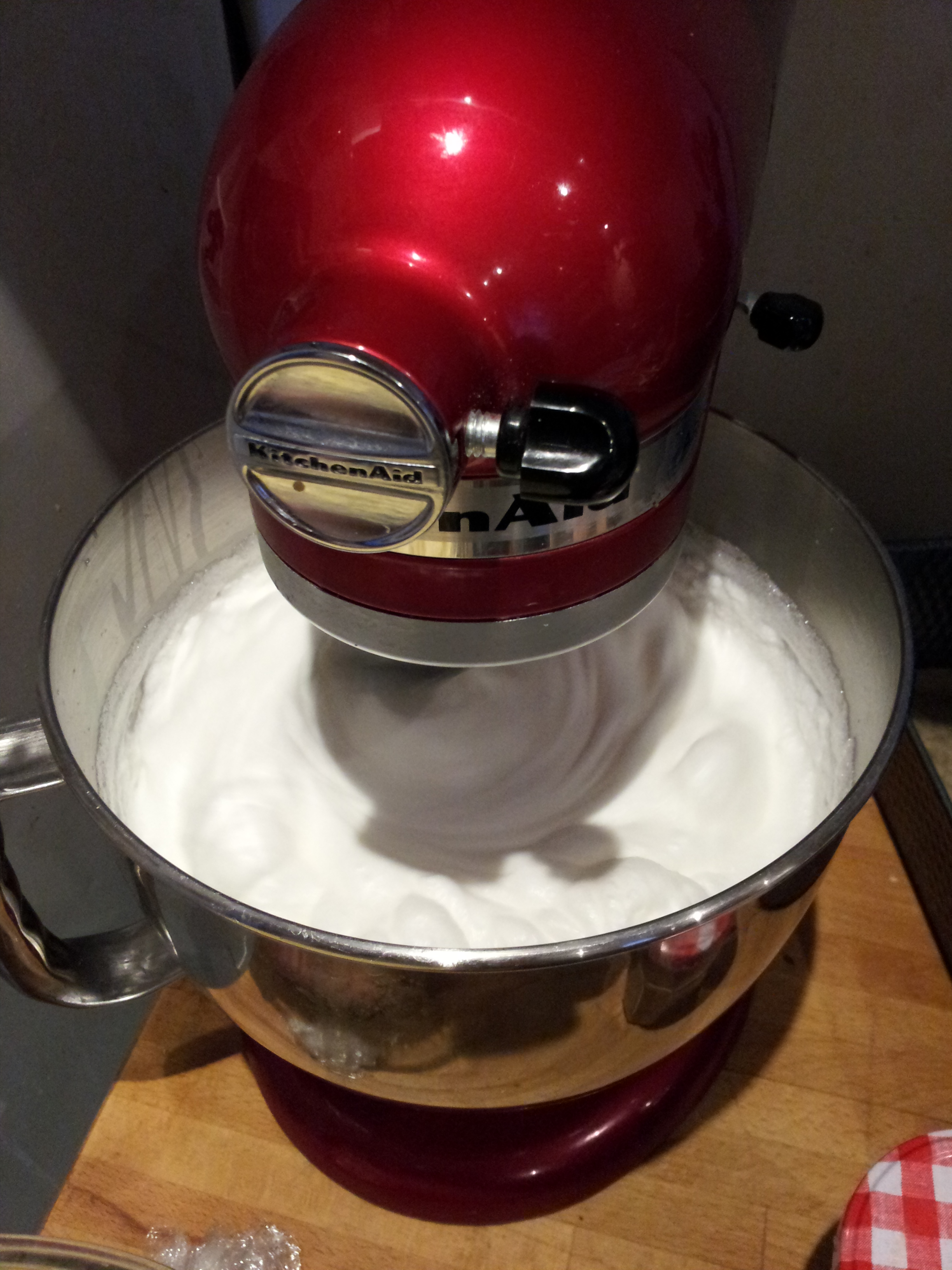
Whilst whisking the egg whites with about 100g of the sugar with a hand held electric whisk I set the Kitchenaid away to whisk the egg whites until fluffy.

Whisking the egg whites until they start to stiffen

Whisking the egg whites until they start to stiffen

Once the whites start to stiffen add 100g of sugar (bit by bit) and continue to whisk until they reach stiff peaks and look glossy.

Beat together the butter, vanilla and sugar

Beat together the butter, vanilla and sugar

Then as if you’re not busy enough, beat together the remaining sugar, with the butter and vanilla extract until light and fluffy.

Mix together the butter and egg yolk mixtures in one large bowl

Mix together the butter and egg yolk mixtures in one large bowl

You’re going to need the biggest bowl that you own to incorporate all of the ingredients together. Start with mixing the egg yolk batter and the butter/sugar paste together.

All together now - butter, sugar, and egg yolks batter

Butter, sugar, and egg yolks batter all together

Once all of the ingredients are mixed well (I used my electric hand whisk) the delicate process of folding in the egg whites to the batter can begin. Using a metal spoon fold in gently the egg whites to preserve the air in the batter.

There's a lot of egg whites to fold in!

There’s a lot of egg whites to fold in!

It will start to look like scrambled eggs but persevere until the batter looks smooth.

Yum scrambled eggs!

Yum scrambled eggs! Keep going with the folding

Next up is the relatively small amount of plain flour considering how much egg and butter is in this cake! It also needs to be folded in carefully to the batter with a metal spoon.

Fold in the flour

Fold in the flour

To achieve the two tone and two flavour effect half of the batter needs to be flavoured with spices and the other half left to be as it is, with a hint of vanilla.

Fold in a vast quantity of spice

Fold in a vast quantity of spice to half the batter

Split the batter in half (you’re going to need yet another bowl here!) and fold the spices into half of the batter.

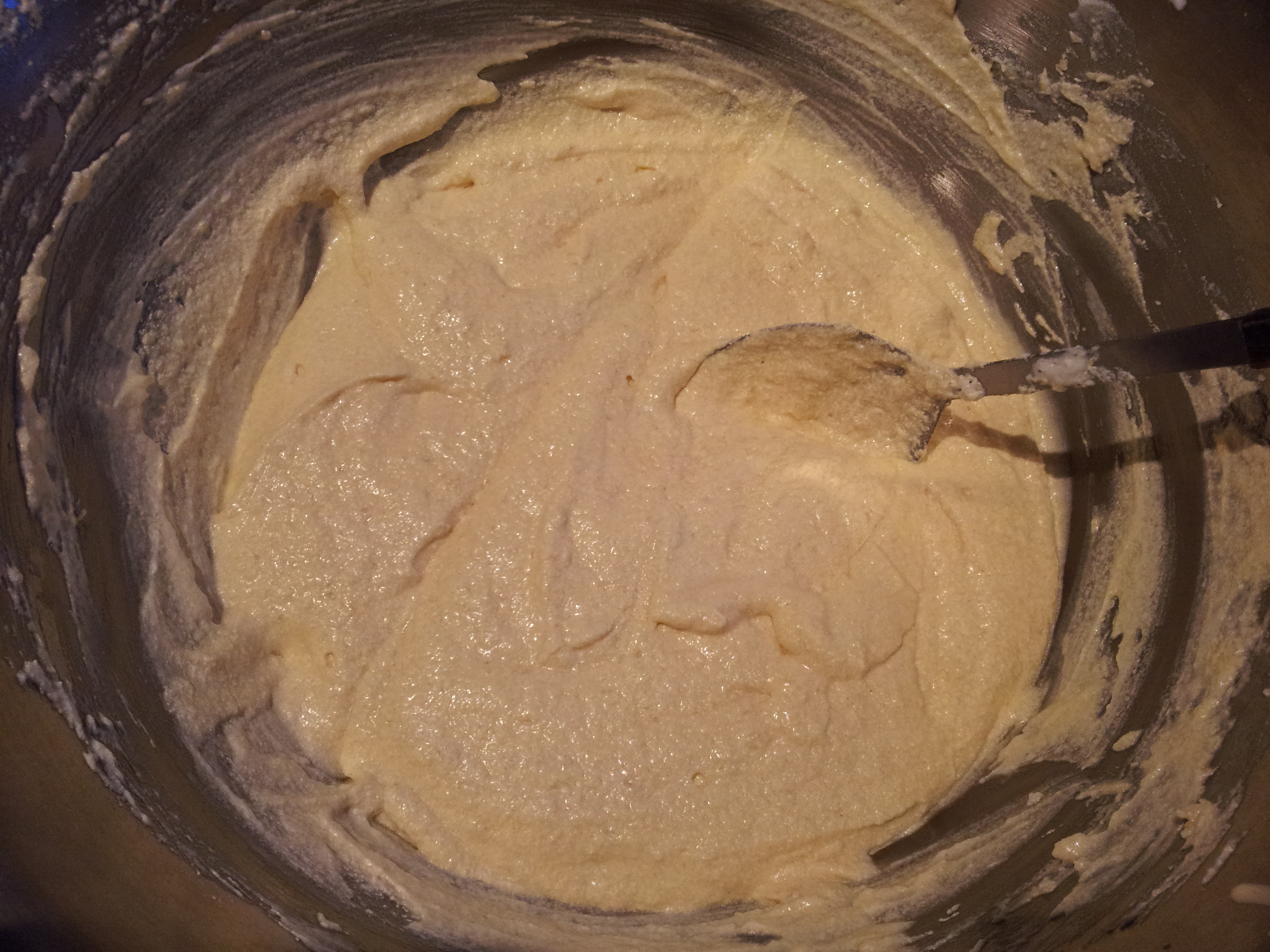
Leave the other half of the batter as it is in a separate bowl

Vanilla batter – Leave the other half of the batter as it is in a separate bowl

The spiced batter should look slightly browner in colour. this will help you to remember which layer you’re up to when it comes to cooking the cake!

Spiced batter

Spiced batter

With your two bowls of batter ready, it’s time to spoon a thin layer (about 5mm) into greased and lined baking tin. I used my new extra long German loaf tin 30cm x 10cm. Make sure you push the batter into all of the corners and smooth it down. Give it a very gentle tap on the worksurface to remove any air bubbles and pop it in the oven for 11 minutes. Some recipes say to follow this bake with a minute under the grill, however my oven doesn’t have a separate grill and oven.  The grill would have to be warmed up each time which to me seemed a bit too laborious. Instead I added an extra minute to the baking time to compensate for the lack of grilling and it worked a treat.

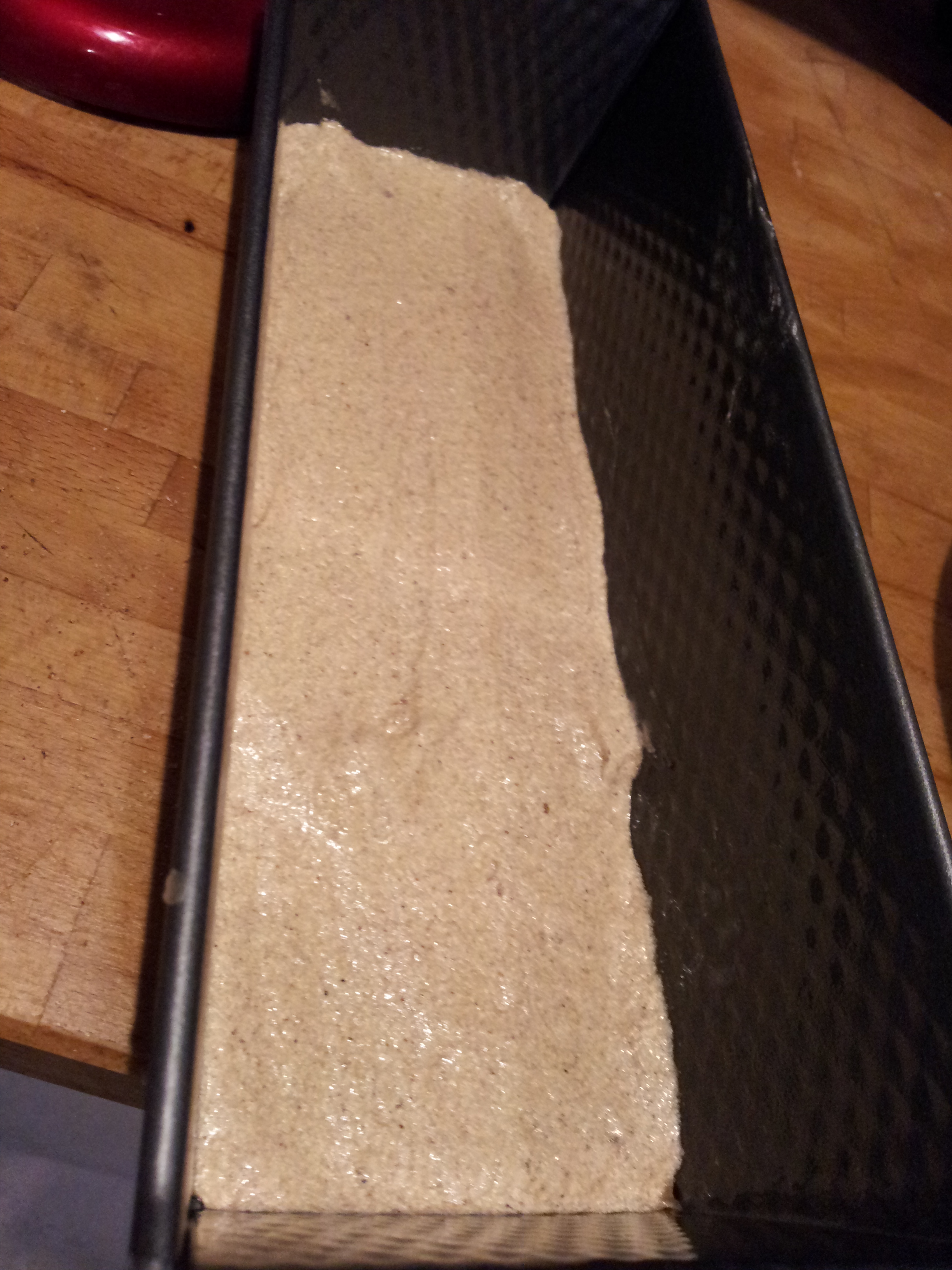
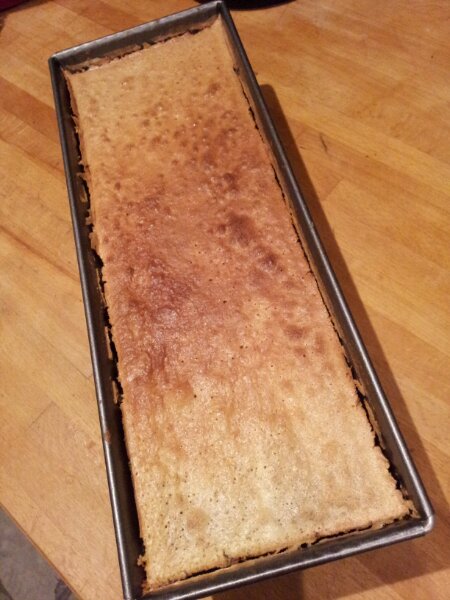
The first layer in the extra long loaf tin

The first vanilla batter layer in the extra long loaf tin

It’s a bit tricky to get the first layer into all of the corners as the batter is quite stiff. I wiped the inside edges of the tin round with a clean finger to remove any extra batter to avoid any smudging of the layers later on. The last thing you want is a smear of burnt batter up the sides your beautiful layer cake.

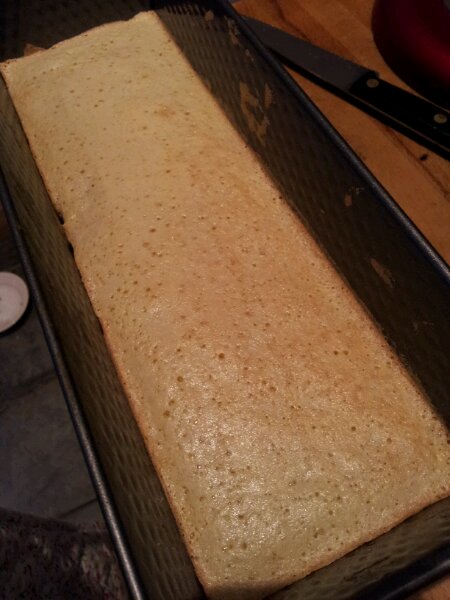
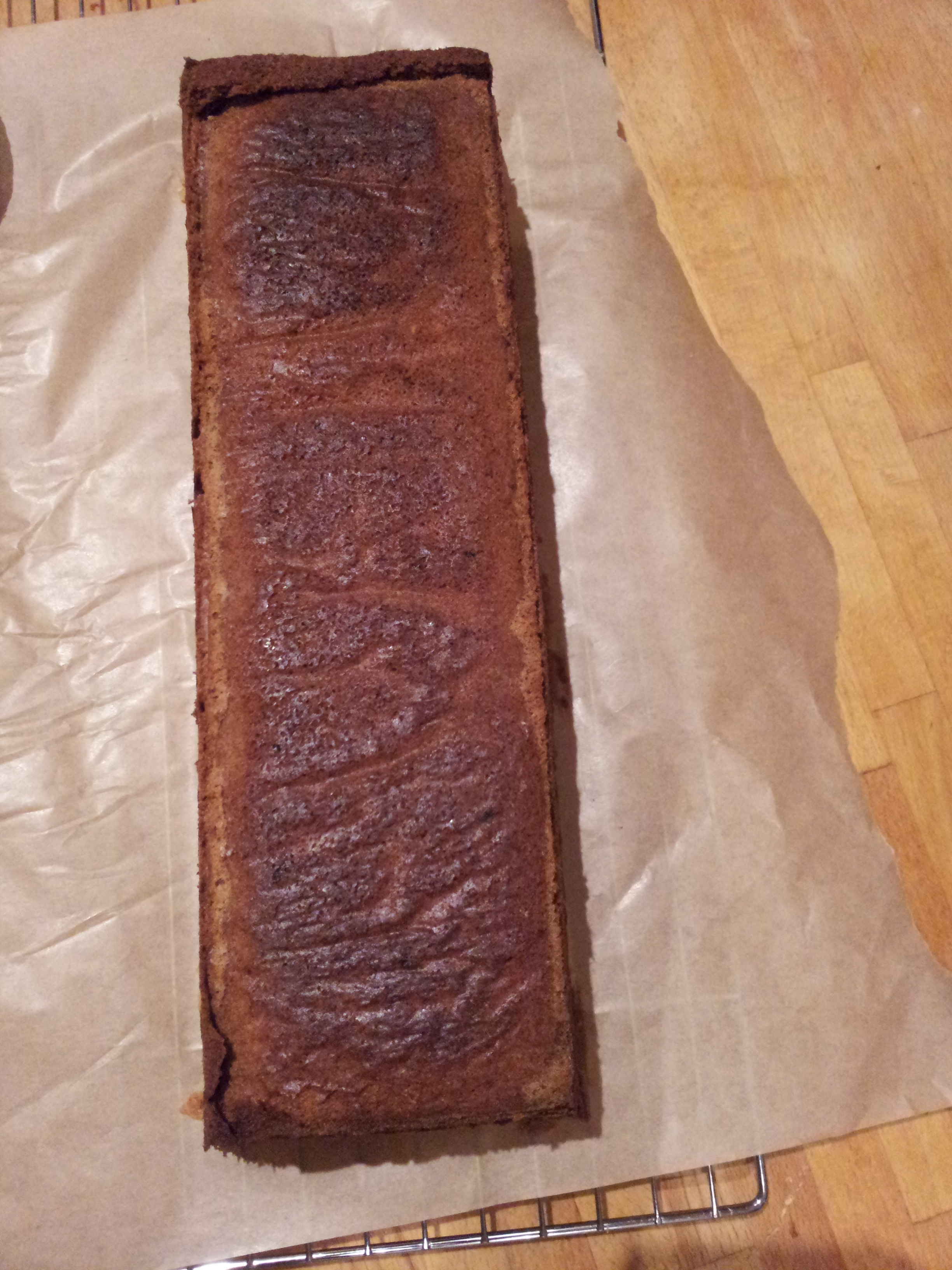
The first baked layer in the extra long loaf tin

The first baked layer in the extra long loaf tin

After 11 minutes in the oven the first layer should be slightly golden brown and evenly baked. Ready for the addition of the next layer straight on top of the hot cake. The heat from the first layer helps to melt the butter and spread the batter evenly around the tin. Remember to alternate your batters! One layer vanilla, one layer spice and repeat.

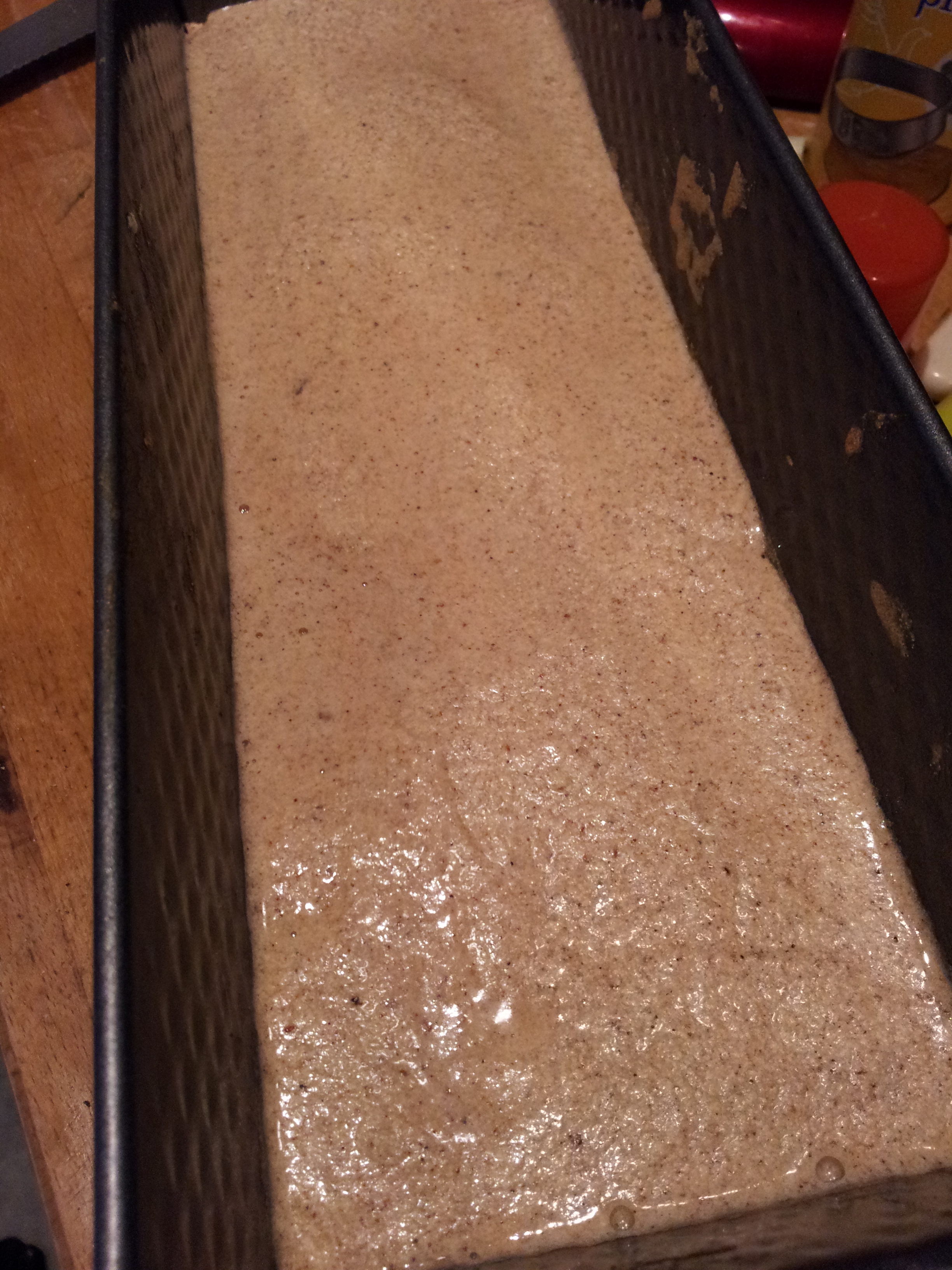
Raw spiced batter straight on top of the cooked cake below

Raw spiced batter straight on top of the cooked cake below

As your cake bakes it will probably shrink back from the sides of the tin a little, so don’t be alarmed if some of the raw batter disappears down the sides of the cake and into the layer below. A liberal dusting of icing sugar hides all manner of mishaps to a finished cake!

The second spiced layer

The second spiced layer, smooth and ready for the oven

Keep alternating the batters. Repeating the layering, spreading, baking and even more layering until you’ve no more batter left. This process is not for the time restricted or feint hearted. Baking the cake took at least 4 hours, but it’s almost like a work out, leaping up off the sofa to take the cake out of the oven every 11 minutes.

I grilled the final layer a bit for extra authenticity... It looks a bit burnt but tasted good!

I grilled the final layer a bit for extra authenticity… It looks a bit burnt but tasted good!

Let the cake cool in the tin for about 2o minutes before gently loosening the cake from the tin with a palette knife and attempting to remove it from the tin. I grilled the final layer a bit for extra authenticity… It looks a bit burnt but tasted good!

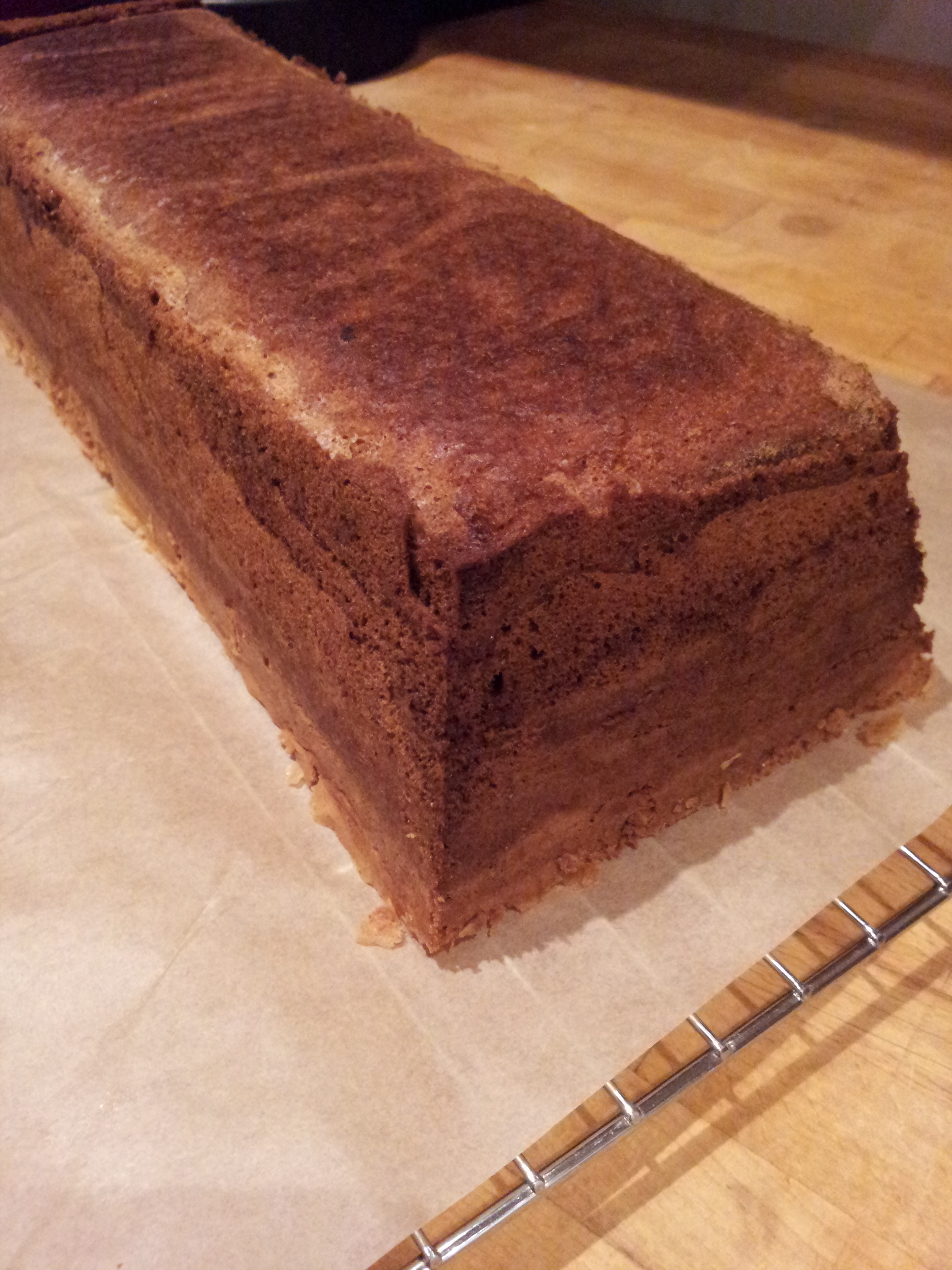
The final long layered cake out of it's tin

The final long layered cake out of it’s tin

I must admit I was a tad alarmed at how dark the cake was when I removed it from the tin. I did wonder how the initial layers would hold up after being baked time and time again. Would they be burnt and tough? I baked at least 18 layers into my cake, that’s a whole lot of oven time for the first few cms of the cake.

Indonesian Layer Cake

Indonesian Layer Cake

The liquid batter did seep under the greaseproof paper inside the tin. The cake had baked around the paper which made it a his made it a bit difficult remove, but not impossible. However this meant the top was a little uneven, so I trimmed it slightly and dusted it with icing sugar! (shh no one will know!)

Trimmed and dusted to reveal the lovely layers inside

Trimmed and dusted to reveal the lovely layers inside

The white icing sugar gave the layers an extra lift against the contrasting spice. I baked my Indonesian Thousand  Layer Cake for a special Clandestine Cake Club ‘Here comes the sun’ themed event. I was hurrying along to the cakey gathering but just had enough time to slice up some homemade candied orange and lemon citrus peel (Thank you Sharyn at The Kale Chronicles for the how to!) in long thin strips to create my very own sunburst effect, adding a trio of star anise (one of the key spices in the cake) to bring the summery spicey cake to life. As Mary Berry always says, you should include a bit of what’s inside the cake, outside the cake to whet people’s appetites.

Here comes the sun - Indonesian Layer Cake

Here comes the sun – Indonesian Layer Cake

As the tin that I used is supposed to be for bread, I don’t own a cake stand or plate big enough to house such a lengthy cake. I resorted to carrying the cake ,open topped on a chopping board instead. Note to self, icing sugar sitting on a cake will not stay there for long on a windy day. Precariously seated on my passenger seat and me also liberally coated in icing sugar we made our way to the Clandestine Cake Club!

Indonesian Thousand Layer Cake

Indonesian Thousand Layer Cake

I’m so pleased I took the time to attempt the Indonesian Thousand Layer Cake cake although technically not exactly 1000 layers it feels close enough! A challenge of the patience and my washing up ability it may be but this cake promises so much more than a frustrating time in the kitchen. It is such an unusual tasting cake, quite delicate and surprisingly light, I guess due to the sparse amount of flour and the endless whisking.

Layers and layers and layers

Layers and layers and layers

This cake is magic. There must be something in the enormous amounts of eggs that go into the batter that prevent the layers from burning or drying up to a miserable shrivelled mess. It’s moist, spicy and sweet, although not too sweet. It’s a proper grown up cake, sophisticated in it’s beautiful layers and exotic taste. It also improves with age. I had half a piece left from the Cake Club which I shared with Chris 4 days after baking it and it was delicious not dry in the slightest. I think spice cake always deepens in flavour with time. If you want to savour the cake you can even peel each individual layer and eat them separately. I enjoyed devouring it with a strong coffee. I will be baking this again when I have an afternoon to spare and maybe attempting more stripey cakes in the future. I think I’m hooked!

Things I used to make my Indonesian Layer Cake

  • 375g sugar (100g added to egg whites, 100g added to egg yolks, and 175g added to butter mixture)
  • 10 egg whites
  • 8 egg yolks
  • 2 tsp cinnamon
  • 1 tsp ground cassia bark
  • 1 tsp ground cardamom
  • 1/2 tsp ground star anise
  • 1/4 of a grated fresh nutmeg
  • 250g butter
  • 185g plain flour
  • 2 tsp vanilla extract
  1. In separate bowl – Whisk egg whites til fluffy add 100g sugar gradually. Whisk til shiny and stiff
  2. In separate bowl – Cream 175g sugar and the butter together til light and fluffy
  3. In separate bowl – Whisk egg yolks and 100g sugar together til fluffy
  4. In a big bowl – Whisk egg mixture and butter mixture together
  5. Fold in egg whites
  6. Fold in flour
  7. Split the batter in half
  8. Fold the spices into one half of the batter
  9. Pour a thin 5mm layer of vanilla batter into tin
  10. Bake for 11 minutes at 160 degrees C.
  11. Pour a thin layer of spiced batter onto cooked layer
  12. Bake
  13. Repeat alternating the batters until all the batter is cooked.
  14. Cool, remove from tin, decorate and eat!