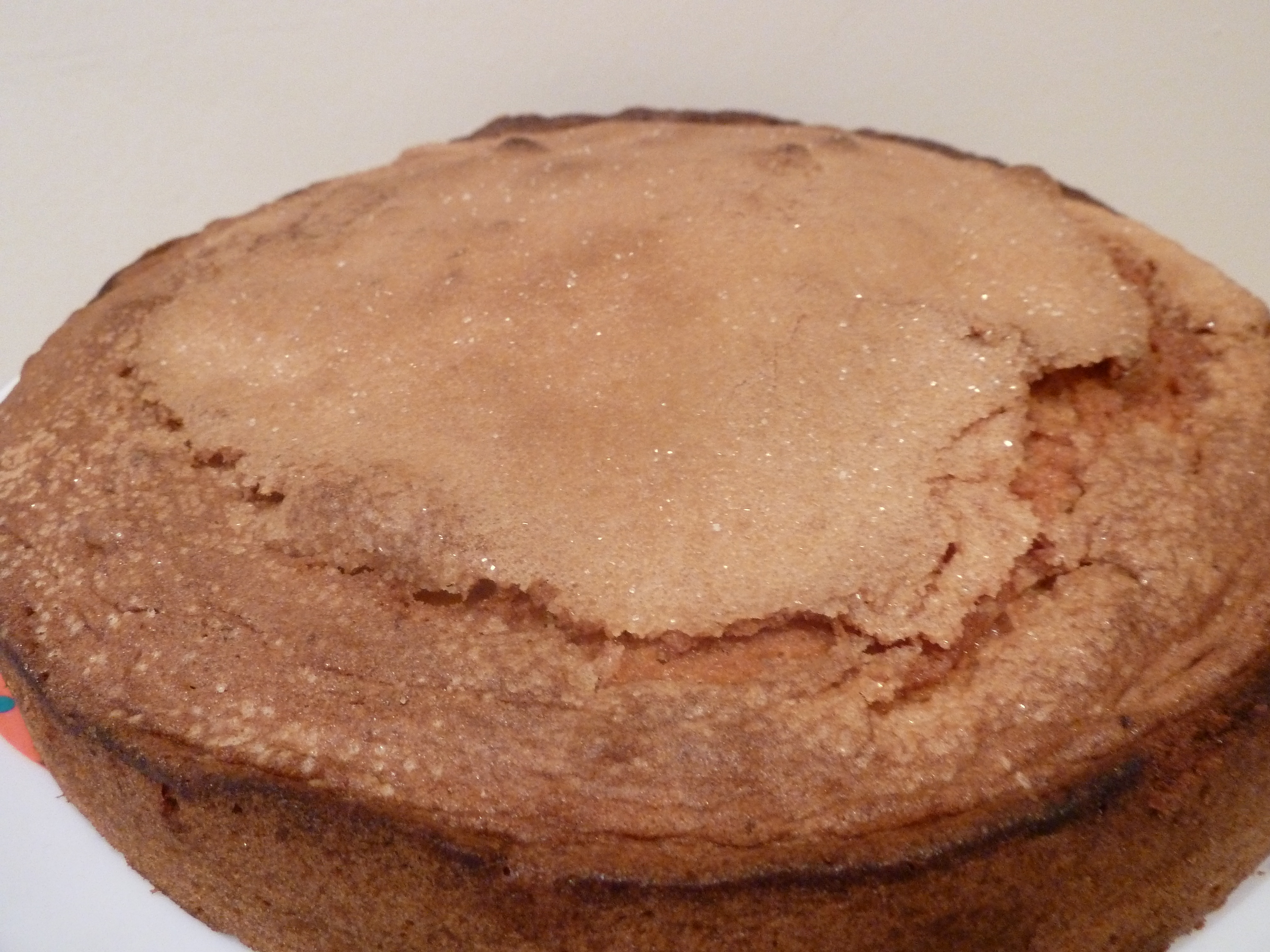
43. Polvorón – Spanish Christmas Cakes or Mexican Wedding Cakes

image

Polvoron – you are always on my mind

I’ve had Polvorón on my mind for some time. I read about these crunchy little biscuits bites, months and months ago and they’ve been sitting patiently in my ‘Things to bake’ pile ever since.

They are quite an unusual discovery, something I had never heard if before. Traditionally Polvorón are eaten as wedding  cakes in Mexico made with pecans or as Christmas cakes in Spain, kind of like a Spanish Shortbread. Now I’m planning my own wedding I thought perhaps now is the time to incorporate an international flair into the festivities. Intrigued I launched into my own interpretation of the traditional recipe, basically determined by whatever ingredients I have in the cupboard.

image

Chopped up dried coconut

I don’t usually buy pecans or walnuts so they had to be substituted for good old almonds (a nut which is ever present in my cupboard and life…) and chunks of dried coconut roughly chopped.

Due to the speedy baking that was necessary (and seems to be happening more and more often in my house) I improvised yet again. No time to assemble to food processor so I grabbed the nearest heavy item (a glass jar), threw the almonds into a sturdy sandwich bag and hammered them with the jar until they were delightfully smushed. Feel free to use a pestle and mortar if you wish to be a tad more refined than I.

image

Beating the butter to a smooth paste

The ingredients are very similar to basic shortbread, with flour, butter and sugar.

image

Thoroughly whipped butter

This is another brilliant biscuit for busy bakers as I managed to whip up the dough first thing on a Saturday morning, chill it whilst I showered. I used my trusty hand held electric whisk to beat the butter and icing (powdered) sugar together. Then to whisk in the flour and vanilla extract.

image

Whisking in icing sugar, vanilla and finally flour

image

My combination of ground almonds, chopped blanched almonds and chopped coconut.

And finally the nuts of your choice.
image

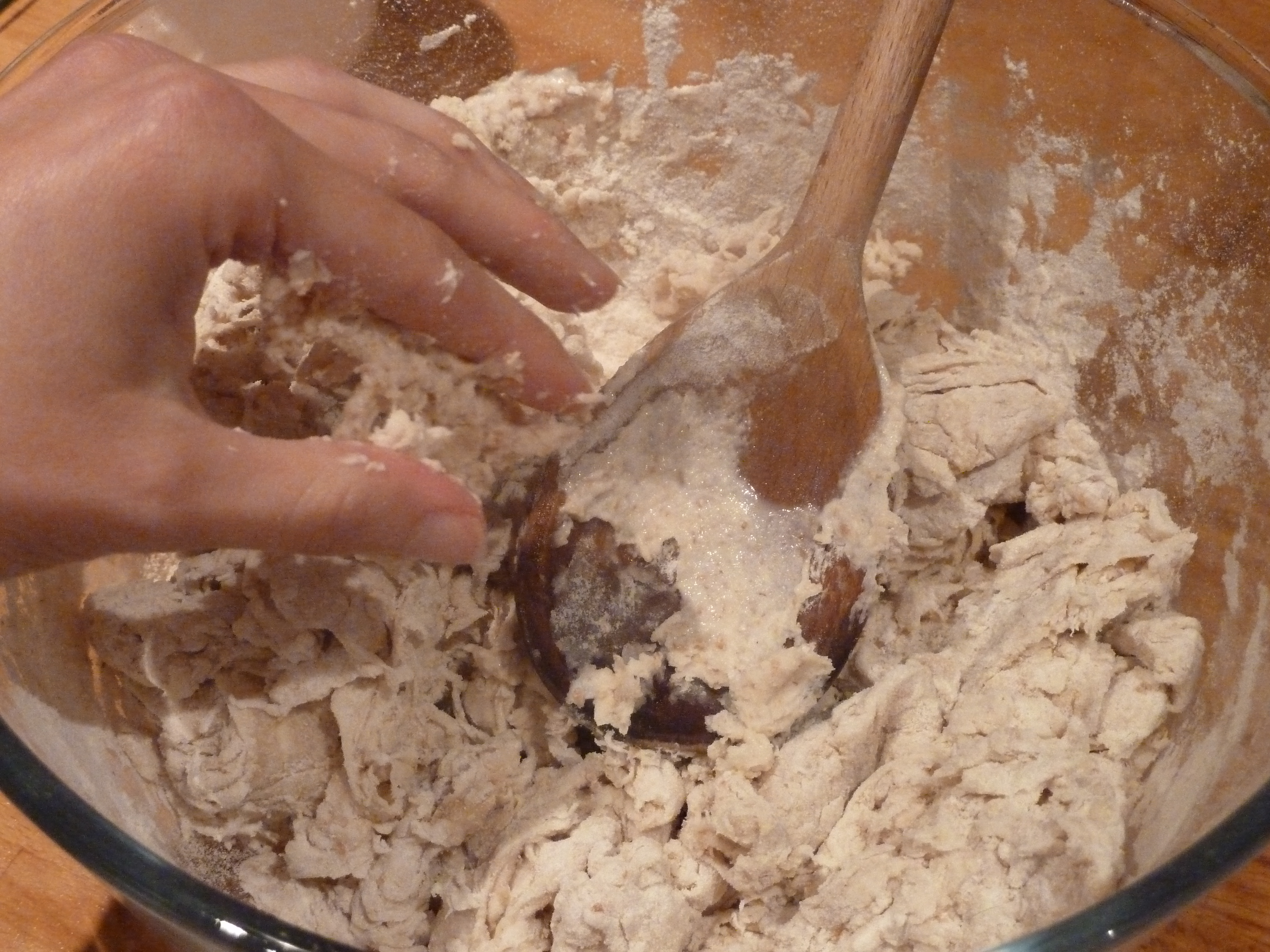
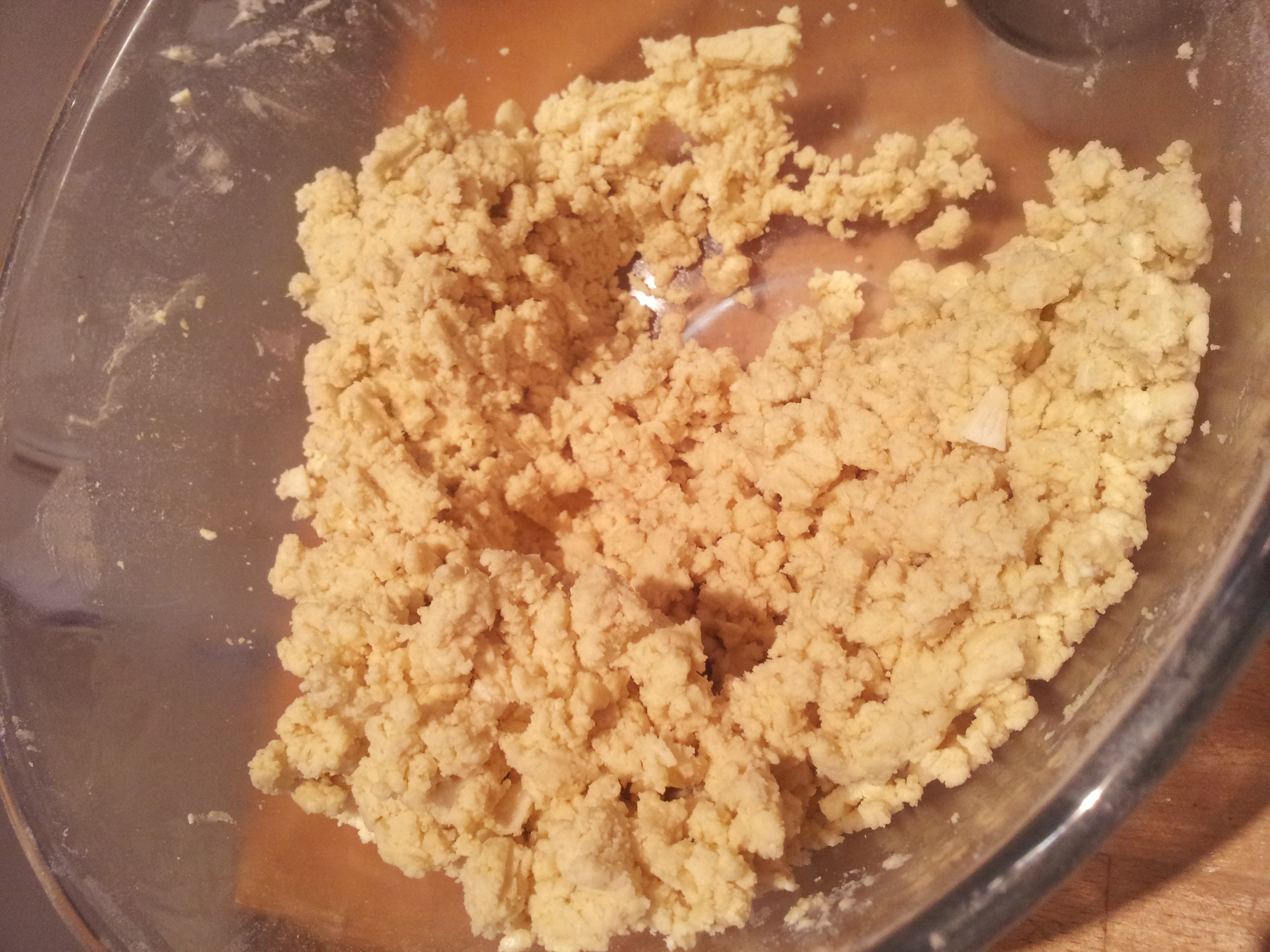
The dough looks a bit scrambled eggy to start with…

image

Take a small amount of loose dough in your hand

I completely misunderstood the recipe which calls for the dough to be chilled. I shapped the dough by hand into about 35 mini golf balls.

image

squash it together and hey presto you have a ball!

I popped them all onto a greased and lined baking sheet covered them with cling film and popped them in the fridge to chill.

image

All the Polvoron lined up in a row – ready for chilling

(I think you’re supposed to chill the whole dough then shape it?!) But this gave me a chance to shower so in effect helped to speed up the process.

image

Delicately golden Polvoron fresh from the oven

I then spaced the little balls out evenly to give them room to spread whilst they baked. I popped the tray in the oven to bake it at 170 degree C for about 18-20 minutes, until they took on a delicately golden hue, whilst I applied clothes and make up.

image

Cooled and ready for a good dusting of spicy icing sugar

Just enough time to then allow the Polvorón to cool on the tray to set their shape for 5 minutes. Then to cool them fully on a wire rack to stop the butter sweating out of them and give them sticky bottoms.

image

Fully coated Polvoron

Once cooled fully I rolled the Polvorón in a bowl of icing sugar swirled with cinnamon giving them a fluffy white coat. As they set the sugar absorbed slightly into the biscuit adding an extra dimension of sweetness to the treat.

image

Happy Birthday Mel!

I then quickly bagged them up, tied with a pretty ribbon and dashed off with my pretty packages of Polvorón to celebrate my friends birthday! With a champagne fueled (10 minute) train journey to Durham. Followed by more food, cocktails and Polvorón.

image

Obviously I had to ensure their quality before sharing them with friends… they passed the test! Crunchy and sweet Polvoron

We declared them a tremendous cocktail accompaniment (and that’s not the frozen strawberry daiquiris talking).

Polvorón are buttery like shortbread but with an added crunch as they are smaller and denser than a traditional shortbread biscuit. The almonds brought a subtle creamy yet crunchy texture along with the coconut. I expect pecans would add even more bite to the biscuit. The Polvorón remind me a little of biscotti or amaretti biscuits which I also adore. What’s not to love about a delicious bite sized treat. Even better, as they’re so small you can obviously eat a whole handful of them in one go!

Polvoron – up close

I love the method of shaping these little biscuits into balls as I find rolling and cutting out biscuits a bit laborious  I quite enjoyed this hand made alternative and I’m already inventing my own nut free recipe for my friends who can’t eat nuts as I think everyone needs a bit of Polvoron in their lives!.

Things I used to make Polvorón

Makes about 35 small biscuits

Preparation: 15 minutes

Chilling time: 30 minutes

Baking time: 18-20minutes at 170degrees c

  • 220g butter (1 cup or 2 sticks)  room temperature
  • 250g powdered sugar (2 cups or 240 grams)
  • 2 teaspoons vanilla extract
  • 250g all purpose flour (2 cups or 240 grams)
  • 120 g (1 cup) almonds/pecans/coconut coarsely ground/chopped
  • 1/4 teaspoon ground cinnamon

Thank you to Sourdoughtheangrybaker for inspiring me to bake Polvoron! I had not heard of these wonderful cakes until you told me about them. Brilliant blog if you haven’t had a look already, I recommend reading.

Winner! Best Food and Drink Blog North Award for Aroundtheworldin80bakes

image

I still cannot believe it. I was stunned when I found out that Foodie Sarah had nominated me for the Blog North Awards for the best food and drink blog. (Thank you very much Sarah!).  I was ecstatic to discover that I had been shortlisted from 400 other nominated northern blogs down to 5. So I almost hit the floor when I heard my name announced as the winner of the Best Food and Drink Blog at the awards ceremony in Manchester last week!

I had toyed with the idea of going to the awards but thought that I would never in a million years actually win as the other shortlisted blogs are really fantastic.
I really recommend having a read of the wonderful food and drink blogs
Northern Food
Squidbeak
Offally Good
Little Red Courguette

And also the other categories too!

I came to the conclusion that I would go along for the sheer delight and experience of being shortlisted and to visit my friends Josh and Mark too. BEST DECISION EVER.

I merrily jumped in the car straight from work and flew down the motorway, through torrential rain and lightening, in the merry bliss of enjoying an amazing experience, with the car packed full of international baked goods to share with the boys. It wasn’t until I hit the one way system in Manchester that my tummy did a little flip. (I should also note that this is the furthest I’ve ever driven by myself before, ever! )

We were treated to some wonderful readings from other shortlisted bloggers, my favourite being Victory Garden a Hudderfield postie with a very entertaining blog of his observations of northern folk encountered en route. It wasn’t until the second interval that I started to feel a bit nervous….

The brilliant Culture Vulturess , who I’ve been following on twitter for quite some time, announced the winner of the Food and Drink Blog award and I did a little squeak and staggered down the staircase and up on to the stage, to babble my thanks and amazement at winning. I’m not entirely sure what came out of my mouth at this point but I know I thanked everyone, A LOT. And then my legs realised that I was on stage, speaking in public and momentarily refused to work to get me back down the stairs and off the stage. Once I regained the use of my limbs, I trotted off in a happy haze clutching my winners envelope, with a £50 cheque, a year’s web hosting and a winners badge to adorn my blog.

Me, on stage babbling a few words

Wow! Can you tell how OVER THE MOON I am??! It still feels like a dream and I’m still (almost a week later) smiling very widely. Who would have thought a year ago that I would be half way around the world in 80 bakes  and the winner of a Blog North Award?? I could never have dreamed this would happen.

I cannot thank you all enough. Thank you for reading, thank you for voting, thank you encouraging me! Thank you for sampling my sometimes bizarre and experimental cakes!

Thank you for a memorable and inspiring evening. I thoroughly enjoyed the relaxed and intimate event and had the opportunity to listen and chat to some very talented people! I am such a lucky girl.
I came away even more excited to continue blogging and baking and to complete my challenge. Bring on the next 39 bakes!

Just in case you want to know more about the awards you can find more details on the blognorth website here.

Also just in case you would like to see there’s a little article on my blog award on Sky Tyne & Wear website and Chris Evans gave me a little mention this morning on his BBC Radio 2 breakfast show (36 minutes in – thanks Mam!)

40. Chinese Rice Cakes – Half way aroundtheworldin80bakes!

Hasn’t time flown? One year in and we’re already half way Around the World in 80 bakes and what better destination to reach than China, one of my most favourite places in the world!

The Great Wall – look how far we walked

China has always been my ultimate must visit country. We visited just before the Beijing Olympics. Travelling around on over night trains from Shanghai to Beijing, climbing the Great Wall (sometimes on my hands and knees  – those steps are steep!) and sampling all of the delights of tasty chicken spine (!) and dried fish skin (yum).

Chinese Street Food – we didn’t eat the seahorses on sticks

Chinese Rice cakes have always intrigued me. I found the recipe in Marguerite Patten’s book and was surprised to discover how little rice flour they actually contain! However they do contain LARD! You may recall my love of lard from previous bakes such as Wiltshire Lardy Cake


These are such a quick little cake to bake and the results are impressive. Paul Hollywood would be proud of my equal sized rice cakes and even bake.

Chinese Rice Cakes – Paul Hollywood would be proud, look at the consistent size of the batch!

All you have to do is sift the dry ingredients together; plain, rice and corn flour, with baking powder, salt and sugar.

Ready to rub in the lard and rice flour

Rub the lard into the flour… My least favourite bit as I still shudder at the smell of lard. It’s definitely pungent.

Lardy times

Then bring together the mixture by stirring in a tablespoon of water, almond extract and half an egg. What a peculiarly precise measurement from Marguerite! I struggled to decide what half an egg was, so I cracked an egg into my cupped palm, over a bowl. I chopped the yolk in half with my finger and slid half (ish) of the egg into the mix. Keeping the other half for glazing the cakes later on.
Sticky dough ready for shaping

Once the mixture is quite sticky it’s ready to be divided and rolled into equal sized balls and plopped onto a greased and lined baking sheet. It’s easier to use your hands to roll them into smooth balls.

Lined up and ready for my close up – Chinese Rice Cakes

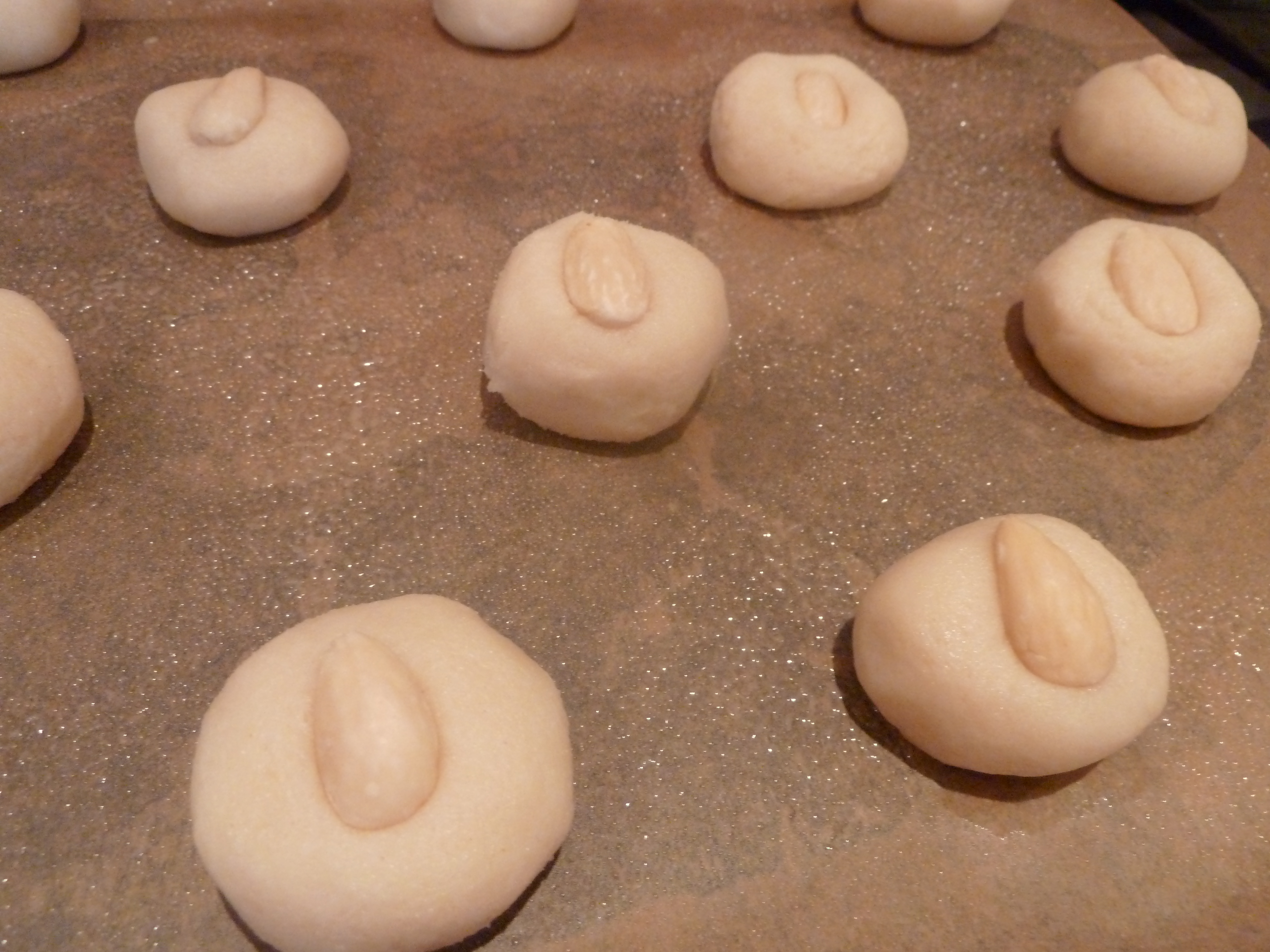
Once they’re on the sheet and spaced out nicely press a blanched almond into the centre and give them a quick egg wash with the other half of the egg. This means they will flatten a little onto the sheet and the almond will stick to the dough as it bakes. You will also get a wonderful golden crust on your cakes.

Perfectly spaced and oven ready Chinese Rice Cakes

Into the oven for for 15 -20 minutes at 205 degrees celsius and…

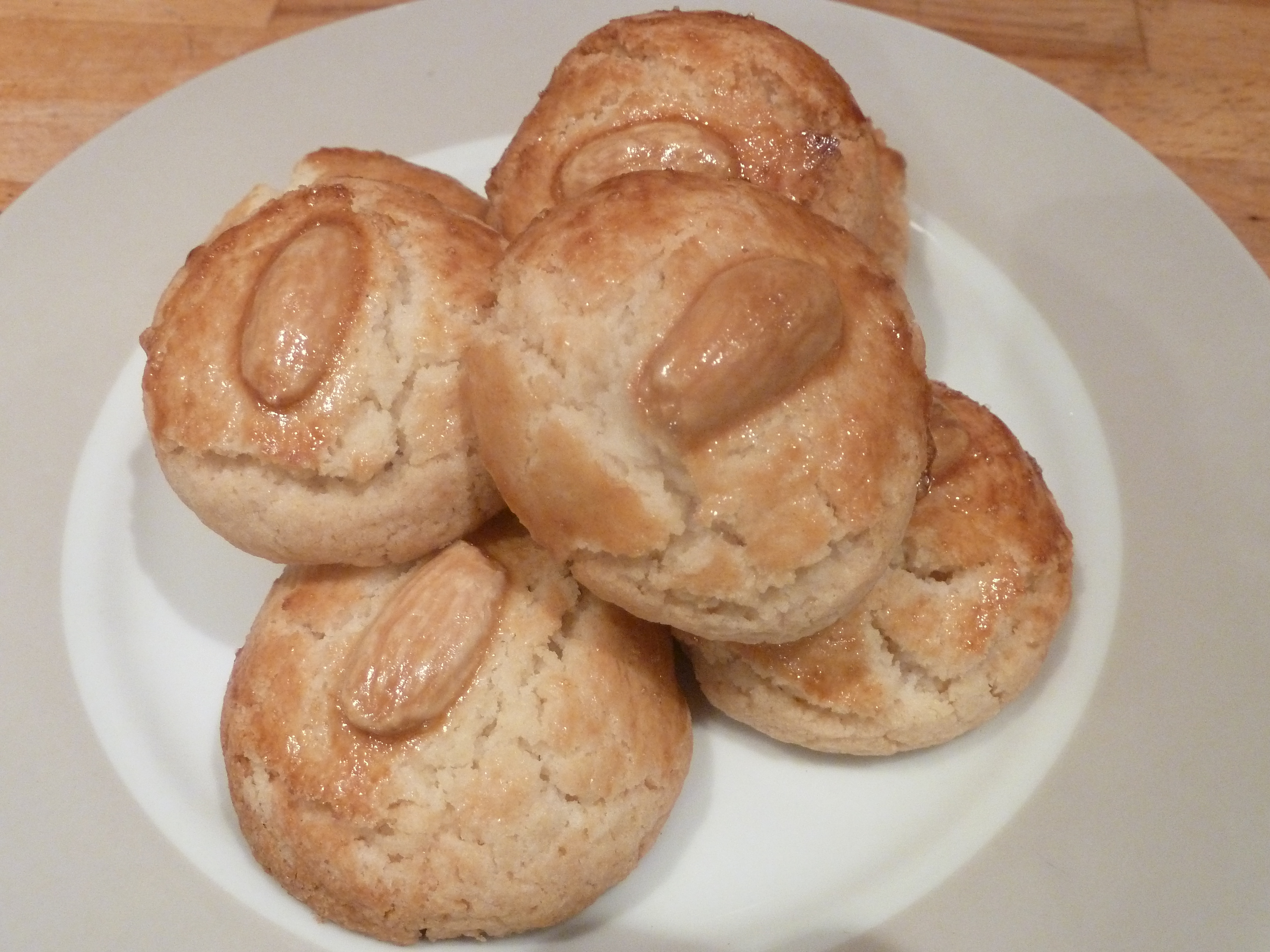
Just baked Chinese Rice Cakes

Ni Hao Chinese Rice Cakes ah hoy!

The Final Bake – Chinese Rice Cake

What a tasty little cake! The almond extract really comes though although if I were to make it again I probably would add more almond extract and some ground almonds too for more of an extravagant bake and richer flavour. Marguerite Patten’s recipes tend to be a bit more on the economical side, using minimum amounts of ingredients as she was baking during the war and making do with rations and tight budgets. I often double the quantities to make a larger batch and feed my hungry friends and family. The lard adds the extra moisture needed to give a crumbly yet light texture when baking with gluten free flours such as corn and rice which can be a bit dry side for my liking. They keep for quite a while in an airtight container and freeze really well too. Then easy to defrost as and when needed for a rice cake fix.
All in all a very quick, efficient and consistent bake. I would definitely bake these again and know that I won’t be able to resist experimenting with the ingredients.

Things that I used to make Chinese Rice Cakes

Margeurite Patten’s Recipe

This makes approximately 15 cakes

Preparation time: 10 minutes! (My kind of preparation!)

Cooking time: 15 -20 minutes

  • 4 oz (118g)  plain flour
  • 1 oz (30g) ground rice (rice flour)
  • 1/2 oz (15g) Cornflour
  • 3 oz (88g) sugar
  • 2/3 tsp baking powder
  • 3 oz (88g) lard
  • 1/2 an egg (quite difficult to measure!)
  • 1 tablespoon water
  • 1/2 tsp almond essence (I used extract as it’s stronger)
  • pinch of salt
  • blanched almonds to decorate
  • 15-20 minutes at 205 degrees Celsius

Blog North Awards 2012 Aroundtheworldin80bakes has been shortlisted!

I am so so thrilled! This week I got a surprise email to tell me that Aroundtheworldin80bakes has been Shortlisted for the Blog North Awards 2012 in the BEST FOOD AND DRINK BLOG category! 

The Blog Awards are celebrating ‘The best online writing in the North’.

How amazing is that!! I never in a million years thought that I would be nominated for an award, never mind shortlisted from over 400 blogs in the North. There is even a cash prize for the winner!

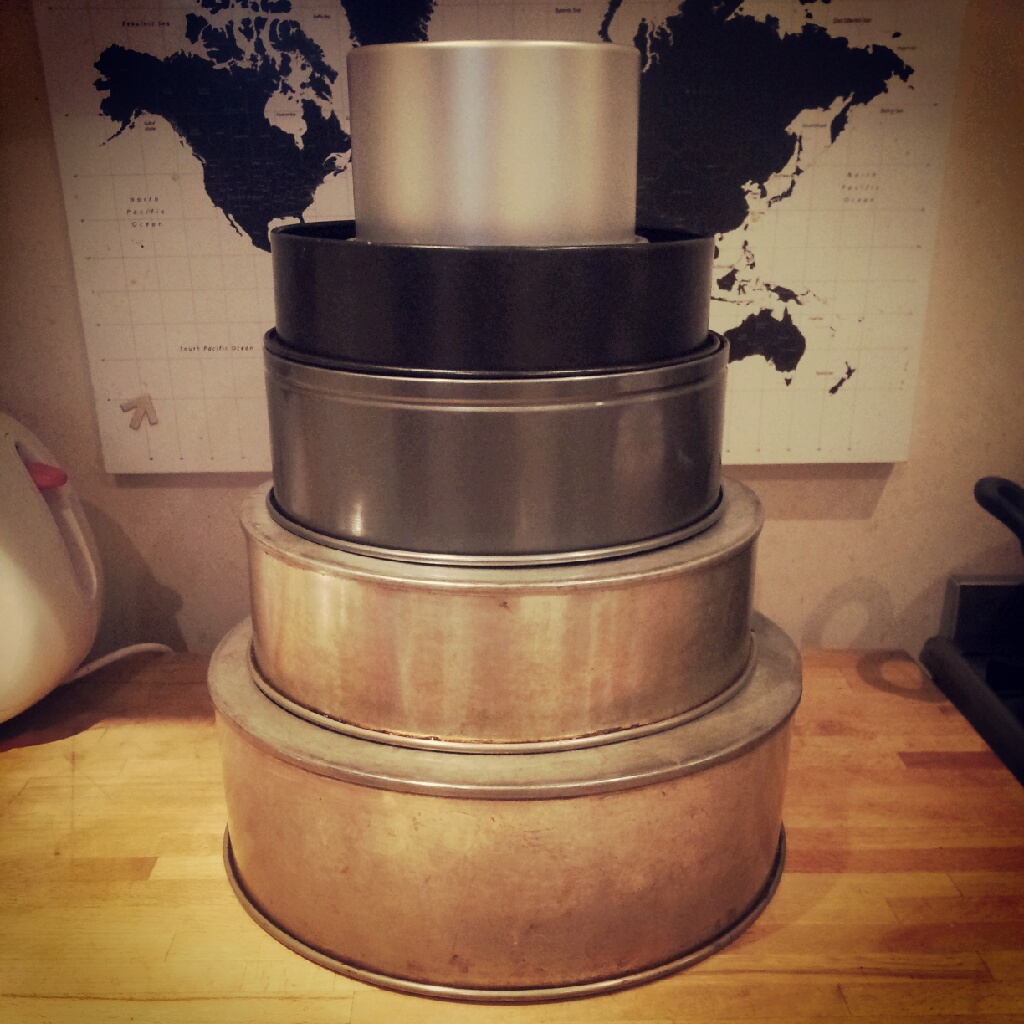
(Now that would come in very handy for more international baking and for my  wedding cake in particular which I began at this weekend. It truely is the biggest cake I have ever attempted! The first tier is already bigger than my head!)

image

If you would like to vote for me (please) in the Blog North Awards you can do so on the Blog North website www.blognorthawards.com/vote 

Voting closes on 4th October with the winners announced at the award ceremony on 17th October! There are 4 other fabulous foodie blogs in the category too which are a very very good read. Also on my most recommended Northern blogs list is www.newcastleeats.co.uk and foodiesarah.wordpress.com.

image

Thank you so much for reading and your support. It is very much appreciated! I will keep you posted on the results. I shall be keeping everything crossed until then!

39. Bagels Bagels Bagels! Polish Bakery

Bagels! Bagels! Bagels!

Bagels have been on my to bake list FOREVER! Inspired by a recent episode of The Great British Bake Off (new series and I’m guessing everyone else is totally addicted to it like me too?) I uncovered my wonderful (signed) copy of  Thoughtful Bread  ‘Bread Revolution’ for a recipe I could begin late one night. (I’ve even tweeted @thoughtfulbread to let them know I was baking from their book and got some lovely late night baking encouragement.)

We were treated to a short history lesson on bagels by the Great British Bake Off. Although they are more recently considered to be an American bread, they were originally brought from Poland to England and then on to America. They are typically Jewish Food with a wonderfully chewy crust from the poaching of the dough before the bake. (My favourite bit!)

Mixing up all the flour, salt, honey and yeast

A spot of late night preparation was in order to get this dough on the road. I mixed together the flour, dried yeast and a little salt to0. I ran out of strong white flour so made up the difference with brown strong flour, so these bagels were almost healthy too.

Add the water to get a sticky dough and stir!

Then to add the water. I had to add a little more water as I worked with the dough, probably due to the slightly drier brown flour I used.

Ready for some good kneading

When I started kneading the dough I was determined to reach the elusive ‘window pane’ stage where the gluten in the flour has become all stringy and elastic  and stretches out when pulled to create a transparent window when held up to the light in the dough. Alas after the allotted 10 minutes of kneading the rather tough dough by hand I was still windowless. A further 10 minutes of kneading (tracked by my faithful hamburger timer) and I was STILL windowless… I asked Chris to have a go with his brute strength and STILL no window. So I gave up comforted slightly that the dough had been kneaded at least twice as long as it was supposed to be and it did bounce back when prodded with my finger.

Me kneading on tip toes

I think I need lower work surfaces for bread making as I always have to resort to balancing on my tip toes to get the full impact of the kneading…

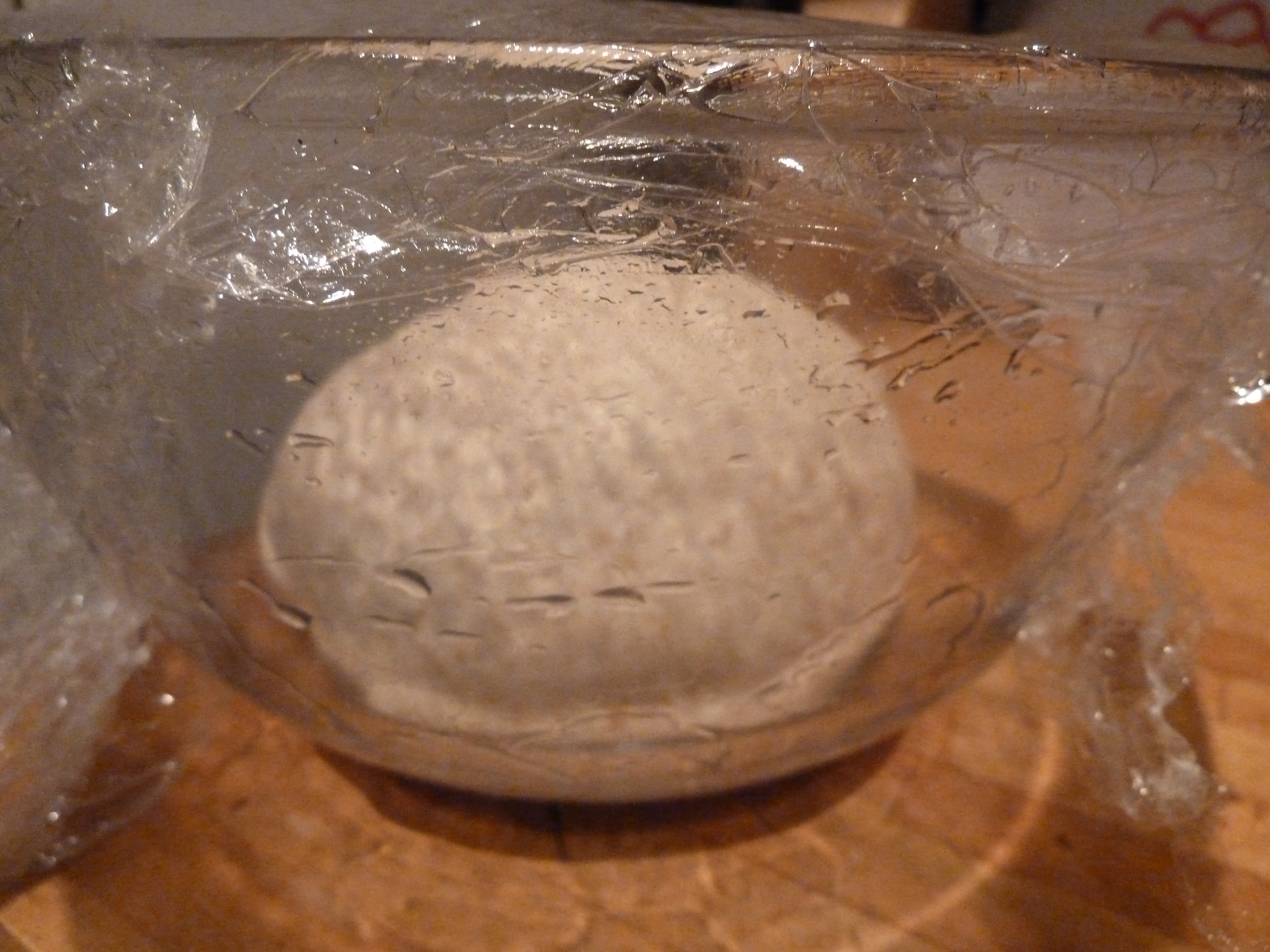
proving time

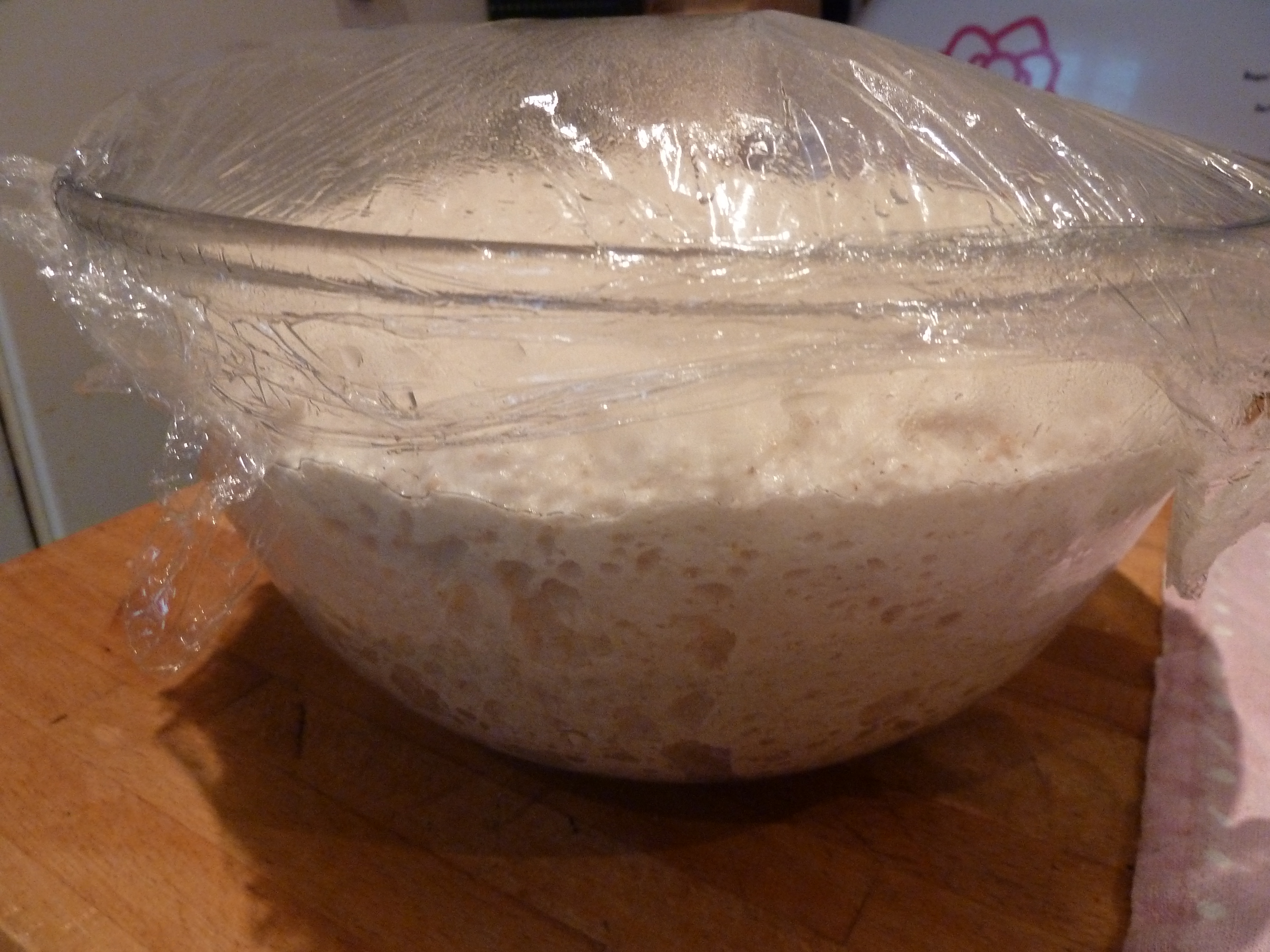
I left the ball of dough to prove and double in size over night in a greased bowl covered with greased cling film. Et voila! The next morning I awoke to beautifully risen dough.

Beautifully risen dough

Punching it back I kneaded it thoroughly again (it’s a good job I do yoga press ups!) dividing the dough into 12 (equal-ish) portions I left it to rest for 5 minutes whilst I arranged the next stage. Water bath!

12 chunks of dough

Taking my largest soup pan I filled it about half way with water from the kettle.

Stage 1: The dough sausage

Then to shape the bagels. I tried a few different methods to see which worked best and I think I prefer the traditional method. Roll a long sausage about 20 cms long) of dough and shape it into a circle.

Stage 2: shape into a circle

Fold the loose ends together and squash them together.

Stage 3: Fold the loose ends together

Then put your hand through the ‘hole’ in the centre and roll the join together until the two ends are firmly merged. Then if required roll the rest of the dough ring in the same way to even up the dough and shape it into a bagel.

Stage 4: Squash the loose ends together

The other method is more modern and maybe slightly quicker. Where you shape the dough into a ball, flatten it, poke your thumb through the centre and then whilst holding the dough in your palm squeeze around the dough to widen the hole and shape the dough into a bagel.

I used for each bagel? Poor dough ring on the right is a bit more of a bagel bracelet

Once shaped the bagels need to prove for about 30 minutes under a damp tea towel or greased cling film at which point you can start to warm up the oven and water so it’s simmering nicely.

If you want to add flavouring to your bagels you can add toppings like sesame or poppy seeds after the poaching stage, but if you like your bagels fruity on the inside (like me) then you will have to add your chosen flavour before you shape the bagels. I chose to make half savoury and half sweet.

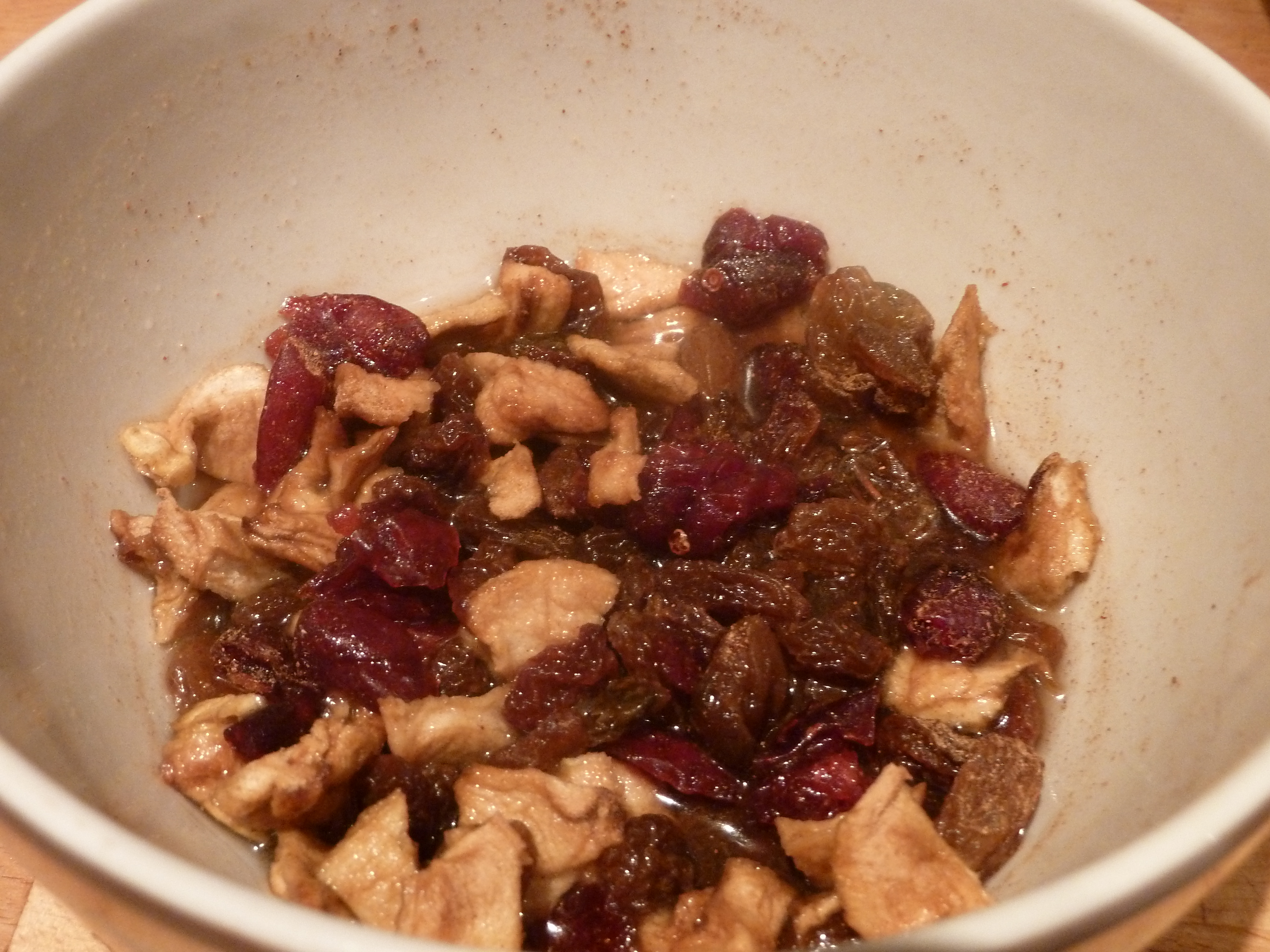
pre soaked dried fruit, apple, cranberries and raisins

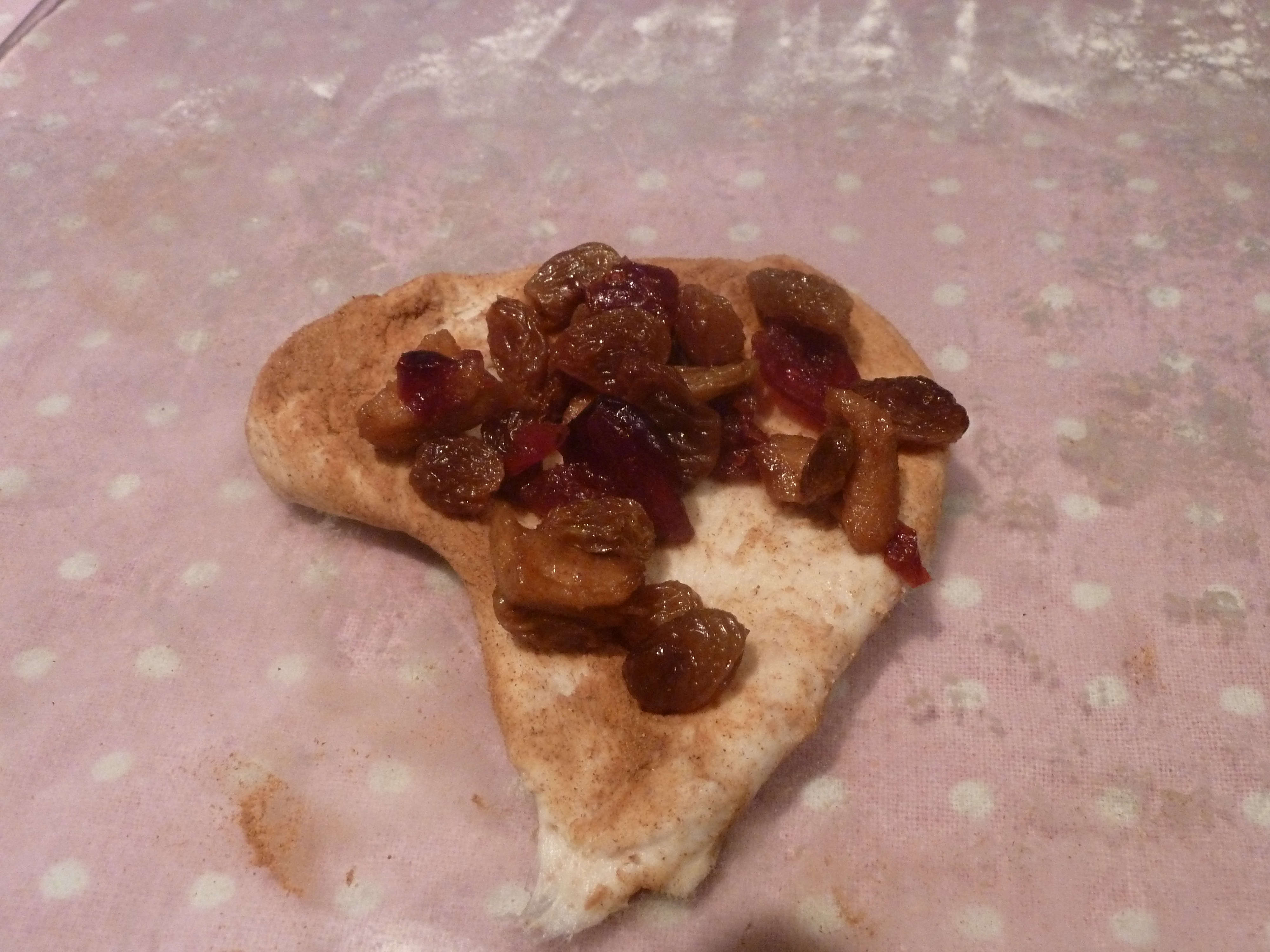
I pre soaked some dried fruit, raisins, apple and cranberries overnight in a little boiling water with a dash of cinnamon. Drained off the excess water and folded in a teaspoon (or 2) of the fruit along with an extra sprinkle of cinnamon into the dough before shaping it.

Step 1: Filling the bagel

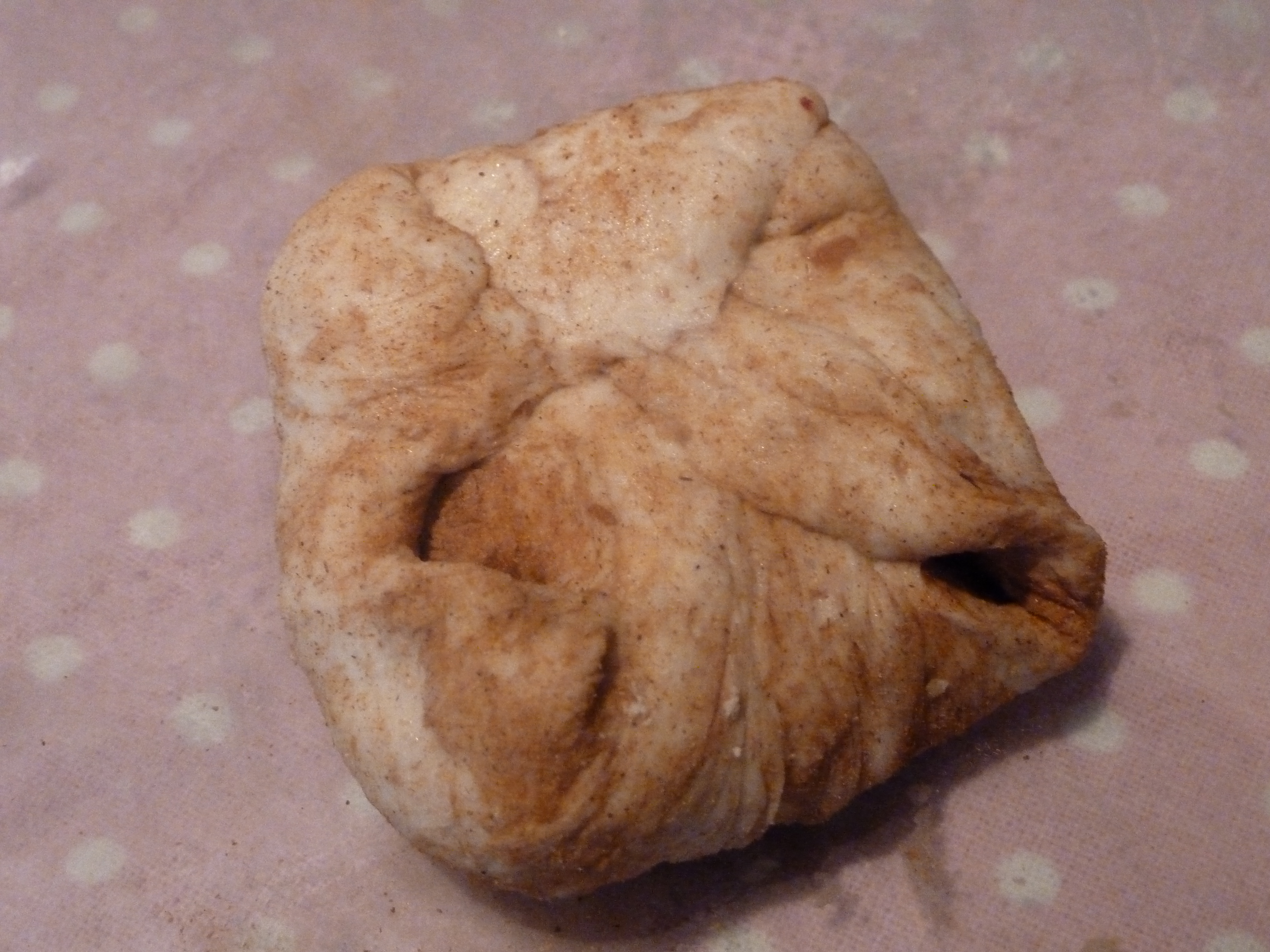
It makes the bagel a bit unpredictable with spots of fruit poking out all over the place but I found if I sealed the fruit into the dough and then shaped it, it was a little easier.

Step 2: folding in the edges to make a fruit pouch. Sealing the edges together

Step 3: roll into a dough sausage and follow the stages above to shape the bagel

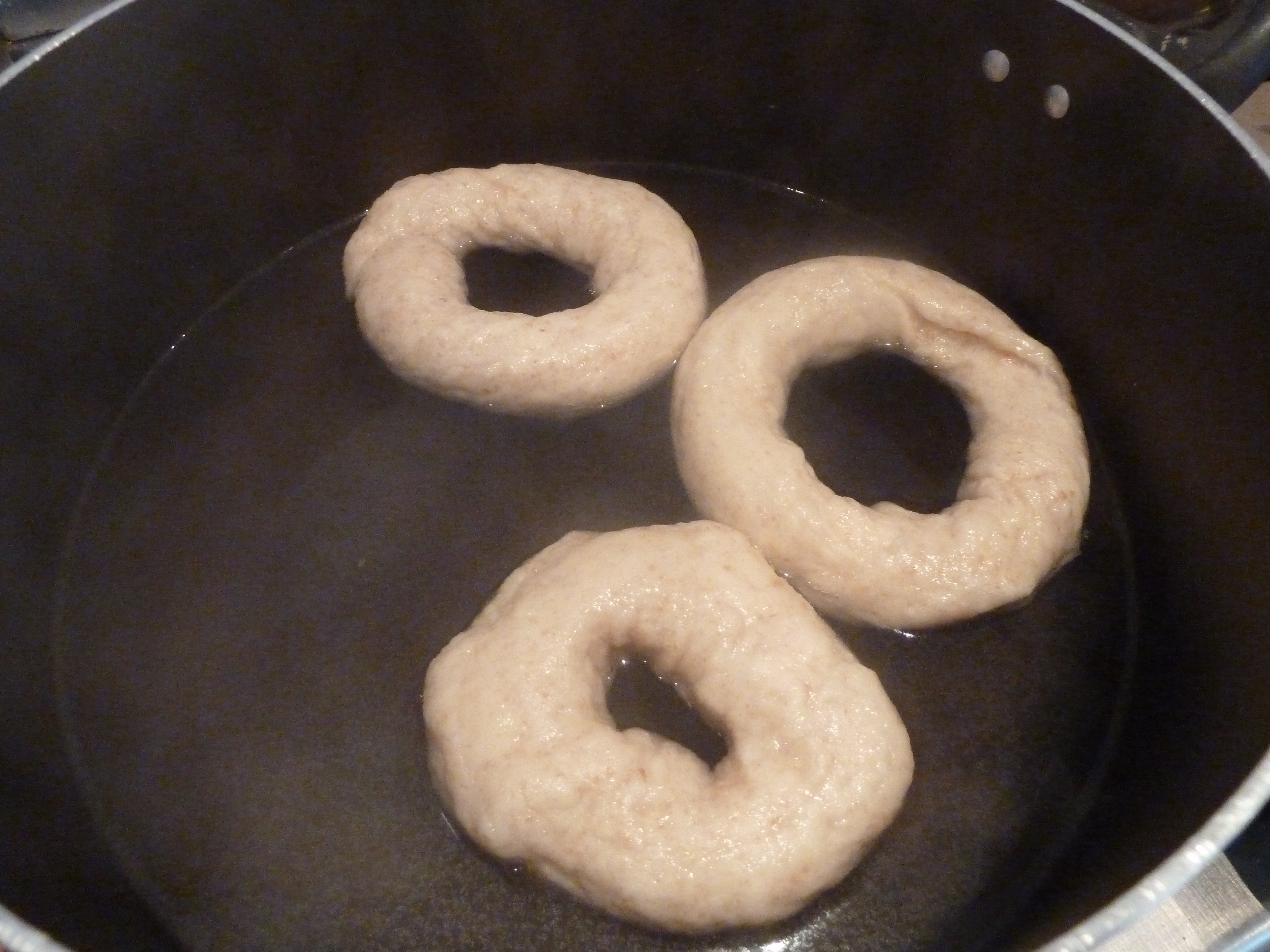
Then all you have to do is plonk the bagels into your pan of simmering water for 2 minutes (turning them over half way through for an even poach).

Bagels in for a swim

The bagels do expand slightly so don’t over fill your pan, do them in batches so they have room to breathe.

Ever increasing circles

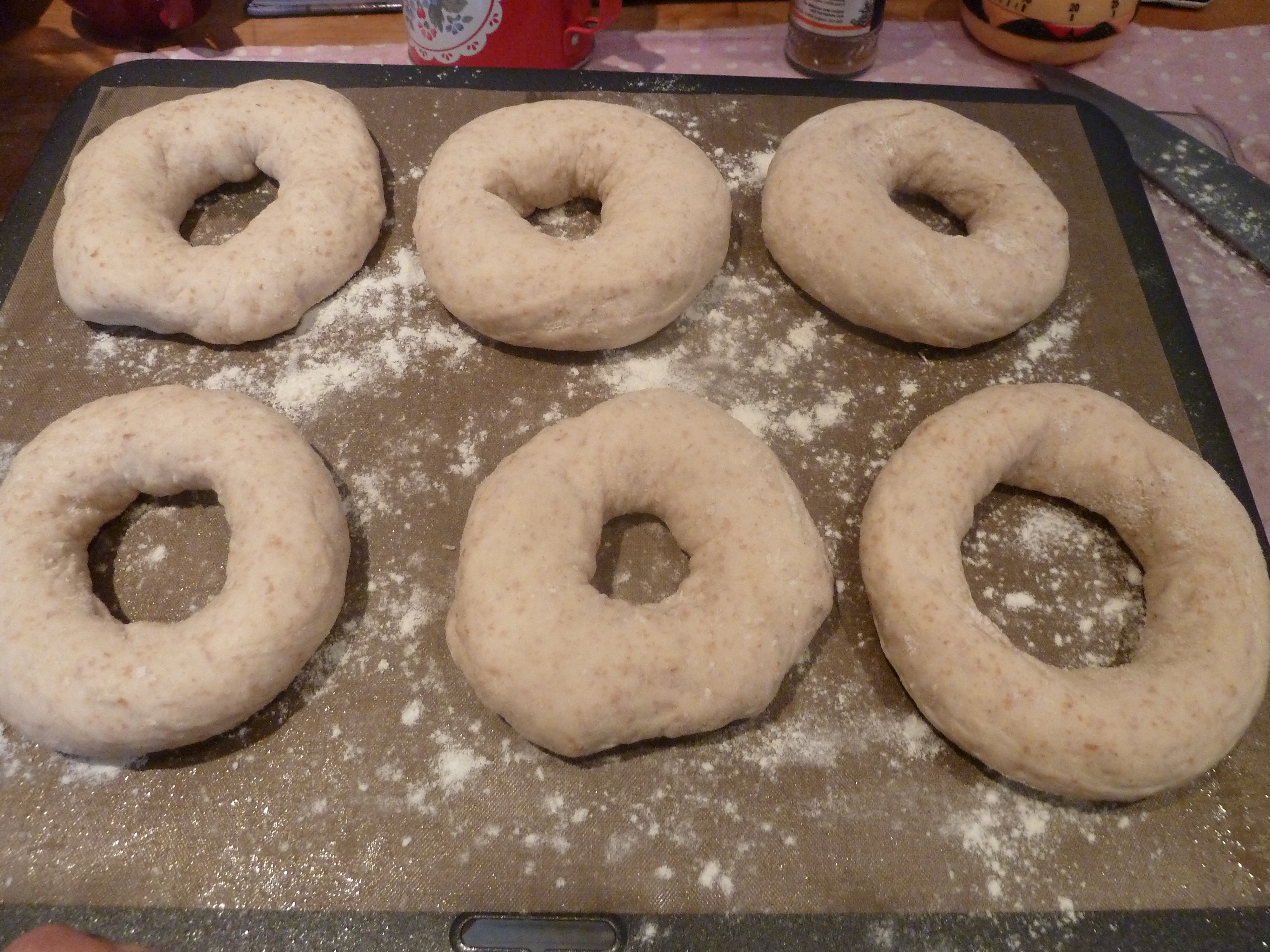
Then out of the pan an into the oven! I used my Nana’s slotted spoon to scoop the bagels out and drain off the water. Then gently pop then onto a lined baking tray (sprinkle on your choice of topping while the bagel is wet) and into the oven they go.

Ready for the oven

This means you can have a continuous run of bagel poaching and baking until all of your bagels are baked. However this meant I was waiting for my breakfast for almost 2 hours. I ended up devouring 2 hot bagels and butter straight from the oven and they did not disappoint! Hot and buttery they were just what I needed.

Fruity Bagels in for a swim

They are definitely easier to split down the middle when they’ve cooled a bit though. The plain bagels were easier to eat and even better toasted too to give an even crisp coating and chewy soft centre. I LOVED this bake. You know you’re making something special when it takes a bit more effort and skill.

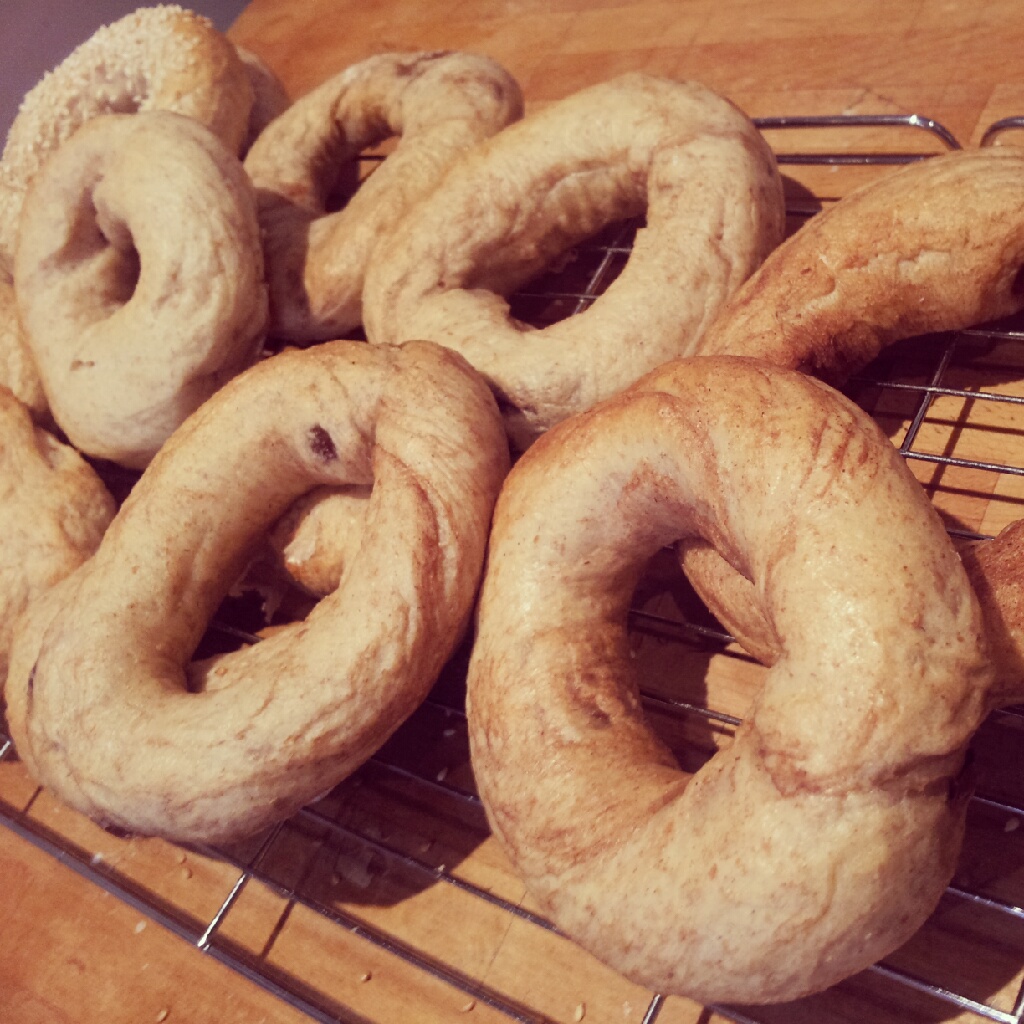
Bagels! Hot from the oven

The fruity bagels were a little more moist in the middle, but this is what I had expected. You can’t put fruit into a bagel without adding a bit of moisture.

bagel splitting

Perhaps in the future when I think they’re baked I might also turn them over and return them to the oven for a few more minutes just to ensure the bagels are baked evenly. As I did find that the bagels were quite wet when they went in the oven so they were slightly soggy when they came out of the oven, but a lot of this moisture dried as they cooled (and I guess adds to their chewiness.)

Bagel goodness

I would also add more cinnamon to the bagels as they weren’t quite cinnamony enough for me. All in all a very good bake and I’m adding this to my baking repertoire now!

Bagel sandwiches

Things I used to make this recipe:

Lovingly adapted  from Bread Revolution by the Thoughtful Bread Company

  • 375g strong brown flour
  • 375g strong white flour
  • 3 tsp fine sea salt
  • 2 tsp dried yeast
  • 375ml warm water
  • 7 tsp honey
  • additional strong white flour for dusting the board

Fruit filling

  • A bowl full of dried fruit (cranberries, raisins, dried apple)
  • cinnamon

Optional Toppings

  • I used sesame seeds and just sprinkled enough to coat the bagels on each one
  • You could use anything such as poppy seeds, sunflower seeds,

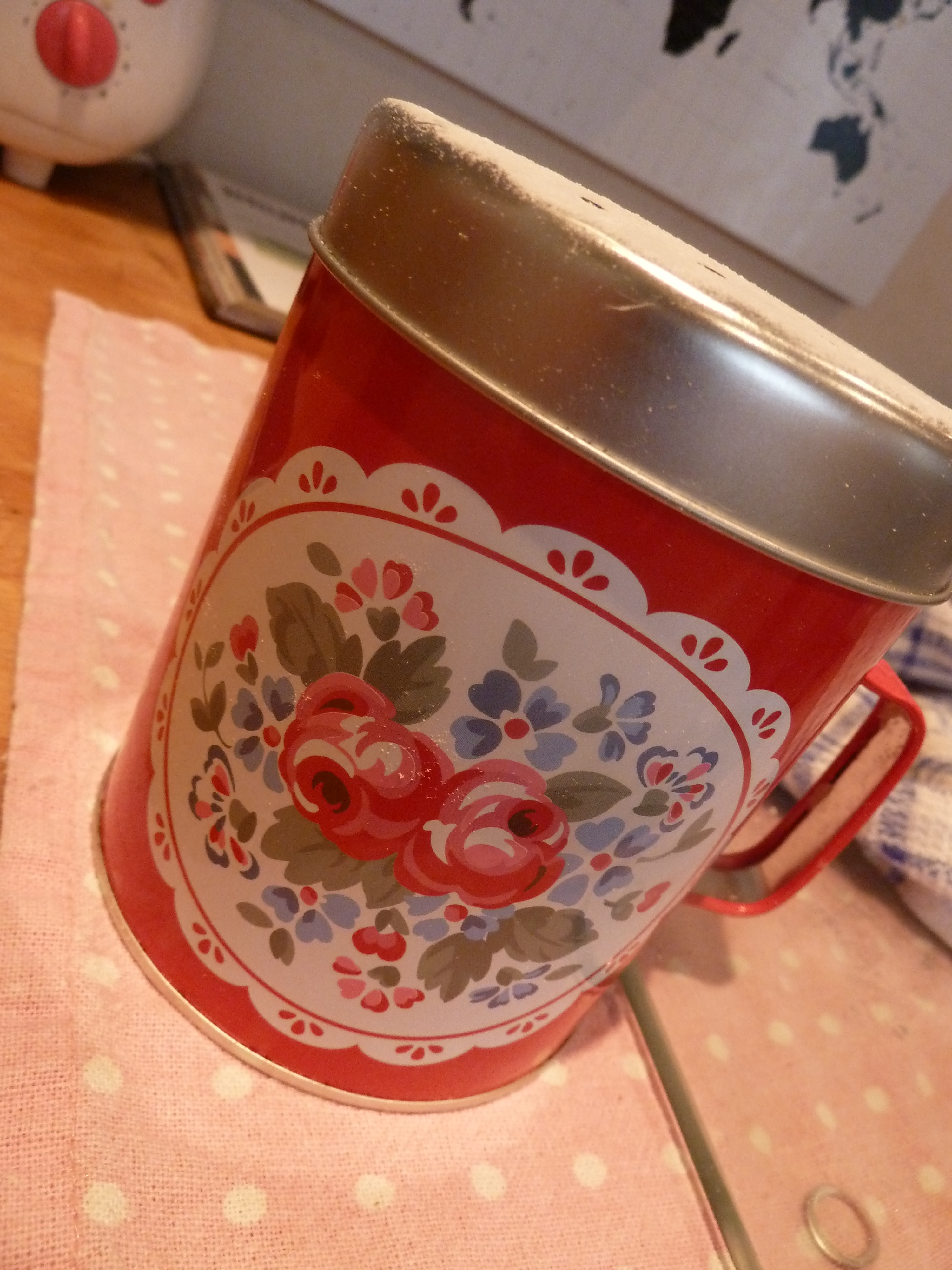
Cath Kidston Flour Sifter – so handy when you’re covered in sticky dough

The Hamburger Timer – so handy for timing all those batches of bagels

38. South Korean Sweet Potato Cake with Creamy Coconut Custard Frosting

This recipe was inspired by what I had left in my fridge. One lonely sweet potato. Upon returning from holiday to Amsterdam I needed a quick and exotic bake for my sister’s birthday. I wasn’t entirely sure that everyone would enjoy a South Korean sweet potato cake but hey, this is what you get when your little sister sets up an international baking blog challenge!

This was actually quite quick to make, the most time being spent peeling and dicing the sweet potato so it could be boiled and mashed into a gloriously orange mush.

Mushed Sweet Potato

I love sweet potatoes and have been eating them a LOT in my preparation for the Great North Run which is (gulp!!) next Sunday!! They promise many vitamins (A, C and B6), antioxidants AND they have anti inflammatory properties! Perfect for soothing those aching joints and muscles post running! ..So this cake is (almost) practically healthy!

Creamy butter and sugar

I started by creaming the butter and two types of sugar together with my handheld electric whisk for about 5 minutes until it became lighter and fluffy.

Then add one egg at a time and vanilla and keep on whisking

Then add the vanilla and eggs, one at a time,vanilla and keep on whisking until they’re incorporated completely. It take about 5 minutes to whisk the mixture up until it’s very light and fluffy.

Lots of fluffy eggs, sugar and butter

Then onto the dry stuff. In a separate bowl I mixed together the flour, baking powder, and salt.

Dry stuff, flour, baking powder and salt

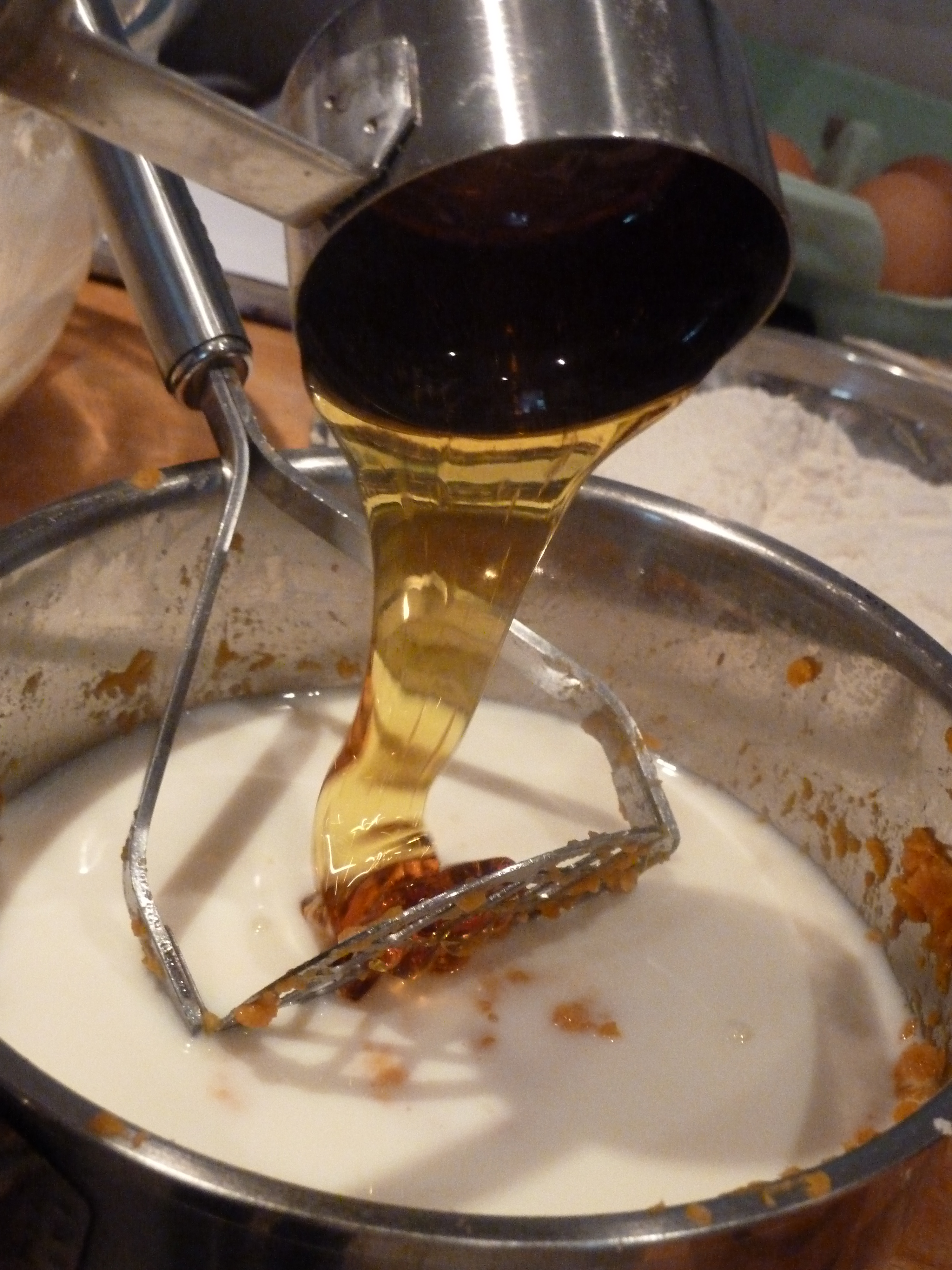
Then to stir in the milk to the sweet potato along with the syrup (as I don’t keep maple syrup in my cupboard I substituted it for golden syrup 🙂

IN with the syrup!

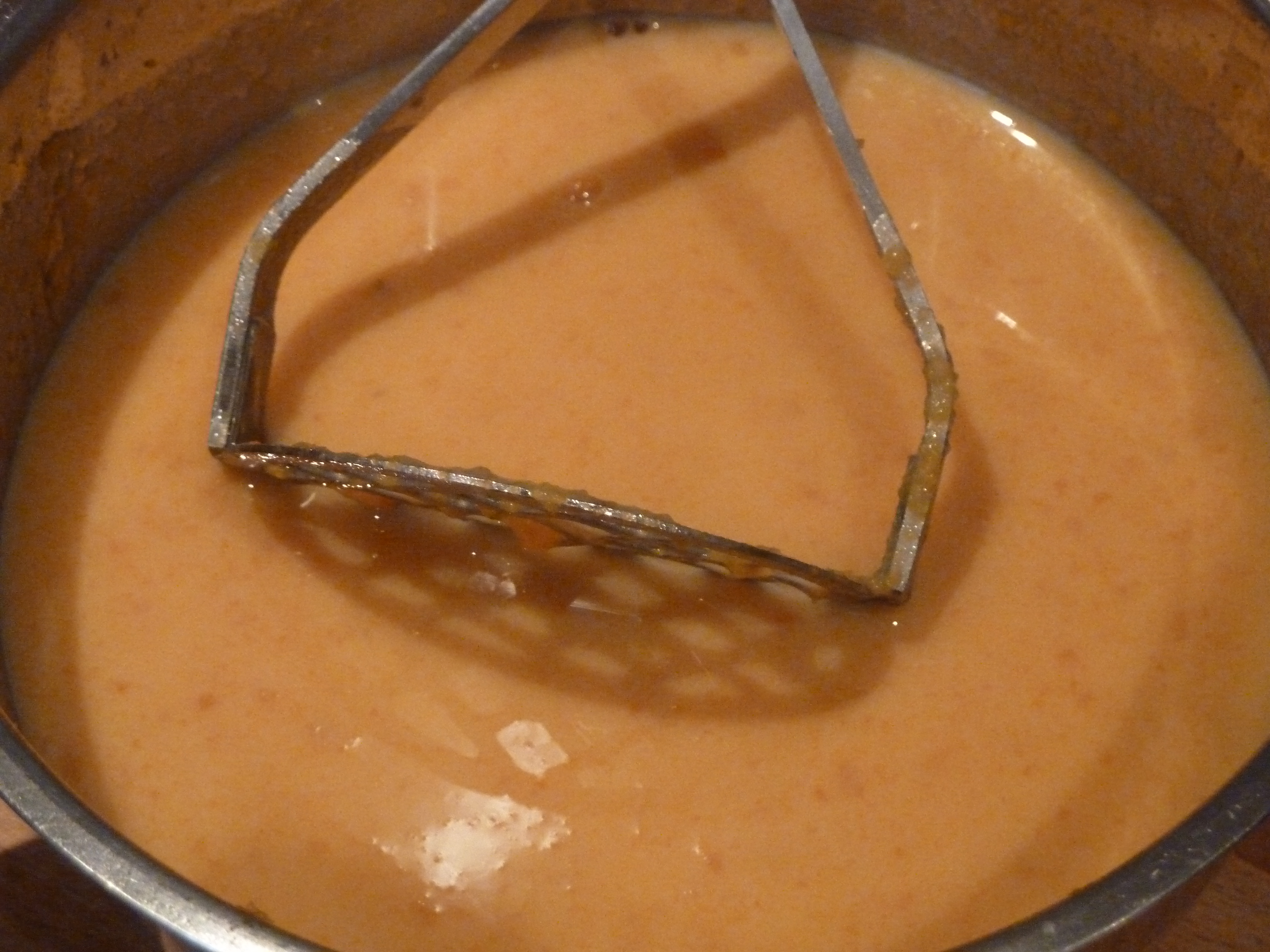
Stir it all together until it’s a milky sweet potato soup

Sweet potato soup

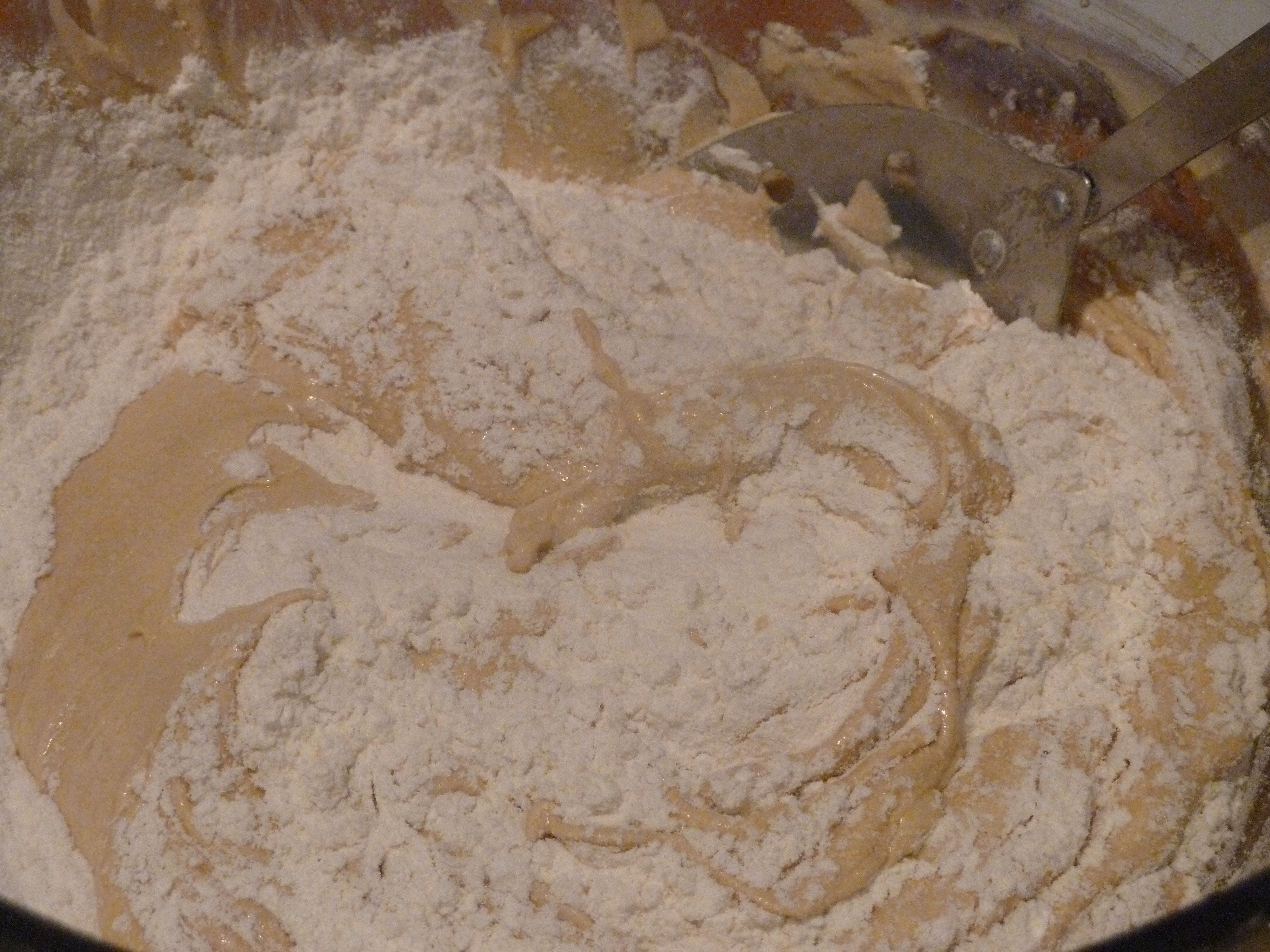
Then to gently fold in a third of the flour to the fluffy eggs and butter mixture

Folding in the flour

And then fold in a third of the sweet potato soup

Folding in the sweet potato soup

And alternate folding in a third of the flour and a third of the soup until all the ingredients are incorporated creating an orange flecked liquid batter.

All in!

The original recipe was to make two 9 inch round cakes. But I wanted one big cake and I love my lazy cake pan (PushPan) and use it at every opportunity I get! It really speeds up the process as it’s really non stick and leak proof! AND my favourite bit! No lining required! No wasted paper and effort. Just a quick spritz with cake release et voila! One quick cake! I wish I could afford more of them.

Just baked. Look at that deep brown!

I used one 9 inch tin to cake all of the batter in a 180 degrees C (or 350 degree F)  oven for 40 to 50 minutes. Until it’s baked evenly, with a golden top. This cake shrank back beautifully from the sides of the tin too to tell me it was ready for eating. I made sure it was done by sticking a cocktail stick in it and it came out clean on my check.
I always leave a cake to cool in it’s pan for at least 15 minutes before turning it out to cool fully on the wire rack. I learnt this the hard way as I once took my Christmas cake out of the tin straight away and it fell into 3 massive chunks in my hands. I did shed a tear at this after waiting patiently for it by the oven for 5 hours. They definitely need a bit of cooling to hold their shape! (Luckily I managed to stick my cake back together with jam and a bit of marzipan to cover the cracks and no one knew the difference!)

Tester sweet potato cupcakes

I was worried that this cake might be a bit odd on our English palettes so I made some tester cupcakes alongside my large cake. I needn’t have worried! It was delicious! I has only meant to try the corner of one cupcake and 2 minutes later the whole thing has disappeared into my tummy. It’s quite a sweet and slightly savoury sponge. A bit like carrot cake but without the grated carrot texture. It’s also a lot more moist than carrot cake.

You could stop here as the recipe didn’t give any sort of filing or frosting and the cake is sweet enough to eat as a sponge in it’s own right. HOWEVER if like me you want to take things a step further I found an amazing recipe for Creamy Coconut Custard Frosting, which is very reminiscent of rice pudding with a whole can of evapourated milk but with dessicated coconut instead of rice. Delicious! And what I love even more about this recipe is it takes 15 minutes with no trace of icing sugar to be swept up from every corner of your kitchen afterwards! This is a great alternative to buttercream which my family aren’t a huge fan of.

Throw into a pan egg yolks,  evapourated milk, sugar and vanilla

Choosing my heaviest sauce pan I added the sugar, egg yolks and milk to it along with the vanilla and stirred it all together

Continue to stir over a medium heat for 12 minutes until it thickens

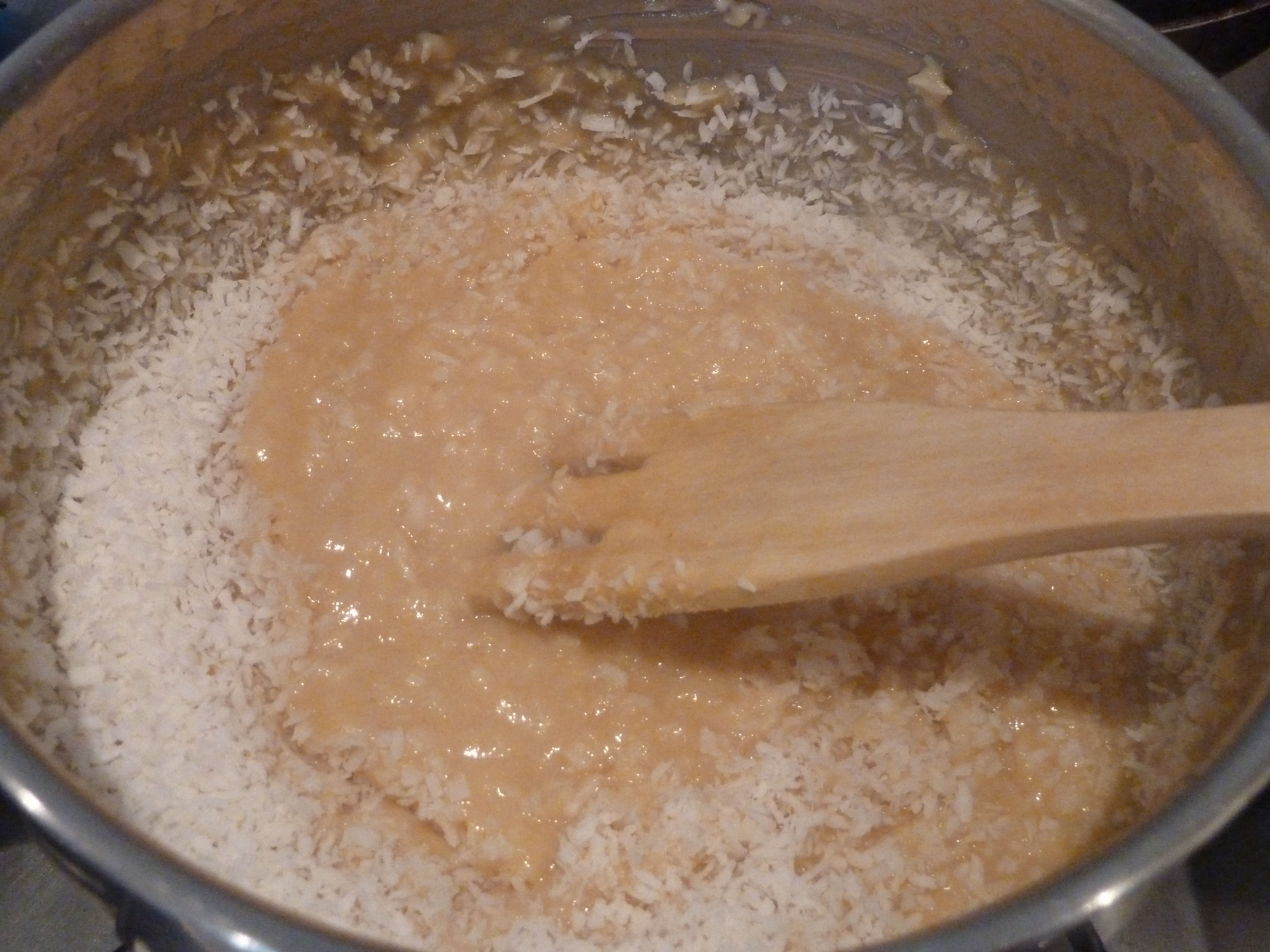
Once it reaches the ‘pudding’ stage (it’s as thick as pudding) take the pan off the heat, throw in the dessicated coconut and Bob’s your uncle you’ve made coconut custard!

Then it needs to be cooled completely before spreading it over your cake.

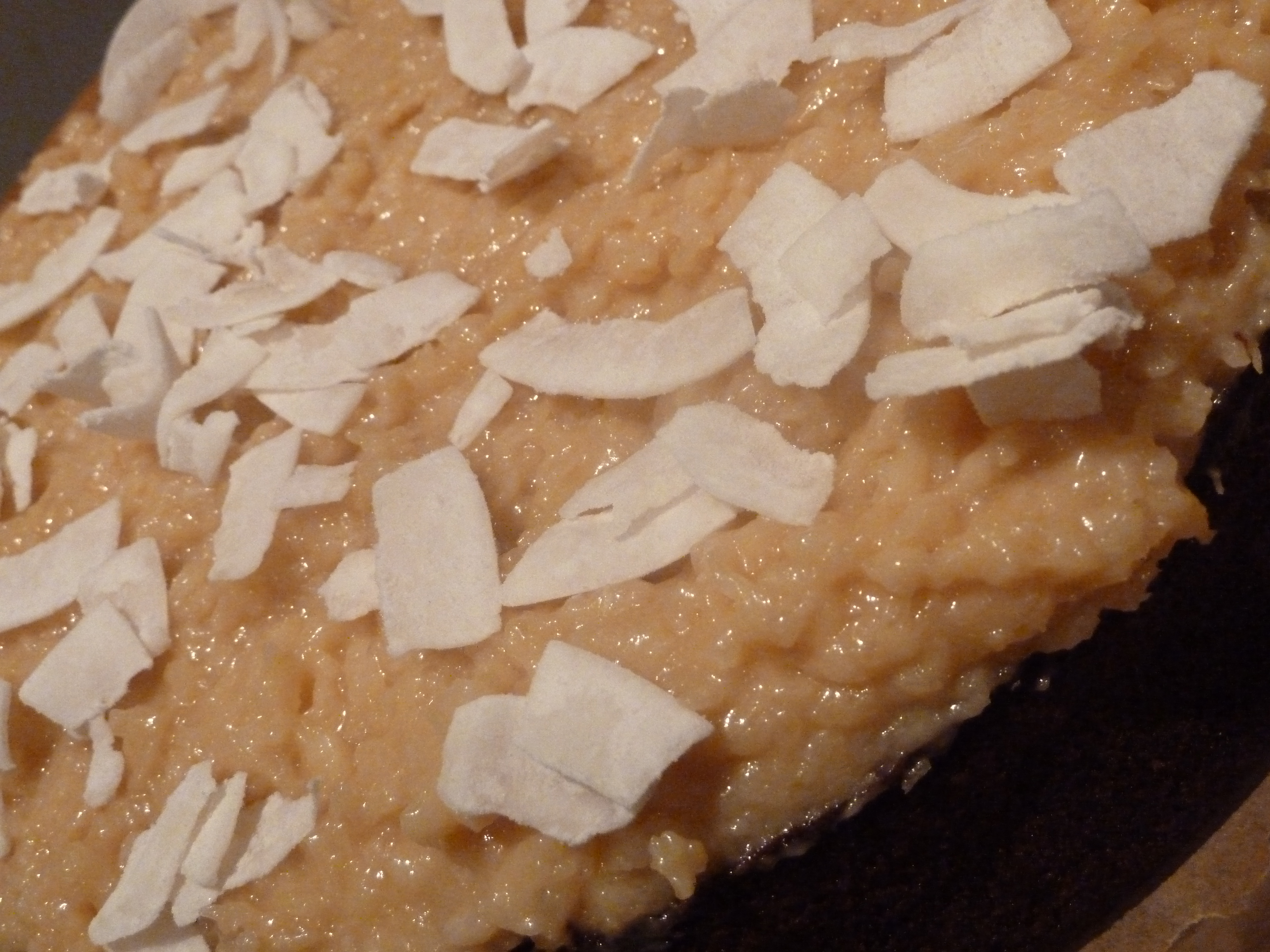
Creamy Coconut Custard Frosting

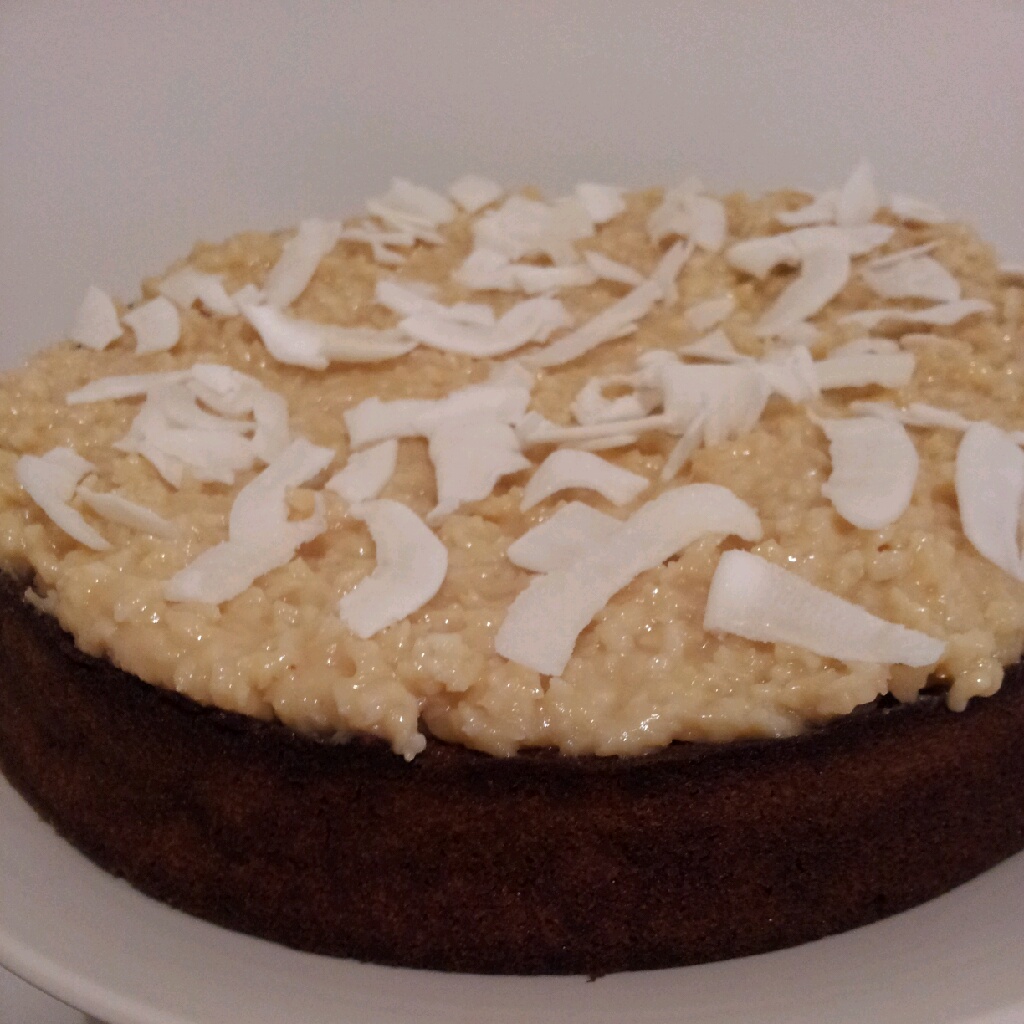
As Mary Berry ‘s sage advice is to include a little of what’s in your cake on your cake so I lovingly adorned the cake with slices of coconut too.

South Korean Sweet Potato Cake and Coconut Custard Frosting

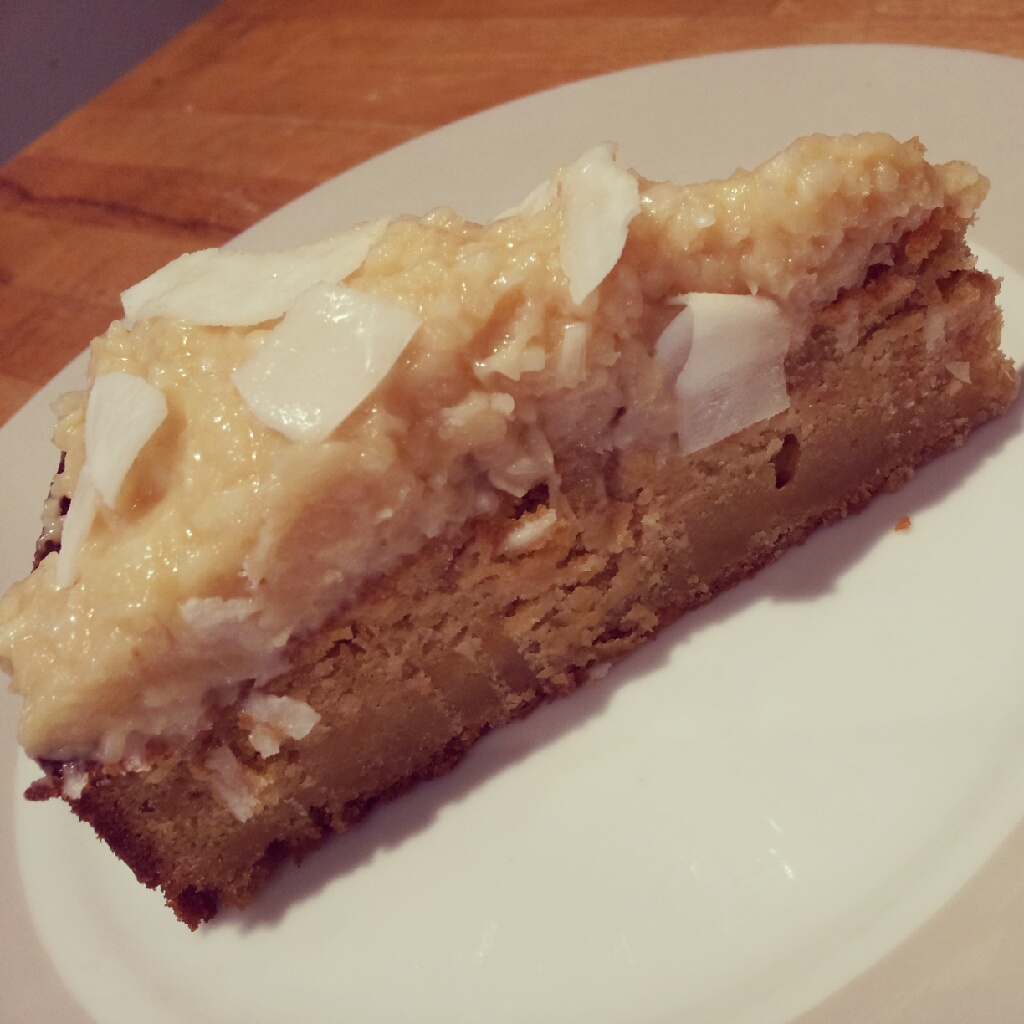
I was very pleasantly surprised by this cake and the combination of coconut custard. This was my very first ever attempt at making custard too and given the opportunity (and a spoon) I could merrily eat the whole pan of it by itself. That would definitely warm you up on a winter’s night! It was so sweet and comforting. You probably couldn’t eat more than one slice as it is quite a dense cake but I’m always up for a challenge. Now I’m thinking about it again I wish I had another huge chunk to tuck into! I’m happy to report that my sister enjoyed it too!

Sweet Potato Cake and Coconut frosting a sideways glance

Things I used to make South Korean Sweet Potato Cake

  • 1 cup of soft butter
  • 2/3 cup white sugar
  • 2/3 cup brown sugar
  • 3 eggs
  • 1 teaspoon vanilla extract
  • 2 cups all-purpose flour
  • 1 cup cake flour
  • 1 tablespoon baking powder
  • 1 teaspoon kosher salt
  • 1 1/3 cups milk
  • 1 medium sweet potato, peeled, cubed, boiled, and mashed
  • 1/3 cup maple syrup (golden syrup)

15 min  Creamy Coconut Custard Frosting

Things I used to make Creamy Coconut Custard Frosting

  • 1 (13-ounce) can evaporated milk
  • 1 cup sugar
  • 1/2 cup butter or margarine
  • 3 egg yolks
  • 1 teaspoon vanilla extract
  • 1 1/2 cups flaked coconut

37. Moroccan Basboosa (Semolina Slice)

Basboosa Baby

Lauren of Arabia

J’adore Morocco, the heat, the people, the beauty, the adventures into the Sahara and camping out under the stars. The food and desserts are amazing. I ate many a tagine and honey soaked sweets when we visited Marrakesh.

into the desert we go

Food Heaven

Having purchased the worlds largest bag of semolina I needed a recipe to put it to good use. I have vaguely horrific memories of semolina pudding every day for as part of of our school dinners and me disliking it so much I pretended to sneeze into my bowl so I could have it removed. But the dinner nannies soon wised up to my rouse and refused to let me get away with refusing semolina.

Thankfully my taste palette has refined somewhat since I was 6years old. I now even eat peas and broccoli!

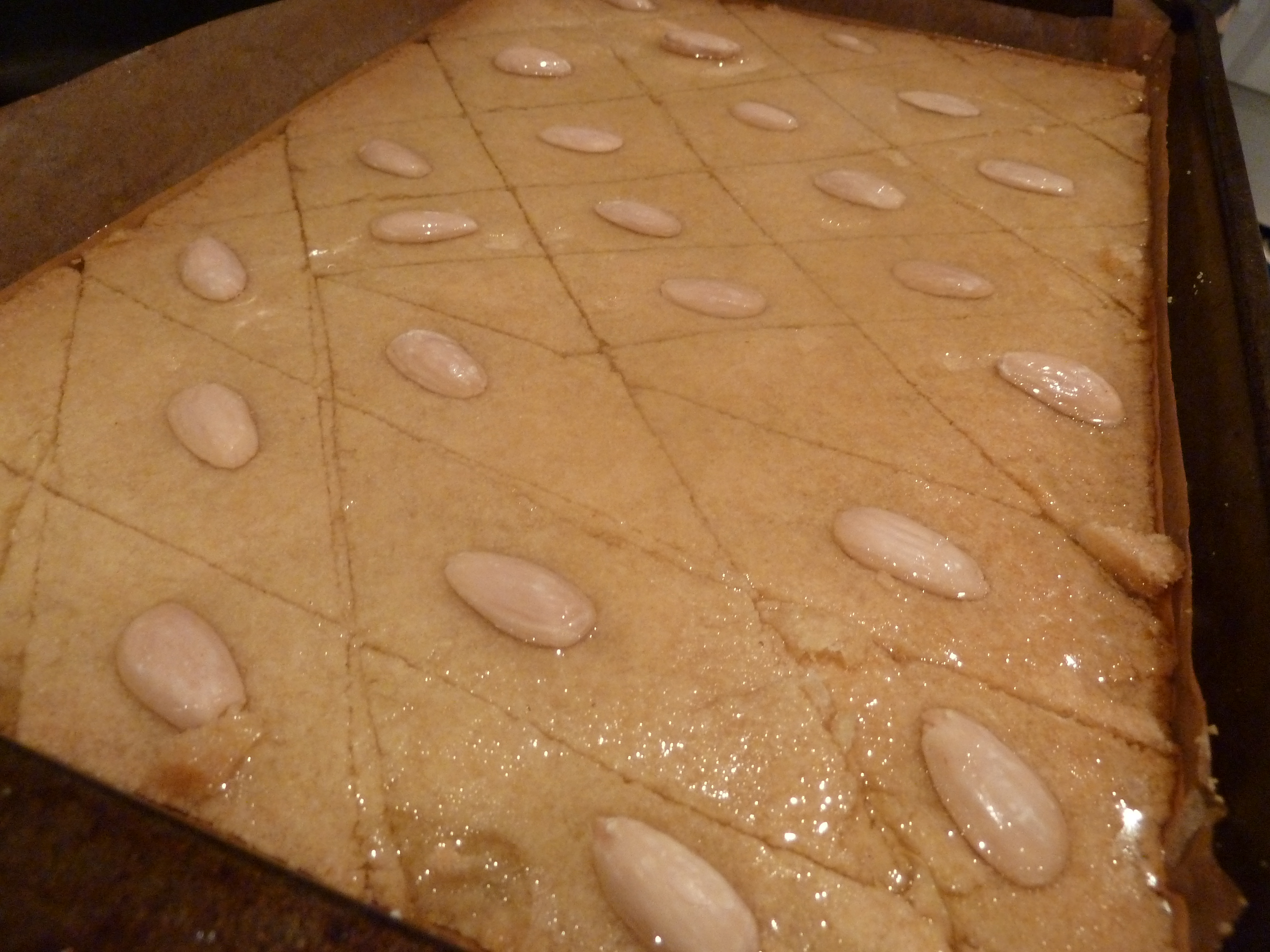
Basboosa all lined up and ready to go

Basboosa is a middle Eastern dessert and seems to be from Morocco and Egypt too. It reminds me of Baklava which I love and you may remember me attempting to make from scratch…

Thankfully Basboosa doesn’t involve the shelling of hundreds of pistachios or the creation of millions of layers of paper thin filo pastry! This is one quick bake the I will be definitely repeating in the future!

Sugar and water to bubble into a syrup

I began with the syrup. Unfortunately I didn’t have an orange flower water so I ad libbed and utilised the lemon and orange extracts I have in my cupboard. I think rose water would work just as well too.

The key to this bake is sugar. And LOTS of it. The syrup requires a lot of simmering to reduce it to about 2 cups worth but it still seemed very watery to me. I put faith in my Marks and Spencer recipe and hoped for the best.

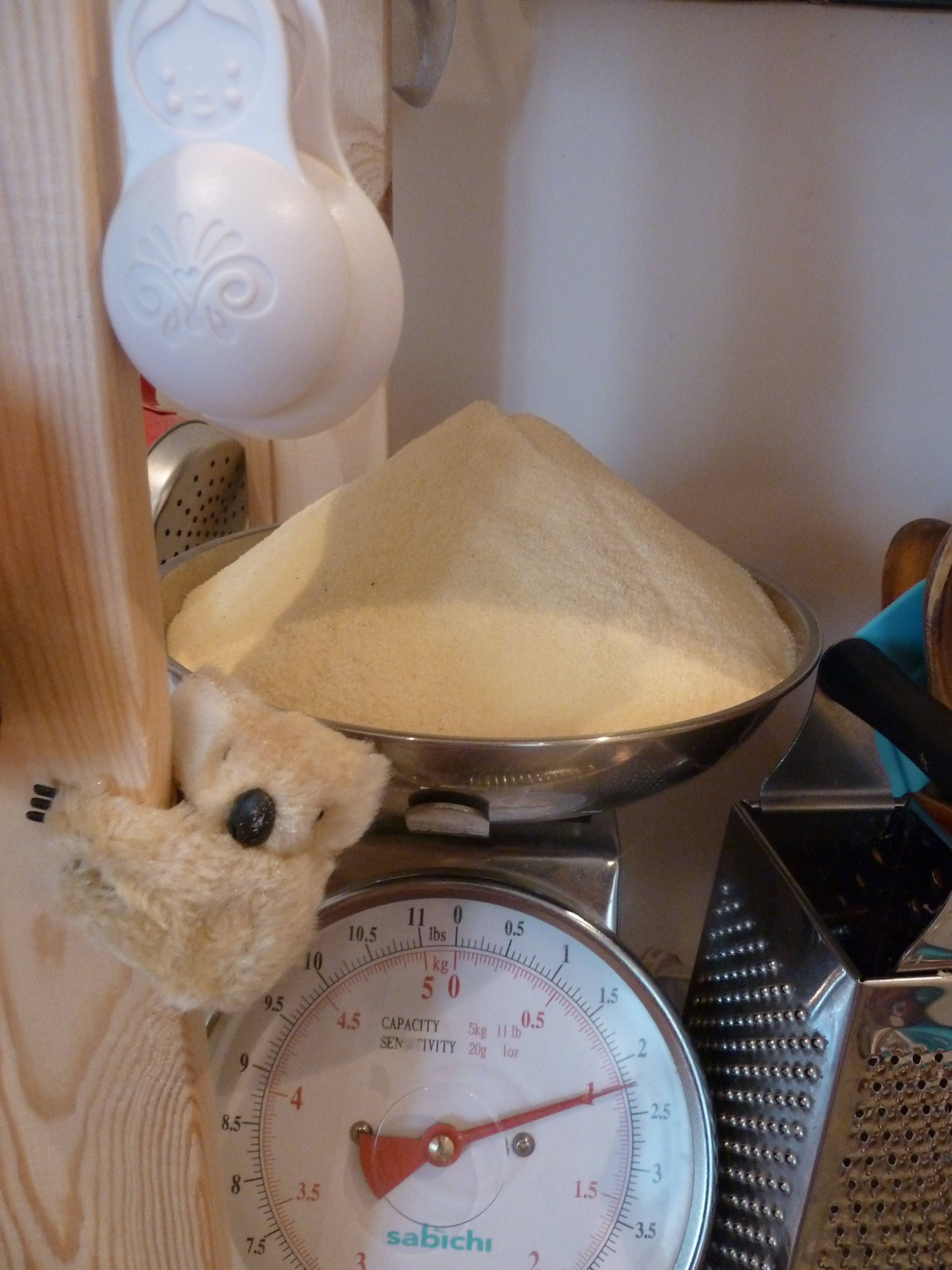
1 KG of semolina!!!

While the pan bubbled merrily on the stove I measured out 1kilogram (yes 1 KG!) of ground semolina! (I checked about 4 times that I had read this right as it seems like a massive amount and just about fitted into my biggest mixing bowl!

Precariously full bowl of sandy semolina

Adding in the sugar the mixing bowl was precariously full and could only be mixed with my bare hands, a spoon would just have tipped things over the edge completely!

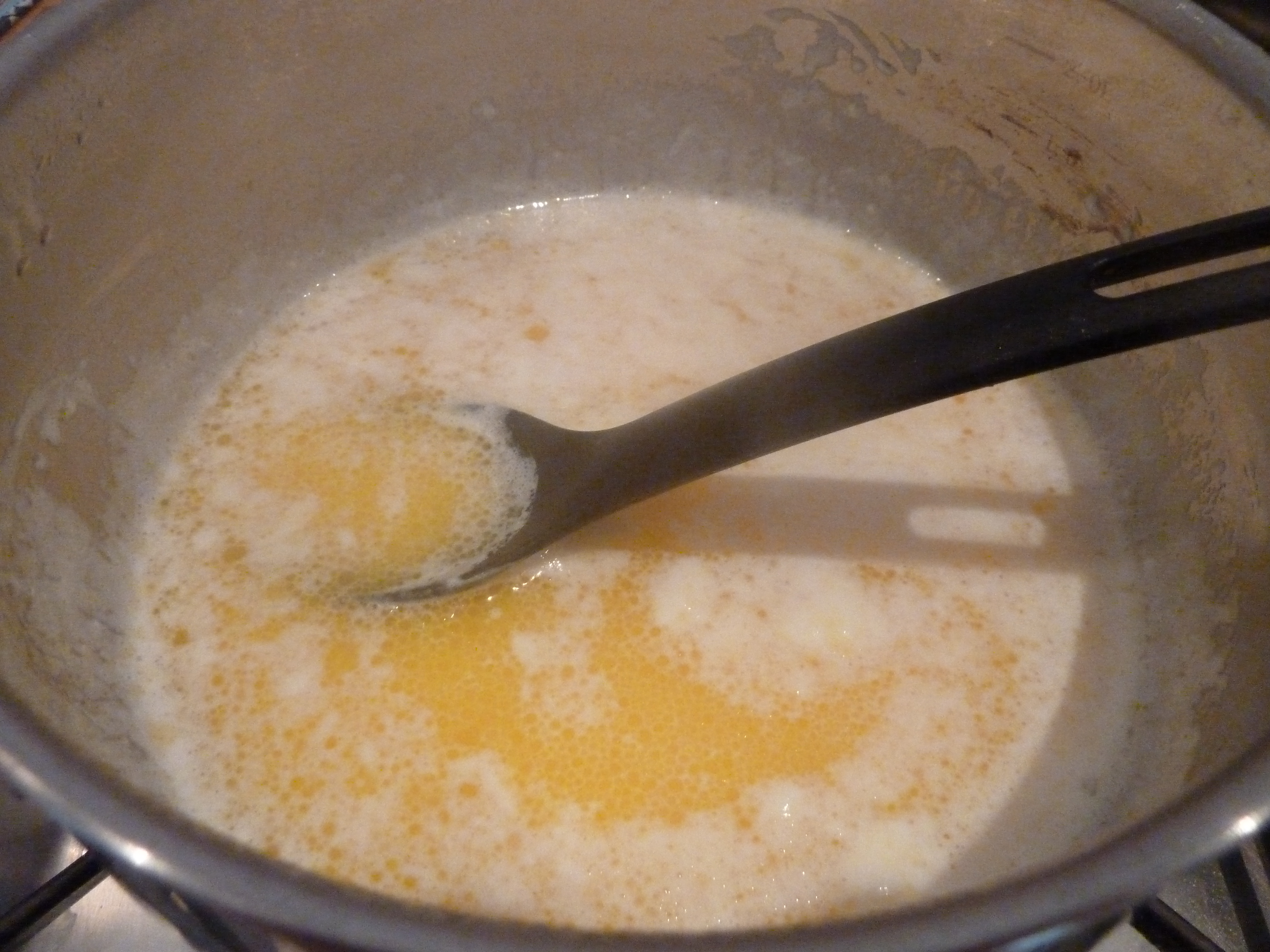
Butter and milk on the stove

Then to gently warm the milk and butter on the stove until the butter melts completely.

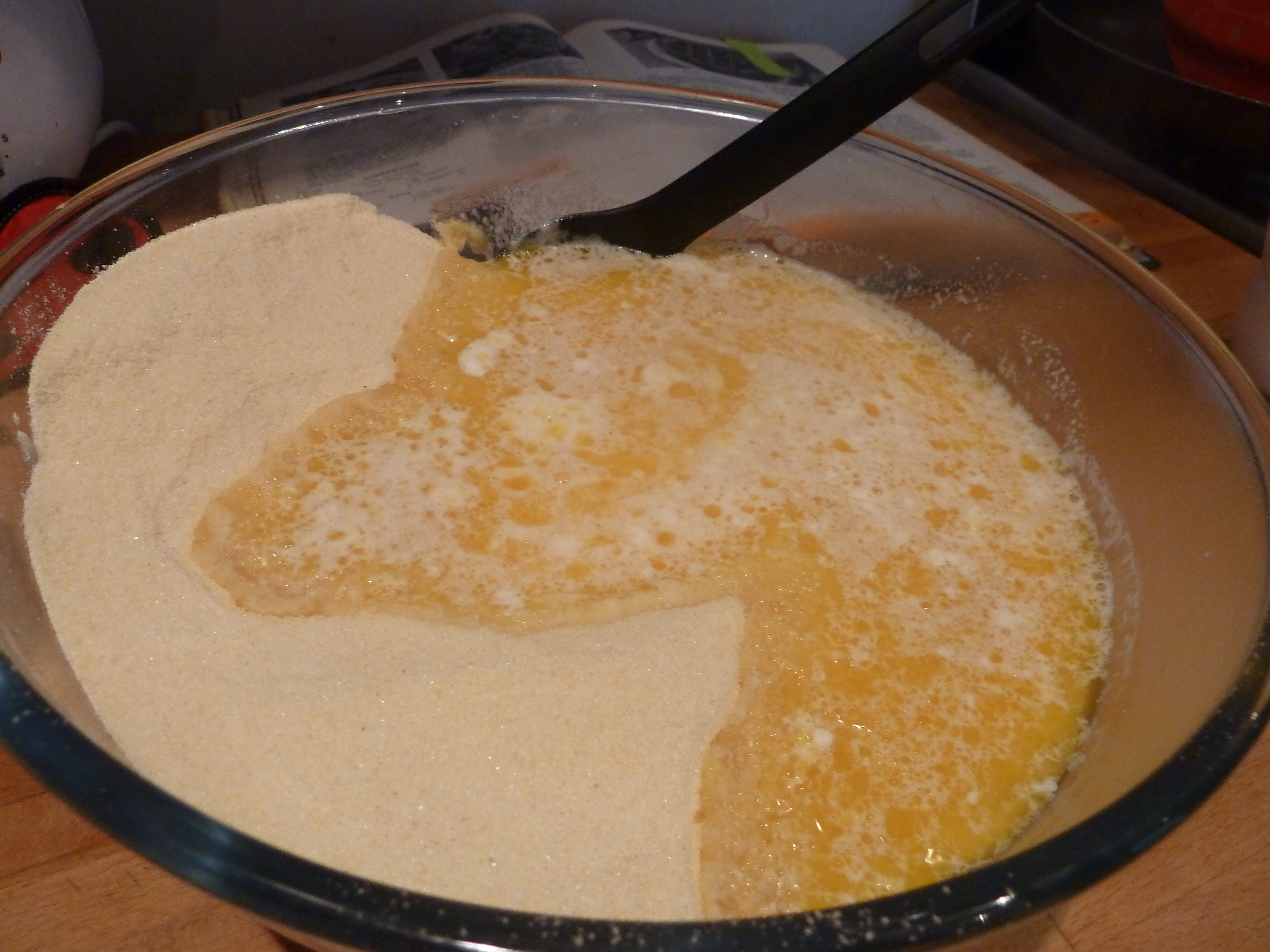
Thoroughly melted butter and milk

Once it’s thoroughly melted (and hopefully a little less frothy than mine) it’s  ready to add to the semolina. This was a delicate process. There didn’t seem to be enough liquid to bring the dry semolina and sugar together into a paste at all.

Bind us together – oh butter sugar and semolina

Nevertheless I perservered and gingerly (the milk was a bit hot) took to mixing it by hand again until lo and behold I had a semolina paste!

Pastey Semolina

Tipping the bowl upside down into my greased and lined deep baking dish the semolina required a little coaxing to flatten it out completely into all the corners.

bowl shaped semolina paste – into the tray you go

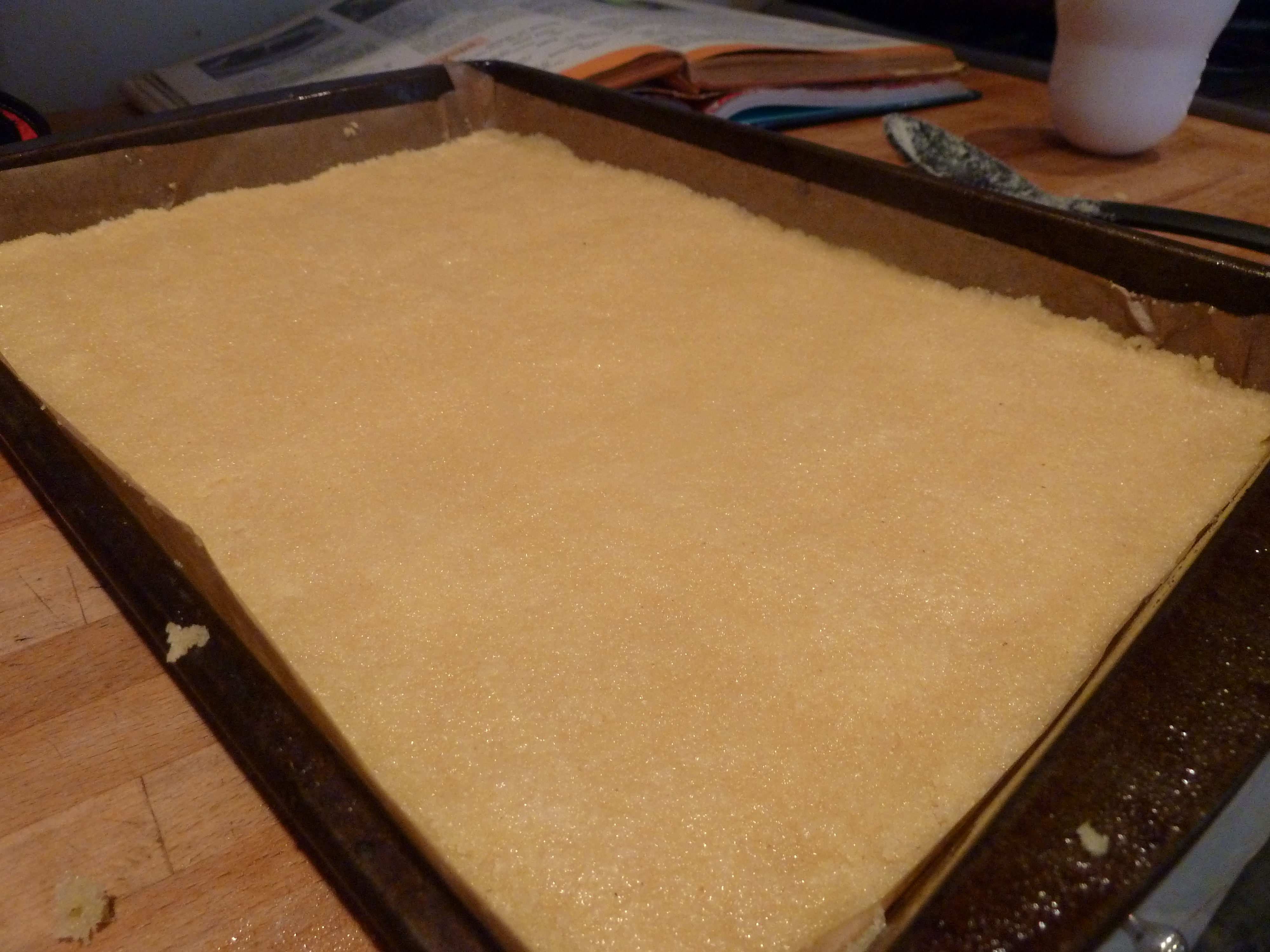
Once it was relatively flat I smoothed the surface with a wet hand and squashed it down into the tin to avoid any bubbles or gaps in the bake.

Flattened and smoothed semolina

Taking the syrup off the stove  (I added a dash more orange extract as I realised I had added it too early and it may have mostly evaporated…) popped it into the fridge to chill it, ready for it’s next job.

Syrupy and ready for a good chilling

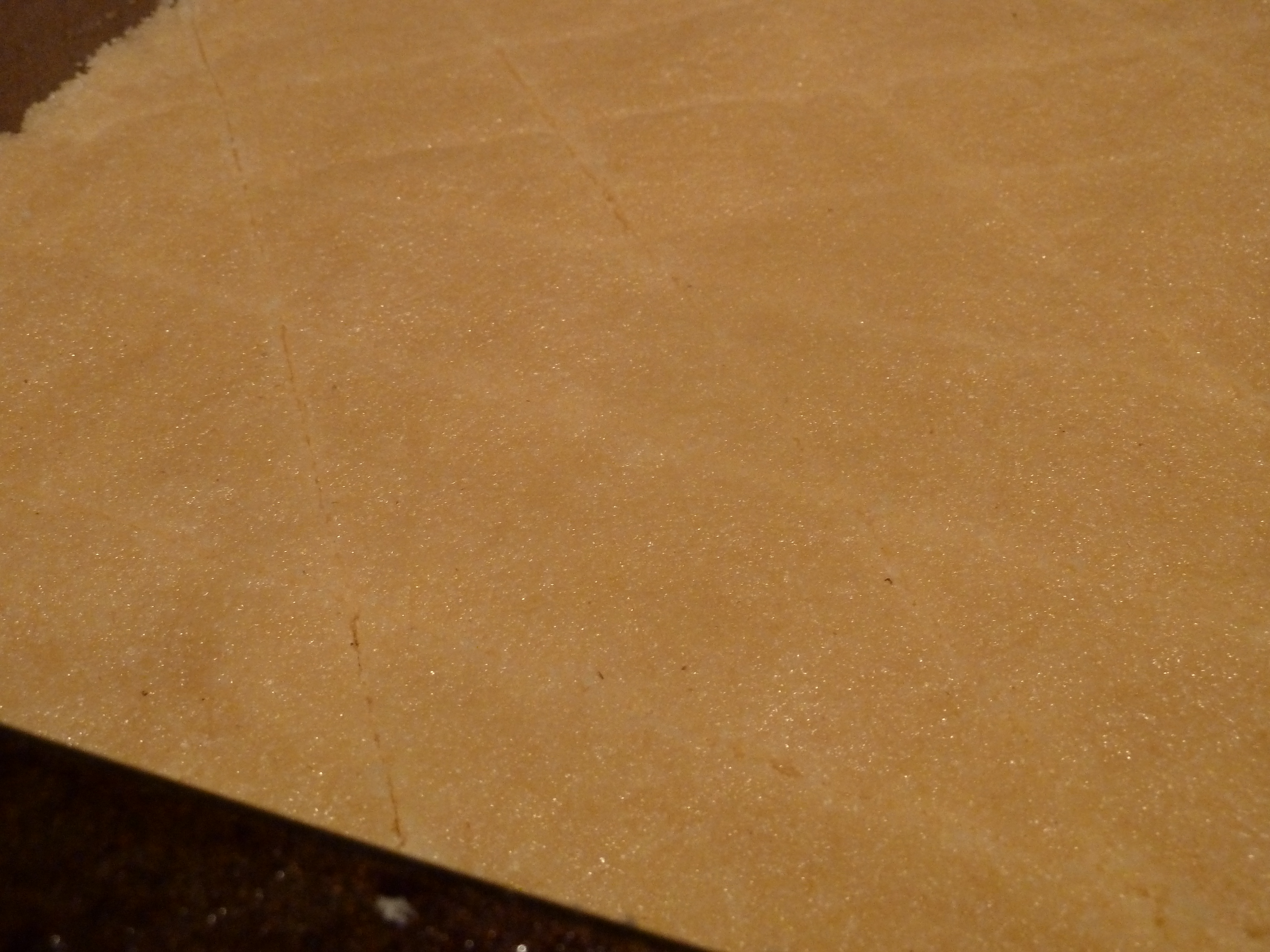
With a sharp unserated knife I attempted to score the semolina into equally sized diamond shapes (this befuddled my brain somewhat so I ended up with all sorts of shapes and sizes).

Zig zags in the semolina (supposedly diamond shaped)

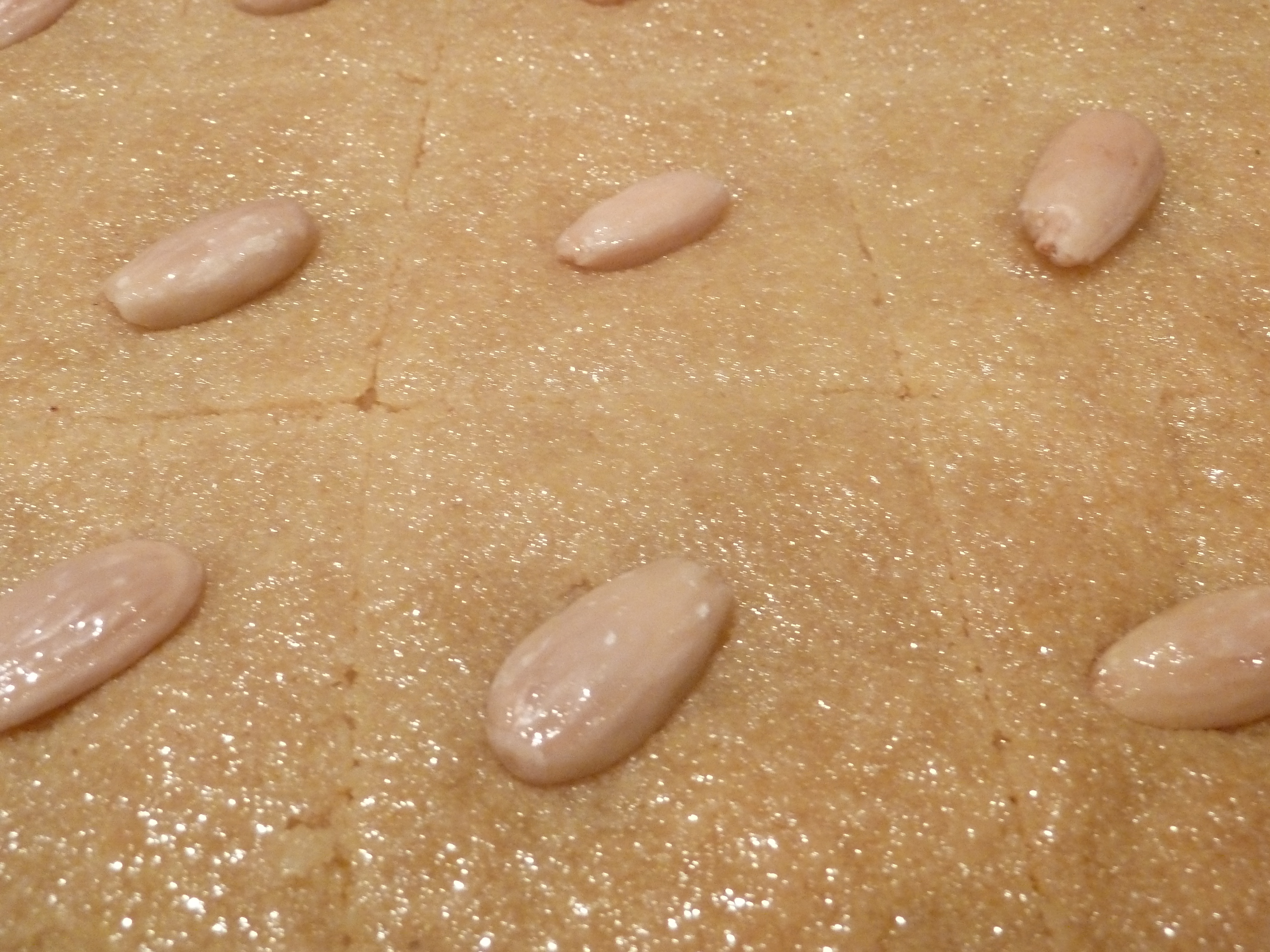
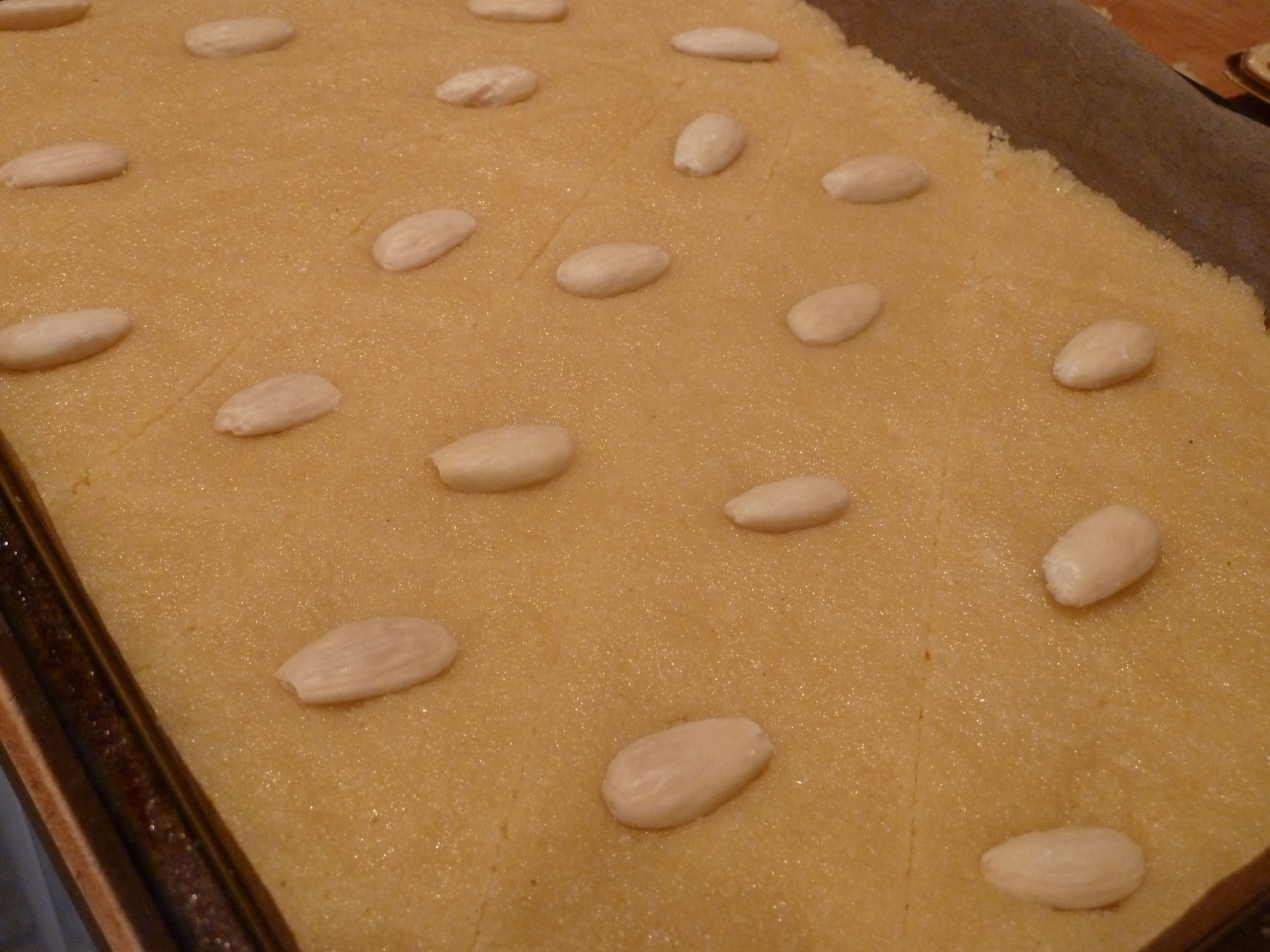
I popped the tray in the oven then quickly realised I forgot to pop the almonds onto each diamond! Quick as a flash I studded each piece with a blanched almond and threw it back in the oven.

Studded Semolina – check out those blanched almonds (better late than never)

Then a cup of tea and a spot of Mary Poppins is all you need to do whilst the bakes for an hour and a half! (Mary Poppins is optional but it was choice du jour)

Soaked in Syrup

Once the semolina is golden brown and firm to touch it’s ready for a final slice with sharp knife and a good drowning in chilled orange syrup. I poured half of the very liquid syrup over the baked semolina and worried that it was a bit too much! It definitely required a break for absorption! Half an hour later I poured the rest of the syrup over and let the Basboosa relax and take it’s time to drink up the sweet orange flavour.

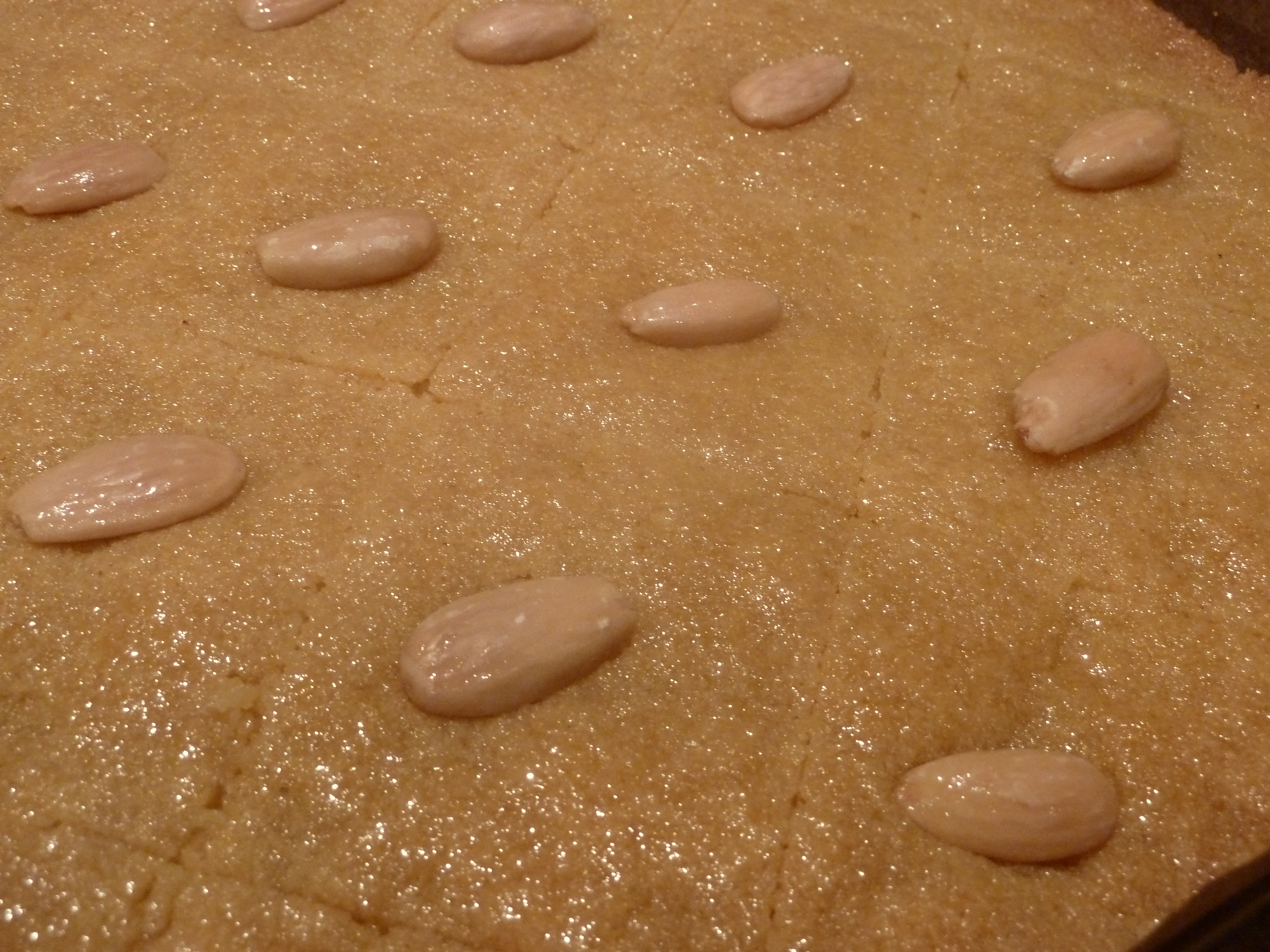
Totally soaked basboosa

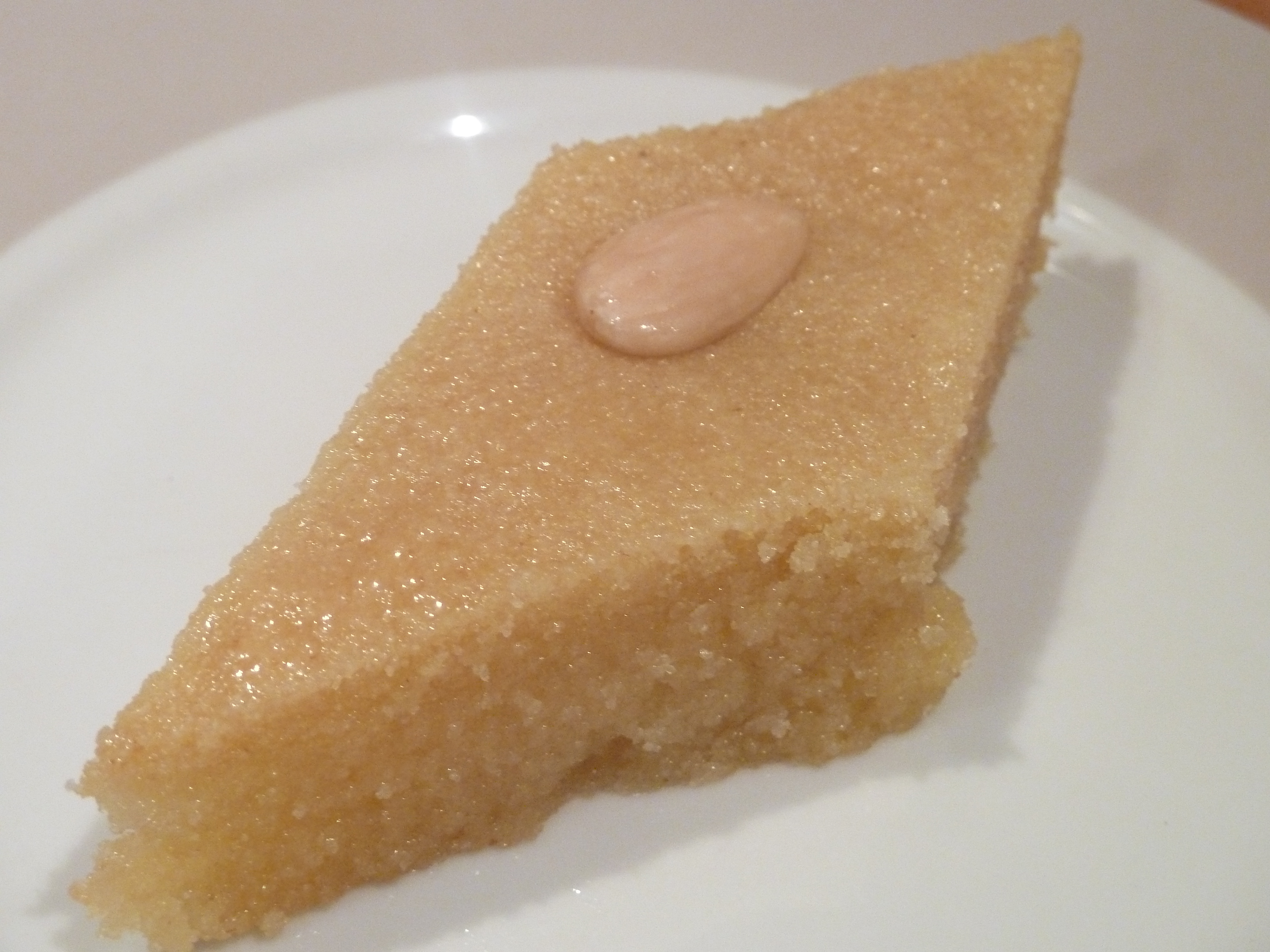
Once it’s all absorbed it’s ready for eating! I REALLY loved this bake. It’s baklava-esque and shortbread-ey. Just the perfect accompaniment to a cup of tea. It has quite a distinctive crumbly texture which some may not enjoy, I suppose it could be a bit dry if you didn’t pour all of the syrup over it too.

But as it’s a wheat derivative it has CARBS and is full of SUGAR so this is a perfect pre run treat. (I’m now running what I had always considered to be beyond my wildest dreams… 10 miles! Who’da thunk it? Admittedly this was by accident as I got hopelessly lost one afternoon/evening but I now know that I can do it! And I now have a freezer stocked full of this sugary pick me up.)

Basboosa Baby

This recipe makes a LOT of Basboosa, about 23 pieces – or more if you cut it into smaller pieces. It is very sweet so you probably don’t need a huge slice but it also keeps really well. Once the syrup crystalises it has a lovely glittery sugary crunchy top too. 🙂

I hope you like it as much as me!

Things I used to make Basboosa…

  • 1 kg ground semolina
  • 2 1/2 cups of sugar (550g)
  • 1 cup milk (250ml)
  • 125g butter
  • 1/4 cup blanched almonds (40g)

Syrup

  • 3 cups water (750ml)
  • 2 teaspoons lemon juice
  • 1 and 1/2 cups sugar ((330g)
  • 2 teaspoons of orange extract  (or Orange blossom water/rose water)
  • 2 teaspoons of lemon extract

Equipment

  • one 20cm x 30cm x 5cm baking tray
  • oven at 140 degrees c (fan assisted oven) 160degrees C normal oven


An Experimental Month

I seem to have been experimenting a lot this month with various non aroundtheworldin80bakes cakes and playing around with my blog a little too. I was inspired by Sarah Hartley to create a map of my bakes so far, which has really helped me to see which countries I am still yet to visit on my culinary challenge

I was over the moon when I got a notificiation to say that my blog had been linked to on another wordpress blog. Clicking the notification I went through to find that the wonderful Foodie Sarah, (Sarah Hartley) a journalist from the Guardian and the Notice community noticeboard website had wrote a piece about me and my challenge!! You can find her wonderful foodie blog here foodiesarah.wordpress.com

Sarah is also on twitter (@FoodieSarah) and is in the process of mapping out the foodie bloggers in the North of England, of which I am one. I recommend hopping over to her blog and checking out her map of bloggers. I read quite a few of these foodie blogs and it’s great to see how much is happening up here!

I baked a shed load of cakes this month for my Mam’s birthday, my friend’s house warming and my nephew’s christening. (Some photos of which are still to follow as the teddy bear sugar christeningcookies are still to be iced!) Most of the things I’ve been baking are new adaptations/improvisations of previous aroundtheworldin80bakes cakes. The Anzacs were particularly challenging as I ran out of coconut so I replaced this with ground almonds! I also ran out of plain flour so I used self raising instead. I feel a new recipe has been born. 🙂

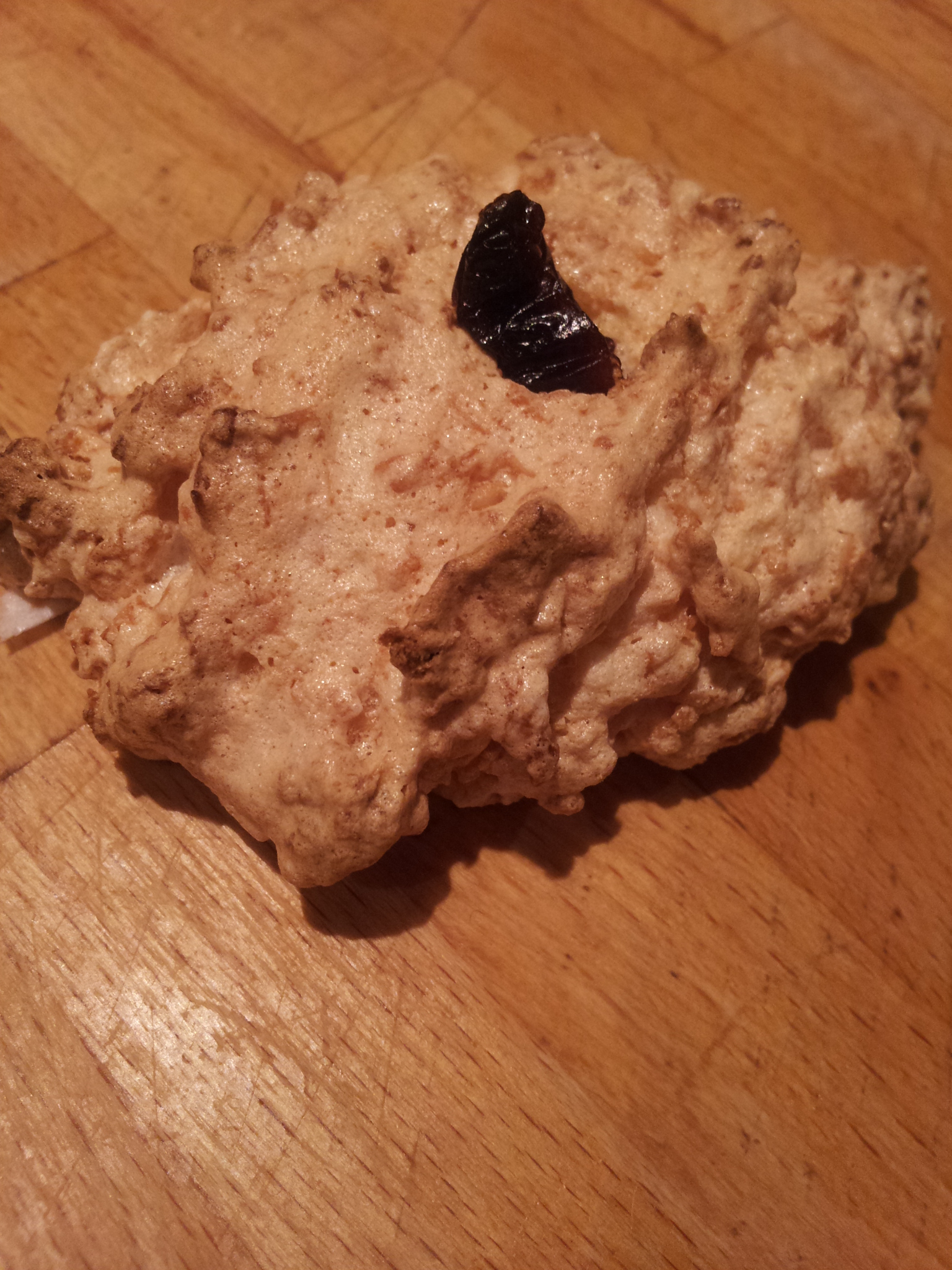
Other baking experiments this week – Coconut Macaroons

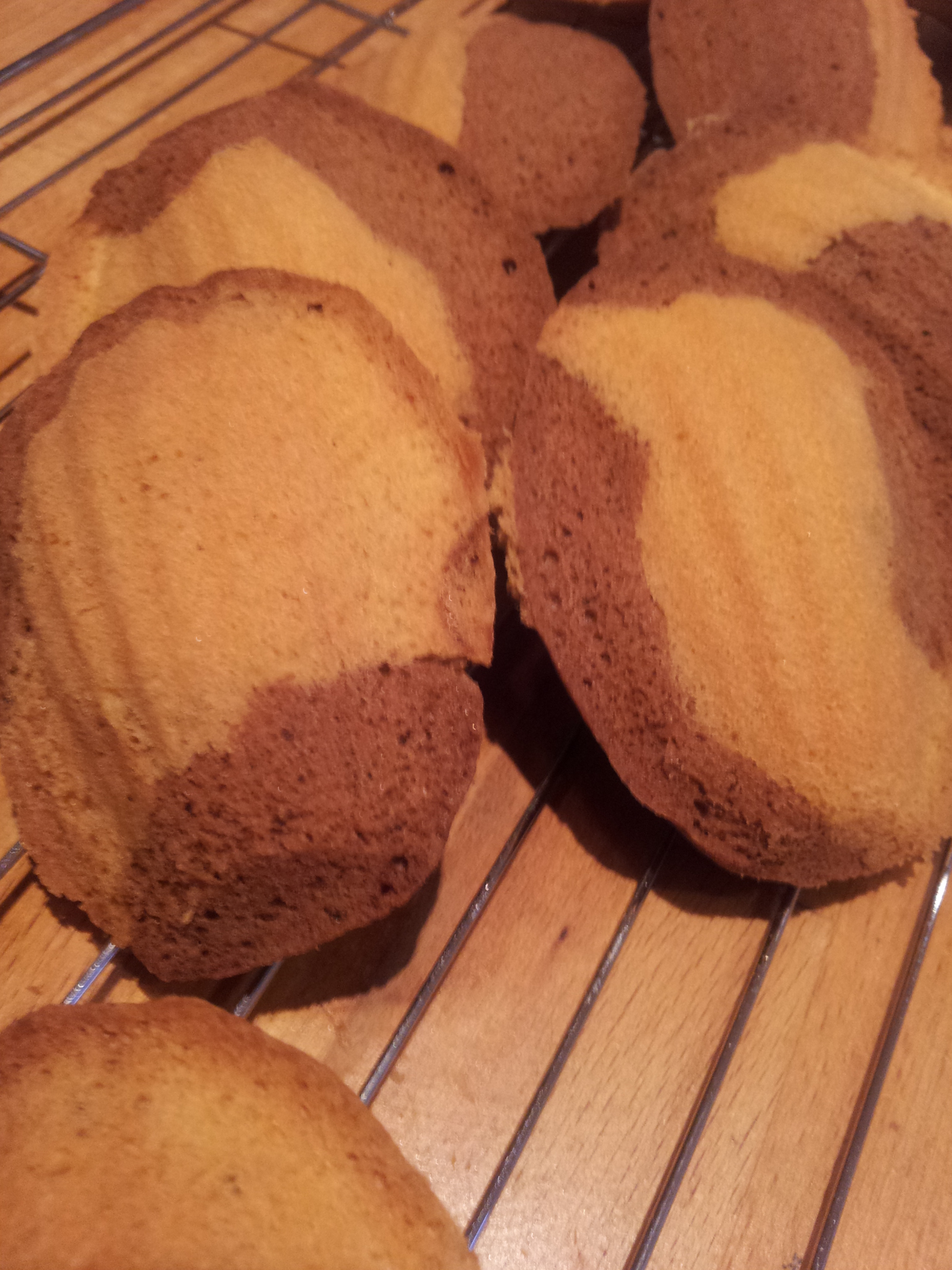
Other baking experiments this week – Two Tone Chocolate and Almond Madeleines

Mountains of improvised Almond Anzacs

In amongst all this baking I’ve been doing a bit more running too in preparation for The Great North Run that I’m running for Oxfam in September. Only 3 months left to go I’ve even started running home after work, just to fit in a few more miles, with my new running haversack (which I broke after 2 runs!).

Early morning (6am!) running down by the Quayside taking in the Olympic Torch parade

all the lads and lasses wit all their smiling faces gannin along the Scotswood Road to see the Blaydon Races! (Pre torrential rain and river like running conditions)

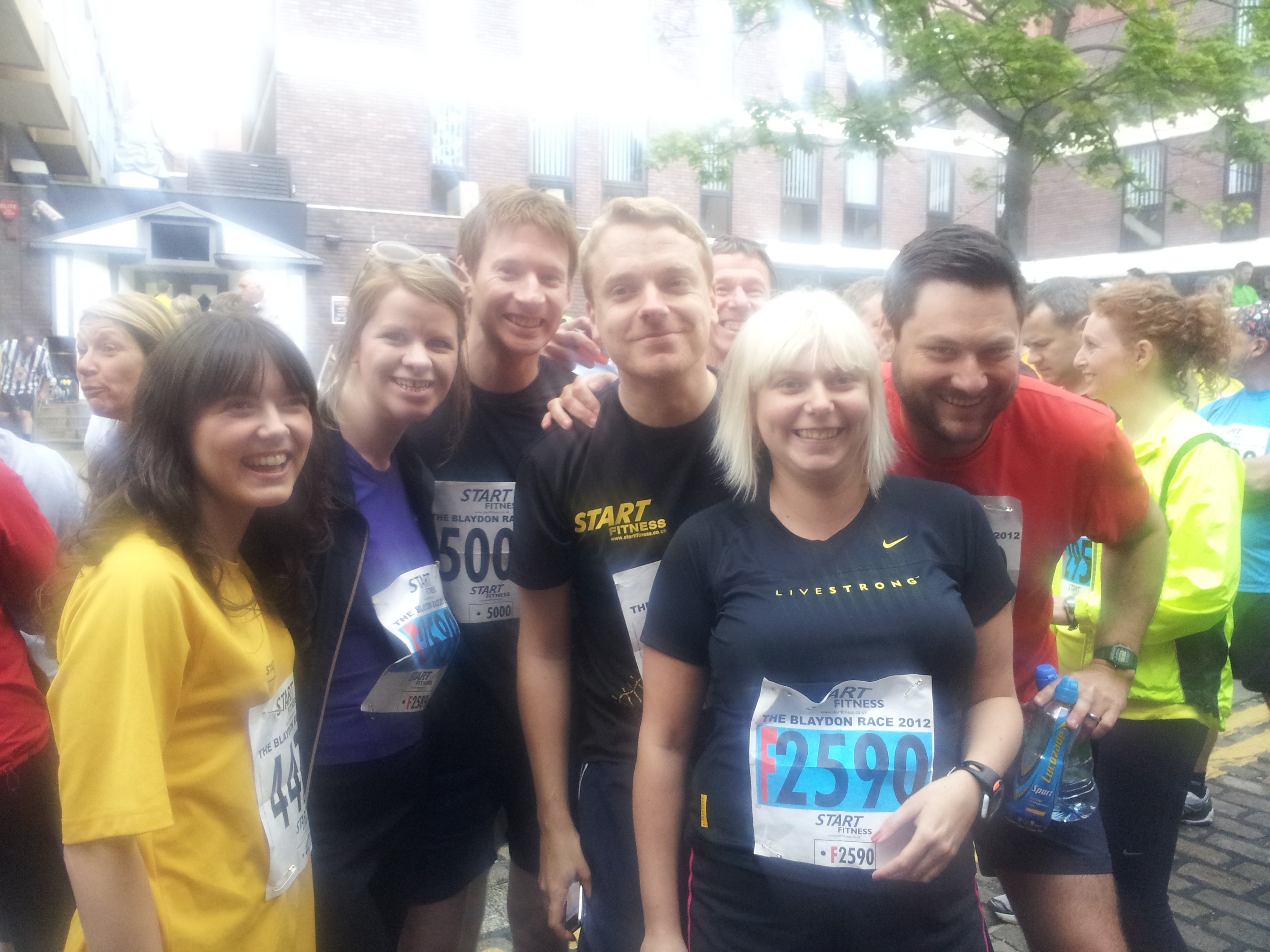
The Blaydon Race was epic. It was the 15oth anniversary and the heavens opened to welcome us. It was like an endurance test running through a stream as the roads were flooded. I have never been so soaked in my life! But then again it made me run quicker (5o mins 40 secs to be exact) to finish which meant I was that little bit closer to getting home, and in a hot bath!

A good old bottle of brun ale – dedicated running!

Before today’s Alnwick 10k Trailrun – who knew what a trailrun entailed until today’s encounter with mud, uneven terrain and LOTS of hills!

And then my first ever ‘Trail Run’ which I hadn’t even realised what I had signed up for. This was one hell of an experience but it was so beautiful up in Northumberland, with the rolling hills and sunshine! Let’s hope my trainers dry out soon… and then for more international baking!

My new (first pair not purchased from the boys children’s dept) proper running trainers!

All of this running and baking means I’ve made very good use of my new favourite purchase…  a stove top Hello Kitty Espresso pot.

Hello Kitty Espresso pot

Thanks very much for reading! I’m off to check on my homemade (invented from the ingredients in the cupboard) rice pudding!

34. Chinese Egg Yolk Sponge Madeleines

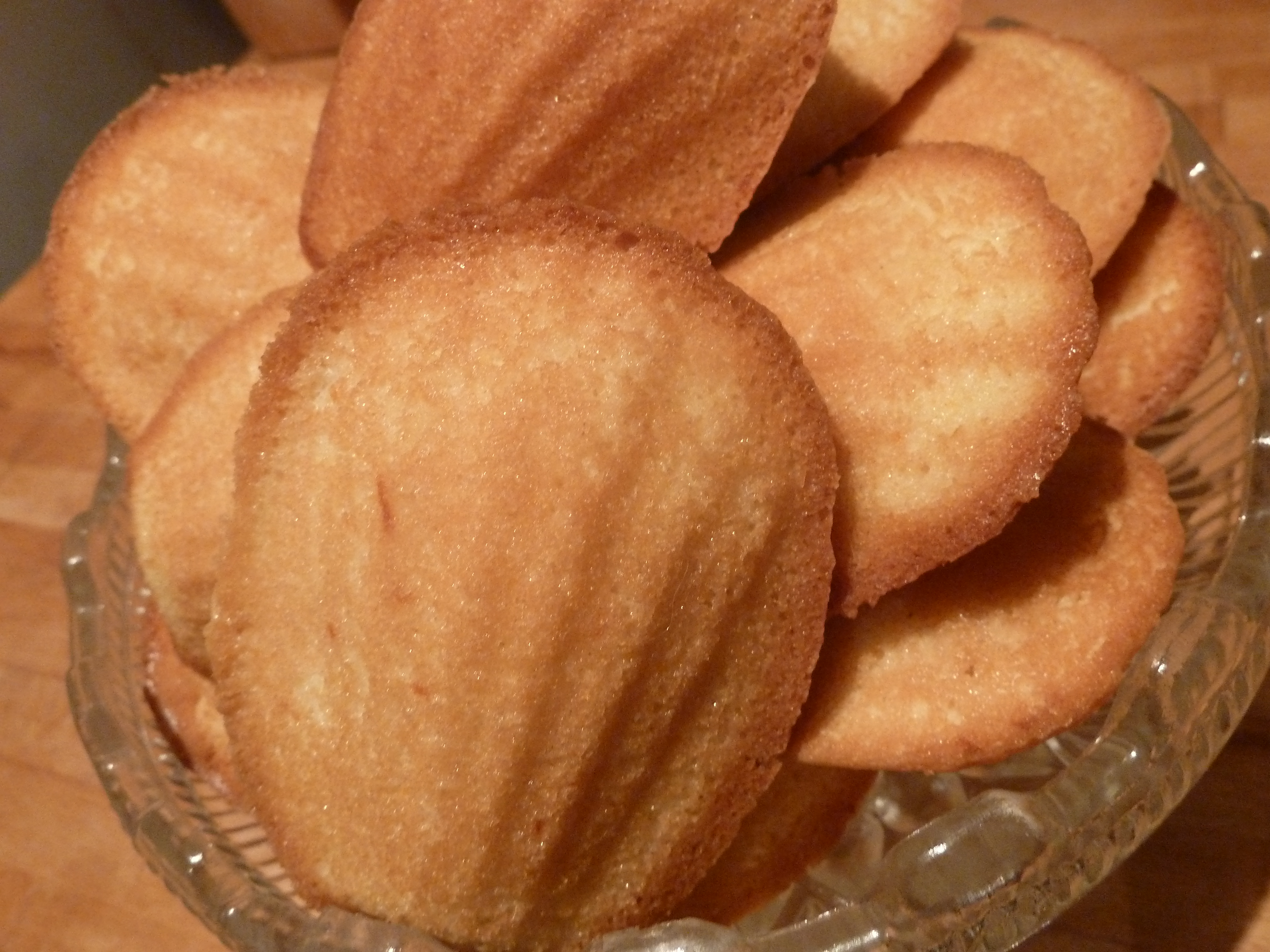
What do you do with all of those egg yolks where you’re making macaroons? (Or in my case breaking an entire batch of macaroons??) Well I suggest you make some Chinese Egg Yolk Sponge Cakes, in the shape of Madeleines (of course, any excuse to use my favourite new tin!)

Chinese Egg Yolk Sponge Madeleines

I’ve eaten a lot of sponge cake in China and sampled a few egg yolk sponges at my favourite Chinese Bakery, Bread Point, in town. It’s not half as eggy as it sounds. In fact they are a lovely light and moist sponge cake. Almost like a Madeira Cake but a bit richer.

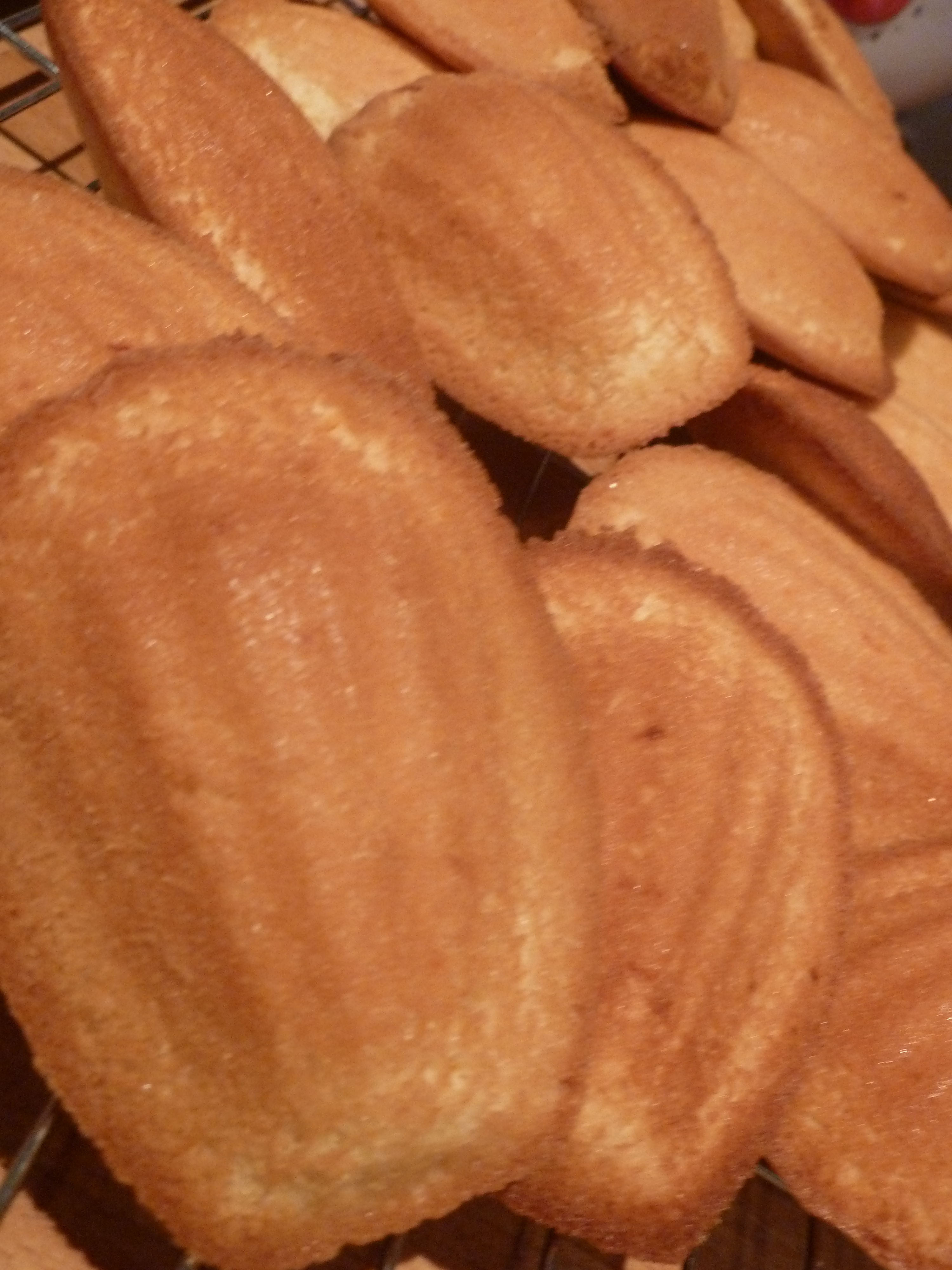
Up close and personal with Madeleines

In a bid to use up everything that I have in my fridge and cupboards I went on a baking spree. Baking 3 types of cake simultaneously, for my Mam’s birthday. I succeeded to use up EVERYTHING, and then went for a run in the rain. (I have to keep squeezing them in every chance I get!) What an achievement for a rainy Jubilee Bank Holiday weekend. Although I forgot to actually bake anything regal or jubilee related.

As I had used up the egg whites having another bash at macaroons I had 3 egg yolks left over to create the Egg Yolk Sponge Madeleines.

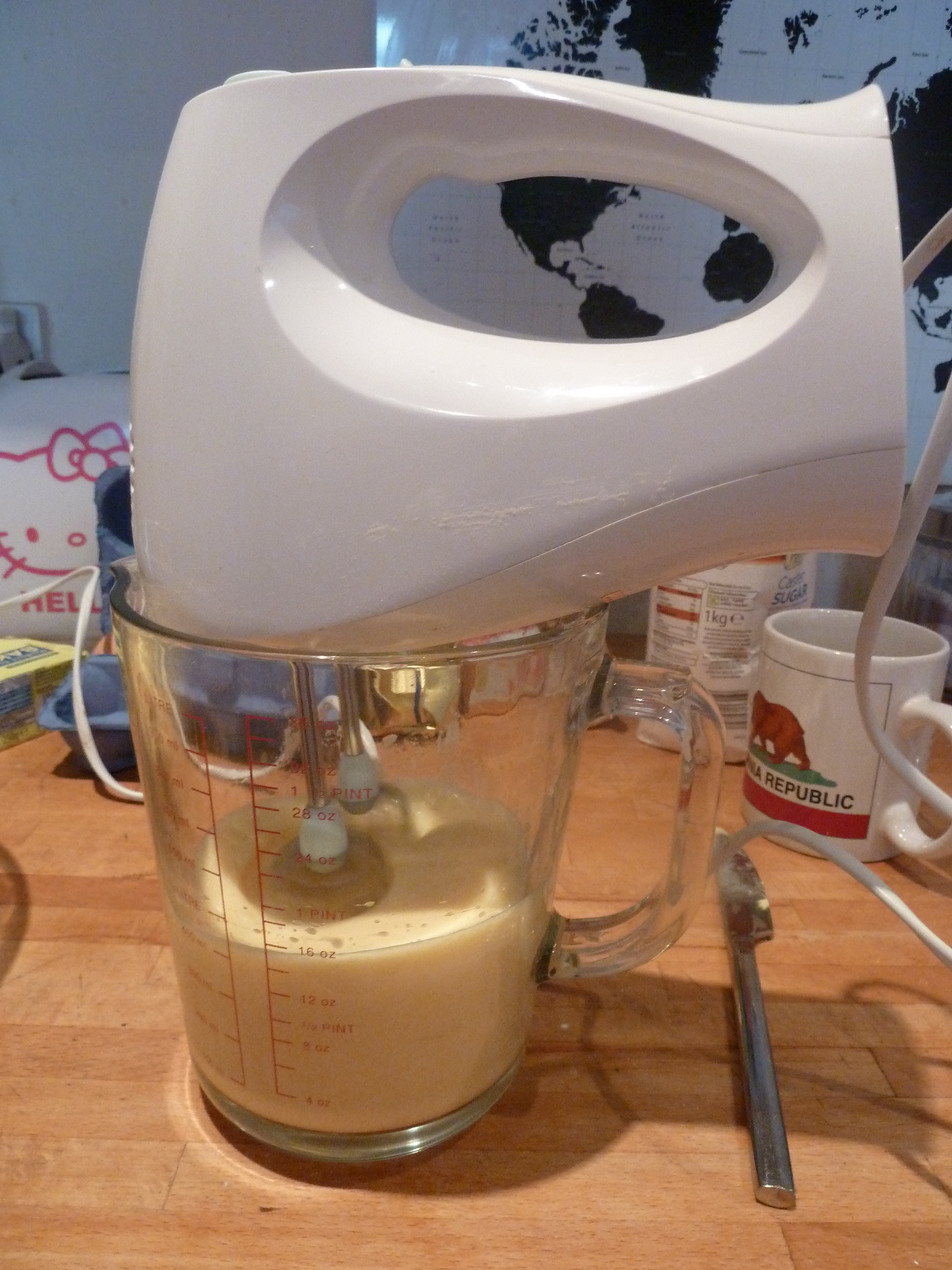
I started by whisking the egg yolks and whole egg together with my food processor using the whisk attachment for about 5 minutes until they became thicker and lemony coloured. (You could of course use a hand held electric whisk instead, I just used this as I already had it to hand from macaroon making…) This creates a lovely warm yellow liquid with all those egg yolks in it!

Fluffy and yellow and frothy

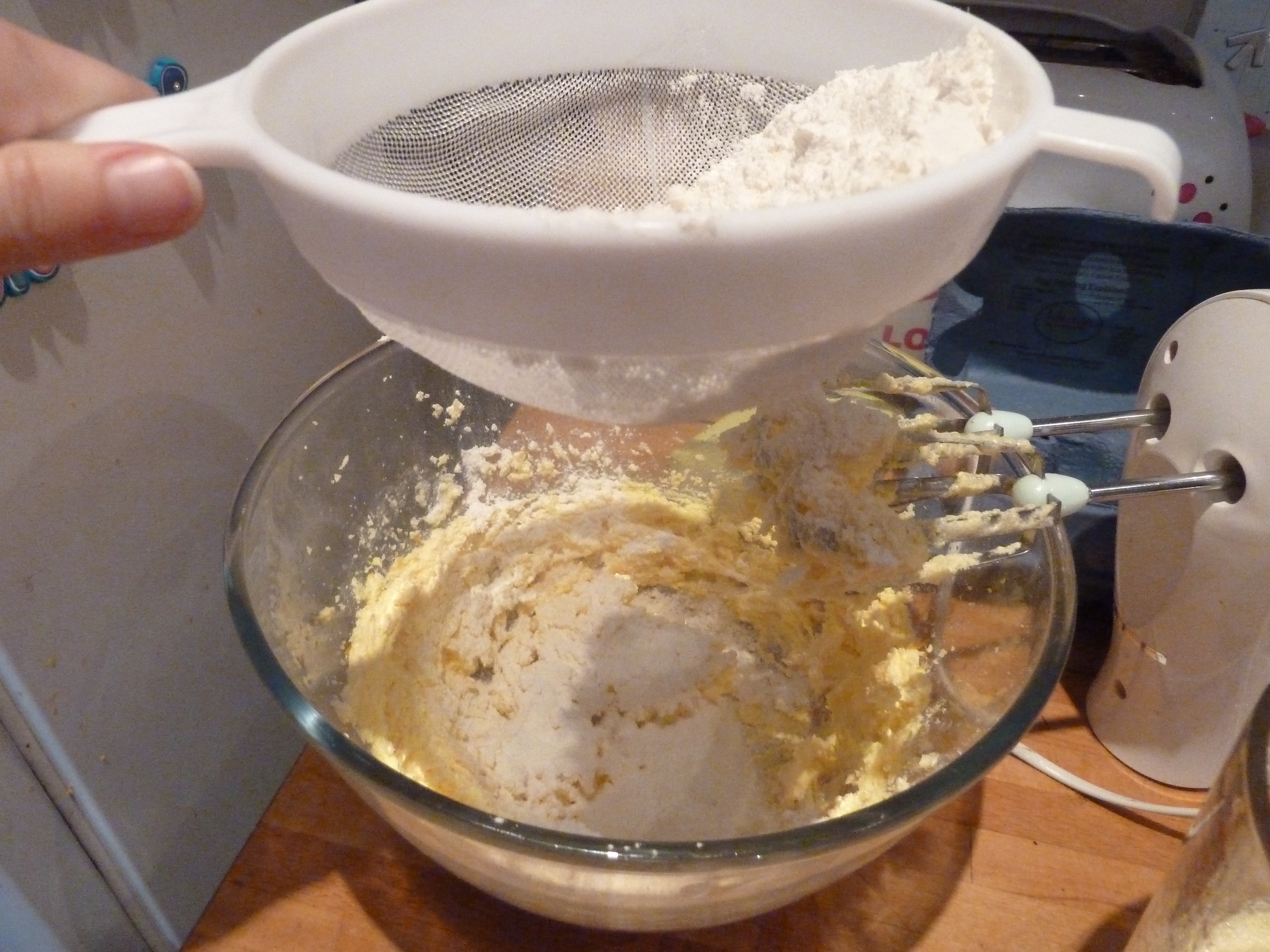
While the mixer is running, add the sugar gradually to the eggs and continue to whisk the mixture for about 10 minutes. While the mixer is running if you have your hands free, you can then use the time to measure out and  sift together the flour, baking powder, and salt in a separate bowl.

Breaking the rules and adding the orange zest to the flour

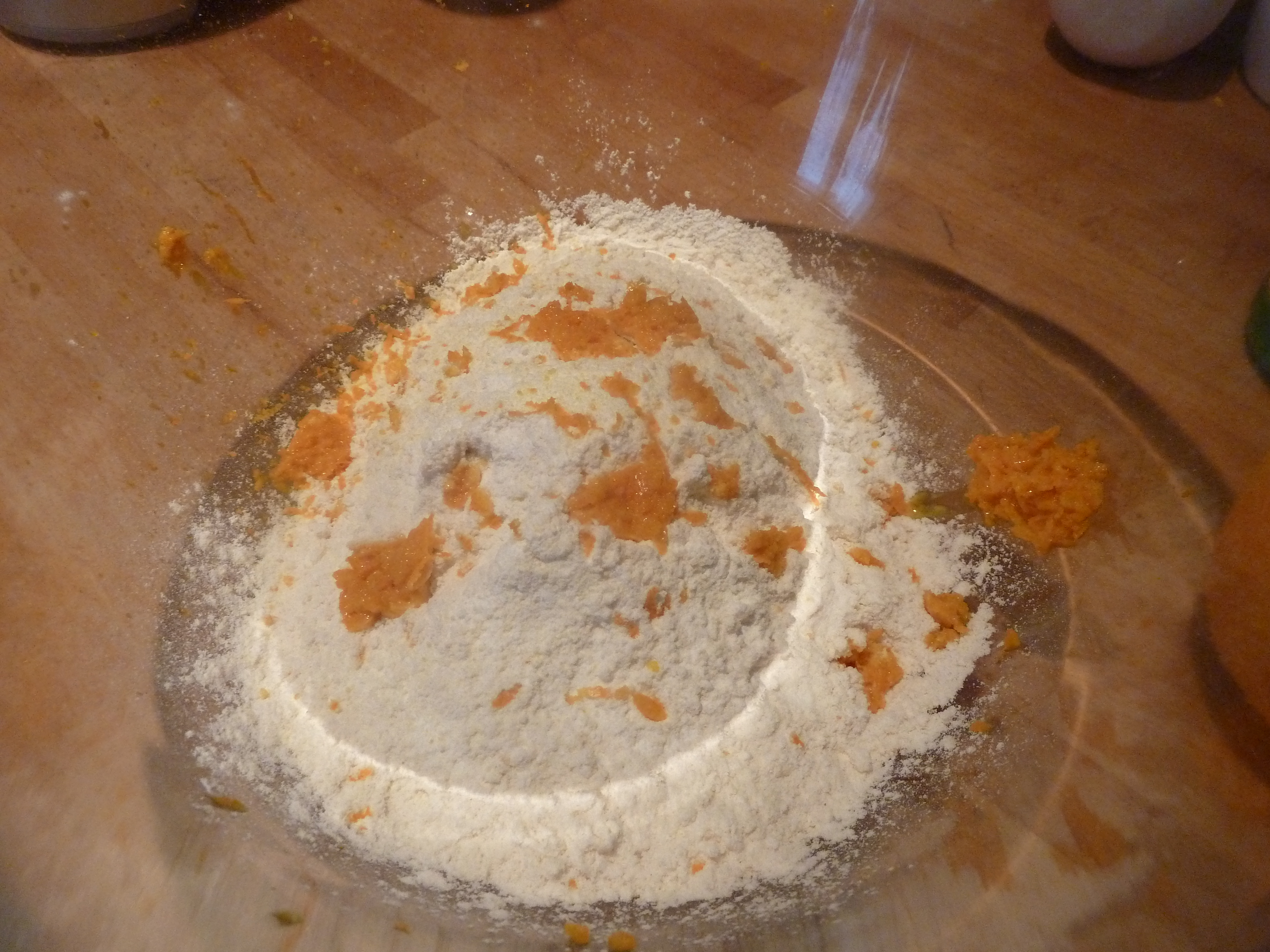
Admittedly I erred from the recipe at this point. I added the zest of an entire orange to my dry ingredients rather than folding them into the wet mix… I don’t think this made the slightest bit of difference, other than I could stir the flour more vigorously without the fear of knocking all of that wonderful air out of the eggy batter. I also couldn’t be bothered to juice my orange, so took the lazy option of adding some lemon juice that I had in the fridge already. Hopefully this added to the citrussyness of the sponge.
I then continued folding in the orange extract and lemon juice. I was also in a hurry so didn’t bother to sift the flour into the mix, but rather opted for the ‘all in’ method. Dumping all of the flour into the egg fluff and folding it in with a metal spoon.
I read somewhere that bakers are divided on this sponge making method. Some say to fold in a third of the flour at a time with a metal spoon to keep in all that lovely air in the whisked eggs. Others say put it all in, in one go, to minimise the amount of folding you have to do, but don’t drop the mixture into the eggs from a height as this will knock out the air. I have tried both methods and I think I have to agree with the latter. And it was quicker too! Whichever sponge making method you prefer the golden rule is always do not stir or beat the mixture and fold with a metal spoon to cut through the mixture. What do you prefer??

Folding in the boiling water one Russian Doll cup at a time

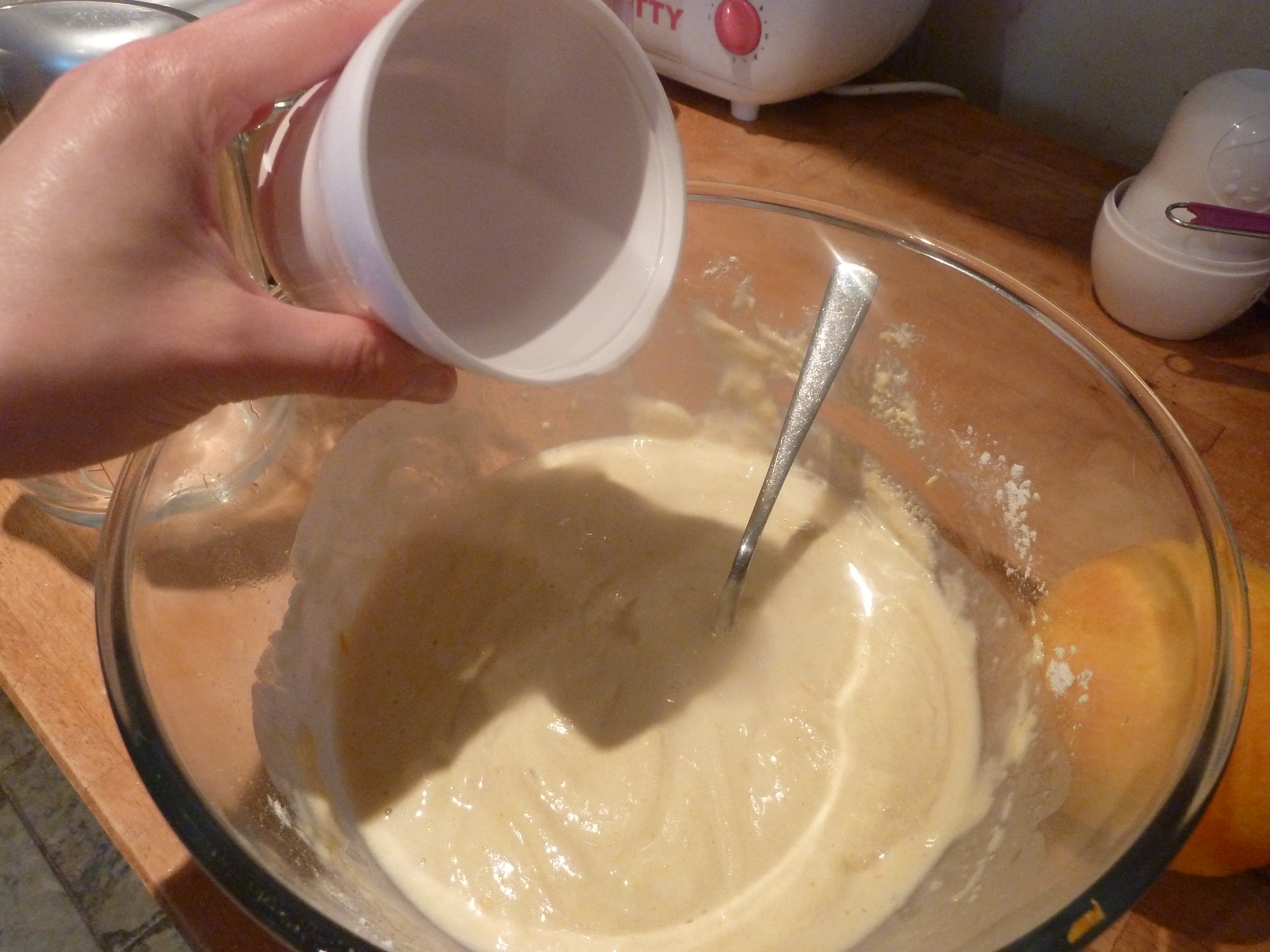
Then last but not least all that is left is to fold in the boiling water carefully to produce a fluffy and luxuriously thick batter.
I found it much easier to squirt the batter into the Madeleine tin last time and have now perfected my method…

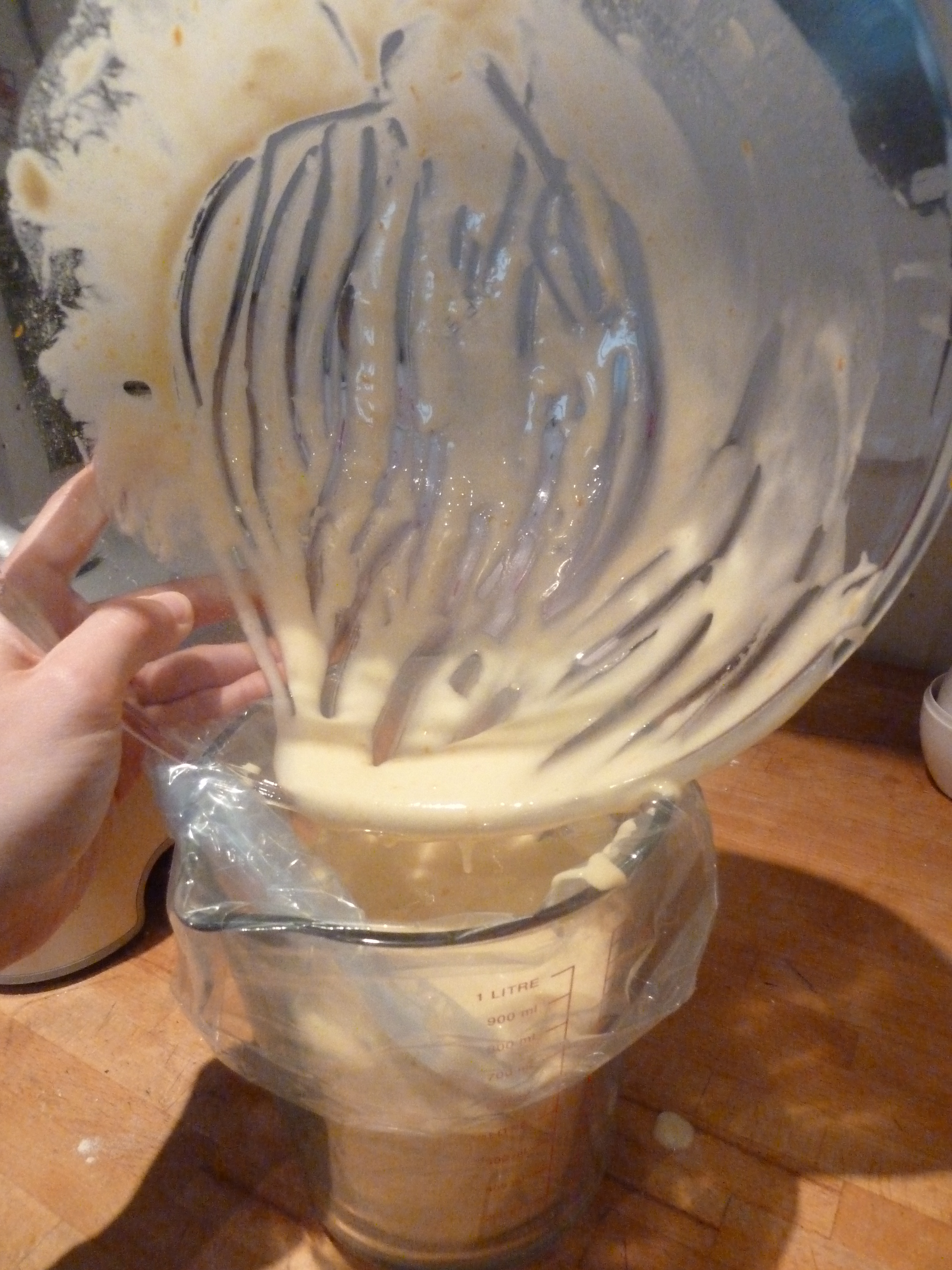
Step 1. Carefully empty the batter into a plastic sandwich bag opened over a measuring jug. The jug helps to support the bag and you can fold the bag down over the edges. I also balanced the bowl onto the wide jug neck so to reduce how far the batter had to travel (and preserve the air content!). it also means you can get the spatula out and encourage the rest of the batter into the bag.

The jug helps to support the bag and you can fold the bag down over the edges. I also balanced the bowl onto the wide jug neck so to reduce how far the batter had to travel (and preserve the air content!). it also means you can get the spatula out and encourage the rest of the batter into the bag.

Step 2. Clip the sandwich bag shut with a peg or tie a knot in it so all the batter falls into one corner of the bag. (Hey presto an improvised and cheap cheap piping bag!)

Step 3. Snip the corner off the ‘piping bag’ and you’re good to go! Squeeze the bag gently to release an even flow of batter into your pre greased tin and use your spare hand to put your finger over the ‘nozzle’ when you have piped enough mixture into each portion of the Madeleine tin. Less mess and no waste!

I  found this much easier and quicker than trying to spoon the batter into the tin as it went everywhere and left lots of mess on the tin too. Don’t forget to grease your Madeleine tin well (I love my quick release spray!) and only fill each Madeleine well one third of the way up so they have room to expand. If you over fill, they will spill out and burn.

Egg Yolk Madeleines ready to bake – look at those flecks of orange!

Leave the tray on a flat surface to settle and let gravity do its job. The mixture will spread and level out, filling all of the shapely Madeleine grooves. You probably won’t need to put as much batter into each well as you think, but this allows you the option of topping up any wells that look a little low.

Baked Egg Yolk Madeleines

Bake the at 325 degrees F (165 degrees C) for 10 to 15 minutes. (You can make one large cake with this recipe but you will need to bake it for 60-65 minutes)
After allowing them to cool for a couple of minutes in the tray, turn the Madeleine tray over onto a wire rack and let the Madeleines fall out. Leave them to cool completely on the wire rack and re grease your Madeleine tray and pipe another set of Madeleines into the wells. This recipe is enough for a batch of 24 Madeleines. If you have any problems getting them back out of the tin, gently coax the edges with your fingers or while the tin is upside down gently tap it. They will eventually pop out, unless the tin hasn’t been greased enough…

Cooling down nicely – Egg Yolk Madeleines

I really love these cakes so zesty and sweet. Having baked them in the Madeleine shape, they have a wonderfully light and soft centre with a golden crust, with a nice bite to it. Not dry or tough in the slightest. I will be making these again for sure.  They are traditionally baked as round cakes or one large cake but I quite like how portable and hand sized the Madeleines are easy to eat on the move with a good cuppa!

Orange Egg Yolk Madeleines

If you’re feeling fancy you could even dust them lightly with confectioner’s sugar or frost with Orange Butter Frosting. But I think I prefer to see the shapely grooves of the Madeleine.

Mountains of Madeleines

Things that I used to make Chinese Egg Yolk Sponge Madeleines…
This was enough to make 24 Madeleines ir you could make one large round cake with this recipe
  • 1 2/3 cups plain flour
  • 1 1/2 teaspoons baking powder
  • 1/2 teaspoon salt
  • 3 egg yolks
  • 1 egg
  • 1 1/2 cups white sugar
  • The zest of 1 large zest
  • 1 tablespoon lemon juice
  • 1/2 teaspoon orange extract
  • 3/4 cup boiling water
  • Preheat oven to 325 degrees F (165 degrees C).
  • Bake madeleines for 10-15 minutes

** This recipe was lovingly adapted from the All Recipes website

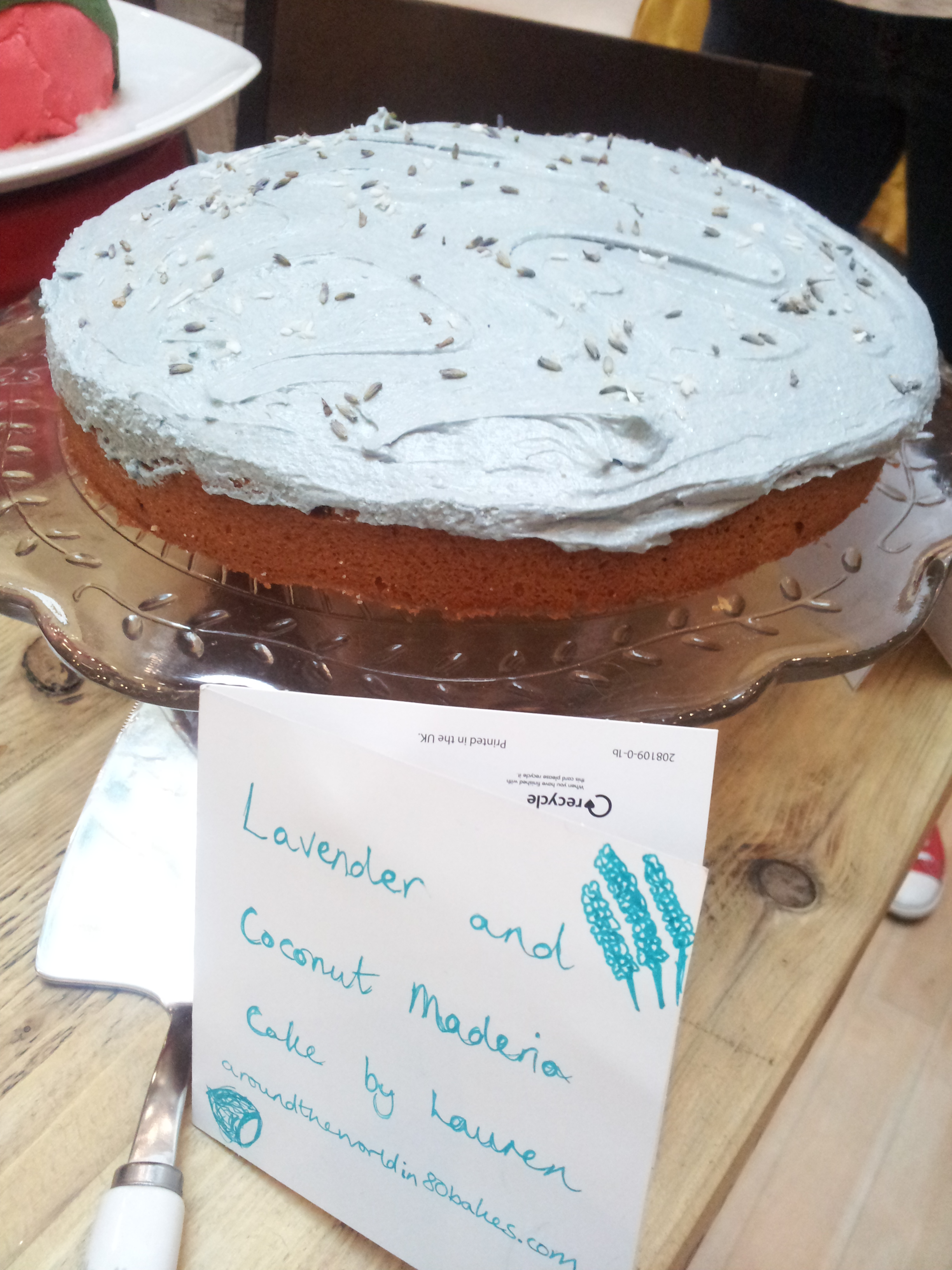
In an English Country Garden! Clandestine Cake Club – Lavender and Coconut Madeira Cake

Following on from my disastrous Lavender and Coconut Bibingka Cake attempt I had  one evening left before the Clandestine Cake Club to create a new and English Country Garden themed cake… I toyed with the idea of a rose flavoured bundt and earl grey tea and then fell upon the idea of a Lavender and Coconut Madeira Cake instead! Normally a citrusy based sponge cake I reckoned I could substitute some ingredients and make my own recipe… Dangerous and experimental with a very short time limit? Sounds good to me!

Emergency Lavender and Coconut Madeira Cake

Unfortunately I can’t count this towards my aroundtheworldin80bakes challenge as I have already baked SO much from England. Despite it’s continental name, Madeira Cake is actually from England. It’s a typical afternoon tea type of sponge cake and one of my favourites! The sponge in the Lamingtons that I made earlier is very similar to a madeira sponge. I love it’s moistness and I think (shock horror) I prefer it to a Victoria Sponge which (when I make it) can be a bit on the dry side.

Funnily enough Madeira cake and Madelines seemed to be very popular when I was in China. I ate rather a lot with my green tea!

Lavender and Coconut Madeira Cake (I can’t spell Madeira in this picture and this was my fourth attempt!)

I used a basic Marguerite Patten recipe and adapted it, replacing the lemon and orange zests with lavender sugar. I used the leftover lavender infused sugar (as mentioned in my last post) to add the lavender to the madeira recipe. I also substituted the milk for coconut milk and steeped some dried lavender in the milk for good measure while I whisked the butter and sugar together.

Beating the sugar and butter together until light and fluffy

I think the key to a maderia cake is to keep beating the butter and sugar until it becomes a lighter yellow colour and then add in one egg at a time. Whisk it all together until you think it’s ready and then beat it a bit more!

Whisking the eggs and coconut milk

Whisking the eggs and milk into the beaten butter and sugar

Fold in the sifted flour

All baked in my lovely new leak proof and non stick tin (no lining required!)

Unfortunately I got a bit carried away with the generous sprinkling of lavender sugar on the top of the cake and it dried out in the oven and cracked. I hadn’t intended on icing it at all, but the top layer crumbled away so on with the buttercream! (and no one will know the difference!)

Naked Madeira – pre cracked top

I usually enjoy my madeira cake plain with a cup of tea, especially as the edges a little more crunchy and sugary. However emergency butter cream was required and I whisked it up with another experimental addition. Coconut powder, icing sugar, blue food colouring, a little red food colouring and vanilla essence! This made the fluffiest icing that I have ever made! It was a bit touch and go for a while as my colourings ended up at grey rather than purple, so I kept adding blue until I got to lavender blue colour instead.

Lavender blue (and a sprinkle of glitter, coconut and lavender petals)

I didn’t have time for fancy piping so I plopped the icing on the cake with my palette knife and smoothed it round. Rustic looking, with a sprinkle of coconut and lavender, as Mary Berry suggests, to use a little of what’s inside the cake, on top of the cake to decorate it. I also couldn’t resist a sprinkle of glitter too…

The Cakes arriving at Cladestine Cake Club

All I had to do, was store it in the fridge over night. Then run home to collect it after work. The Clandestine Cake Club was held in the Garden Kitchen in Eldon Gardens this month. It was a fantastic venue, so light and airy!

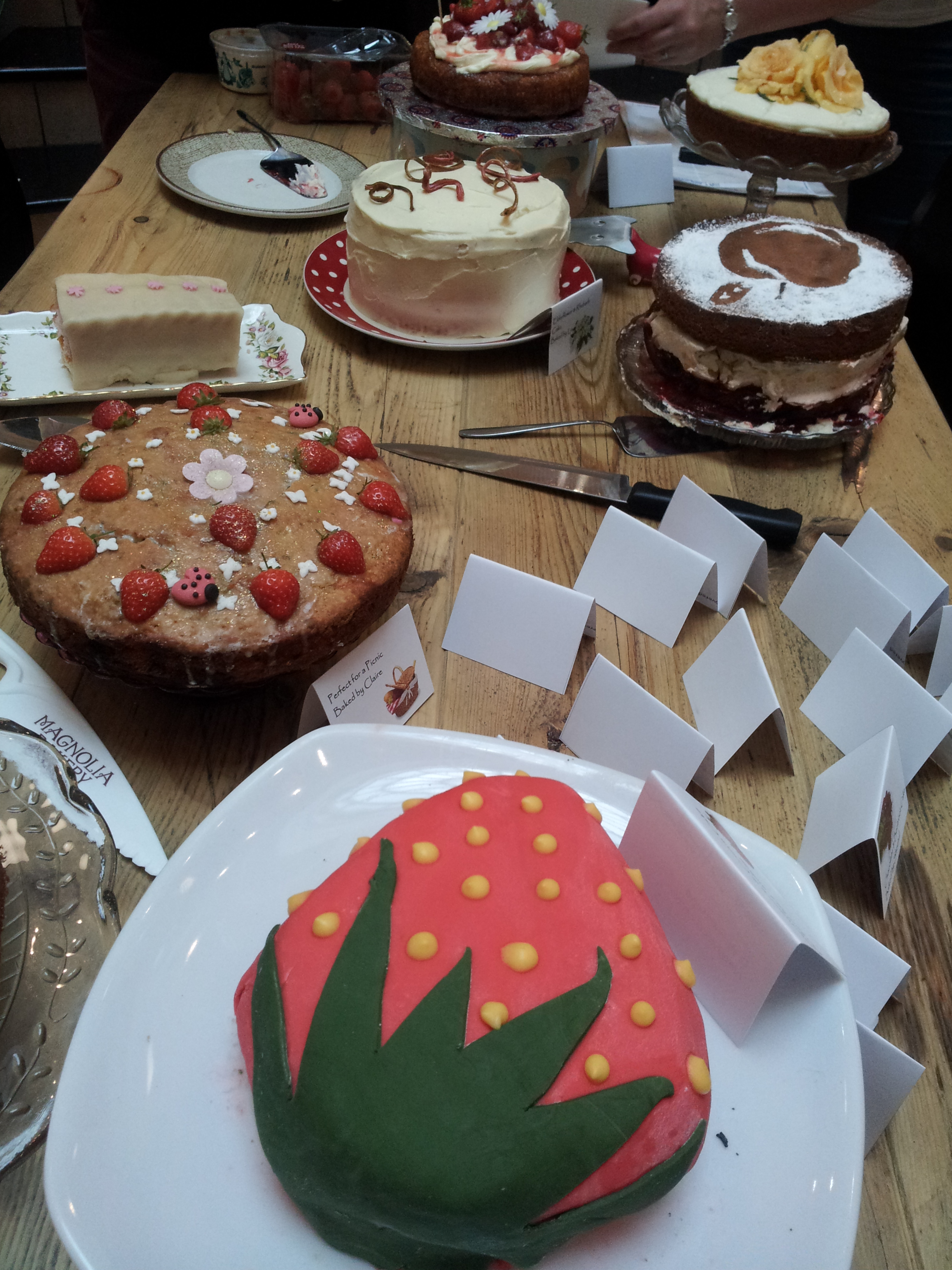
So many gorgeous cakes to try!

The cakes were fantastic! I managed to sample, (almost) all of the cakes this time round. There were 20 bakers at this club with a guest each. I think I tried about 15 cakes! As most of them had fruit (and vegetables) in them they were quite light. I really enjoyed the English Country Garden theme.

Orange Blossom and Pistachio

I loved meeting lots of new faces at the CCC too and catching up with fellow bakers and bloggers Nelly  and Lisa (who organised the Newcastle CCC, it’s definitely worth checking out her blog!). Thankfully my cake seemed to be well received and there wasn’t a piece left at the end of the night! No one seemed to notice the cracked top that the buttercream was hiding too. I even took along my Bibingka Cake, just in case anyone wanted to try it, but there were far too many other lovely cakes to choose from, so I’m not surprised I ended up taking it home with me again!

Real Strawberries were hidden inside the giant carved cake strawberry! Delicious!

I’m looking forward to the next CCC event in July, where I will be baking something from the 18th Century for the EAT Festival! (I have no idea what I will be baking yet as google hasn’t offered many suitable recipes at the moment… all ideas are very welcome!)


Things I used to make Lavender and Coconut Madeira Cake…

Madeira Sponge

  • 6 0z of margarine (stork)
  • 7 oz caster sugar (infused with lavender petals)
  • 3 eggs
  • 8 oz plain flour
  • 1 teaspoon baking powder
  • about 1 tablespoon of dried lavender petals (for the sugar infusion)
  • 2 tablespoons of light coconut milk (you can use normal milk if you prefer)
  • about 1 tsp of dried lavender petals to infuse in the coconut milk

Coconut Buttercream

  • approximately 250g stork margarine
  • as much icing sugar as required to achieve smooth pale fluffy and thick consistency (approximately 200g)
  • a splash of vanilla extract
  • a generous 1-2 tbp powdered coconut milk
  • a sprinkle of dried lavender petals and desiccated coconut (and glitter)
  • blue food colouring (add as much as desired)

* This recipe was lovingly adapted from Marguerite Patten’s Luxury Madeira Cake Recipe, Everyday Food Cookbook