How many Hydrangea Sugar Flowers does it take to make a Wedding Cake?

SEAN_ELLIOTT_PHOTOGRAPHY-703

After you’ve spent an inordinate amount of time baking 8 enormous boozy fruit cakes, how do you decide which wedding cake design to go for? Do you opt for a classic look, a fashionable design or something to match your colour scheme?? For those that know me, you will know that there has never been a colour scheme in my life. I don’t manage to match things very well. In fact if things clash that’s probably for the better. (

I couldn’t bring myself to decide on just one colour for my bouquet, as I love so many colours so I went for a bit of everything. It was only a last minute decision to leave out the bright pink roses from the bouquet. I decided it may be a little bit too much.  You can even see the blue hydragena flowers peeking out between the hyacinths. It was touch and go as to whether these flowers would bloom with it being a December wedding. It was clearly meant to be!

My wedding flowers

My wedding flowers – a little bit of everything

Part of me longed for a classic cake that I would love forever and part of me me wished for an entire room of different types of cake from around the world. Unfortunately there is not enough space in my freezer to create such an awesome display unless I baked them all the day before the wedding which in reality, was never going to happen.

Petite Italian Lavender Meringues

Petite Italian Lavender Meringues

As a compromise I baked as many extras as I could possibly manage. Opting for petite Lavender Meringues

Mini Brownie Bundts and Madeleines

Table Treats – Mini Brownie Bundts and Madeleines

and mini bundt brownies and madeleines to adorn the tables with.

I found so many gorgeous cake designs flicking through endless pages of Pintrest and magazines but many were way out of my skills set. One favourite was an impossibly beautiful white damask lace design on a pale green fondant  I made many many trips to my local cake decorating shop and experimented with different technniques,  I was never going to be able to use a stencil. (I practiced with a little one I had in the house and I always managed to smudge it or it oozed out of the sides.)  I was then going to make millions of sugar roses, but I made about 4. It took me ALL night and I felt angry. It was way too fiddly and my roses always turn out ridiculously enormous and ‘rustic’ looking.

Green Damask Lace Cake – The Cake Parlour

Another of my favourite designs was a tiered cake with a cascade of hydragena blossoms. Little did I know that both of these cakes were designed by the same woman the amazing Zoe Clark. (I have since purchased her books as I love her designs!)

I continued in an experimental vein ordering lots of plastic sugar tools online and waited a month for them to arrive. I attempted to make fondant pearls by hand but didn’t think about how they needed to dry so ended up with one lump of sugar pearl. That would never do.

One lump of pearl for me please

Just the one lump of pearl for me please

Back to the drawing board and my two favourite designs. My Mam invested in a hydrangea cutter and mould for me (thank you Mam) rather than watch me struggle with trying to do everything for myself.

Zoe Clark’s design used pink blossoms which is lovely but I’m not much of a pink girl. Instead I experimented with a few different colours including, lilac, baby blue, teal and finally decided upon ‘hydrangena blue’. I coloured some florists paste with food colouring and added a little more to get the right colour. I also left some to dry for a couple of weeks to see how the colour developed as it can fade as it dries out fully. I had found my winner. I made 3 slightly different shades of hydrangea blue paste to give the flowers more of a natural look and variety in the final cascade.

Using a tooth pick add a dot of your chosen food colour gel to the florists sugar paste and knead it until it's the colour you need.I chose hydrangea blue. Beware adding too much colour in one go, once it's in you can't take it out! You may need to colour your paste in advance to allow it to dry a little so it's not too sticky!

Using a tooth pick add a dot of your chosen food colour gel to the florists sugar paste and knead it until it’s the colour you need. I chose hydrangea blue. Beware adding too much colour in one go, once it’s in you can’t take it out! You may need to colour your paste in advance to allow it to dry a little so it’s not too sticky!

When adding food colouring gel to sugar paste it always makes the paste sticky. I find it much easier to handle if I colour it a few days before I need to use it.

Roll out the colourful florist's paste on a lightly dusted surface - making sugar flowers hydrangea

Roll out the colourful florist’s paste on a lightly dusted surface

You can add a little icing powder to the worksurface when you’re rolling it out but not too much as it will dry the paste out and it will crack. Florists paste isn’t cheap but it has a special ingredient (albumen) which allows you to work it into much thinner and more delicate shapes than normal sugar paste. It also dries really hard quite quickly so it keeps it’s shape. I tried to make my own (I know this was not my best idea!) I thought it would be cheaper to buy powdered albumen and knead it into sugar paste. In reality this was an extra faff on that I didn’t have the time for. It was much easier to just buy pre made florists paste and mix my own colour. If you’re feeling extravagant you could even buy yours in the shade you really want.
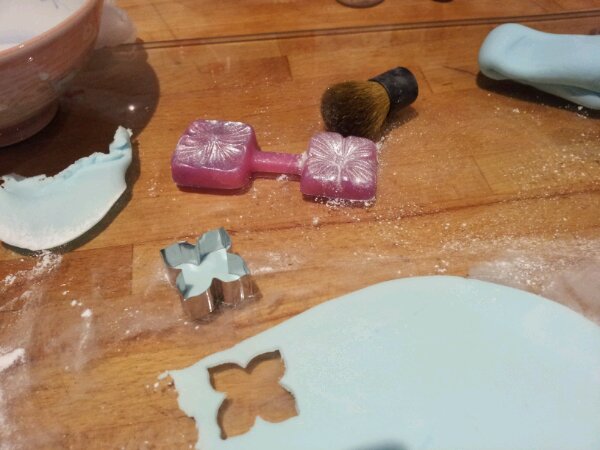
strategically press your cutter into the paste and carefully lift it away from the paste - sugar flowers hydrangea

Strategically press your cutter into the paste and carefully lift it away from the paste

My hydrangea cutter and mould instructions informed me that I needed vegetable fat to smear on the silicon mould to prevent the paste from sticking to the mould. It was late, I was all ready to cut out some flowers so I wasn’t going to make it to any shops. Improvising I took some pearl lustre powder and popped it in a shallow bowl.
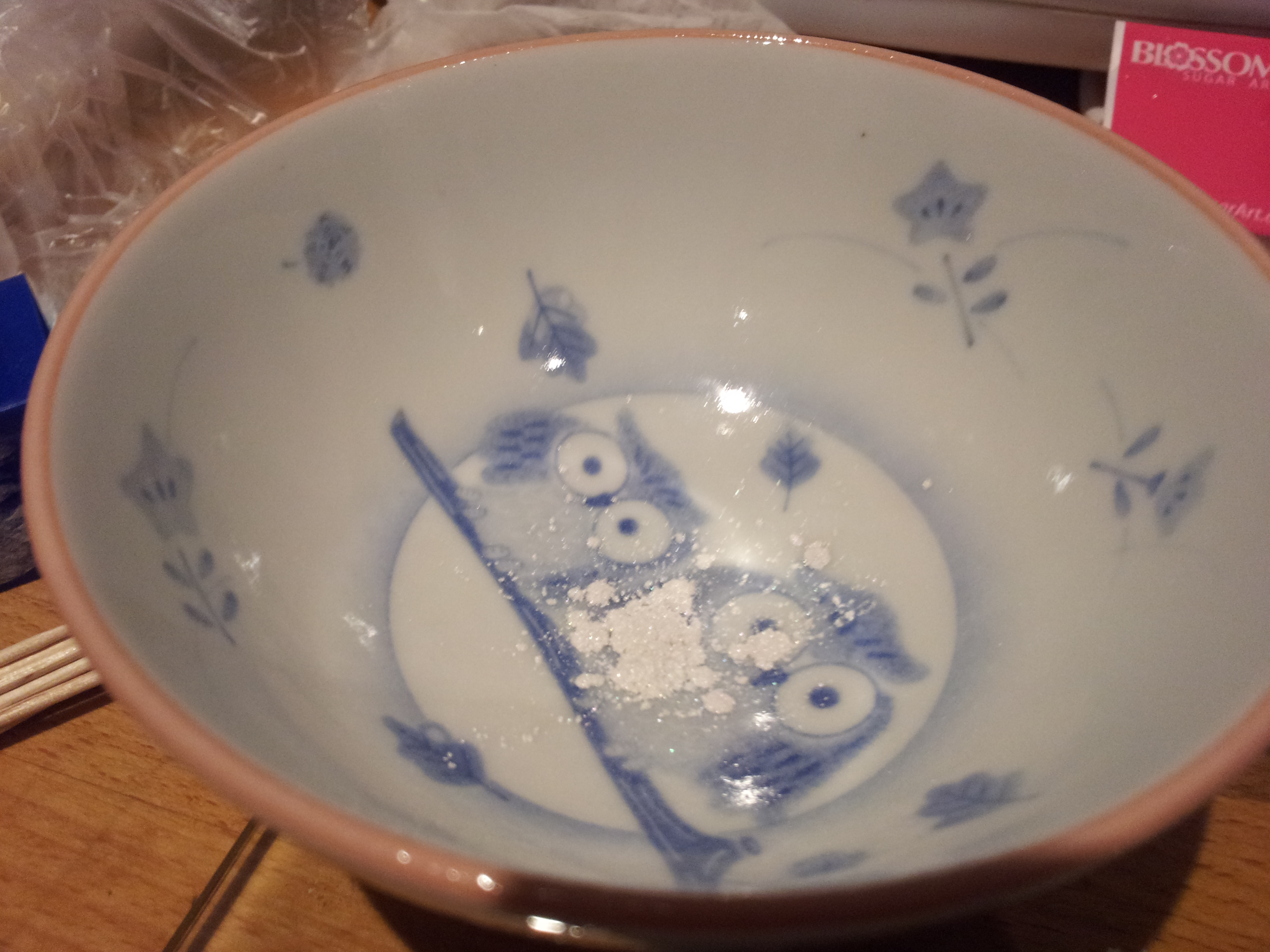
Pearl Lustre Powder makes a great alternative to vegetable fat and icing sugar

Pearl Lustre Powder makes a great alternative to vegetable fat and icing sugar

Using a brand new clean blusher brush I coated the mould liberally with a combination of edible pearl and baby blue lustre powders.

Dust like your life depends on it

Dust like your life depends on it

Et voila. I have satisfactorily released flowers with a touch a sparkle and glamour that I was going to have to paint on afterwards. Success and time saved!

Using a clean blusher brush first the mould with lustre powder to stop it sticking. You can use trex but I discovered this saved me a job later on!

Using a clean blusher brush first the mould with lustre powder to stop it sticking. You can use trex but I discovered this saved me a job later on!

The little mould that I loved to hate. The first 50 flowers were a breeze but your fingers do start to ache after so much cutting, folding and pressing! The trick is to fold the mould over carefully so you don’t dislodge the flower inside. Or if the paste is too thick it oozes out of the sides of the mould when pressed…

image

There is a lot of patience and gentleness required in this process…

The pressed Hydrangea Blossom

The pressed Hydrangea Blossom – look at that beautiful detail

If you’ve lustred up the mould enough it should pop out quite easily but you might need to coax it out if it’s a bit stubborn. (Spot the cocktail sticks in the background). Flipping over the mould allows gravity to do the work for you and release the lovely detailed blossom into your palm.

Gently coax the flower out of the mould by peeling the mould away from the flower or let gravity do it's job

Gently coax the flower out of the mould by peeling the mould away from the flower or let gravity do it’s job

The final result! I also added a little baby blue edible lustre powder to the mix to ad depth and variation to the blossoms. I was glittering for a week after this!

Hey presto! You have a sugar flower all sparkly and full of lustre which helps bring it to life

Hey presto! You have a sugar flower all sparkly and full of lustre which helps bring it to life

I found a good way to make the flowers look more realistic was to gently roll themeach one in my cupped hand before leaving them to dry. This gives more shape to the petals, so they don’t appear too flat and fake. Then repeat times a million… This is probably an extreme exaggeration but I lost count of how many flowers I actually pressed. I used about 2 and half 500g packs of florists paste to create maybe around 150 hydrangea blossoms. Not all of them ended up on the cake however as I dropped some on the floor… Some snapped after they dried. They are quite delicate little flowers! And some flowers just weren’t that pretty (sorry flowers but some had to be prised apart and suffered the consequences) so they didn’t make the cut.

Gently roll the flower in your hand to encourage the edges to bend in slightly and create a bit of variety

Gently roll the flower in your hand to encourage the edges to bend in slightly and create a bit of variety

The flowers need to be held in shape whilst they dry. You can splash out on a special sugar paste foam mat if you like, or you can wrap an egg box in cling film and pile them all up like me. Crinkled up tin foil works really well too. It may also be a good idea to add layers of cling film to stop the flowers sticking together. I know I’m biased but don’t they look pretty all sparkly and delicate??
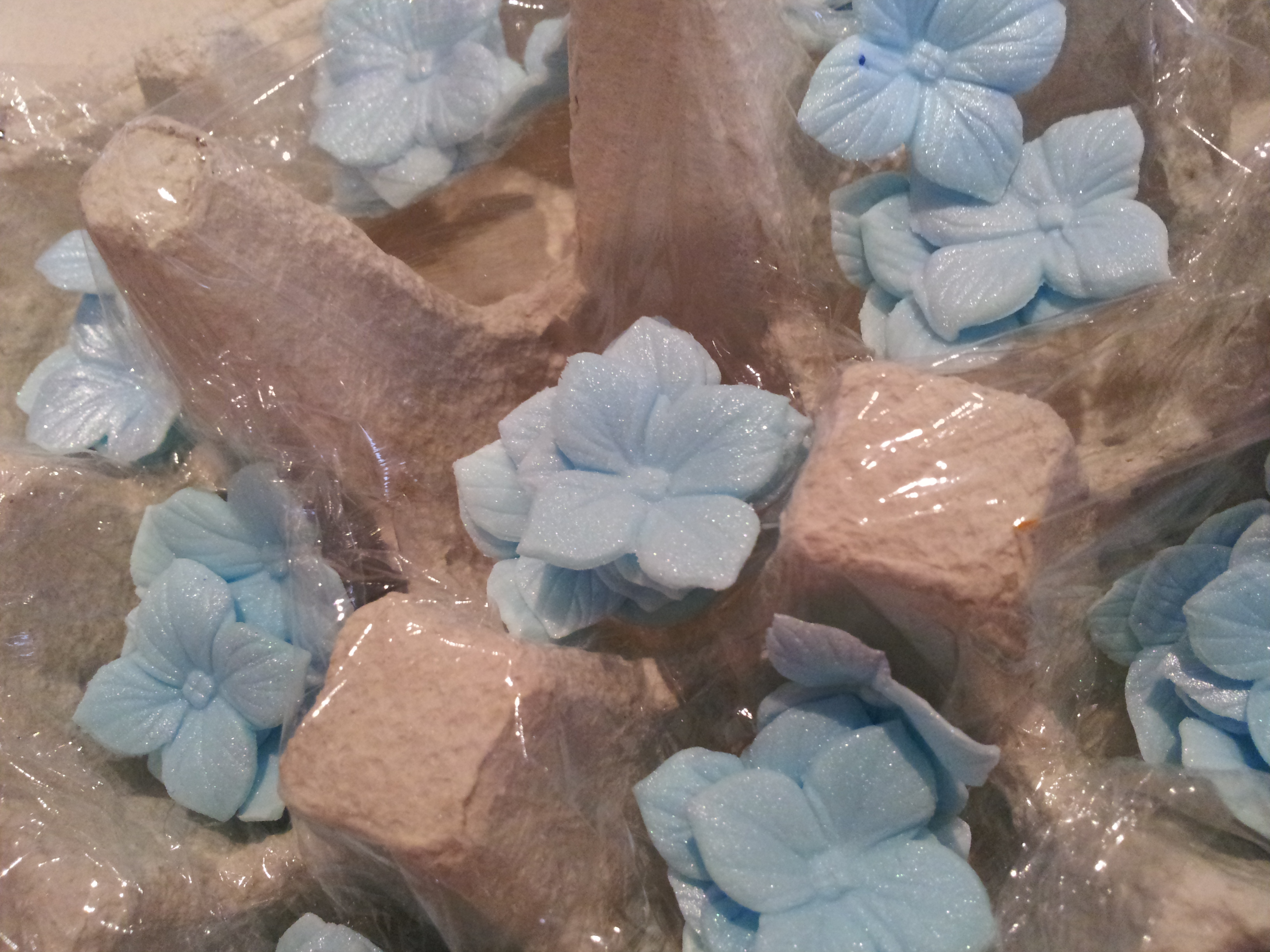
Line an egg box with cling film and pop all your pretty flowers in to hold their shape whilst they dry. Repeat repeat repeat...

Line an egg box with cling film and pop all your pretty flowers in to hold their shape whilst they dry. Repeat repeat repeat…

It takes about a day for the flowers to dry out. I made mine in stages so I could spend an hour or two at a time pressing hydragenas until I thought I had enough. Then  all that’s left to do is ice the 5 tiers of fruit cake and assemble it all.

The Final Result! The Wedding Cake

The Final Result! The Wedding Cake

This is part 2 of the 4 stages of wedding cake baking! You can read more about my epic wedding cake adventures here…

Part 1 – My 5 tiers of fruit wedding cake – My biggest booziest cake yet 

Part 2 – How many sugar flowers does it take to make a wedding cake?

Part 3 – Where to start icing a 5 tier wedding cake?

Part 4 -The Final Frontier – Decorating & assembling my 5 Tier wedding cake

46. Say hello to my Brazilian Roll ~ Rocambole Cake

image

Brazil is yet another country on my still to visit list. However I do have a lovely Brazilian friend who was an exchange student at my sixth form. We became firm friends over A Level Media Studies and parties. Thinking of you Gabriella when baking my Brazilian Roll or as you may call it in Brazil a Rocambole.

image

This bake reminds me of Mary Berry’s Chocolate Roulade (one of my very first around the world in 80 bakes more technical challenges). Both are very similar to the wonderful Swiss Roll however the distinguishing factor of the Rocambole and the Roulade is that they use whisked egg whites to fluff up the sponge. This means it’s a fragile cake but very light. Where as the Swiss Roll is more like a sponge cake, less delicate and probably (in my opinion) a bit easier to bake and to handle.

Traditionally the filling in a Rocambole is a Doce de Leite. This is a Brazilian favourite. It’s a creamy milky toffee sauce made from slowly reduced condensed milk. (It’s quite similar to the Italian toffee sauce dolce de leche). It’s reduced down over a low heat until caramelised to produce a thick fudgey gooey paste. As the filing takes quite some time to prepare it’s best to start with this! You need to be really careful with this as if the pan is left to boil dry the can could explode and really hurt yourself (and your kitchen).

how to make doce de leit Simmer an unopened can of condensed in a pan of water for at least 2 and a half hours

Simmer an unopened can of condensed in a pan of water for at least 2 and a half hours

Take one unopened can of condensed milk (Most cans in the UK randomly contain a very precise amount of condensed milk of 395ml. Who knows why? But the process is the same regardless of the size of your tin). Place your unopened can of condensed milk in a pan of boiling water and simmer it for 2 and a half hours. Keep an eye on the pan and keep topping up the water so the water level remains.always around 2 thirds of the way up the can. Allow the can to cool for about 30 minutes before opening it.

Evaporated milk isn’t the same and unfortunately won’t work as a substitute, as evaporated milk doesn’t have as much sugar in it. Never to be defeated I have managed to make doce de leite with evaporated milk. If you’re up for an experiment and evaporated milk is all you’ve got, you could get away with adding sugar to evaporated milk and dissolving it slowly over a low heat to create your own toffee sauce. (I have free styled this recipe before and it gave a rather more liquid toffee sauce so it can be done! Just add enough sugar until you reach your desired level of toffee colour and taste.)

how to make doce de leite

The grand reveal! My doce de leite looks suspiciously like condensed milk. No hint of toffee here. Back in the pan you go

Unfortunately I failed to let the water bubble (being a little too cautious – very unlike me!) so when I opened my can it still looked like condensed milk, just a bit thicker. However undeterred I threw it all into the pan and heated it on the stove to make my doce de leite directly in the pan. It does require a bit more attention and elbow grease however…

The slightly reduce condensed milk straight from the can, the bottom revealed some thicker doce de leit

The slightly reduce condensed milk straight from the can, the bottom of the can revealed  the beginnings of some thicker doce de leit. It’s a bit lumpy so needs a good whisk

I’m a little impatient and wanted it to thicken up quickly so kept increasing the heat and whisking by hand until it bubbled, then removed the pan from the heat to allow the residual heat to continue to cook the condensed milk. You need strong arms to keep whisking continuously as the milk thickens! (My arms weren’t feeling the strongest after a full day of Yoga handstands the day before but I still managed)

Whisking the condensed milk over a low heat to make doce de leit

Whisking the condensed milk over a low heat to make doce de leite

My impatience led my doce de leite to become extremely thick and it pulled the head off my hand whisk! However a little cold milk reduced the heat of the sugar to calm the doce de leite down. It allowed me to get the sauce back to a slightly more spreadable state. To stop the cooking process I placed the hot pan into a sink of cold water. In my ‘wisdom’ I then dipped my finger into the doce de leite to test if it was cool enough to spread! It was most definitely NOT cool enough and welded to my finger. I managed to pull the molten lava doce de leite off my finger and ran it under the cold tap. Did you know a piece of frozen melon makes a wonderful cold compress to take the heat out of a burn? Clutching my melon I managed awkwardly to continue to whisk the sauce still undefeated by my blistering finger. I ended up clutching on to more frozen fruit whilst spreading the doce de leit and rolling up the cake.

After a good 5 minutes of whisking and heating it turns a golden brown colour and becomes quite thick! Add a bit of milk to loosen the mixture if it needs it.

After a good 5 minutes of whisking and heating it turns a golden brown colour and becomes quite thick! Add a bit of milk to loosen the mixture if it needs it.

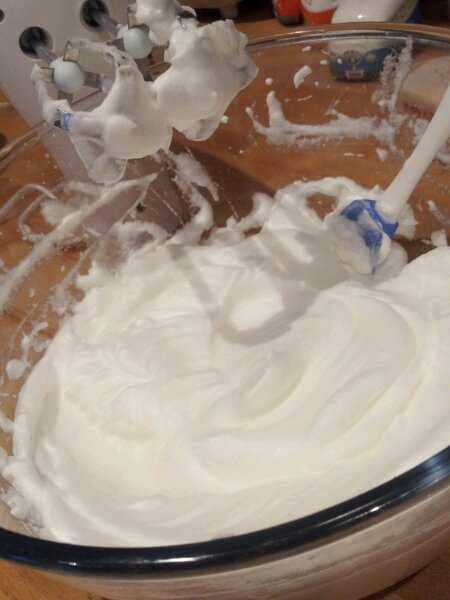
The cake itself takes hardly any time at all to prepare. The whisking is the most time consuming part of the Rocambole. Like a Roulade you have to whisk the ALL of the egg whites (there’s 5 eggs in this cake! That’s a lot of egg!) on a high speed setting. (If you have an electric whisk, if not prepare your arms for a bit of a work out!) until stiff and shiny. This takes about 5 to 7 minutes. The egg whites will double in size. I love this bit!

Whisking the egg whites to make Rocambole

Whisking the egg whites to make Rocambole

One slight difference between the Rocambole to a Roulade is that the egg yolks are then also whisked into the egg whites. (With a Roulade you whisk the yolks with the sugar and chocolate then fold it into the egg whites.) The Rocambole is a bit quicker banging it all together and whisking to your hearts content. You don’t want to knock any of the air out of the egg whites, so it’s best to beat the yolks lightly first so they are runny. You can then pour the egg yolks in as you whisk.

Adding egg yolks to whisked egg whites - rocambole

Whisking in the egg yolks to the egg whites – lovely creamy yellow colour and very fluffy!

Then to whisk in the sugar. The traditional Brazilian Rocambole recipe doesn’t include any flavourings or spices, it is a plain egg sponge. (A bit like my Chinese Egg Yolk Sponge favourite!)  Ever the experimenter I wanted to add a bit of flavour to this bake so I used vanilla sugar. I made this really simply by shoving a leftover vanilla pod, which I had scraped the seeds from for another bake, into a bag of sugar. I then left it to infuse it’s vanillary goodness for a couple of weeks. It smells lovely and gently flavours the sugar with a hint of vanilla. It’s a good way to get your moneys worth out of those more expensive ingredients as I hate to throw the pods away. I often pop a vanilla pod into any spirit that I have in my cupboard too. Vanilla Brandy or Vanilla Rum anyone?

Then to whisk in 5 tablespoons of water into the eggs and sugar - Rocambole

Then to whisk in 5 tablespoons of water into the eggs and sugar

The eggs should be seriously expanding and threatening to overflow the bowl by this point as they inflate rapidly. You need to continue to whisk the fluffy and shiny eggs whilst pouring in 5 tablespoons of water. This takes around 5 minutes of whisking.

Fold in the tiny amount of flour and baking powder

Fold in the tiny amount of flour and baking powder

In order to maximise the air in the cake and to avoid knocking the air out of the wonderfully fluffy eggs, sift in all 5 tablespoons of plain flour and half a teaspoon of baking powder. Then using your  best metal spoon fold in the dry ingredients gently. This is probably the smallest amount of flour that I’ve ever folded into a cake. It felt a bit odd as the flour just disappeared to the bottom of the bowl, but trust in the recipe, it definitely works!

Rocambole Carefully pour the mixture into a rectangular baking tin

Carefully pour the mixture into a rectangular baking tin

Line and grease a rectangular baking tin. I used a tin 37cm long by 22cm wide and 5cm high. Use a deep tin as it will rise in the oven.  This mixture is really delicate so to avoid knocking the air out of it, hold your bowl of mixture as close to your tin as possible and pour. It’s a very liquid mixture so try to pour it into all of the corners so you don’t have to move it around too much in the tin. Gently level the mixture with a spatula to avoid an uneven bake.

A fully cooked and curled Rocambole

A fully cooked and curled Rocambole

After baking it in a preheated oven (350 F/170 degrees Celsius) for 15-20 minutes, it will become golden brown and feel slightly firm and springy to the touch. I always check that a cake is cooked by using a cocktail stick, if it comes out clean from the sponge you know it’s done. Unfortunately I was trying my Mary Berry recommended foil backed parchment paper and it doesn’t always do what it’s told. In the heat of the oven it curled up and into the cake! Maybe a wider variety of paper is needed for this tin so that it reached the edges of the tin and can be scrumpled down over the lip of the tin to hold it in place?

Carefully lift your cake from the tin and prise any baking paper out of the sponge (if needed)

Carefully lift your cake from the tin and prise any baking paper out of the sponge (if needed)

Allow the cake to cool in the tin slightly so it holds it’s shape. Then carefully lift the cake out of the tin, by the baking paper. But don’t remove the baking paper.

Spread the Doce de Leite carefully onto the sponge - try not to take the cake with you

Spread the Doce de Leite carefully onto the sponge – try not to take the cake with you

Using a spatula and a palette knife , I tried to spread  a thin layer of doce de leite across the cake. This is easier said than done whilst holding a piece of frozen fruit on your burnt finger. The Doce de leite is very gooey and if it’s as thick as mine, it could pull holes in your cake (note the holes in my sponge above…) But who is going to check the inside of your cake? When it’s rolled up no one will notice  and it’s going to taste gorgeous anyway so throw it on as best as you can.

Carefully does it ... Roll Roll Roll your Rocambole

Carefully does it … Roll Roll Roll your Rocambole (excuse my slippers)

There is a bit of a knack to rolling up a Rocambole. I decided to neaten up my slightly rough edges, trimming the longest edge as straight as possible with my very best sharp knife. It’s not the easiest cake to trim as the sponge is very moist and delicate (so it sticks to the knife!). I only trimmed one edge in case I destroyed the other side. This cake was to accompany me to the Clandestine Cake Club and I didn’t have time to make another one (or anyone condensed milk!). Trimming the cake does have it’s benefits however, I could make sure it tasted good before serving it up to my friends! 


Ta da! One rolled up Rocambole!

Ta da! One rolled up Rocambole! (And one pan of soapy boiling water on the stove to dissolve all of the doce de leite)

Before I even attempted rolling the cake I made sure I had loosened all of the edges from the baking paper gently with my fingers to avoid tearing the sponge. It’s best to keep the sponge on the paper so you can use the paper to coax the cake over. I started the roll off by pressing a knife into the sponge about half an inch in from the shortest edge. I then folded this lip of sponge over to start the roll and give a really tight spiral. Then to let gravity do it’s job! Lifting the paper over,  letting the cake fall into place whilst coaxing it into a roll with your hands. Once you start it’s easy to get carried away! Hence my lack of photos of this process the Rocambole was all rolled up before Chris could get into the kitchen to take a photo for me!

Rocambole recipe Gently ease any slightly stuck bits  of cake off the paper using your finger tip...

Gently ease any slightly stuck bits of cake off the paper using your finger tip…

All of the pictures I could find of a Rocambole seemed to show a cake with a very long spiral with a very thin sponge so I chose to roll mine from the short edge to the short edge, to maximise my spiral. If you wanted to get more slices out of your Rocambole you could roll from long edge to long edge and get a much longer cake.

Just rolled Rocambole - trimmed edge to the front!

Just rolled Rocambole – trimmed edge to the front!

Once you’ve rolled up your Rocambole all it needs is a liberal dusting with icing sugar and you’re good to go! I recommend eating it quick as the doce de leite has a tendency to ooze out of the sides when left for a night. But if you like this effect then see if you can hang fire for a bit for an extra level of goo.  I can confirm that this a tasty cake. It’s definitely a winner if, like me, you have a sweet tooth as most of the flavour is derived from the sugar in the cake and the milky caramel doce de leite! It’s an extremely tender sponge that almost melts in your mouth. I’ve heard very good things from my Brazilian friend, who’s Grandma makes Rocambole. She covers the entire Rocambole in chocolate buttercream and adds some texture with a fork to create a chocolate log Rocambole! Now there’s a good idea for another Christmas bake to add to my list!

Clandestine Cake Club Newcastle at Pink Lane Coffee

Glorious Cake Collection at the Clandestine Cake Club Newcastle at Pink Lane Coffee

I took my little Rocambole along with me to the Clandestine Cake Club  at the lovely Pink Lane Coffee shop in Newcastle where we were baking around a ‘New’ theme. This could mean a new recipe, new baking tin, new ingredients. This was perfect for me as pretty much every recipe I bake is new to me and a bit of an experiment. There were some amazing cakes that night, my favourite being a chocolate and peanut butter layer cake (7 layers in total!). Check out Lisa’s blog for more gorgeous pictures of the beautiful cakes from all of the bakers who braved the January snow. When there’s cake nothing will get in my way. It was immense. I must admit I took an extra sneaky piece home for later too. I was so happy that all of my Rocambole got eaten.

So if that has whetted your appetite for a spot of Rocambole here’s what I used to make mine.

Ingredients

Doce de Leite Filling

1 unopened can of condensed milk (395 ml)

Alternative fillings…

If you don;t fancy simmering a can of condensed milk down in a pan I’m sure you could put a jar of nutella or jam or guava marmalade (another traditional Brazilian Rocambole filling) to good use here too.

Cake

  • 5 eggs
  • 5 tablespoons of vanilla infused  sugar (or just normal sugar will do)
  • 5 tablespoons of water
  • 5 tablespoons of plain flour
  • 1/2 teaspoon of baking powder

Lauren’s Layered Lamington Cake

Lauren's Layered Lamington Cake

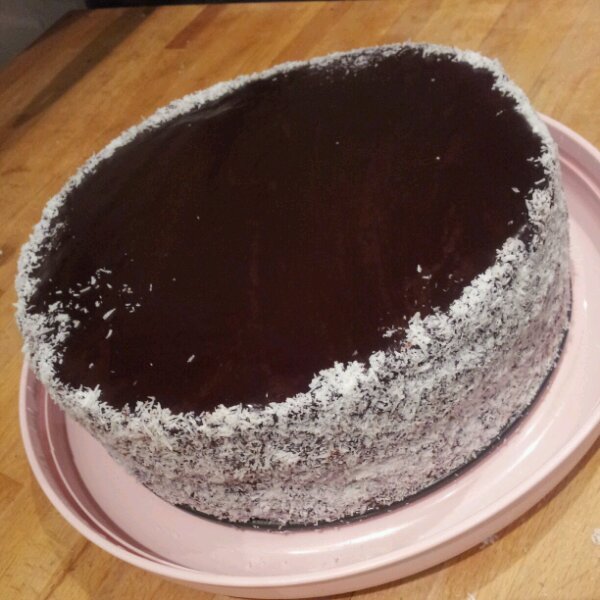
Lauren’s Layered Lamington Cake

You may realise by now that I LOVE Lamingtons. They are definitely one of my Australian highlights, alongside the cake shops in St Kilda and the koalas hanging out in eucalyptus trees. It’s been a while since I baked any of these sweet treats and I must apologise it’s been quite some time since I wrote. It’s been a bit hectic what with getting married having a last minute trip to Berlin and oh yes fitting in the proper job too… I promise I will get back to some international baking VERY soon (and also share with you the photos of my wedding cake too!). In the meantime I wanted to share with you an experimental Layered Lamington Cake that I made up the other day.

I had promised Chris a tiered Lamington Cake for the wedding. Something that I had imagined in my mind but frankly in amongst baking and icing 5 layers of fruit cake, making 150 sugar flowers, our house flooding 2 weeks before the wedding and baking brownies and Lavender meringues I never had the opportunity to bring to life. Until now. So here it is! A slightly smaller scale Layered Lamington Wedding Cake for Chris. Next time I will bake 2 more smaller cakes and stack them one on top of the other… for a tower of layered Lamington!

Lauren's Layered Lamington Cake

Lauren’s Layered Lamington Cake – 3 layers of coconut madeira, double chocolate coated and jam sandwiched

I wanted to make a more grown up version of the Lamington. More luxurious, decadent and slightly prettier than the Lamington bricks that I’ve made previously. To produce this I incorporated the coconut into the sponge, which meant I could keep the top of the cake coconut free to showcase the shiny chocolate ganache, whilst preserving the coconut and chocolate Lamington tradition. I double coated the cake in chocolate soup sauce first before a double chocolate ganache layer to increase the luxuriousness of the Lamington. And then to add an extra level of height and flavour why not add a third layer of sponge, one more than your traditional Lamington sandwich. It’s an extremely indulgent cake. One to be enjoyed on a special occasion perhaps. It takes a bit of organising and assembling, but I can assure you it’s worth the effort! Chris definitely enjoyed it and so did my friends. If you fancy having a go I’ve included the instructions below.

As the cake is entirely encased in chocolate and contains a double layer of jam it’s  a light and moist sponge. I’m hungry just reminiscing about it now! Hope you enjoy it as much as me.

Lauren’s Layered Lamington Recipe

Coconut Madeira Sponge Cake

  • Caster Sugar 250g
  • Butter 300g
  • Self Raising Flour 400g
  • Desiccated Coconut 50g
  • Pinch of salt
  • Milk 6 tablespoons
  • 2 x 8 inch round cake tins
  • Bake at 170 degrees Celsius (fan)  for 25-30 minutes
  1. Cream together sugar and butter
  2. Sift in flour and baking powder and gently fold it into the creamed butter and sugar
  3. Fold in desiccated coconut
  4. Fold in milk
  5. Gently pour mixture into 2  greased and lined 8 inch round cake tins
  6. Carefully level the mixture
  7. Bake in the middle of the oven until the cakes shrinks back from the sides of the tin, is golden brown and a skewer comes out clean from the sponge
  8. Let the cakes cool in the tin for 10 minutes to hold their shape
  9. Remove from tin and place on cooling rack
  10. When fully cooled carefully split one cake in 2 down the centre with a sharp knife
  11. Carefully level the other sponge removing the top (you can then sample the top bit of the sponge!)

Filling Strawberry Jam  (you could buy a jar or make it yourself)

  • 1kg strawberries
  • 1kg granulated sugar
  • ½ lemon, juice only
  • small knob of butter
  1. Heat equal amounts of fruit and sugar in a large pan
  2. Stir until all of the sugar has dissolved
  3. Stir in lemon juice and butter
  4. Stop stirring and boil rapidly (about 10minutes)
  5. Keep boiling the jam and checking the consistency of the jam every 10  minutes and take it off the heat once it coats the back of a spoon (this could take up to an half an hour but hopefully less!)
  6. Allow the jam to cool and set slightly in the pan

Icing

  • Butter 25g
  • Sifted icing sugar 450g
  • Sifted cocoa powder 50g
  • Milk 120ml
  • Vanilla Extract 2 tsp
  1. Sift all of the ingredients into a large bowl
  2. Put the bowl over a pan of boiling water
  3. Melt the butter over a low heat
  4. Stir together to make a thick chocolate soup
  5. Remove from heat
  6. (but if it gets too hot pop it back on the heat to warm through)

Chocolate Ganache

  • Plain chocolate 140g
  • Double cream 200ml
  • Milk chocolate 25g
  1.  Heat the double cream over a low heat in a pan
  2. Break up the chocolate into small pieces
  3. Allow the cream to become piping hot then take it off the heat
  4. Throw in the chocolate and stir until it’s really smooth and shiny

Layered Lamington Assembly

  1. Have a pre-prepared cake stand/plate to arrange it all onto
  2. Turn the bottom of the sponge face upwards (from the one sponge that you’ve split in 2) spoon a generous amount of chocolate icing soup onto the sponge and spread it evenly over the sponge base and sides. (Lamingtons are supposed to be encased in chocolate and this will help to fix it to your stand too…)
  3. Give it a few minutes to ‘set slightly’ then flip over the sponge so the chocolate is face down on your cake plate.
  4. Spoon half the jar of strawberry  jam onto the sponge and spread evenly.
  5. Place the other half of the sponge cake on top of the jam and press gently.
  6. Spoon the rest of the jam on top of the sponge and sandwich the final layer of sponge on top. (smoothest side up)
  7. Rest the cake in the fridge for 5-10 minutes to set the jam and hold sponge in place
  8. Pour the chocolate soup all over the cake and smooth with a palette knife. Removing excess icing to give a smooth ‘crumb coating’ and hold the cakes in place
  9. Return to the fridge to allow it to set for 5 minutes
  10. Pour the hot chocolate ganache all over the cake and sides. Ensure you have a smooth and shiny coat by tilting the cake to run the ganache down the sides, use a palette knife if necessary to sharpen the edges of the cake.
  11.  Use a hairdryer if needed to melt the ganache slightly to create a smooth finish
  12. Repeat ganache layer again to double coat the cake.
  13. Whilst the chocolate is still wet carefully sprinkle the sides of the cake with desiccated coconut, use a cupped hand to press the coconut into the ganache, leaving the top of the cake free so the ganache shines through
  14.  Allow the ganache to set at room temperature to maintain the high gloss finish and serve in huge chunks with a bucket of tea.

43. Polvorón – Spanish Christmas Cakes or Mexican Wedding Cakes

image

Polvoron – you are always on my mind

I’ve had Polvorón on my mind for some time. I read about these crunchy little biscuits bites, months and months ago and they’ve been sitting patiently in my ‘Things to bake’ pile ever since.

They are quite an unusual discovery, something I had never heard if before. Traditionally Polvorón are eaten as wedding  cakes in Mexico made with pecans or as Christmas cakes in Spain, kind of like a Spanish Shortbread. Now I’m planning my own wedding I thought perhaps now is the time to incorporate an international flair into the festivities. Intrigued I launched into my own interpretation of the traditional recipe, basically determined by whatever ingredients I have in the cupboard.

image

Chopped up dried coconut

I don’t usually buy pecans or walnuts so they had to be substituted for good old almonds (a nut which is ever present in my cupboard and life…) and chunks of dried coconut roughly chopped.

Due to the speedy baking that was necessary (and seems to be happening more and more often in my house) I improvised yet again. No time to assemble to food processor so I grabbed the nearest heavy item (a glass jar), threw the almonds into a sturdy sandwich bag and hammered them with the jar until they were delightfully smushed. Feel free to use a pestle and mortar if you wish to be a tad more refined than I.

image

Beating the butter to a smooth paste

The ingredients are very similar to basic shortbread, with flour, butter and sugar.

image

Thoroughly whipped butter

This is another brilliant biscuit for busy bakers as I managed to whip up the dough first thing on a Saturday morning, chill it whilst I showered. I used my trusty hand held electric whisk to beat the butter and icing (powdered) sugar together. Then to whisk in the flour and vanilla extract.

image

Whisking in icing sugar, vanilla and finally flour

image

My combination of ground almonds, chopped blanched almonds and chopped coconut.

And finally the nuts of your choice.

image

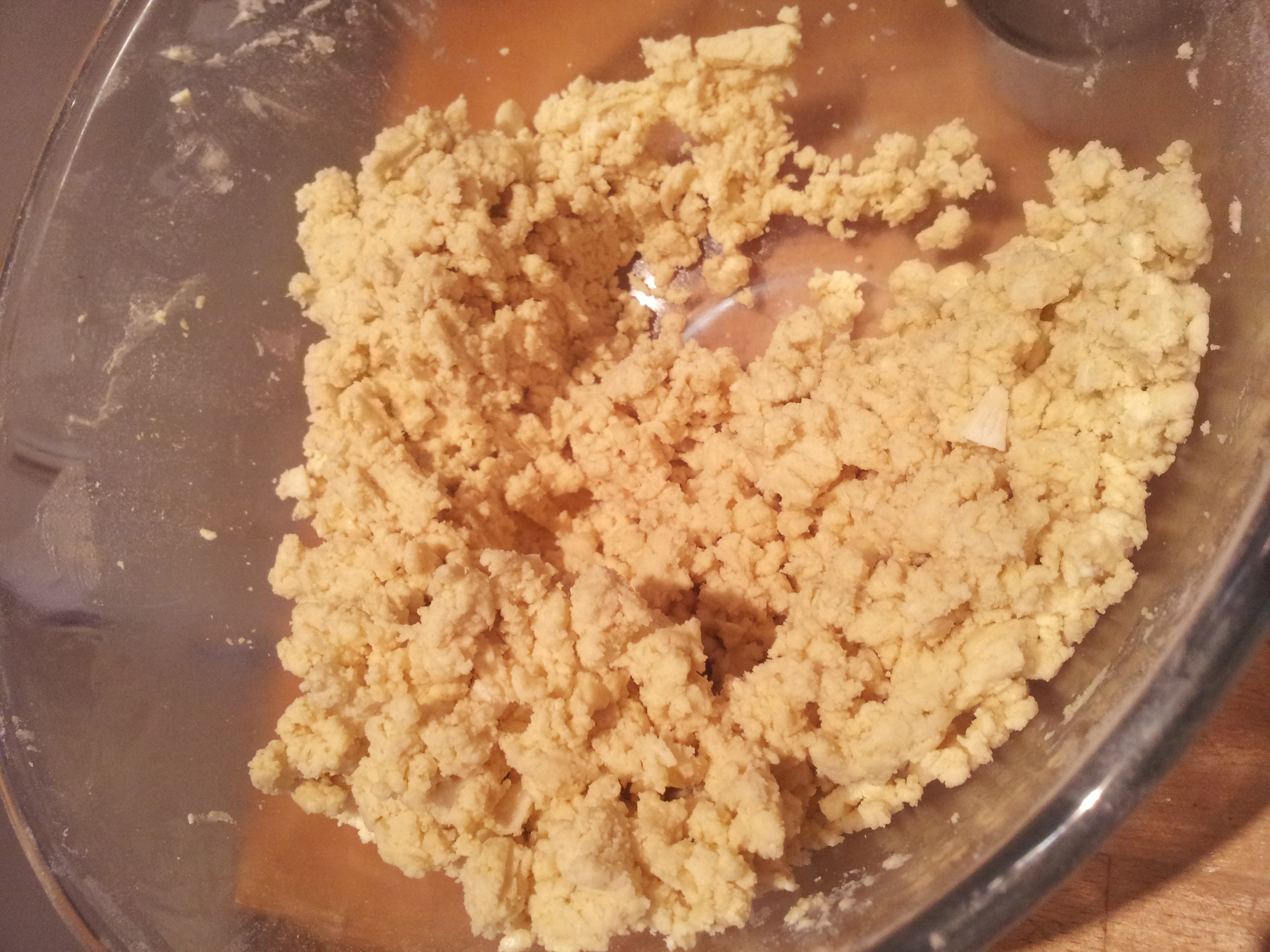
The dough looks a bit scrambled eggy to start with…

image

Take a small amount of loose dough in your hand

I completely misunderstood the recipe which calls for the dough to be chilled. I shapped the dough by hand into about 35 mini golf balls.

image

squash it together and hey presto you have a ball!

I popped them all onto a greased and lined baking sheet covered them with cling film and popped them in the fridge to chill.

image

All the Polvoron lined up in a row – ready for chilling

(I think you’re supposed to chill the whole dough then shape it?!) But this gave me a chance to shower so in effect helped to speed up the process.

image

Delicately golden Polvoron fresh from the oven

I then spaced the little balls out evenly to give them room to spread whilst they baked. I popped the tray in the oven to bake it at 170 degree C for about 18-20 minutes, until they took on a delicately golden hue, whilst I applied clothes and make up.

image

Cooled and ready for a good dusting of spicy icing sugar

Just enough time to then allow the Polvorón to cool on the tray to set their shape for 5 minutes. Then to cool them fully on a wire rack to stop the butter sweating out of them and give them sticky bottoms.

image

Fully coated Polvoron

Once cooled fully I rolled the Polvorón in a bowl of icing sugar swirled with cinnamon giving them a fluffy white coat. As they set the sugar absorbed slightly into the biscuit adding an extra dimension of sweetness to the treat.

image

Happy Birthday Mel!

I then quickly bagged them up, tied with a pretty ribbon and dashed off with my pretty packages of Polvorón to celebrate my friends birthday! With a champagne fueled (10 minute) train journey to Durham. Followed by more food, cocktails and Polvorón.

image

Obviously I had to ensure their quality before sharing them with friends… they passed the test! Crunchy and sweet Polvoron

We declared them a tremendous cocktail accompaniment (and that’s not the frozen strawberry daiquiris talking).

Polvorón are buttery like shortbread but with an added crunch as they are smaller and denser than a traditional shortbread biscuit. The almonds brought a subtle creamy yet crunchy texture along with the coconut. I expect pecans would add even more bite to the biscuit. The Polvorón remind me a little of biscotti or amaretti biscuits which I also adore. What’s not to love about a delicious bite sized treat. Even better, as they’re so small you can obviously eat a whole handful of them in one go!

Polvoron – up close

I love the method of shaping these little biscuits into balls as I find rolling and cutting out biscuits a bit laborious  I quite enjoyed this hand made alternative and I’m already inventing my own nut free recipe for my friends who can’t eat nuts as I think everyone needs a bit of Polvoron in their lives!.

Things I used to make Polvorón

Makes about 35 small biscuits

Preparation: 15 minutes

Chilling time: 30 minutes

Baking time: 18-20minutes at 170degrees c

  • 220g butter (1 cup or 2 sticks)  room temperature
  • 250g powdered sugar (2 cups or 240 grams)
  • 2 teaspoons vanilla extract
  • 250g all purpose flour (2 cups or 240 grams)
  • 120 g (1 cup) almonds/pecans/coconut coarsely ground/chopped
  • 1/4 teaspoon ground cinnamon

Thank you to Sourdoughtheangrybaker for inspiring me to bake Polvoron! I had not heard of these wonderful cakes until you told me about them. Brilliant blog if you haven’t had a look already, I recommend reading.

40. Chinese Rice Cakes – Half way aroundtheworldin80bakes!

Hasn’t time flown? One year in and we’re already half way Around the World in 80 bakes and what better destination to reach than China, one of my most favourite places in the world!

The Great Wall – look how far we walked

China has always been my ultimate must visit country. We visited just before the Beijing Olympics. Travelling around on over night trains from Shanghai to Beijing, climbing the Great Wall (sometimes on my hands and knees  – those steps are steep!) and sampling all of the delights of tasty chicken spine (!) and dried fish skin (yum).

Chinese Street Food – we didn’t eat the seahorses on sticks

Chinese Rice cakes have always intrigued me. I found the recipe in Marguerite Patten’s book and was surprised to discover how little rice flour they actually contain! However they do contain LARD! You may recall my love of lard from previous bakes such as Wiltshire Lardy Cake


These are such a quick little cake to bake and the results are impressive. Paul Hollywood would be proud of my equal sized rice cakes and even bake.

Chinese Rice Cakes – Paul Hollywood would be proud, look at the consistent size of the batch!

All you have to do is sift the dry ingredients together; plain, rice and corn flour, with baking powder, salt and sugar.

Ready to rub in the lard and rice flour

Rub the lard into the flour… My least favourite bit as I still shudder at the smell of lard. It’s definitely pungent.

Lardy times

Then bring together the mixture by stirring in a tablespoon of water, almond extract and half an egg. What a peculiarly precise measurement from Marguerite! I struggled to decide what half an egg was, so I cracked an egg into my cupped palm, over a bowl. I chopped the yolk in half with my finger and slid half (ish) of the egg into the mix. Keeping the other half for glazing the cakes later on.

Sticky dough ready for shaping

Once the mixture is quite sticky it’s ready to be divided and rolled into equal sized balls and plopped onto a greased and lined baking sheet. It’s easier to use your hands to roll them into smooth balls.

Lined up and ready for my close up – Chinese Rice Cakes

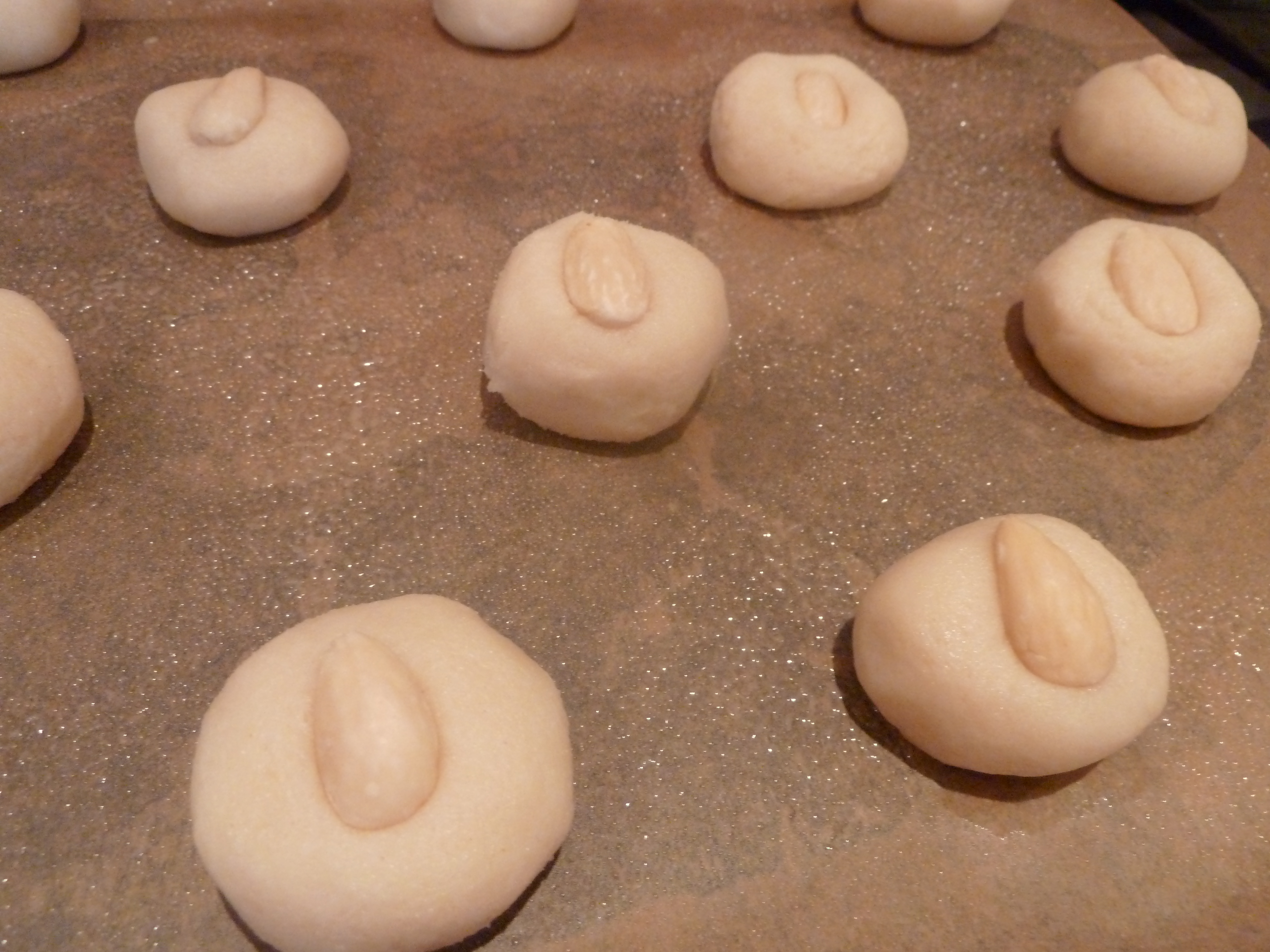
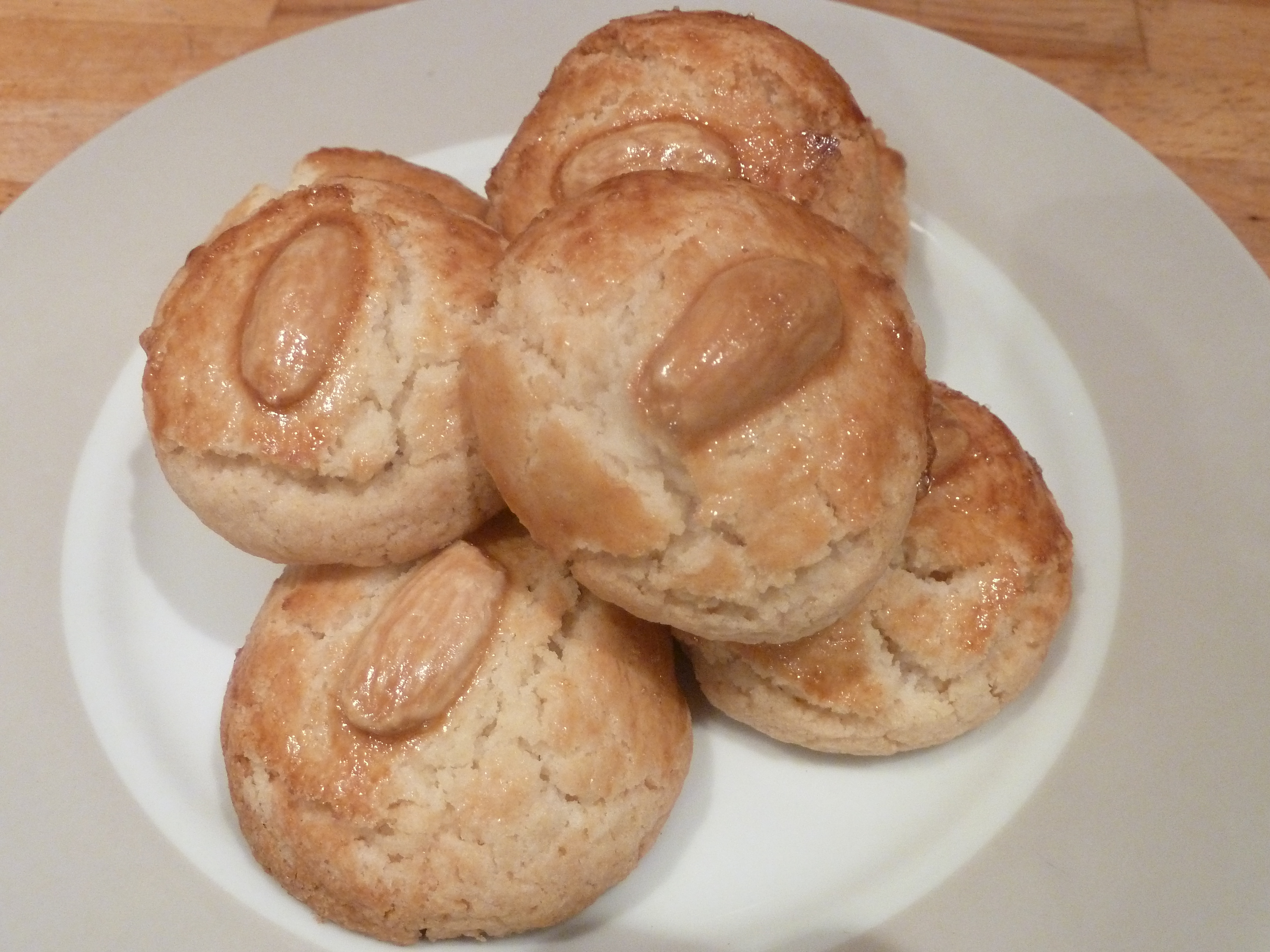
Once they’re on the sheet and spaced out nicely press a blanched almond into the centre and give them a quick egg wash with the other half of the egg. This means they will flatten a little onto the sheet and the almond will stick to the dough as it bakes. You will also get a wonderful golden crust on your cakes.

Perfectly spaced and oven ready Chinese Rice Cakes

Into the oven for for 15 -20 minutes at 205 degrees celsius and…

Just baked Chinese Rice Cakes

Ni Hao Chinese Rice Cakes ah hoy!

The Final Bake – Chinese Rice Cake

What a tasty little cake! The almond extract really comes though although if I were to make it again I probably would add more almond extract and some ground almonds too for more of an extravagant bake and richer flavour. Marguerite Patten’s recipes tend to be a bit more on the economical side, using minimum amounts of ingredients as she was baking during the war and making do with rations and tight budgets. I often double the quantities to make a larger batch and feed my hungry friends and family. The lard adds the extra moisture needed to give a crumbly yet light texture when baking with gluten free flours such as corn and rice which can be a bit dry side for my liking. They keep for quite a while in an airtight container and freeze really well too. Then easy to defrost as and when needed for a rice cake fix.

All in all a very quick, efficient and consistent bake. I would definitely bake these again and know that I won’t be able to resist experimenting with the ingredients.

Things that I used to make Chinese Rice Cakes

Margeurite Patten’s Recipe

This makes approximately 15 cakes

Preparation time: 10 minutes! (My kind of preparation!)

Cooking time: 15 -20 minutes

  • 4 oz (118g)  plain flour
  • 1 oz (30g) ground rice (rice flour)
  • 1/2 oz (15g) Cornflour
  • 3 oz (88g) sugar
  • 2/3 tsp baking powder
  • 3 oz (88g) lard
  • 1/2 an egg (quite difficult to measure!)
  • 1 tablespoon water
  • 1/2 tsp almond essence (I used extract as it’s stronger)
  • pinch of salt
  • blanched almonds to decorate
  • 15-20 minutes at 205 degrees Celsius

33. Fill your boots – Filipino Lavender and Coconut Bibinkga Cake

Just to make life that little bit more difficult for my trip this month to the Clandestine Cake Club I insisted upon incorporating some international aroundtheworldin80bakes baking into the English Garden themed bake . Up for yet another challenge I searched for and discovered an unusual recipe for a cake I’ve never even heard of before! Bibinkga cake (also known as mochiko cake) from the Philippines. (Another country on my still to be visited list too).

Lavender & Coconut Bibingka

So I was aiming to create an experimental English country garden cake with an aroundtheworldin80bakes twist… Hence lavender and coconut Bibinkga cake. I won’t be shocked if you don’t know what a Bibingka cake is, in fact I am very impressed if you are familiar with this cake. I was very intrigued by the idea of baking a rice flour cake with condensed milk and sugar. The twist of lavender offered a nod to the traditional English country garden theme.

I was a bit nervous creating something so different for CCC as everyone brings such beautiful and wonderous cakes along. But I am the one who conjured up my own challenge and therefore I must stick to it. When there is a baking requirement I see an international baking opportunity! (Despite most of my friends and family’s preference for chocolate cake… )

Even with my aroundtheworldin80bakes dedication/obsession I still felt some trepidation and so baked the Bibinkga 2 days in advance… just in case of epic disasters. I must be psychic. I’m so pleased that I realised my own limitations and didn’t pin all of my hopes on this bake!

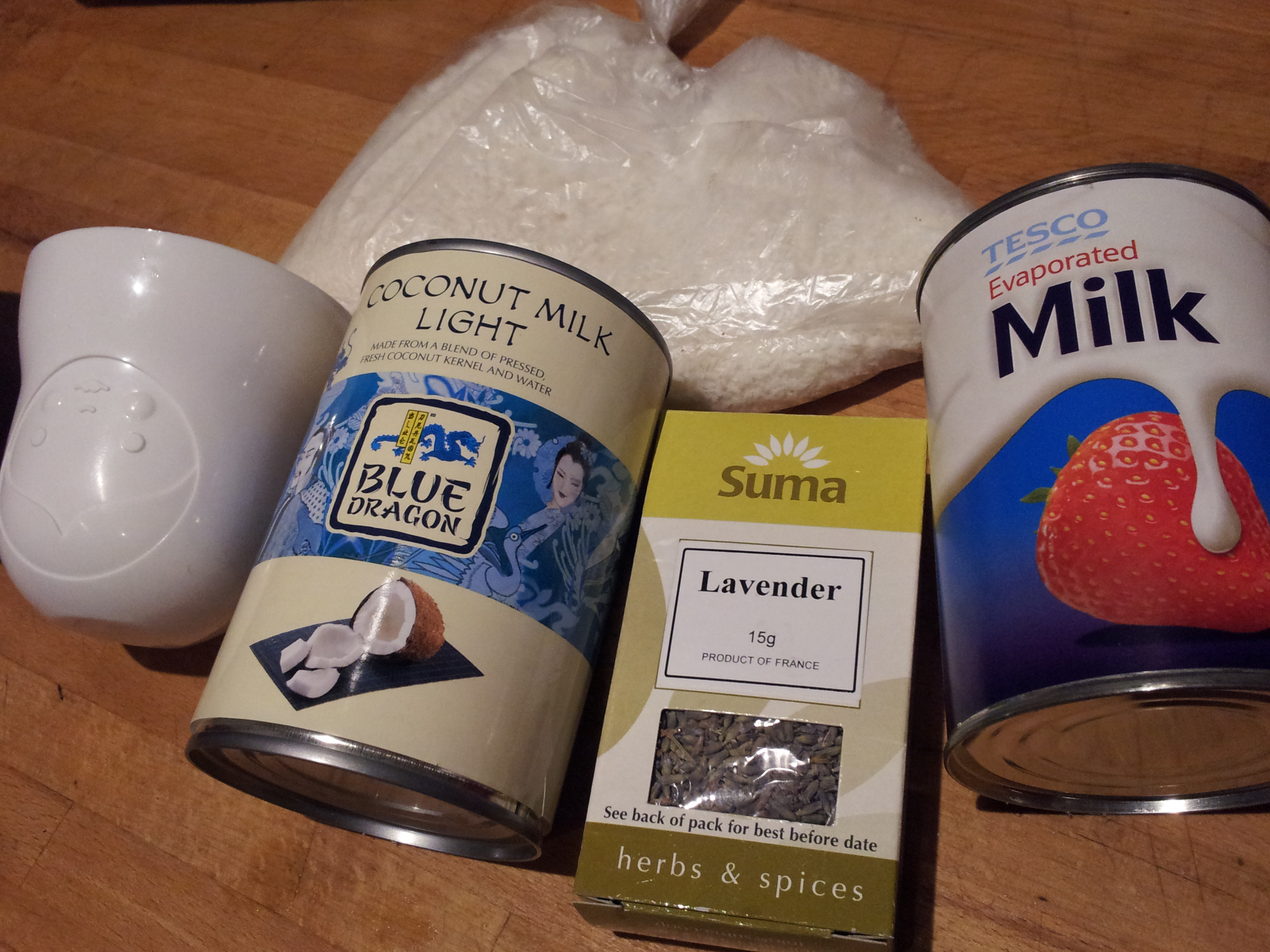
What goes into to Lavender and Coconut Bibingka Cake?

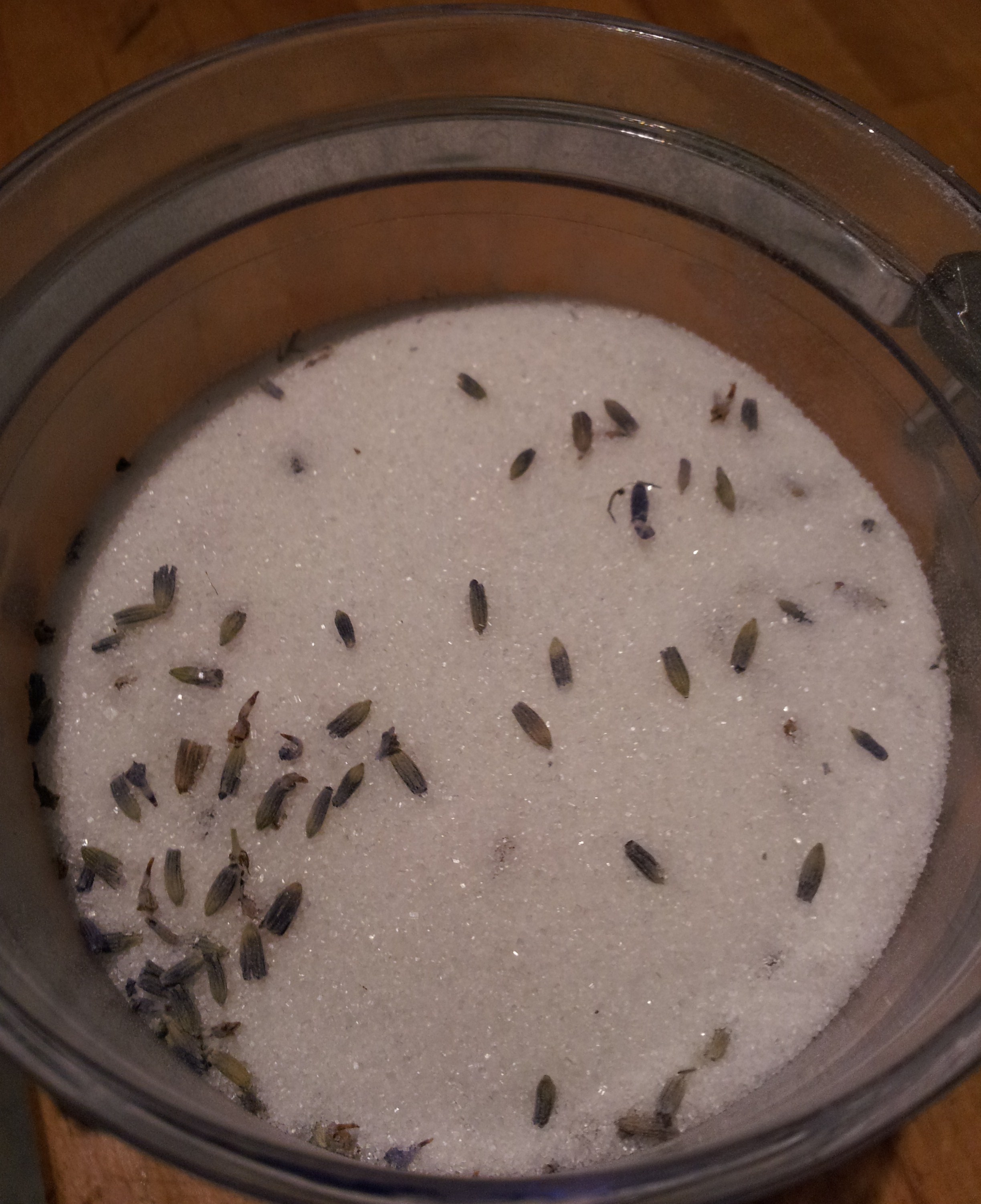
It was a fairly quick bake with a bit of whisking. Last year I made lavender shortbread (which I loved and gave to friends and family for Christmas). I learnt a really great way of introducing lavender to baking by infusing dried culinary lavender for a week or two in an airtight container filled with sugar. Just popping the lid of the sugar jar is a little breath of heaven when you’re making lavender sugar. This time round I still had some lavender stored up so infused the sugar for a week or so before baking this. It really does make all the difference as lavender can be a little too delicate to flavour a full cake.

Lavender Sugar – pre blitzing in all it’s infused glory

To ensure the sugar was REALLY lavendery and evenly distributed throughout, I threw couple of tablespoons of dried flowers into the sugar and after their infusion used my stick blender to blitz it all up together.

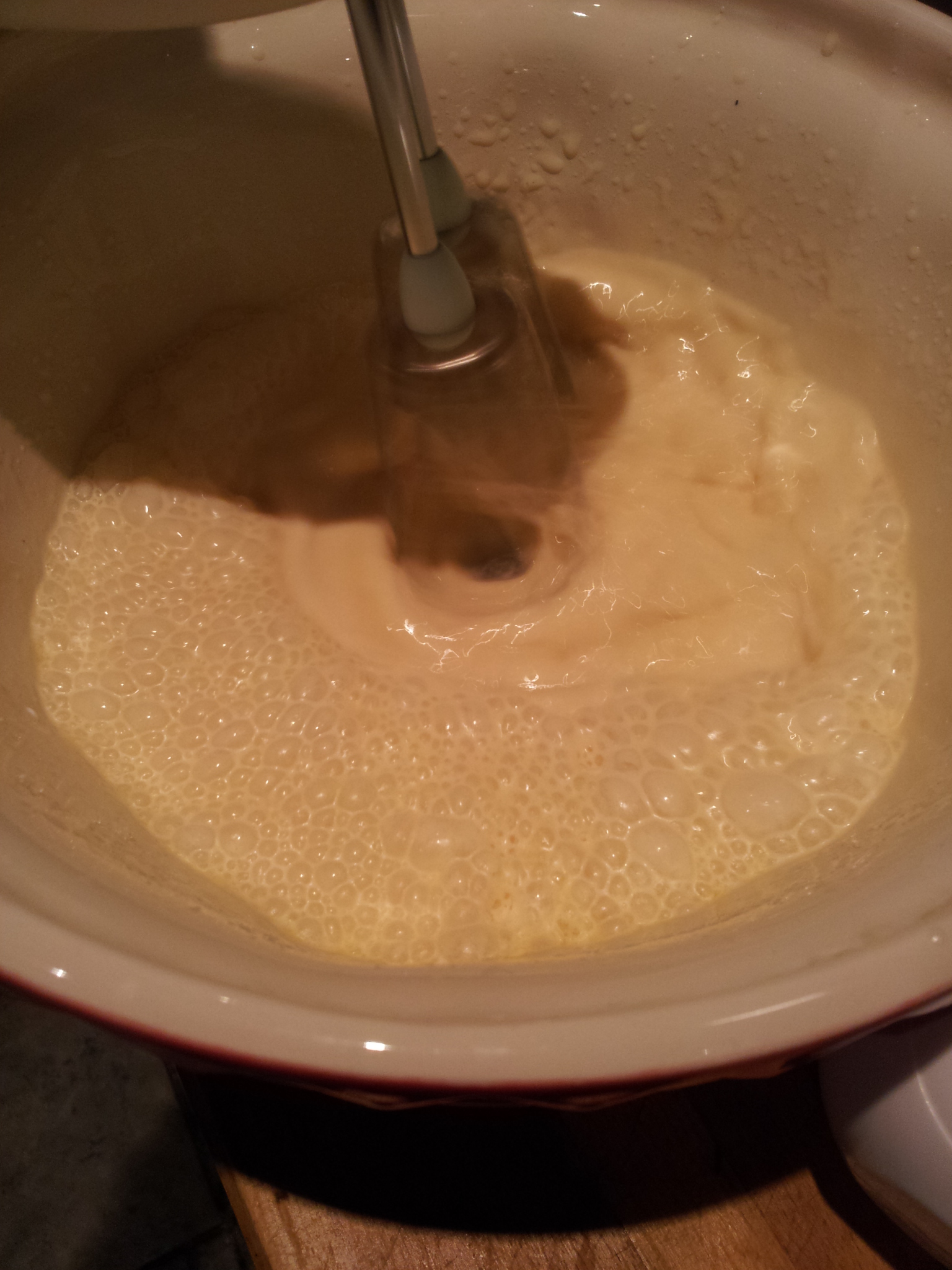
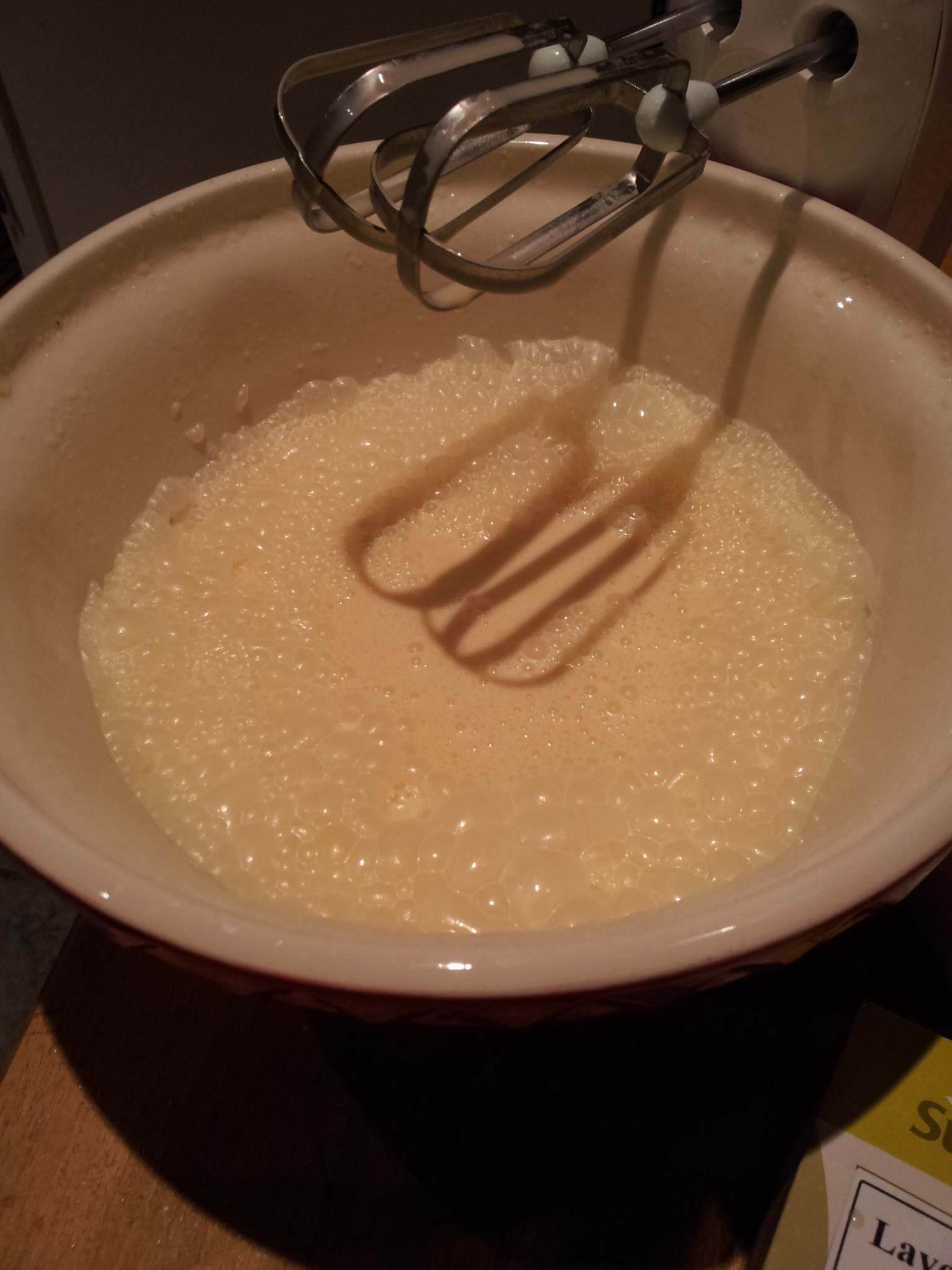
Frothing up nicely

This was really quite a quick bake and so the most effort required was for the whisking. I used my handheld electric whisk to whisk together the coconut milk, evaporated milk and melted butter. I whisked this up until it was a lovely creamy yellow colour and frothy, (and of course all up the walls in the kitchen) probably for around 5 minutes.

Then I whisked in the eggs, and whisked to incorporate as much air as possible.

Even Frothier

Still using my hand held whisk I added the lavender sugar  and vanilla extract, and whisked it until it was a smooth runny batter. Then to  gradually beat/whisk the rice flour into the batter. I added 1/2 cup at a time to attempt to avoid dreaded lumps and bumps.

After all that whisking, all that’s left to do is to pour the very fluid batter into a pre prepared grased and lined baking  tin. I used a rectangluar roasting pan about 13cm by 9cm

Oven Ready Bibingka

With a generous sprinkle of dessicated coconut and a bit extra lavender for good luck the Bibingka cake was ready for a good baking  for 45 mins at 190 degrees C (or 375 degrees F)

The recipe warned that the cake would look like it had risen and it wasn’t wrong.  20 minutes into the baking time there was no waft of cake floating from the oven nor any lavender perfume warming the air. Concerned, I checked the oven to discover I had created a balloon cake. One end dangerous puffed up with air and close to being frazzled whilst the other end lay calm and flat baking quietly.

Burnt Bibingka Balloon

When faced with a disproportionate cake inflation do you a) leave it alone, it may sort itself out? or b) open the oven and pop it with the closest thing to hand (usually a chopstick in my house). Being uncharacteristically sensible I did a) and now I really regret not popping the balloon with a chopstick.

Perhaps I whisked the batter into a frenzy and added too much air? I may have been a bit lazy just using the electric whisk for the entire cake creation process? Perhaps I should have folded in the flour rather than whisking it? The recipe did say that it would deflate after rising so I waited. And waited. And after 45minutes in the oven and a cooling off period. It STILL hasn’t deflated.

The final product

I clearly do not have the Bibingka skills! Once it had cooled I sliced it up into squares and had a little taste. God knows what I did wrong to this poor cake but it was utterly devoid of taste or fragrance. The complete opposite of my lavender shortbread which perfumed the entire house. It was rather dense, chewy and a bit on the greasy side for my liking. Perhaps I used the wrong type of rice flour? Perhaps it was the light coconut milk that I picked up by accident? Or perhaps my lavender had lost it’s oomph?!

Hollow on the inside, flat on the outside

Either way I couldn’t possibly take it to the Clandestine Cake Club in it’s lumpy, hollow and burnt state. Sometimes things go wrong in my kitchen, I’m not ashamed to admit it… it was fun experimenting all the same. It just meant I had some emergency baking to do and a new recipe to conjure up, quickly! Bring on the next challenge!

Things that I used to create Lavender and Coconut Bibingka Cake

  • 2 cups rice flour
  • 3/4 cup coconut milk (about half a can)
  • 3/4 cup evaporated milk (about half a can)
  • 1/2 stick of butter (1/4 cup)
  • 3 large eggs
  • 1/2 teaspoon vanilla extract
  • 1 tablespoon dried lavender
  • 1/2 cup unsweetened shredded coconut
  • My Russian Doll measuring cups (every chance I get to use an American recipe!)
  • baking tin 13cm x 9cm
  • 190 degrees C oven for 45minutes

I found this recipe over at Kensington Kitchen’s Wonderful Blog . Thank you for sharing and thank you very much for reading.

32. Moomins Love Berry and Cardamom Cake – Finland

I spotted the amazing Moomin Cookbook on my friend Jess’s shelf. Curious to discover what moomins eat I discovered this gorgeous recipe for lingdonberry and cardamom cake. It’s a traditional Finnish recipe, yet another country I am still yet to visit.
image

Unfortunately the only place I have seen lingdonberries is Ikea and that was in jam form so I substituted to the extreme using a combination of blueberries and dried cranberries.

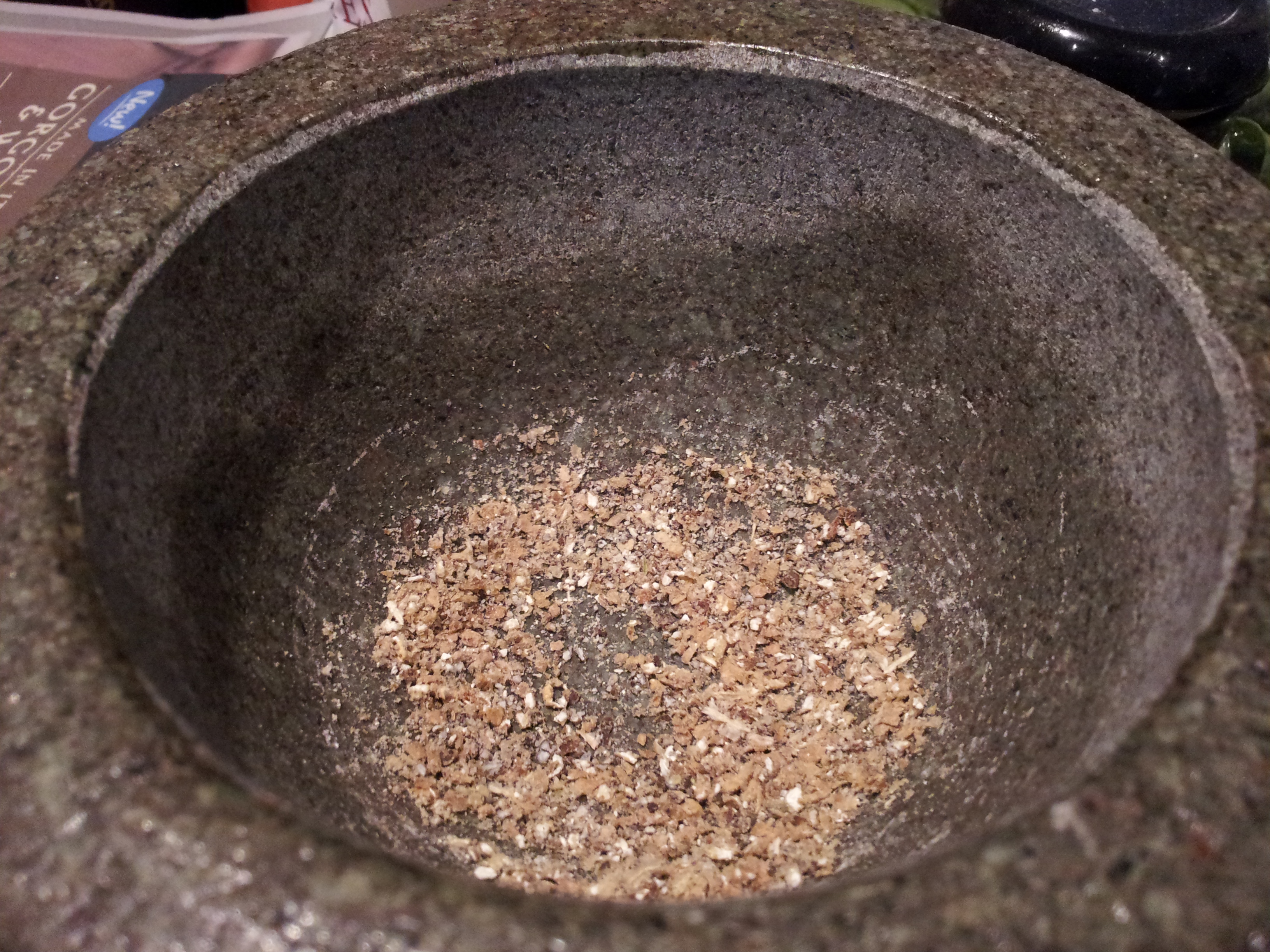
The most time consuming part was grinding the cardamom pods ( I lost count of how many I smashed to produce 2tsp of ground cardamom) and the cloves. I have a feeling I was a bit over enthusiastic with the addition of cloves but it added a wonderfully Christmassy aroma to the kitchen (and the final cake).

grinding cardamon and cloves

image

After my pestle and mortar workout all that was left to do was mush up the berries, then beat all of the ingredients together in one bowl. Wonderfully quick and little mess too!

If I was in less of a hurry I would have used my stick blender to blitz the berries but as I was in a rush I just used the back of fork… Not the best way to mush up dried fruit. Perhaps I should have soaked the cranberries in juice beforehand.

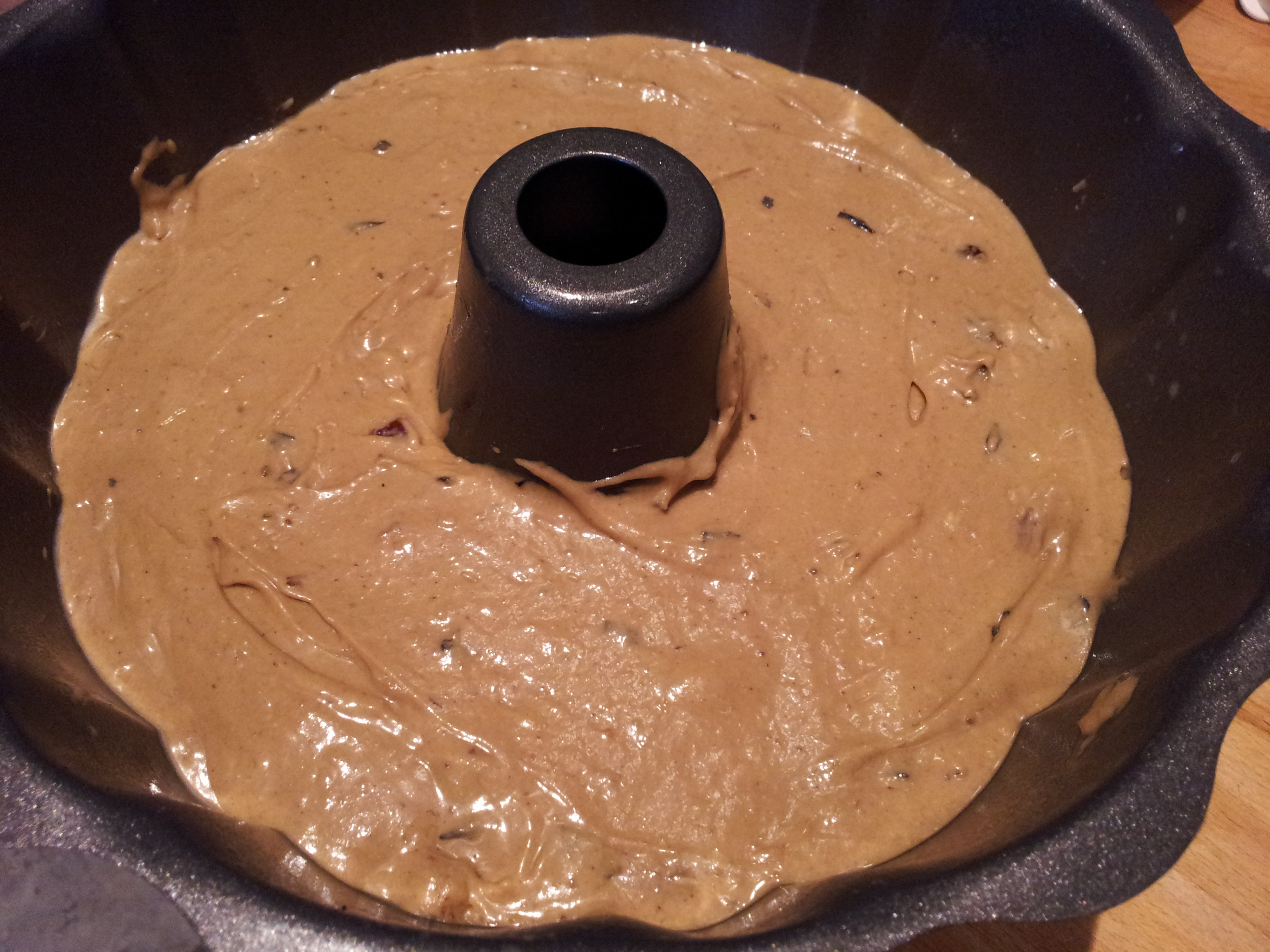
The recipe called for a greased and dusted (with semolina) loose bottomed tart tin. I paid little attention to these directions and subsequently forgot to add a dusting of semolina to my tin. I also forgot to use the specified tin and ended up with making use of my favourite bundt tin (again!)

To compensate for the tin difference I baked the sponge for a slightly shorter period of time and when the skewer came out clean from the cake, I knew it was baked through.

image

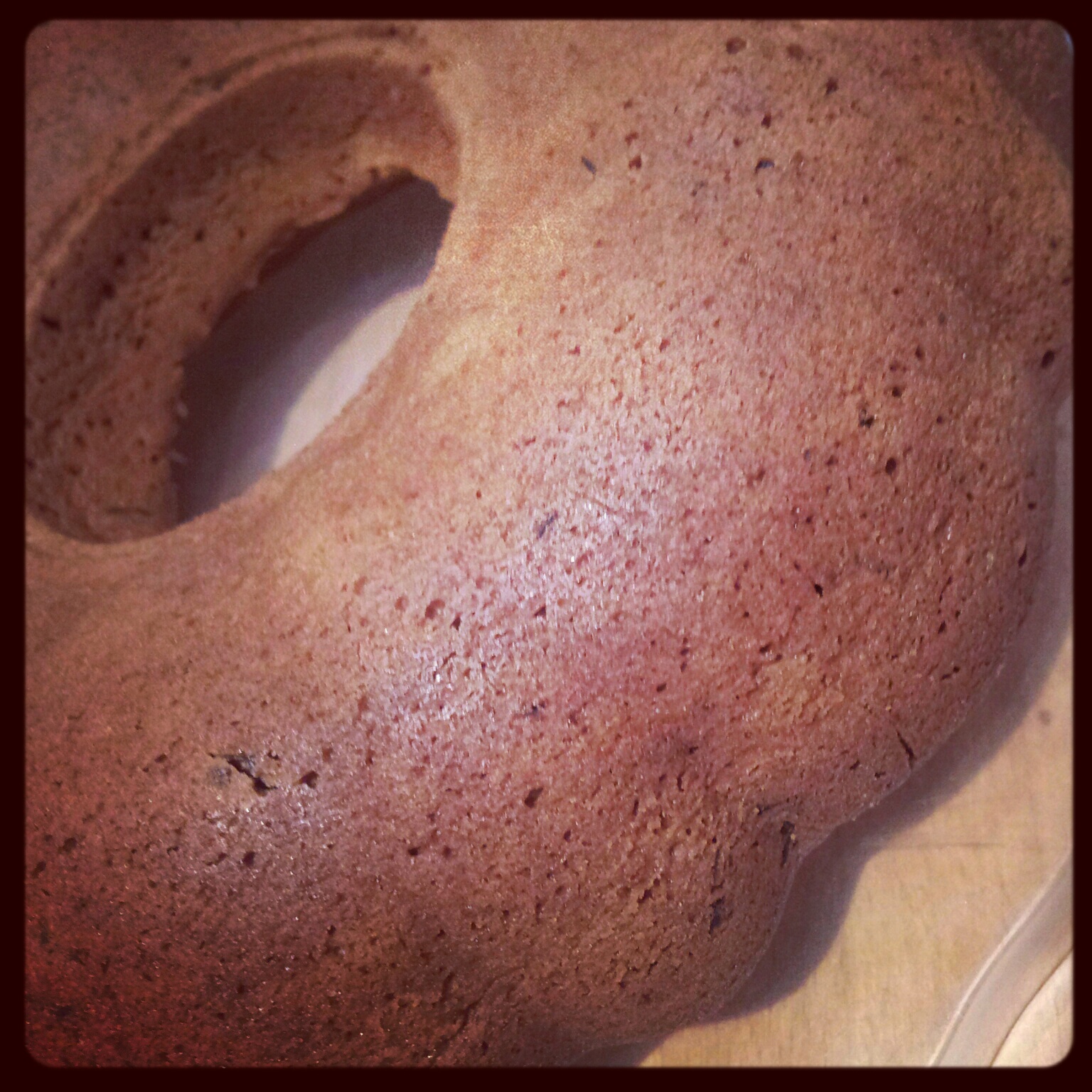
This was so much quicker and non of the hassle of lining tins with greaseproof paper. I recently indulged in a can of baking spray to grease my cake tins with (or ‘quick release spray’) as it was half price and it makes such a difference. Very quick and easy to use. Perfect for when I’m in a hurry, which is most days. No buttery fingers produced either!

I was worried that the lack of semolina in my tin would mean the cake stuck but it simply slid out as soon as I turned tin over onto my cooling rack. Effortless baking. Just how I like it, which meant I could cook tea whilst whipping this cake up simultaneously. (I just can’t stop multitasking!)

image

It’s  recommended that you leave the cake for a day to develop the favours. I successfully managed to resist cutting into it all night. However I was a little worried that the cloves might be a bit overpowering in this recipe, having never baked with cardamon before I wasn’t sure what to expect….

image

I loved the combination of the spices, the cloves definitely come through first with a tingly punch, while the cardamon and ginger add gentle undertones of warmth. It went well with the terrible weather we’ve been having in England recently, rain, rain and more rain along with snow in some places! But equally now the sun is shining I could merrily munch on a slice of berry and cardamon cake with a cup of tea. Spicy and fruity and moist. What could be better? No wonder the Moomins love Lingdonberry and cardamom cake!

image

Things I used to make Berry and Cardamon cake.

* 2tsp baking powder
* 250g brown sugar
* 250g plain flour
* 2tsp ground ginger
* 2tsp ground cloves
* 2tsp ground cardamom seeds
* 2tsp ground cinnamon
* 50g of blueberries (pureed/mushed) – if you can find lingdonberries just use 50 g of these as a puree)
* 10g dried cranberries (pureed/mushed)
* 200ml single cream
* 2eggs
* 90g melted butter

* One bundt tin
* One oven heated to  175 degrees c
* Bake for 1 hour or until cake is cooked all the way through
image

* This recipe was lovingly adapted from The Moomins Cookbook

Happy Mother’s Day Mam! Here’s a Cath Kidston-esque cake just for you

Happy Mother’s Day! Cath Kidston inspired cake

Happy Mother’s Day to my Mam! I wanted to bake something special, Cath Kidston -esque and chocolate free for my Mam and came up with this haphazard star cake. I will tell you all about the inside of the cake later on as it’s still a little secret (and we haven’t tried it yet!).

After some frantic last minute icing shopping I managed to get a layer of marzipan and royal icing on the very alcoholic cake in record breaking time. Fingers crossed it’s all set in place now as there was no time to let the icing dry before adding the decorative touches. Especially with the cake inside having taken 2 weeks of soaking and 7 hours of preparing/baking. I’m hoping it tastes good!

The various colours of icing and star shape cutters

I attempted to colour my own icing after failing to create purple with red and blue food colourings I managed to use some silver spoon blue liquid colouring to create the blue icing and I was lucky to have some pre coloured red icing left over from Christmas too, that needed to be used up.

Glitter plate

I rolled the different colours of icing out using my mini silicon rolling pin and used a variety of star cutters to cut out the shapes.  Adding a liberal coating of glitter on each star to give it a bit more sparkle. I found tipping the glitter onto a plate and swishing the stars in the glitter made life a bit easier and a good generous layer of glitter to boot. Although the curious cat also got a bit glitterified too in the process.

Super Hans the glittery cat

I don’t own edible cake glue so I made my own with a bit of water and liquid glucose and used a knife to spread it on each star (sparingly) as I didn’t want the colours to bleed into the white icing and ruin the effect. The idea is to create just enough stickiness to hold the decorations on.

Stars climbing up the side of the cake

I got a bit carried away and put as many red and blue stars on to the cake as I could fit, including a few that are climbing up the side of the cake… I was envisaging a Cath Kidston fabric print and hope that it kind of conjures up that image but with more glitter 🙂

I’m off to take it to my Mam now. Let’s hope she likes it!

Star shaped and sparkly

All shapes and sizes

Herman’s Big Night Out!

image I’m very sad to announce the death of Herman the German Friendship Cake. He made it through 2 days and then alas Poor Herman was not bubbling anymore.

He was a brave sourdough soldier. After a brief mourning period I tipped him down the sink and started again. This time using real sugar not honey as a substitute, which meant I had to make a trip to the shops.

image

4 days on Herman the German II is doing well. So well infact I’ve split him in half and delivered him to Karen who, so committed tot he Herman, travelled all the way from Middlesbrough. Now she too can spread the Herman Joy.

image

Herman off on his holidays after a morning by the heater at work. In his own travel bag and hot water bottle combo.

Only 5more days of feeding til I can split him again and share 3 quarters out. Please let me know if you would like a Herman starter and I will try to get one to you. Then the baking shall commence!

Or alternatively you can make your own starter by following these intructions

Want to see how Herman turned out??Clcik on to the next post From Herman with Love for the grand finale!