54. Hawaiian Haupai Pie – A Coconut Chocolate Cream Dream

Coconut curls and chocolate drizzle. Haupai Pie part deux

Haupai Hawaiian Coconut Pie

Having never visited Hawaii I have absolutely no idea what the traditional cake Hawaiian cake would be until I discovered Haupai Pie. I’ll never look back from this tropical chocolate, coconut cream dream pie.
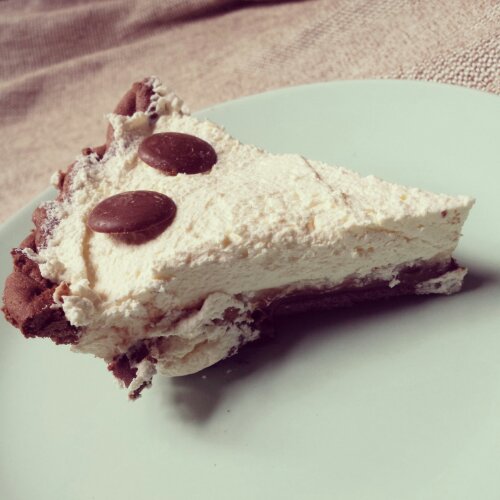
The first slice of Haupai Pie

The first slice of Haupai Pie

Trying to decide on a birthday cake for my sister I put a call out for inspiration on twitter and Haupai Pie was suggested by the lovely @FoodandFrets. I knew instantly that this was the pie for me especially with my upcoming trip to @private_pie club which was to be held the amazing Quilliam Bros Teahouse (which is incidentally also my favourite shop to visit with their millions of teas brewed to perfection and spectacular peanut brownies). The theme of Private Pie club this month was ‘free from’. I interpreted this to mean free from meat but not free from calories.

The sweet pie table at Private Pie. Gorgeous Raw Chocolate Vegan Pie, Shoofly Pie and my Hapuai Pie

The sweet pie table at Private Pie. Gorgeous Raw Chocolate Vegan Pie, Shoofly Pie and my Hapuai Pie

Recipes vary for Haupai pie. Many require just an unspecified ‘pie crust’. Which is helpfully vague but also means I can do what I like best in the kitchen, and make it up as I go along. Sweet chocolate pastry pie crust it is then for me!

Pastry is not my forte. It’s no secret. I have heard that chocolate pastry is particularly difficult and delicate but who cares what the worriers tell you. Just plough on through and it’ll be fine. If I can make it I’m sure anyone can.

Butter me up

Butter me up

Infused with confidence, having churned my own butter recently, I set to work using my Homemade butter to make this challenging crust.

Rub rub run your flour

Rub rub run your flour

Rubbing together the flour, cocoa powder, icing sugar and homemade butter by hand means you’re more in control of the pastry and less likely to overwork it. (Not that I could honestly tell the difference between over our under worked pastry as they all taste pretty good to me.) I chose to use icing sugar rather than caster sugar to achieve a smoother pastry. Caster sugar, although finely ground, could be a little too course for this pastry  (Another helpful tip brought to you from the wisdom of Mary Berry!) It’s definitely not because I had ran out of caster sugar and only had icing sugar to hand…

Pastry starting to come together

Pastry starting to come together

An egg is used to enrich the pastry and bring the dry mixture together. I also added a splash of milk to get the pastry to a good rollable consistency. Once it starts to come together, tip it onto an icing sugared dusted surface and knead it lightly and pat it into a round.
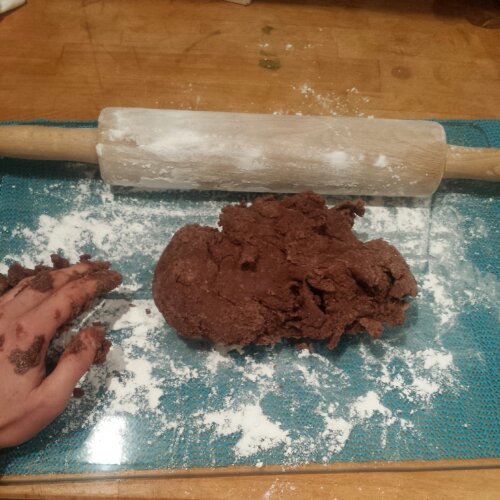
A dark chocolate pastry ready for rolling

A dark chocolate pastry ready for rolling

Moving the pastry as little as possible is apparently the key to good pastry (and cold hands, which I have even in summer). Lightly rolling the pastry away from you, in one direction, turn the pastry 90 degrees clockwise, roll again and turn. Keep repeating until it’s about 5mm thin and big enough to line your tin.

A thin pastry rectangle

A thin pastry rectangle

The best tip I have is to trim off the excess pastry, making more of a round shape as you roll to help keep it all under control. It makes life much easier when trying to fling the pastry into your tin too. Also as the pastry has a high butter content, there’s no need to grease your tin. Hurrah! Another job saved.

Pastry envelope

Pastry envelope

My method is to fold the pastry like an envelope, into thirds and lift it into the middle of the tin. Then all you have to do is unfold the pastry and gently press it into all of the nooks and crannies of your tin (I chose a tart tin with a wavy edge for my main pie). If your pastry is extremely delicate you can press it using a piece of cut off pastry instead of your fingers to stop yourself from poking a hole in it.

Unfold your pastry into the tin

Unfold your pastry into the tin

Once the pastry has relaxed and is pressed tightly into the tin you can trim off the extra and save it for later. This recipe made enough pastry for 2 pies! So I made a bonus practice Haupai pie. You could freeze the raw pastry for another day if you prefer or make some tasty biscuits instead.
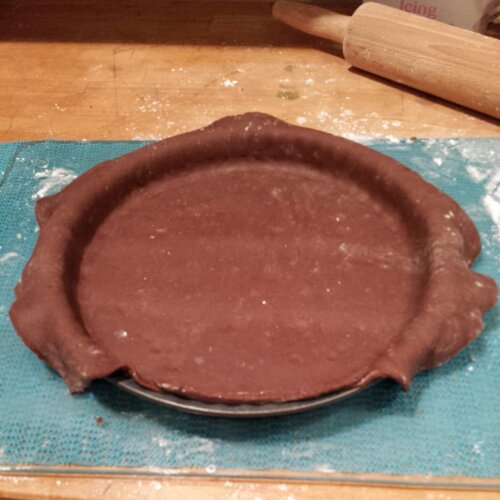
Trim your edges

Trim your edges

The pastry needs to chill in the fridge for at least 10 minutes before blind baking the case.

Trimmed and chilled pie case

Trimmed and chilled pie case

Before baking the chocolate pastry case prick the pastry all over with a fork to stop it bubbling up allowing you to fill it evenly later on.
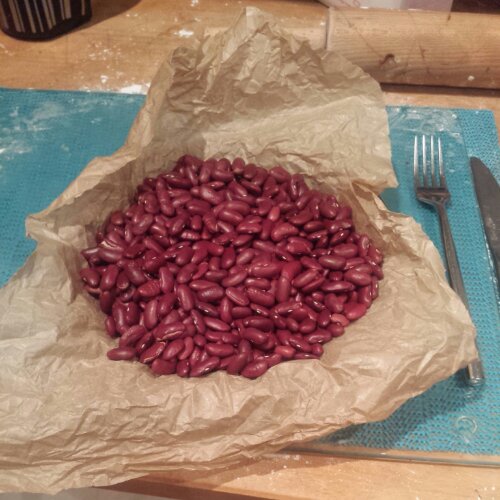
Blind baking with kidney beans

Blind baking with kidney beans

I like to use crumpled up greaseproof paper to line the case and kidney beans to hold the pastry down during the blind bake. With my extra pastry I decided to attempt a fancy twisted pie crust…
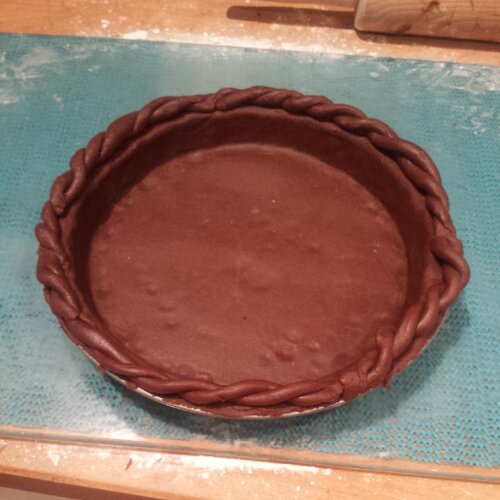
Fancy twisted pie crust

Fancy twisted pie crust

However in reality the fancy pie crust was a bit over ambitious. It melted in the oven during the blind bake and collapsed into the case giving some lucky people an extra thick chocolate crust! To make sure the pie crust bakes evenly I pop the pie onto a preheated baking sheet. The pie needs to be blind baked for 15 minutes and then baked uncovered for a final 5 minutes until it’s fully cooked in the middle. Some of the crust did stick to the greaseproof paper but hey it doesn’t need to look pretty on the inside, it’s going to be covered in luscious chocolate and coconut pudding. (Please ignore the twisted pastry mess on the outside too.)

Not so fancy pie crust

Not so fancy pie crust

Whilst the pie crust is cooling you can then make the coconut custard/pudding mixture. This recipe seemed worryingly liquid filled to me.  I couldn’t imagine it ever thickening up to a custard consistency. I had visions of the runny custard seeping into the pastry and ruining the crisp base. No one wants a soggy bottomed tart. The recipe called for a lot of coconut milk, milk and sugar to be boiled together and allowed to thicken. I had some homemade dulce de leche that needed to be used up so I substituted half of the milk for this instead, which also helped to thicken the mixture. (But you could just use normal milk or condensed milk for an extra sugary kick if you prefer…)
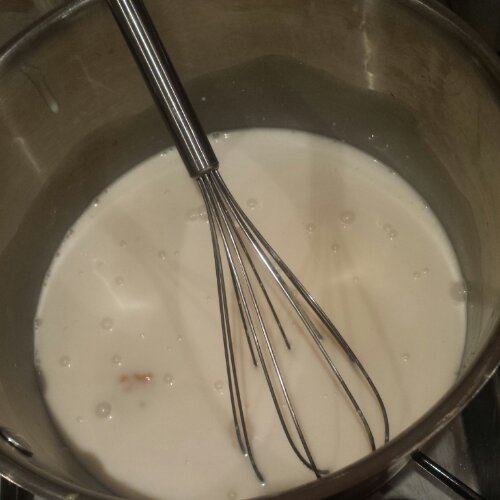
Simmering and whisking coconut milk, dulce de leche

Simmering and whisking coconut milk, dulce de leche

I’ve never made a custard without eggs before, relying solely on corn flour to thicken the mixture. This seemed the perfect opportunity to use up the box of cornflour I had carefully carried through customs all the way back from Berlin recently too, believing it to be a German cake mix. Google translate revealed later that it’s just plain old cornflour that I could buy in any shop here…

This custard/pudding recipe screamed against all my baking instincts, which I had to suppress with all my might to stop myself throwing in the odd egg yolk or two. I’m pleased I ignored my supposed baking instincts and put my faith in the recipe.  Pouring the full volume of water mixed with cornflour into the coconut milk, I held my breath and whisked like mad…

This seems like a lot of water and cornflour to me...

This seems like a lot of water and cornflour to me…

Miraculously the custard thickened immediately after I poured to full amount of cornflour into the mix! Producing a gloriously thick and glossy custard.

Beautifully thick and glossy coconut custard

Beautifully thick and glossy coconut custard

The custard then needs to be divided in half to whisk chocolate into one half and dessicated coconut to the other, until you get a beautifully shiny chocolate custard and a wonderfully textured coconut pudding custard.

Chocolate custard
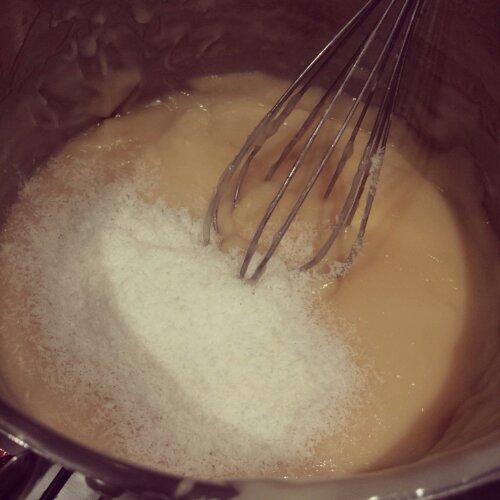
Chocolate custard

Coconut custard

Coconut custard

With your cooled chocolate and coconut custards at the ready, the rest of the Haupai Pie assembly is pretty straight forward. Pour the chocolate layer in first and spread evenly over the base, followed by a layer of coconut custard. As I was making two pies, I ran out of coconut custard for my second pie, but you get the gist of it… You could just make one really full pie instead if you prefer or have a much more chocolatey second pie, like me.
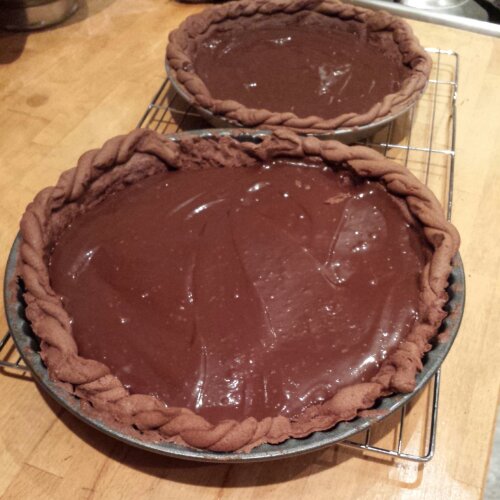
Chocolate custard filled chocolate pastry cases

Chocolate custard filled chocolate pastry cases

Whilst this is setting in the fridge, take the opportunity to whip up your double cream with a little caster sugar, until fluffy and light.

Followed by a generous layer of Coconut custard

Followed by a generous layer of Coconut custard

Spread a final thick layer of whipped cream evenly all over your pie and decorate with chocolate, or coconut or a combination of the two! With two pies to decorate I made one with chocolate buttons and another with homemade coconut curls and a milk chocolate drizzle.

The first slice of Haupai Pie - chocolate buttons make a quick decoration

The first slice of Haupai Pie – chocolate buttons make a quick decoration

I absolutely love Haupai Pie! I love the triple layered effect, with the dark chocolate pastry and custard contrasting with the mellow coconut custard and the white whipped cream! You can probably tell I have a bit of a coconut fascination, so this pie is right up my street.
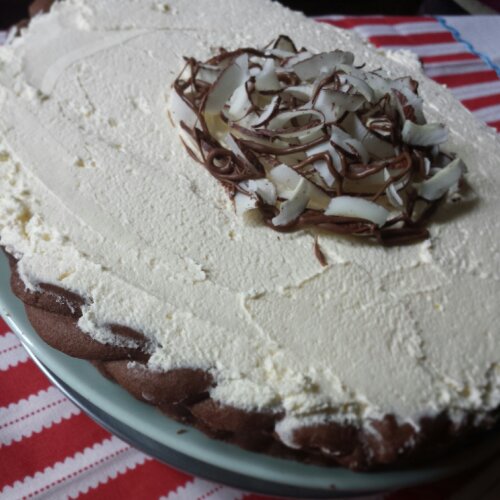
Haupai Hawaiian Coconut Pie

Haupai Hawaiian Coconut Pie

The crisp chocolate base is the perfect partner to the smooth and creamy filling. Adding the extra dessicated coconut to the custard gives an added texture and interest to the pie too. And despite my crust slipping into the pie, I quite enjoyed the extra thick crust.  I could quite happily eat chocolate pastry every day. Who would have thought that this time last year I thought that I didn’t really like pastry or cream?! I’m so pleased I persevered and not only do I now like pastry and cream I can now say I really do LOVE it.

Coconut curls and chocolate drizzle. Haupai Pie part deux

Coconut curls and chocolate drizzle. Haupai Pie part deux

I was worried that I had prepared the pies too early as I made them on Monday to be served on Wednesday. I feared that the custard would make the pastry too wet. But lo and behold it was still perfectly crisp after 2 days. This pie definitely needs to be kept in the fridge and is probably eaten as soon as possible but rest assured it keeps very well for at least 3 days (if it lasts that long in your house!).
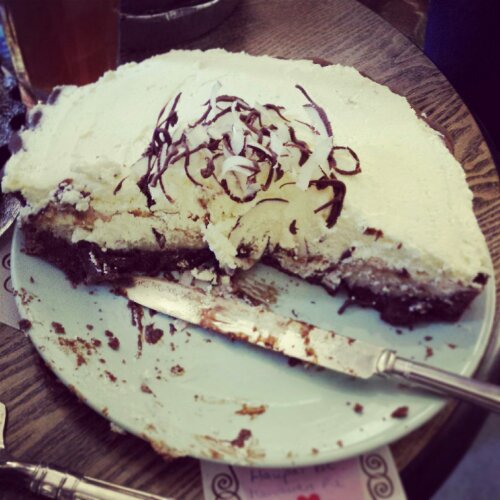
Haupai Pie mid devouring at Private Pie Club

Haupai Pie mid devouring at Private Pie Club

Things That I used to make me Haupai Pie

Chocolate Pastry Recipe

  • 90g icing sugar
  • 30g cocoa powder
  • 250g plain flour
  • 140g butter
  • 1 egg
  • a splash of milk
  1. Rub together ingredients dry ingredients and butter
  2. Add the egg (and milk if needed) to bring the pastry together
  3. Roll out to 5mm thickness and press into tin
  4. Cut to shape and prick with a fork all over
  5. Blind bake for 15 minutes at 180 degrees c.
  6. Bake uncovered for a further 5 minutes, until evenly baked.
  7. Allow to cool

Coconut and Chocolate Custard Fillings

  • 235ml milk (or 175ml dulce de leche and 50ml milk) (or 235ml condensed milk)
  • 1 can of coconut milk (400ml)
  • 200g white sugar

Heat milk and sugar until boiling and simmer for 5 minutes to thicken.

  • 235ml water
  • 65g cornflour
  1. Mix the cornflour and water until dissolved.
  2. Pour cornflour into the coconut milk
  3. Whisk over the heat until thickened (about 3 minutes)
  4. Take off the heat and divide the mixture in half
  • 210g chocolate (100g milk and 110g dark)
  • 40g dessicated coconut
  1. Whisk the chocolate into one half of the custard
  2. Whisk the dessicated coconut into the other half of the custard
  3. Allow to cool
  • 400ml Double cream
  • 40g caster sugar
  1. Whisk the double cream and sugar together until fluffy
  2. Pour chocolate custard into the pastry case
  3. Pour coconut custard into the pastry case
  4. Top with whipped cream
  5. Decorate with chocolate/coconut (or anything else you like)
  6. Enjoy!
Eat with a big spoon

Eat with a big spoon
How to churn your own Butter and make Buttermilk – Back to Basics

image

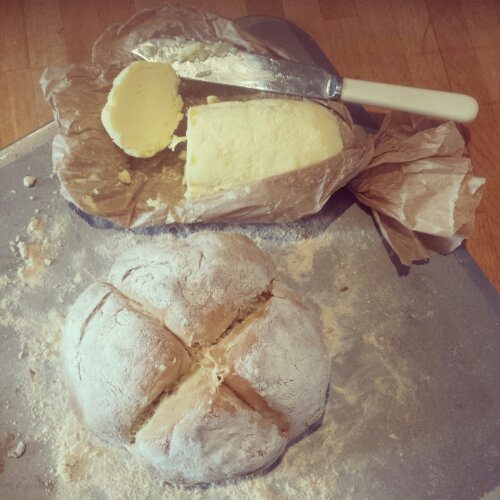
Homemade soda bread and butter at the ready!

Homemade Butter

Homemade Butter

Not wanting to let any food go to waste I realised I had a pot of double cream sitting in the fridge almost ready to be thrown away. So what to do with left over cream?? Why not teach myself how to churn butter at home?

Bread and butter. The perfect combination

Bread and butter. The perfect combination

Having a kitchenaid stand mixer makes this so easy, however I know you can make your own butter by sloshing cream around in a jar too. One guy attached a sealed jar of cream to his very active toddlers back and as the child frolicked he churned butter as he went. Now that’s multi tasking.

image

I didn’t employ any small children in the making of this butter. Rather I set my kitchenaid to work for less than 20 minutes and produced a patty of butter and a bowl of buttermilk. Magic.

There’s 6 clear stages in the butter development which is quite exciting to watch.  Starting with 350ml of double (or heavy) cream just whack it in your mixer with the beater attachment and let it go.

Double cream at the ready

Double cream at the ready

As it’s quite liquid to start with I gradually increased the speed working my way up to high and left it running whilst I made myself a cup of tea and treat Super Hans to a dollop of leftover cream. I could then marvel at the wonder of butter making, stopping only to sip my tea and take photos.

If you start off too high the liquid will escape from the bowl and not end up in your butter. I want to maximise my butter intake so slow and steady it goes. The cream will thicken as it fluffs up with air.

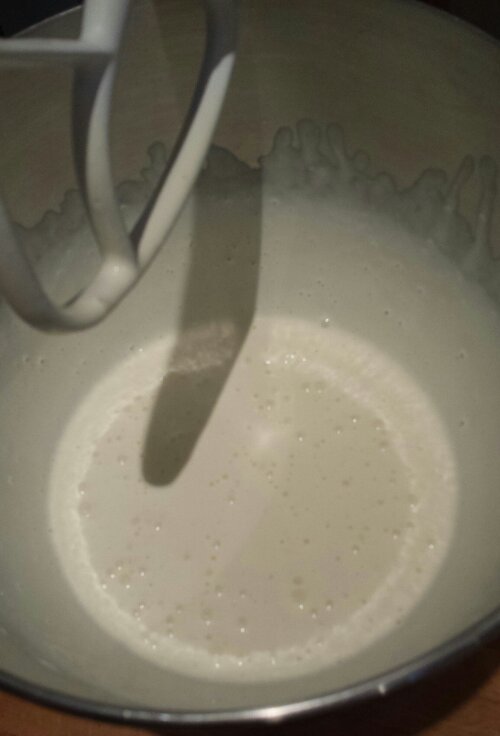
Stage 1: Bubbly Cream

Stage 1: Bubbly Cream

Stage 1. White bubbly cream.

Whipped cream! Keep going

Whipped cream! Keep going

Stage 2. Thick whipped cream. Delicious on scones but not what we’re looking for.

Not quite ready... starting to become yellow and thick

Not quite ready… starting to become yellow and thick

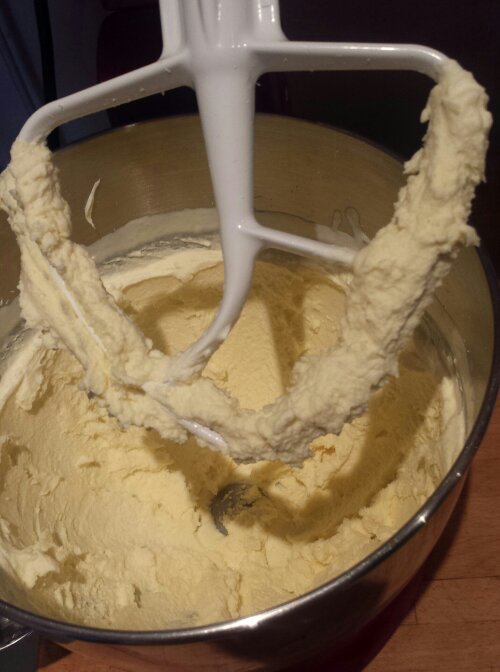
Stage 3. It’s getting exciting. The cream takes on a yellow hue and is very thick.

Starting to separate into butter and milk

Starting to separate into butter and milk

Stage 4. It starts to look a bit scrambled as the cream begins to separate into butter and milk. Don’t worry it’s meant to look a bit grainy!

Ready!

Ready! We have Butter!

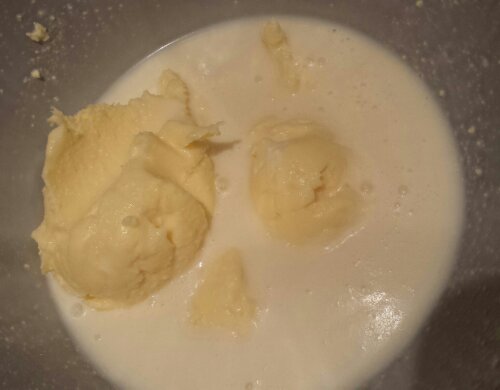
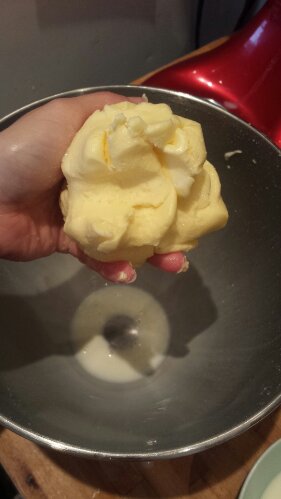
Stage 5. WE HAVE BUTTER! And a beautiful buttermilk by product.  It separates fully into a lump of butter sloshing around the bowl with buttermilk. Take it easy at this stage as you’ll lose the precious buttermilk if you beat the butter too vigorously.  Once the butter comes together in a patty it’s ready to drain.

Squish out the excess buttermilk

Squish out the excess buttermilk

Stage 6. Drain the buttermilk out of the bowl and save it for later. (This is a triumph. I’ve not been able to find real buttermilk in the shops so now I have genuine buttermilk to work with and make proper Soda Bread!) Squish the butter by hand to remove the excess milk and hey presto your butter is ready. You can also leave it drain in a sieve over a bowl.

And as if by magic we have Butter and Buttermilk

And as if by magic we have Butter and Buttermilk

Stage 7. Roll into a nice patty shape inside some greaseproof paper and pop it in the fridge to set. You could add flavourings at this stage too if you fancy, herbs, garlic, salt. As I’m going to use this in a pie crust I’m keeping mine pure and simple.

Butter me up

Butter me up

Before even starting the washing up I calculated the ratio of flour needed for the amount of buttermilk I had made (162ml of buttermilk to be exact) to whip up a quick soda bread!

Butter patty at the ready with Soda Bread for the oven

Butter patty at the ready with Soda Bread for the oven

I just threw all the flour back into the mixing bowl and made a half size loaf. I guessed just under half the amount of flour was needed. Now we have a full on snack from one pot of cream that was just going to be thrown in the bin. Using every single bit of the ingredient so nothing goes to waste. Economical and environmentally friendly baking. Now that’s my kind of cooking.

Homemade butter and soda bread!

Homemade butter and soda bread!

Things I used to make my butter

  • 350ml double or heavy cream (any amount would do, but the more cream you have the greater the amount of butter you will make with better value for your time and electricity bill…)
  • Kitchenaid (or you could shake it up in a jar or use a hand whisk if you’re feeling energetic)
  • You coud add herbs, garlic or salt to flavour your butter)

After 20 minutes of beating I made

53. Triple Layer Sachertorte – why have 1 layer when you can have 3?

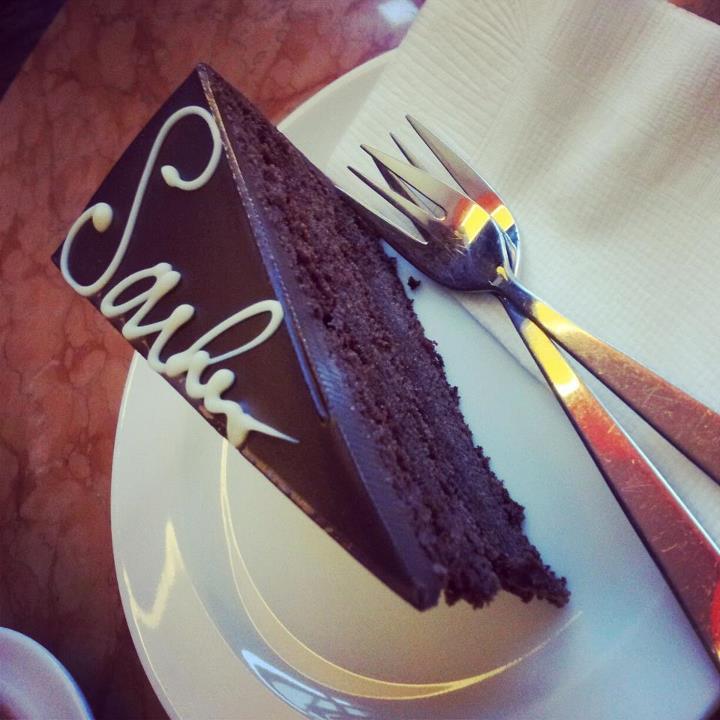
Not one that I made earlier unfortunately but one hell of a triple layer Sachertorte in Berlin

Not one that I made earlier unfortunately but this is one hell of a triple layer Sachertorte that I ate in Berlin

What’s more indulgent and luxurious than a Sachertorte? Surely a triple layer Sachertorte beats them all hands down. Why have merely one layer when you can have three? The Berliners had the best idea and yes I stole it, nay, lovingly recreated it at home for my friend Adam’s 30th birthday present.

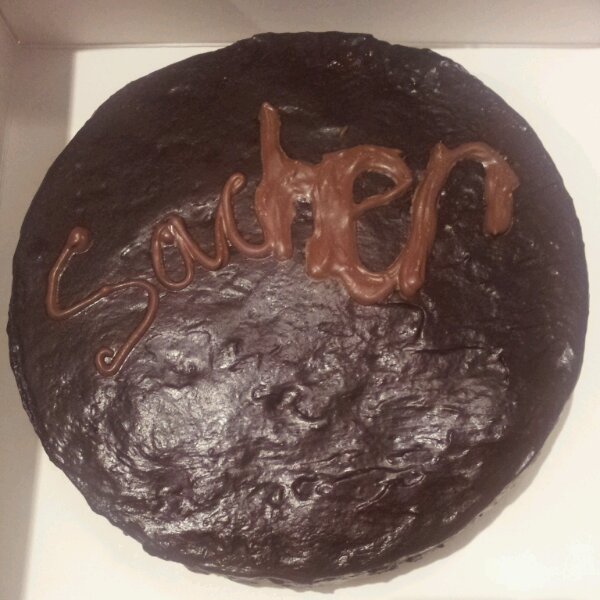
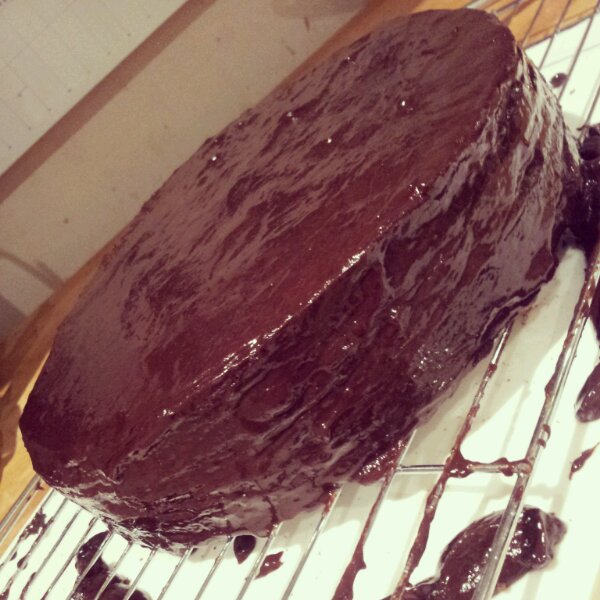
Oh dear it's all gone a bit wrong, but here's my SacHER torte. Check out that glossy ganache (and ignore my terrible chocolate icing skills...)

Oh dear it’s all gone a bit wrong, but here’s my SacHER torte. Check out that glossy ganache (and ignore my terrible chocolate icing skills…)

Sachertorte was invented in Vienna, Austria and although I’m still yet to visit the country I thoroughly enjoy it’s food. One of my very first around the world in 80 bakes, bakes was indeed a 4 foot pastry monster, also known as the Viennesse Apple Strudel.

I did another one... just one layer to see if I could get it right... shhh don't tell anyone

After all of that I had to make myself a one too … just one layer to see if I could get it right… shhh don’t tell anyone

A very rich and dense chocolate cake, two layers of Sachertorte are usually sandwiched together with apricot jam and chocolate ganache. But for this extra special version I made 3! Well it is a special birthday after all and I had been promising Adam a triple layer Sachertorte for sometime.

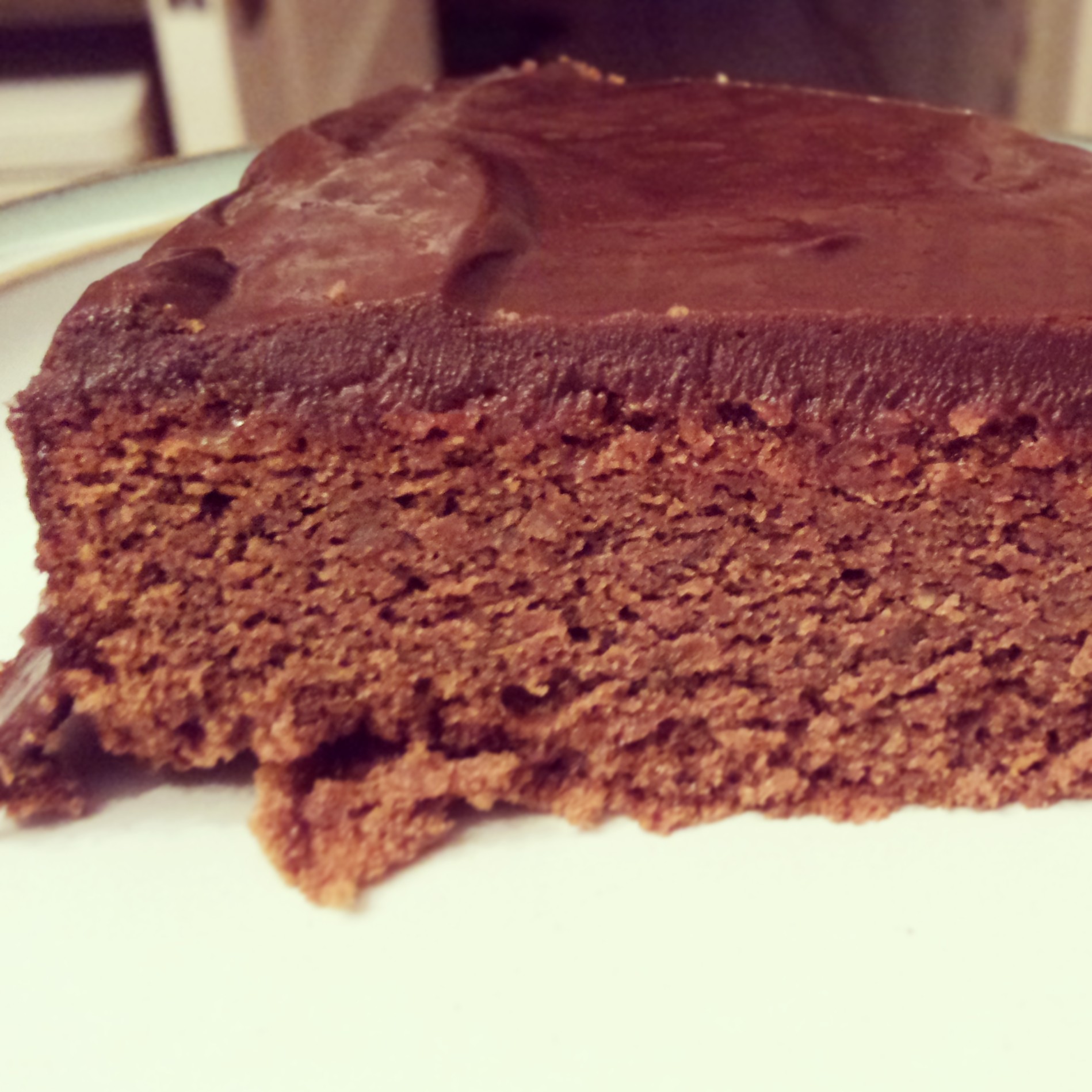
Here's a slice of my second attempt at Sachertorte (Just the one layer) but beautifully rich and moist!

Here’s a slice of my second attempt at Sachertorte (Just the one layer) but beautifully rich and moist!

It’s an almost flourless sponge, made mainly from almonds, so it can cope with a bit of handling (or slicing into more layers). It also benefits from a heavy layer of ganache to retain moisture in the sponge.

Melt the chocolate

Melt the chocolate

There’s a lot of real chocolate in this cake, so it’s as chocolately as it’s ever going to get, rather than just adding cocoa powder. This is the real deal. Using a bain marie is the best way to melt chocolate (in my opinion) without burning it. Melt the chocolate gently with a bowl suspended over a pan of boiling water.

Beat together the sugar and butter

Beat together the sugar and butter

Once the chocolate is melted, leave it to cool slightly whilst you beat together the butter and sugar until it’s light and fluffy.

The slightly cooled chocolate can then be beaten into the melted chocolate along with the vanilla extract.

Beat in the chocolate - sachertorte

Beat in the chocolate

Then whisk in the egg yolks one by one until the mixture is nice and thick.

Beat in the eggs - sachertorte

Beat in the eggs

The ground almonds and flour can then be introduced and folded into the chocolatey egg yolk mix.

Whisk egg whites

Whisk egg whites

If like me you have a stand mixer you can do a little cheat here. I used my hand held electric whisk to the egg whites to a fluffy state whilst I set my Kitchenaid to task whisking mix the chocolate and egg yolks together in a separate bowl. This helped to save a bit of time and energy on my part. Don’t worry if you don’t have a stand mixer however you could easily whisk your egg whites after you’ve finished the egg yolk mix.

The egg whites need to be whisked to incorporate as much air into them as possible as this cake doesn’t have any other raising agent to help it do the job. The whites should be whisked for about 2-3 mins at a slow speed until frothy and bubbly. Then increase the speed to high and continue to whisk for about 4-5 minutes, until the whites are stiff but not dry.

Fold into the egg whites

Fold the chocolate mix into the egg whites

Add a good dollop of the chocolate egg yolk mix to the egg whites and fold in gently to help loosen the mixture up. Then carefully spoon the rest of the chocolate mix into the egg whites and fold in, very gently ,to preserve as much air as possible in the mixture.
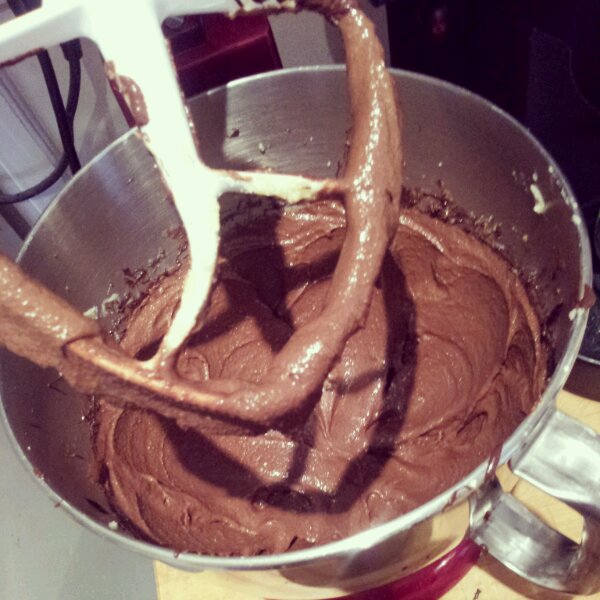
Pour into the tin

Pour into the tin

Once it’s all combined (and there’s no tell tale spots of egg whites floating about) the batter is good to go. Carefully pour the batter, (holding the bowl as close to the tin as possible so you don’t knock any of the air out of the mixture) into a greased and lined 9 inch round tin and smooth the surface down with a spatula, making sure there’s no holes or lumps. Bake the cake in the centre of your preheated oven at 180 degrees C for 40-45 minutes.

Baked Sachertorte

Baked Sachertorte

Once the cake is thoroughly cooked, you can tell this as a cocktail stick when inserted will come out clean, the cake will shrink back from the sides of the tin slightly and when pressed in the centre the cake will spring back. Leave it to cool in the tin slightly and then tip it out onto a wire cooling rack.

You may remember the Sachertorte from the Great British Bake Off technical challenge in series 2. Mary Berry insisted that you had to use the top of the cake so it had to be as flat as can be. I’m not that strict so I use the lovely flat bottom of the cake as my smooth top, although either end of the cake would be fine to use, as it was in fact rather flat.

Sliced in 3 layers

Sliced in 3 layers

The cake really needs to be entirely cold before you take a knife to it. I’ve learnt this lesson the hard way and broken many a cake cutting into it while it’s still warm too eager to start the layering process. It always ends in tears and much smaller cake than I envisioned. So patience my friend and a really sharp knife.

I find it easier to swivel the cake round and hold the knife in the same place to (attempt) to get an even slice. I find it easier to cut the top layer off first and work my way down. Using a palette knife to support the cake to carefully lift each layer off and pile them up on a plate.

Ganache Mixing

Ganache Mixing

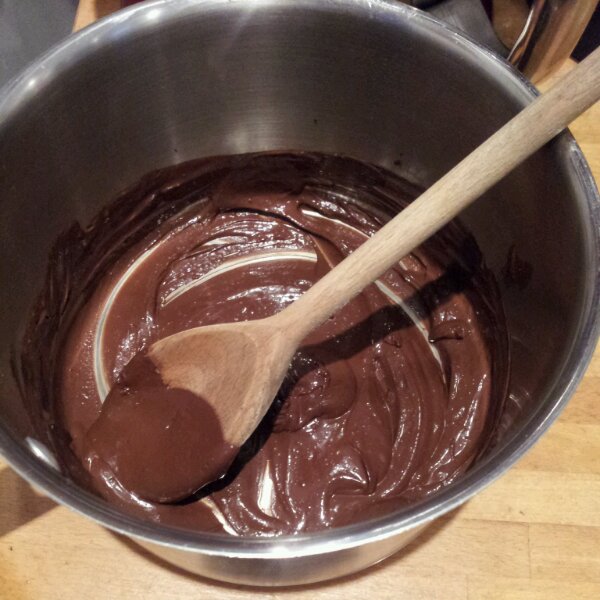
While your slicing up your cake into 3 layers, pop the cream in a pan and heat  it to almost boiling point. Take it off the heat and add two thirds of the the broken dark chocolate. Keep stirring the ganache until the chocolate is fully melted and add the final third of the chocolate. Continue to stir until it’s glossy and smooth.

First layer all jammed up

First layer all jammed up

As this was a birthday present I bought a cake board to pile the cake onto. I sterilised the board with a little orange brandy, to get the party started. Taking the bottom layer (which technically was the top of the cake previously when it was baking in the tin…confusing?) I sat the sponge on top of a splodge of warm apricot jam on the cake board to hold it in place. The jam must be heated to make it extra runny and also to sterilise it, as you want your cake to keep well. 40 seconds in the microwave should do it, but don’t boil the jam!

Ganache Layer

Ganache Layer

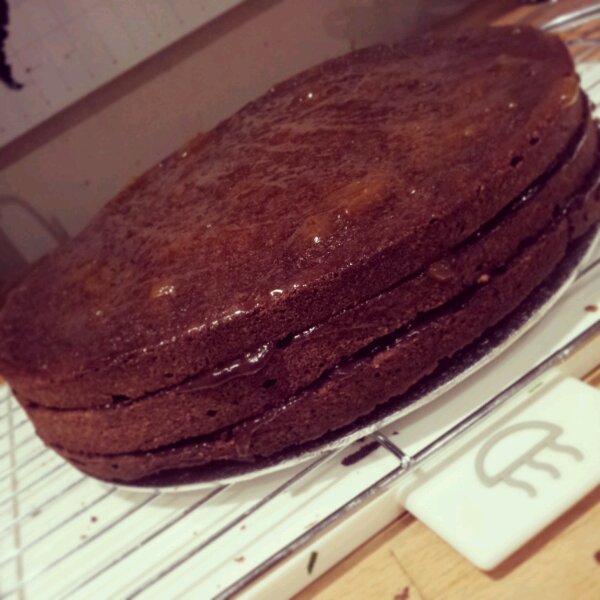
Smear a generous coating of warm apricot jam onto the sponge, to act as a barrier against the ganache so it doesn’t seep too far into the sponge. Then add a nice layer of ganache and plop the next sponge layer on top. Repeat for the next 2 layers.

Glazed and stacked triple layer sachertorte

Glazed and stacked triple layer sachertorte

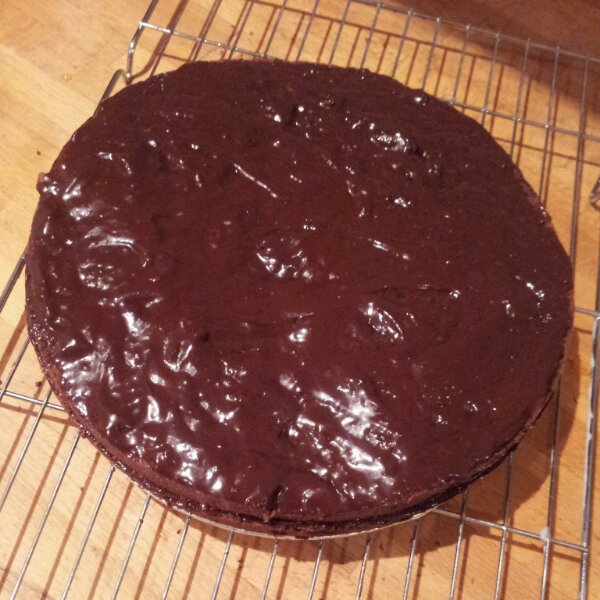
The final layer will need to be neat and tidy so pour the ganache all over the top of the cake and using a palette knife and gravity encourage the ganache to run down the side of the cake. You may need to even things up a little, holding the palette knife vertically and pressing it gently into the side of your cake, run the knife around the side of the cake to straighten up the edges.

Hairdryer at the ready

Hairdryer at the ready

The ganache may start to set before you want it to, so keep a hairdryer to hand (yes a hairdryer- I haven’t lost my mind honest) to heat the ganache a little and allow you to continue to work with it. You can always tip the cake slightly to let the ganache flow around the top of the cake.

Ganached and glossy

Ganached and glossy

Undoubtedly you will get ganache everywhere at this point, on your face, in your hair, up your arms and all over the kitchen, but that’s part of the fun. Keep some paper towels close by to mop up any spillages and to wipe excess chocolate off your palette knife. You’re also going to need a damp paper towel (or 10) to wipe the excess ganache off the cake board. Apparently it’s a really clever idea to put pieces of greaseproof paper under the sponge to catch the ganache which can then be disposed of later on. Or if your cake board is entirely flush to the cake (like mine), you could pop it on a wire cooling rack and let the ganache drip onto a plate underneath, ready to be used again, or eaten with a spoon (I’ll let you decide).

Sack the chef

Sack the chef

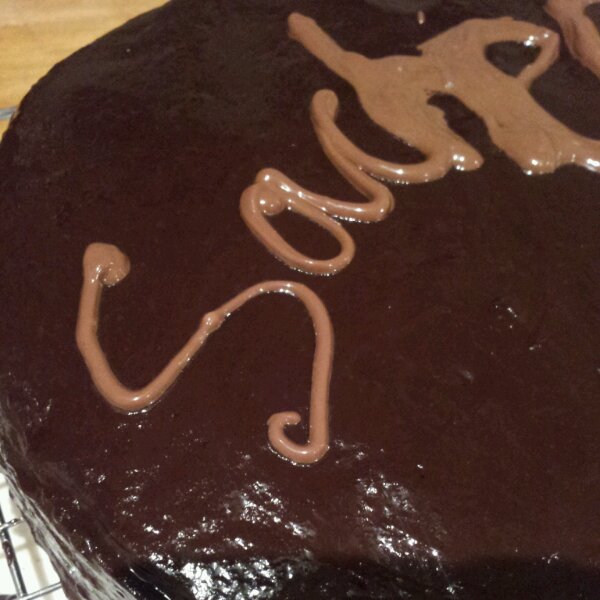
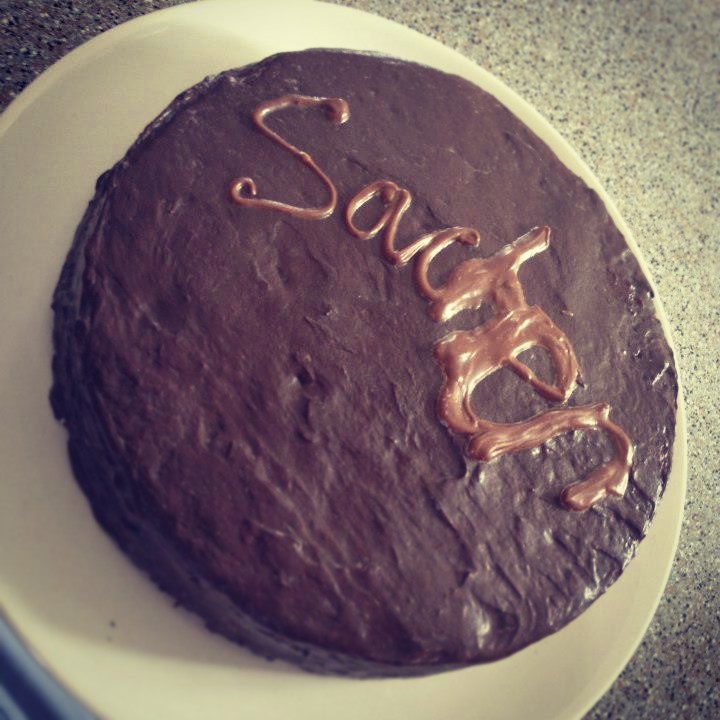
The pièce de résistance. The chocolate ‘Sacher’ signature. The name of this wonderful cakes creator. You need milk chocolate to contrast against the dark ganache, melted and in a piping bag. Or like me you may use a sandwich bag with the tip snipped off. You only have one attempt at this, unless you fancy re – ganaching your entire cake, so no pressure. I made a right hash of it (sorry Adam) as my piping/sandwich bag exploded half way through dripping unslightly chocolate onto the cake which then had to be incorporated into the signature.

oh dear it all went a bit wrong but here's my SacHERtorte...

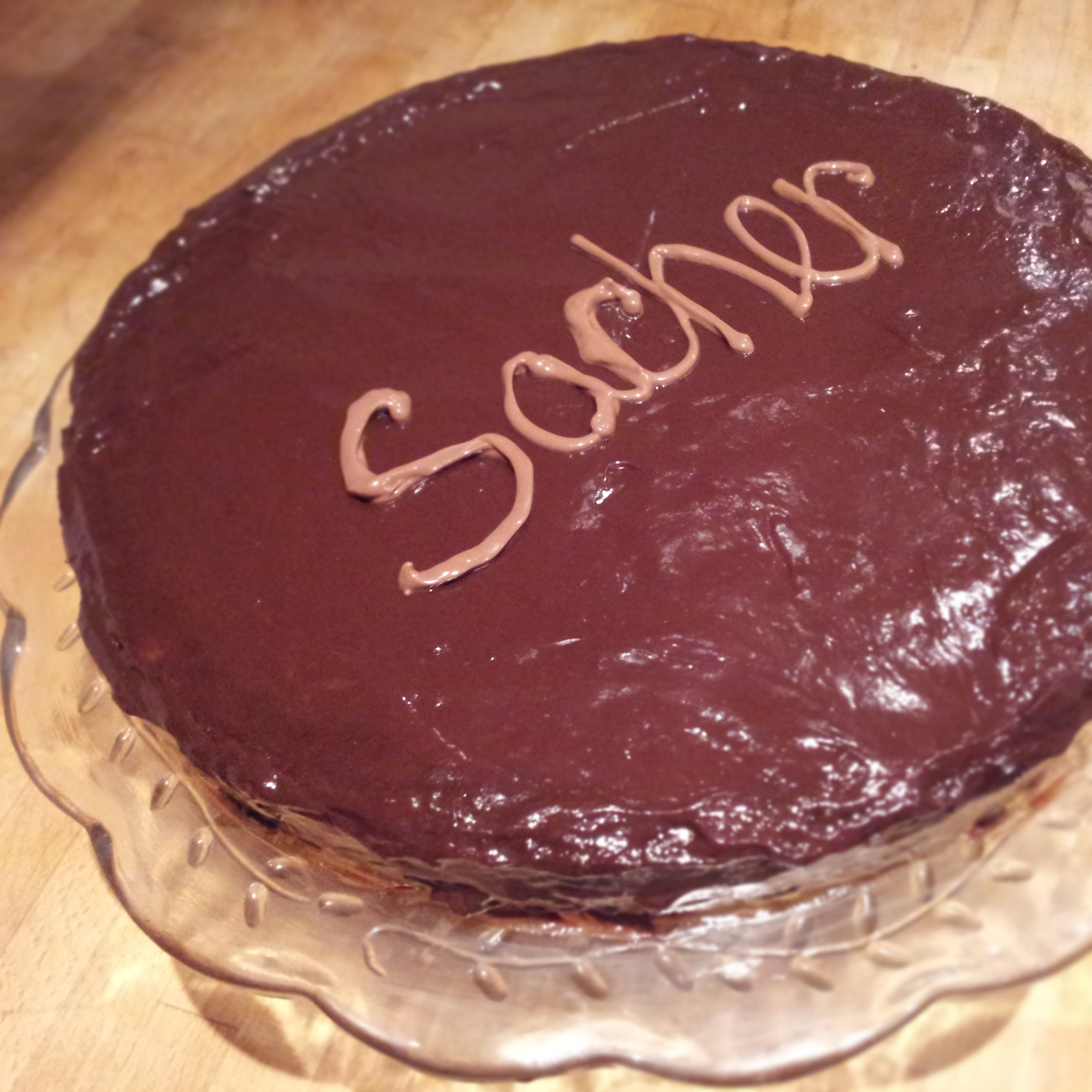
Sack the Chef. Check out my very neat s – a and c

Well my signature is certainly distinctive. But on a positive note the ganache is extremely glossy and mostly smooth. Perhaps I should have stopped while I was ahead… Please note how nice and neat the ‘S’ ‘a’ and ‘c’ are. Maybe it’s a subliminal message to myself SacHER!

Triple Layer Sachertorte! Happy Birthday Adam!

Triple Layer Sachertorte! Happy Birthday Adam!

Anyways I’m sure your chocolate handwriting skills will far surpass mine. I’m assured that it tasted lovely despite how rustic it actually appeared…  I boxed it up and delivered it complete with sparkler candles to wish Adam a very happy 30th Birthday!

Cake delivery!

Cake delivery!

I wanted to try making a traditional one layer Sachertorte just to make sure I could definitely do it right, second time round and definitely not because I’m a greedy guts. I absolutely love this cake. It’s a moist sponge and improves (as most cakes do) when left for a day or two to cut it.

I did another one... just one layer to see if I could get it right... shhh don't tell anyone

I did another one… just one layer to see if I could get it right… shhh don’t tell anyone

I must admit that home made was actually more moist than the shop bought cake we sampled in Berlin. The apricot jam infuses the chocolate with a gorgeous fruity flavour, balancing out the slightly bitter dark chocolate ganache with the sweetness of the jam. The ganache is smooth and luxurious and means the sponge keeps really well.

Here's a slice of my second attempt at Sachertorte (Just the one layer) but beautifully rich and moist!

Here’s a slice of my second attempt at Sachertorte (Just the one layer) but beautifully rich and moist!

One thing to note, if you store your cake in the fridge your ganache will lose it’s shine so it’s best to keep it at room temperature if you want to see it glisten in the birthday candle light. It’s a classic celebration cake that will be loved by everyone.

Things that I used to make my Triple Layered Sachertorte

The Cake

Preheat the oven to 180 degrees C
One greased and lined 9 inch round tin

  • 140g dark chocolate (at least 70% cocoa solids)
  • 140g butter
  • 115g caster sugar
  • ½ tsp vanilla extract
  • 5 eggs
  • 85g ground almonds
  • 55g plain flour

Bake for 40  minutes at 180 degrees C

The Ganache

  • 140g plain chocolate
  • 200ml double cream

The Filling

  • One jar of apricot jam, heated

The Writing

  • 25g melted milk chocolate

IMG_20130801_094101