100 Boozy Birthday Cupcakes and Counting

We have been busy bees recently. I put some of our wedding present vouchers to very good use and invested in a beautiful Candy Apple Kitchenaid Mixer. I have christened her Joni and she has already proven her weight in gold.

Introducing Joni my candy apple buttercream dream making machine Kitchenaid mixer

Introducing Joni my candy apple buttercream dream making machine

My 30th birthday was approaching fast and wanting to mark the occasion my friend Jill (who’s birthday just so happens to be the day before mine!) and I decided to have a little soiree at our local pub. Cupcakes seemed to be a good option for a gathering, so we didn’t have to worry about plates, knives and such like. It also meant that we could go a bit mad with the flavour combinations too.

What a lucky birthday girl I am with 2 surprise birthday cakes!

On my actual birthday! What a lucky birthday girl I am with 2 surprise birthday cakes from my mam and my sister. We’re not going to go hungry. EVER.

The week before our birthdays, Jill and I spent a merry evening baking everything in sight. Modifying Hummingbird Bakery recipes to our hearts content. It’s amazing what can be achieved in 3 hours by two 29 year old girls, armed with a Kitchenaid and a bottle of prosecco. We got very creative indeed.
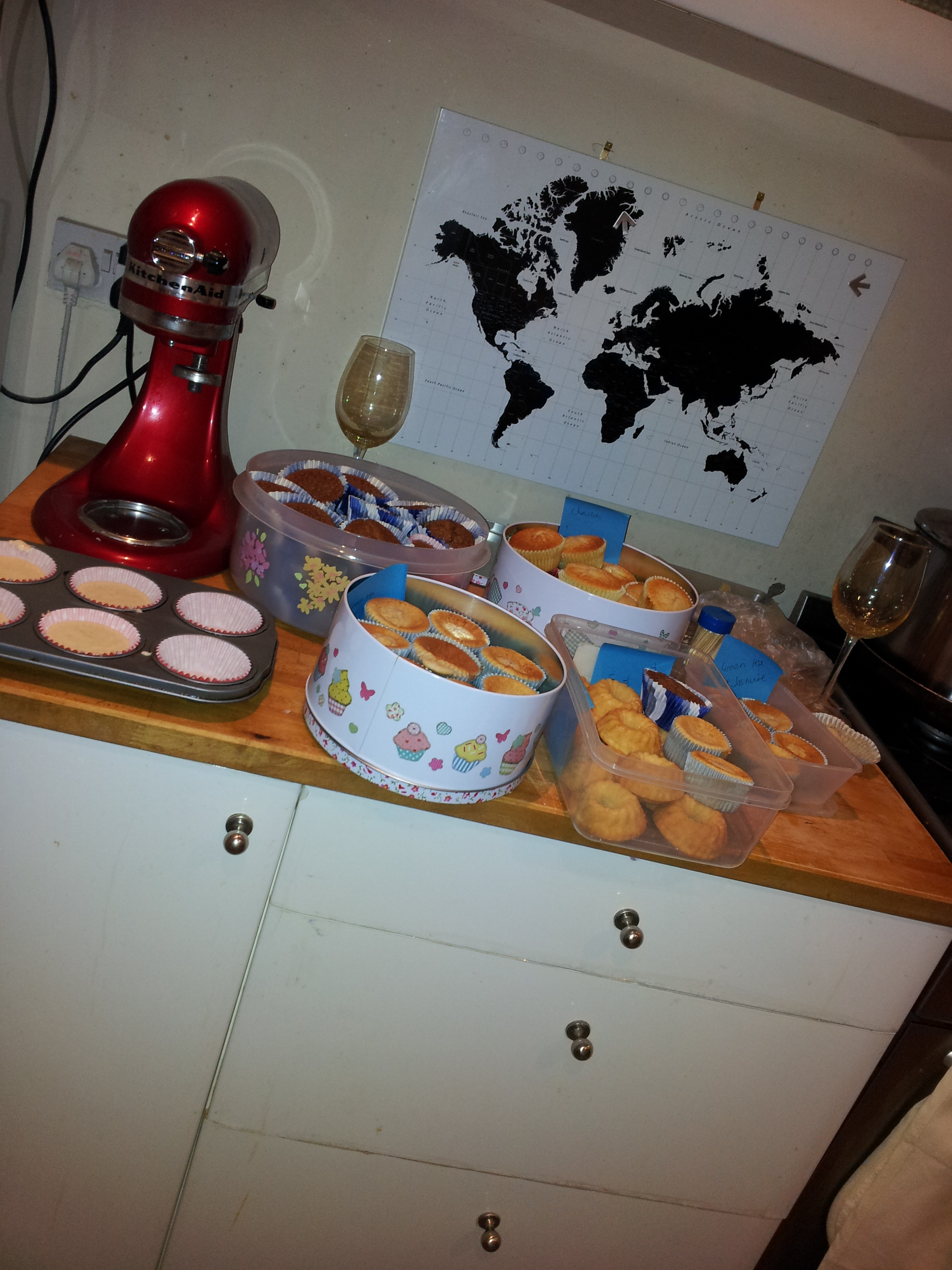
How many cupcakes can 2 girls make in less than 3 hours whilst drinking a bottle of fizz??

How many cupcakes can 2 girls make in less than 3 hours whilst drinking a bottle of fizz?? There’s still more in the oven…

We baked well over 100 cakes and still made it to the pub afterwards to meet our husbands. I must admit we sampled rather a few along the way so not all of the cakes made it into our freezers to await their icing. It’s hard to resist when you’ve got cupcakes hot out of the oven dancing in front of your eyes.

The beginnings of Pina Colada Bundt cakes from a genuinely German Gugelhupf tin!

The beginnings of Pina Colada Bundt cakes from a genuinely German Gugelhupf tin! Soaking in white rum syrup

The following week we defrosted our cupcakes and spent an entire day icing the lot, with lashings of buttercream, glitter and ganache. The results were very well received by our friends and the bar staff! The Jasmine green tea cupcakes were a surprise success after I accidentally  emptied the entire bottle of Jasmine Extract into the cupcake batter… They are the most fragrant cupcakes I’ve ever created. Perhaps an acquired taste for some and definitely an excellent air freshener accessory.

Amaretto and Coconut Snowball cupcakes

Amaretto and Coconut Snowball cupcakes – my personal favourite. I shall be rolling many more cakes in coconut in the future

Our 30th birthday party cupcake table

Our 30th birthday party cupcake table! (From left to right; coconut mini bundt cakes, amaretto snowballs cakes, pina colada bundts, jasmine green tea, double chocolate, more jasmine green tea, amaretto sours, and peppermint cream cupcakes,)

Amaretto Sour Swirl Cupcakes

Amaretto Sour Swirl Cupcakes

Pina Colada Gugelhupf cakes

Pina Colada Bundt (Gugelhupf) cakes

Extremely fragrant Green Tea and Jasmine Vintage Rose Swirl Cupcakes (With obligatory birthday glitter and lustre powder)

Extremely fragrant Green Tea and Jasmine Vintage Rose Swirl Cupcakes (With obligatory birthday glitter and lustre powder)

Double chocolate Cupcakes complete with golden lustre, glossy ganache and white chocolate hearts

Double chocolate Cupcakes complete with golden lustre, glossy ganache and white chocolate hearts

Chocolate and Peppermint Cream Cupcakes

Chocolate and Peppermint Cream Cupcakes

Happy birthday to us! What a wonderful start to the new decade!

The Creative Cupcake Modification Method

I’m not entirely sure if this is the scientific way to create your own recipes but it seems to work for me. My basic understanding of creative baking is to find a recipe that works for you then add and subtract from it. Experiment to the extreme! My general guidelines are

  1. Don’t alter the specified oven temperature (unless you have to because you’re using a fan/non fan oven) cupcakes bake at around 170-180 degrees Celsius and should take about 20 minutes depending on the size of your cases
  2. Maintain the combination of wet to dry ingredients
  3. Use whatever is in your cupboards
  4. Feel free to double the quantities if you need to bake lots but be prepared to bake them in stages
  5. Naked cupcakes freeze really well and can keep for a month. Freeze them as soon as they’re cooled in freezer bags/Tupperware and this holds all of the moisture in sponge. Leaving you with a wonderfully moist cupcake when you choose to ice it later on.
  6. You normally need more buttercream than you think so again feel free to make a double batch!
  7. The more you beat buttercream the better it is.
  8. Feel free to experiment with shapes if you have a Madeleine tin, Gugelhupf or mini bunt tin they work really well too
  9. A squiggle of melted chocolate works wonders if you can’t be bothed to whip up buttercream to top your cakes and a sprinkle of coconut and glitter hides a multitude of sins

The Basic Cupcake Recipe

Makes 12-16 cupcakes (using cupcake not muffin sized cases)

For the sponge:
Rub together (using an electric whisk if you have one) the sugar, butter, flour salt and baking powder. When it all looks quite sandy beat in the wet ingredients including your choice of flavouring!

Then pour the smooth liquid batter into prepared cupcake cases in a muffin tin.
Bake for 20-25 minutes in the centre of the oven at 170 degrees celsius until golden brown and springs back when pressed. To be extra certain they’re cooked insert a cocktail stick and if it comes out clean it’s definitely done.

The Basic Cupcake Sponge Ingredients

  • 120g  (4½oz) plain flour
  • 140g (5oz/) caster sugar
  • 1½ tsp baking powder
  • A pinch of salt
  • 40g (1½oz) unsalted butter, at room temperature
  • 120ml (4½floz) milk
  • 1/4 tsp vanilla extract
  • 1 egg

Cupcake Roulette!
Choose from an array of flavour combinations such as

Green Tea

  • 3 Jasmine Green Tea bags steeped in 3tbsp just-boiled water (reduce the amount of milk by 3
  • Replace 30 ml of milk with jasmine extract

Vanilla

  • 1 vanilla pod
  • Replace caster sugar with vanilla flavoured sugar (if you have pre-prepared some but if not don’t worry!)
  • 1 tsp vanilla extract

Amaretto

  • Replace 40ml of milk with amaretto
  • You can also add almond extract for extra oomph

Amaretto Sour

  • Replace 40ml of milk with amaretto
  • Add 1 tsp lemon extract
  • Add zest of one lemon

Coconut

  • Replace 25g of flour with desiccated coconut
  • Use coconut milk instead of normal milk

Chocolate

  • Replace 20g of flour with cocoa powder

Lavender

  • Steep the milk in 1 tbs of dried lavender flowers overnight
  • Infuse the sugar with 2tbs of dried lavender flowers for a week
  • Sieve the lavender petals out of the sugar and milk before use
  • Blitz 1 tsp of lavender into the sugar before use

Rose

  • same as lavender but using dried rose petals
  • Replace 1 tbs of milk with rose water

Piña Colada

  • Replace 40ml of milk with Malibu
  • Replace 25 g of flour with desiccated coconut
  • Use coconut milk instead of milk
  • (soak cupcakes in rum syrup whilst still warm)

Chocolate Brandy

  • Replace 40ml of milk with brandy
  • Replace 20g flour with cocoa powder

Orange

  • Use orange extract instead of vanilla
  • Add orange zest

The possibilities are endless! Create your own flavour combinations!!

You could choose your own favourite liquor, (Gin?)  cordial (sasparilla, blackcurrant), extract (Orange Blossom, violet), and just follow this idea. I’m very tempted to create some Brandy Alexander cocktail cupcakes very soon…

Then to choose your topping to enhance your flavour combination even further…


The Basic Buttercream Recipe
Depending on your style of icing you may want to double the quantities of buttercream. Piping swirls and roses uses a lot more icing than creating a palette knife swirl.

  • 25 ml milk
  • 250g icing sugar
  • 80g unsalted butter, softened

Icing Flavour Options

Vanilla

  • 1 tsp vanilla extract

Amaretto Sour

  • Replace 25 ml milk with amaretto
  • 1 tsp lemon extract
  • Zest of 1 lemon

Coconut

  • use coconut milk

Peppermint

  • Use 1 tsp peppermint extract

The General Buttercream Guidelines

You can see here the rules are simple. Add whatever flavour extracts you like. Substitute milk for liquid or boozy flavourings.  Zests are good to add as they are dry so won’t effect the consistency of the buttercream. If your icing is looking a bit sloppy beat in some more icing sugar and return it to the fridge to set a bit if it’s too runny.

Use a piping bag and star shaped nozzle to pipe swirls,  Mr Whippy peaks, stars or roses onto your cupcakes. Or use a palette knife to smooth a swirl of buttercream onto your cakes.

Syrup

If you would like extra moist cakes you can add a syrup to the sponge whilst it’s still warm.

Tropical White Rum Syrup

  • 200ml white rum
  • 60g sugar

Warm the sugar and rum in a pan over a low heat. Simmer it until it’s reduced by half in volume. Once cooled pour over your cakes. Allow it to soak in before icing your cakes. Feel free to use other flavours too! Lemon juice, rose water, cordial etc make a really good syrup!

Colourings

Using a cocktail stick add a couple of drops of your food colour gel of choice and beat until its fully incorporated. You can always add more if needed.

If you want to swirl 2 colours together, split your buttercream in half. Colour each half whatever you fancy. Pipe one colour buttercream down one side of a piping bag and then pipe the different colour down the other side of the bag. You will then get a lovely swirl of colours on you cupcakes when piping the two colours simultaneously from the same bag!

Chocolate Ganache

  1. Heat up 300ml of double cream to just about boiling
  2. Take it off the heat
  3. Smash up equal amount of dark plain chocolate 300g
  4. Stir the chocolate into the hot cream until completely smooth
  5. Spoon a generous blob onto cupcakes and let gravity do the work to create a smooth level shiny ganache top

You could use white chocolate if you add more white chocolate to the mix as it contains less cocoa solids so it won’t set until there’s more chocolate than cream in the mixture.

  • 150ml double cream
  • 250ml white chocolate

Decoration
Arm yourself with a selection of…

  1. Sprinkles
  2. Glitter
  3. Desiccated coconut
  4. Chocolate shavings
  5. Hand made chocolate swirls (melt chocolate squiggle it onto some grease proof paper allow it to cool and hey presto fancy looking chocolate bits)
  6. Lustre powders
  7. Popping candy
  8. Pearls
  9. Cupcake wrappers (if you have some)

And go wild!

Cupcake Combinations That Work Well

  • Chocolate sponge and peppermint buttercream
  • Jasmine green tea sponge and vanilla buttercream
  • Chocolate sponge and chocolate ganache
  • Amaretto sour sponge and amaretto sour buttercream
  • Piña colada sponge and coconut buttercream
  • Amaretto sponge and coconut buttercream

46. Say hello to my Brazilian Roll ~ Rocambole Cake

image

Brazil is yet another country on my still to visit list. However I do have a lovely Brazilian friend who was an exchange student at my sixth form. We became firm friends over A Level Media Studies and parties. Thinking of you Gabriella when baking my Brazilian Roll or as you may call it in Brazil a Rocambole.

image

This bake reminds me of Mary Berry’s Chocolate Roulade (one of my very first around the world in 80 bakes more technical challenges). Both are very similar to the wonderful Swiss Roll however the distinguishing factor of the Rocambole and the Roulade is that they use whisked egg whites to fluff up the sponge. This means it’s a fragile cake but very light. Where as the Swiss Roll is more like a sponge cake, less delicate and probably (in my opinion) a bit easier to bake and to handle.

Traditionally the filling in a Rocambole is a Doce de Leite. This is a Brazilian favourite. It’s a creamy milky toffee sauce made from slowly reduced condensed milk. (It’s quite similar to the Italian toffee sauce dolce de leche). It’s reduced down over a low heat until caramelised to produce a thick fudgey gooey paste. As the filing takes quite some time to prepare it’s best to start with this! You need to be really careful with this as if the pan is left to boil dry the can could explode and really hurt yourself (and your kitchen).

how to make doce de leit Simmer an unopened can of condensed in a pan of water for at least 2 and a half hours

Simmer an unopened can of condensed in a pan of water for at least 2 and a half hours

Take one unopened can of condensed milk (Most cans in the UK randomly contain a very precise amount of condensed milk of 395ml. Who knows why? But the process is the same regardless of the size of your tin). Place your unopened can of condensed milk in a pan of boiling water and simmer it for 2 and a half hours. Keep an eye on the pan and keep topping up the water so the water level remains.always around 2 thirds of the way up the can. Allow the can to cool for about 30 minutes before opening it.

Evaporated milk isn’t the same and unfortunately won’t work as a substitute, as evaporated milk doesn’t have as much sugar in it. Never to be defeated I have managed to make doce de leite with evaporated milk. If you’re up for an experiment and evaporated milk is all you’ve got, you could get away with adding sugar to evaporated milk and dissolving it slowly over a low heat to create your own toffee sauce. (I have free styled this recipe before and it gave a rather more liquid toffee sauce so it can be done! Just add enough sugar until you reach your desired level of toffee colour and taste.)

how to make doce de leite

The grand reveal! My doce de leite looks suspiciously like condensed milk. No hint of toffee here. Back in the pan you go

Unfortunately I failed to let the water bubble (being a little too cautious – very unlike me!) so when I opened my can it still looked like condensed milk, just a bit thicker. However undeterred I threw it all into the pan and heated it on the stove to make my doce de leite directly in the pan. It does require a bit more attention and elbow grease however…

The slightly reduce condensed milk straight from the can, the bottom revealed some thicker doce de leit

The slightly reduce condensed milk straight from the can, the bottom of the can revealed  the beginnings of some thicker doce de leit. It’s a bit lumpy so needs a good whisk

I’m a little impatient and wanted it to thicken up quickly so kept increasing the heat and whisking by hand until it bubbled, then removed the pan from the heat to allow the residual heat to continue to cook the condensed milk. You need strong arms to keep whisking continuously as the milk thickens! (My arms weren’t feeling the strongest after a full day of Yoga handstands the day before but I still managed)

Whisking the condensed milk over a low heat to make doce de leit

Whisking the condensed milk over a low heat to make doce de leite

My impatience led my doce de leite to become extremely thick and it pulled the head off my hand whisk! However a little cold milk reduced the heat of the sugar to calm the doce de leite down. It allowed me to get the sauce back to a slightly more spreadable state. To stop the cooking process I placed the hot pan into a sink of cold water. In my ‘wisdom’ I then dipped my finger into the doce de leite to test if it was cool enough to spread! It was most definitely NOT cool enough and welded to my finger. I managed to pull the molten lava doce de leite off my finger and ran it under the cold tap. Did you know a piece of frozen melon makes a wonderful cold compress to take the heat out of a burn? Clutching my melon I managed awkwardly to continue to whisk the sauce still undefeated by my blistering finger. I ended up clutching on to more frozen fruit whilst spreading the doce de leit and rolling up the cake.

After a good 5 minutes of whisking and heating it turns a golden brown colour and becomes quite thick! Add a bit of milk to loosen the mixture if it needs it.

After a good 5 minutes of whisking and heating it turns a golden brown colour and becomes quite thick! Add a bit of milk to loosen the mixture if it needs it.

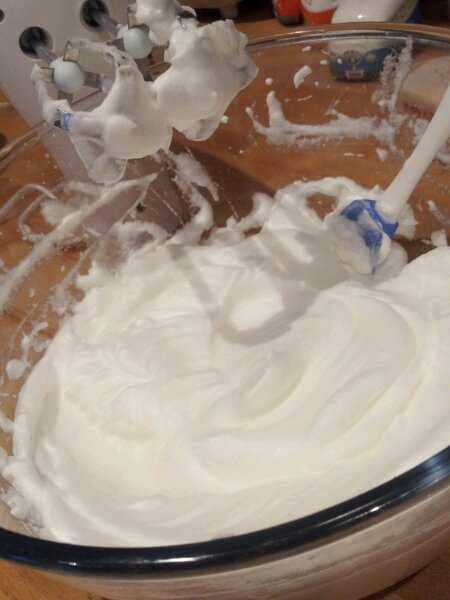
The cake itself takes hardly any time at all to prepare. The whisking is the most time consuming part of the Rocambole. Like a Roulade you have to whisk the ALL of the egg whites (there’s 5 eggs in this cake! That’s a lot of egg!) on a high speed setting. (If you have an electric whisk, if not prepare your arms for a bit of a work out!) until stiff and shiny. This takes about 5 to 7 minutes. The egg whites will double in size. I love this bit!

Whisking the egg whites to make Rocambole

Whisking the egg whites to make Rocambole

One slight difference between the Rocambole to a Roulade is that the egg yolks are then also whisked into the egg whites. (With a Roulade you whisk the yolks with the sugar and chocolate then fold it into the egg whites.) The Rocambole is a bit quicker banging it all together and whisking to your hearts content. You don’t want to knock any of the air out of the egg whites, so it’s best to beat the yolks lightly first so they are runny. You can then pour the egg yolks in as you whisk.

Adding egg yolks to whisked egg whites - rocambole

Whisking in the egg yolks to the egg whites – lovely creamy yellow colour and very fluffy!

Then to whisk in the sugar. The traditional Brazilian Rocambole recipe doesn’t include any flavourings or spices, it is a plain egg sponge. (A bit like my Chinese Egg Yolk Sponge favourite!)  Ever the experimenter I wanted to add a bit of flavour to this bake so I used vanilla sugar. I made this really simply by shoving a leftover vanilla pod, which I had scraped the seeds from for another bake, into a bag of sugar. I then left it to infuse it’s vanillary goodness for a couple of weeks. It smells lovely and gently flavours the sugar with a hint of vanilla. It’s a good way to get your moneys worth out of those more expensive ingredients as I hate to throw the pods away. I often pop a vanilla pod into any spirit that I have in my cupboard too. Vanilla Brandy or Vanilla Rum anyone?

Then to whisk in 5 tablespoons of water into the eggs and sugar - Rocambole

Then to whisk in 5 tablespoons of water into the eggs and sugar

The eggs should be seriously expanding and threatening to overflow the bowl by this point as they inflate rapidly. You need to continue to whisk the fluffy and shiny eggs whilst pouring in 5 tablespoons of water. This takes around 5 minutes of whisking.

Fold in the tiny amount of flour and baking powder

Fold in the tiny amount of flour and baking powder

In order to maximise the air in the cake and to avoid knocking the air out of the wonderfully fluffy eggs, sift in all 5 tablespoons of plain flour and half a teaspoon of baking powder. Then using your  best metal spoon fold in the dry ingredients gently. This is probably the smallest amount of flour that I’ve ever folded into a cake. It felt a bit odd as the flour just disappeared to the bottom of the bowl, but trust in the recipe, it definitely works!

Rocambole Carefully pour the mixture into a rectangular baking tin

Carefully pour the mixture into a rectangular baking tin

Line and grease a rectangular baking tin. I used a tin 37cm long by 22cm wide and 5cm high. Use a deep tin as it will rise in the oven.  This mixture is really delicate so to avoid knocking the air out of it, hold your bowl of mixture as close to your tin as possible and pour. It’s a very liquid mixture so try to pour it into all of the corners so you don’t have to move it around too much in the tin. Gently level the mixture with a spatula to avoid an uneven bake.

A fully cooked and curled Rocambole

A fully cooked and curled Rocambole

After baking it in a preheated oven (350 F/170 degrees Celsius) for 15-20 minutes, it will become golden brown and feel slightly firm and springy to the touch. I always check that a cake is cooked by using a cocktail stick, if it comes out clean from the sponge you know it’s done. Unfortunately I was trying my Mary Berry recommended foil backed parchment paper and it doesn’t always do what it’s told. In the heat of the oven it curled up and into the cake! Maybe a wider variety of paper is needed for this tin so that it reached the edges of the tin and can be scrumpled down over the lip of the tin to hold it in place?

Carefully lift your cake from the tin and prise any baking paper out of the sponge (if needed)

Carefully lift your cake from the tin and prise any baking paper out of the sponge (if needed)

Allow the cake to cool in the tin slightly so it holds it’s shape. Then carefully lift the cake out of the tin, by the baking paper. But don’t remove the baking paper.

Spread the Doce de Leite carefully onto the sponge - try not to take the cake with you

Spread the Doce de Leite carefully onto the sponge – try not to take the cake with you

Using a spatula and a palette knife , I tried to spread  a thin layer of doce de leite across the cake. This is easier said than done whilst holding a piece of frozen fruit on your burnt finger. The Doce de leite is very gooey and if it’s as thick as mine, it could pull holes in your cake (note the holes in my sponge above…) But who is going to check the inside of your cake? When it’s rolled up no one will notice  and it’s going to taste gorgeous anyway so throw it on as best as you can.

Carefully does it ... Roll Roll Roll your Rocambole

Carefully does it … Roll Roll Roll your Rocambole (excuse my slippers)

There is a bit of a knack to rolling up a Rocambole. I decided to neaten up my slightly rough edges, trimming the longest edge as straight as possible with my very best sharp knife. It’s not the easiest cake to trim as the sponge is very moist and delicate (so it sticks to the knife!). I only trimmed one edge in case I destroyed the other side. This cake was to accompany me to the Clandestine Cake Club and I didn’t have time to make another one (or anyone condensed milk!). Trimming the cake does have it’s benefits however, I could make sure it tasted good before serving it up to my friends! 


Ta da! One rolled up Rocambole!

Ta da! One rolled up Rocambole! (And one pan of soapy boiling water on the stove to dissolve all of the doce de leite)

Before I even attempted rolling the cake I made sure I had loosened all of the edges from the baking paper gently with my fingers to avoid tearing the sponge. It’s best to keep the sponge on the paper so you can use the paper to coax the cake over. I started the roll off by pressing a knife into the sponge about half an inch in from the shortest edge. I then folded this lip of sponge over to start the roll and give a really tight spiral. Then to let gravity do it’s job! Lifting the paper over,  letting the cake fall into place whilst coaxing it into a roll with your hands. Once you start it’s easy to get carried away! Hence my lack of photos of this process the Rocambole was all rolled up before Chris could get into the kitchen to take a photo for me!

Rocambole recipe Gently ease any slightly stuck bits  of cake off the paper using your finger tip...

Gently ease any slightly stuck bits of cake off the paper using your finger tip…

All of the pictures I could find of a Rocambole seemed to show a cake with a very long spiral with a very thin sponge so I chose to roll mine from the short edge to the short edge, to maximise my spiral. If you wanted to get more slices out of your Rocambole you could roll from long edge to long edge and get a much longer cake.

Just rolled Rocambole - trimmed edge to the front!

Just rolled Rocambole – trimmed edge to the front!

Once you’ve rolled up your Rocambole all it needs is a liberal dusting with icing sugar and you’re good to go! I recommend eating it quick as the doce de leite has a tendency to ooze out of the sides when left for a night. But if you like this effect then see if you can hang fire for a bit for an extra level of goo.  I can confirm that this a tasty cake. It’s definitely a winner if, like me, you have a sweet tooth as most of the flavour is derived from the sugar in the cake and the milky caramel doce de leite! It’s an extremely tender sponge that almost melts in your mouth. I’ve heard very good things from my Brazilian friend, who’s Grandma makes Rocambole. She covers the entire Rocambole in chocolate buttercream and adds some texture with a fork to create a chocolate log Rocambole! Now there’s a good idea for another Christmas bake to add to my list!

Clandestine Cake Club Newcastle at Pink Lane Coffee

Glorious Cake Collection at the Clandestine Cake Club Newcastle at Pink Lane Coffee

I took my little Rocambole along with me to the Clandestine Cake Club  at the lovely Pink Lane Coffee shop in Newcastle where we were baking around a ‘New’ theme. This could mean a new recipe, new baking tin, new ingredients. This was perfect for me as pretty much every recipe I bake is new to me and a bit of an experiment. There were some amazing cakes that night, my favourite being a chocolate and peanut butter layer cake (7 layers in total!). Check out Lisa’s blog for more gorgeous pictures of the beautiful cakes from all of the bakers who braved the January snow. When there’s cake nothing will get in my way. It was immense. I must admit I took an extra sneaky piece home for later too. I was so happy that all of my Rocambole got eaten.

So if that has whetted your appetite for a spot of Rocambole here’s what I used to make mine.

Ingredients

Doce de Leite Filling

1 unopened can of condensed milk (395 ml)

Alternative fillings…

If you don;t fancy simmering a can of condensed milk down in a pan I’m sure you could put a jar of nutella or jam or guava marmalade (another traditional Brazilian Rocambole filling) to good use here too.

Cake

  • 5 eggs
  • 5 tablespoons of vanilla infused  sugar (or just normal sugar will do)
  • 5 tablespoons of water
  • 5 tablespoons of plain flour
  • 1/2 teaspoon of baking powder

Lauren’s Layered Lamington Cake

Lauren's Layered Lamington Cake

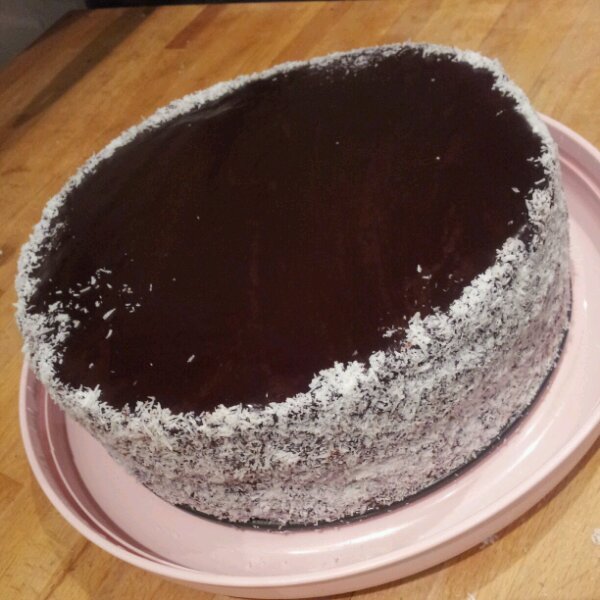
Lauren’s Layered Lamington Cake

You may realise by now that I LOVE Lamingtons. They are definitely one of my Australian highlights, alongside the cake shops in St Kilda and the koalas hanging out in eucalyptus trees. It’s been a while since I baked any of these sweet treats and I must apologise it’s been quite some time since I wrote. It’s been a bit hectic what with getting married having a last minute trip to Berlin and oh yes fitting in the proper job too… I promise I will get back to some international baking VERY soon (and also share with you the photos of my wedding cake too!). In the meantime I wanted to share with you an experimental Layered Lamington Cake that I made up the other day.

I had promised Chris a tiered Lamington Cake for the wedding. Something that I had imagined in my mind but frankly in amongst baking and icing 5 layers of fruit cake, making 150 sugar flowers, our house flooding 2 weeks before the wedding and baking brownies and Lavender meringues I never had the opportunity to bring to life. Until now. So here it is! A slightly smaller scale Layered Lamington Wedding Cake for Chris. Next time I will bake 2 more smaller cakes and stack them one on top of the other… for a tower of layered Lamington!

Lauren's Layered Lamington Cake

Lauren’s Layered Lamington Cake – 3 layers of coconut madeira, double chocolate coated and jam sandwiched

I wanted to make a more grown up version of the Lamington. More luxurious, decadent and slightly prettier than the Lamington bricks that I’ve made previously. To produce this I incorporated the coconut into the sponge, which meant I could keep the top of the cake coconut free to showcase the shiny chocolate ganache, whilst preserving the coconut and chocolate Lamington tradition. I double coated the cake in chocolate soup sauce first before a double chocolate ganache layer to increase the luxuriousness of the Lamington. And then to add an extra level of height and flavour why not add a third layer of sponge, one more than your traditional Lamington sandwich. It’s an extremely indulgent cake. One to be enjoyed on a special occasion perhaps. It takes a bit of organising and assembling, but I can assure you it’s worth the effort! Chris definitely enjoyed it and so did my friends. If you fancy having a go I’ve included the instructions below.

As the cake is entirely encased in chocolate and contains a double layer of jam it’s  a light and moist sponge. I’m hungry just reminiscing about it now! Hope you enjoy it as much as me.

Lauren’s Layered Lamington Recipe

Coconut Madeira Sponge Cake

  • Caster Sugar 250g
  • Butter 300g
  • Self Raising Flour 400g
  • Desiccated Coconut 50g
  • Pinch of salt
  • Milk 6 tablespoons
  • 2 x 8 inch round cake tins
  • Bake at 170 degrees Celsius (fan)  for 25-30 minutes
  1. Cream together sugar and butter
  2. Sift in flour and baking powder and gently fold it into the creamed butter and sugar
  3. Fold in desiccated coconut
  4. Fold in milk
  5. Gently pour mixture into 2  greased and lined 8 inch round cake tins
  6. Carefully level the mixture
  7. Bake in the middle of the oven until the cakes shrinks back from the sides of the tin, is golden brown and a skewer comes out clean from the sponge
  8. Let the cakes cool in the tin for 10 minutes to hold their shape
  9. Remove from tin and place on cooling rack
  10. When fully cooled carefully split one cake in 2 down the centre with a sharp knife
  11. Carefully level the other sponge removing the top (you can then sample the top bit of the sponge!)

Filling Strawberry Jam  (you could buy a jar or make it yourself)

  • 1kg strawberries
  • 1kg granulated sugar
  • ½ lemon, juice only
  • small knob of butter
  1. Heat equal amounts of fruit and sugar in a large pan
  2. Stir until all of the sugar has dissolved
  3. Stir in lemon juice and butter
  4. Stop stirring and boil rapidly (about 10minutes)
  5. Keep boiling the jam and checking the consistency of the jam every 10  minutes and take it off the heat once it coats the back of a spoon (this could take up to an half an hour but hopefully less!)
  6. Allow the jam to cool and set slightly in the pan

Icing

  • Butter 25g
  • Sifted icing sugar 450g
  • Sifted cocoa powder 50g
  • Milk 120ml
  • Vanilla Extract 2 tsp
  1. Sift all of the ingredients into a large bowl
  2. Put the bowl over a pan of boiling water
  3. Melt the butter over a low heat
  4. Stir together to make a thick chocolate soup
  5. Remove from heat
  6. (but if it gets too hot pop it back on the heat to warm through)

Chocolate Ganache

  • Plain chocolate 140g
  • Double cream 200ml
  • Milk chocolate 25g
  1.  Heat the double cream over a low heat in a pan
  2. Break up the chocolate into small pieces
  3. Allow the cream to become piping hot then take it off the heat
  4. Throw in the chocolate and stir until it’s really smooth and shiny

Layered Lamington Assembly

  1. Have a pre-prepared cake stand/plate to arrange it all onto
  2. Turn the bottom of the sponge face upwards (from the one sponge that you’ve split in 2) spoon a generous amount of chocolate icing soup onto the sponge and spread it evenly over the sponge base and sides. (Lamingtons are supposed to be encased in chocolate and this will help to fix it to your stand too…)
  3. Give it a few minutes to ‘set slightly’ then flip over the sponge so the chocolate is face down on your cake plate.
  4. Spoon half the jar of strawberry  jam onto the sponge and spread evenly.
  5. Place the other half of the sponge cake on top of the jam and press gently.
  6. Spoon the rest of the jam on top of the sponge and sandwich the final layer of sponge on top. (smoothest side up)
  7. Rest the cake in the fridge for 5-10 minutes to set the jam and hold sponge in place
  8. Pour the chocolate soup all over the cake and smooth with a palette knife. Removing excess icing to give a smooth ‘crumb coating’ and hold the cakes in place
  9. Return to the fridge to allow it to set for 5 minutes
  10. Pour the hot chocolate ganache all over the cake and sides. Ensure you have a smooth and shiny coat by tilting the cake to run the ganache down the sides, use a palette knife if necessary to sharpen the edges of the cake.
  11.  Use a hairdryer if needed to melt the ganache slightly to create a smooth finish
  12. Repeat ganache layer again to double coat the cake.
  13. Whilst the chocolate is still wet carefully sprinkle the sides of the cake with desiccated coconut, use a cupped hand to press the coconut into the ganache, leaving the top of the cake free so the ganache shines through
  14.  Allow the ganache to set at room temperature to maintain the high gloss finish and serve in huge chunks with a bucket of tea.