42. Swedish Tea Ring – the cake for busy bakers

Planning to bake something in advance of an event or special occasion can be difficult. Sponge cake will dry out if baked too far in advance and if you freeze it you can’t ice it beforehand. I seem to be in a real baking frenzy at the moment. Partly because I’m in the process of baking my 5 tier wedding cake…

The teetering tower of fruit cake… shame 2 tiers need to be re-baked.

I’ve chosen fruit cake for my 5 tier wedding cake is because I love fruit cake and it will be Christmas(!) but also because I can plan it in and bake it in advance. Then take my time with icing it, hopefully resulting in a well organised and non stressful experience. Also fruit cake improves with age! The longer I soak the fruit and feed it BOOZE the better it will taste.

Swedish Tea Ring

So what else keeps well? A rich yeast dough, that’s what! Bring on another new discovery and favourite of mine, The Swedish Tea Ring!!

Marguerite Patten has been tempting me with this recipe for years and I finally found a reason to bake it! To give as a present to my friends Josh and Mark for looking after me in Manchester at the Blog North Awards last week.

It’s like a robust Chelsea Bun/Cinnamon Roll/Belgian Bun hybrid. Perfect for cinnamon junkies like me and for preparing in stages for the busy baker. I can also confirm it’s portability! It survived a 3 hour drive through lightening and torrential rain! That’s one sturdy bake.

Whisking the dry ingredients together…

One thing I dislike about making yeast doughs is the kneading time required. I no longer own a hand whisk with dough hooks attached and my food processor can only handle dough for 2-3 minutes before it starts rocking around the counter top precariously. So, in my mad baking frenzy, I improvised as best as I could do. I used my electric hand whisk and beat the dough together… Who knows if this is an acceptable baking practice?

Whisking in the egg

But despite my poor little electric whisk’s protests (it’s been through a lot this year) It managed to combine the wet dough together with minimal effort required from me. I call that a result (although the blown out birthday candle smell emanating from the little whisk’s motor might suggest otherwise…)

Whisking in the milk – making a wonderfully sticky dough

Now as Marguerite arranged each bit of this recipe in a different section of the book, I managed to confuse my recipe somewhat. I used the full rich yeast dough recipe and didn’t adjust it for the Swedish Tea Ring, which means you either make one massive tea ring or one modest sized ring (according to the recipe) and a smaller mini one for later with the off cuts. (I made 2!)

Poor little burnt out whisk – thoroughly kneading/whisking the dough

Whisk all of the dry ingredients together. Then whisk into the mix the butter, followed by the egg and then the milk until you get an elastic, wet sticky dough.

One thoroughly kneaded lump of richer yeast dough

Leave it in an oiled bowl and cover with greased cling film to prove. I popped mine in the fridge over night to prove slowly (although it should only take an hour or two in a warm spot).

Or if you’re in a hurry you could pop your bowl over a pot of soup on the hob to prove…

Remove the proven dough from the fridge and allow to come to room temperature (if you have proven it in the fridge).

Fully proven dough straight from the fridge

Kneaded the full proven dough thoroughly to re distribute the heat throughout the dough.

Kneaded and shaped into a rectangle ready for rolling out

Roll the dough out to a rectangle 10 inches by 8 inches about 0.5mm thick. I was feeling very precise so I even measured and trimmed the rectangle so it had straight edges, to avoid the misshapen ends I found when making Chelsea buns

Rolled and trimmed to perfection. (Note the ball off extra dough leftover…)

My favourite bit was smearing the entire rectangle of dough with melted butter. I don’t think you need to be precise here. I found a pastry brush too delicate for this job and slapped the lot on with my hand instead straight from the microwave. (It only needs about 30 seconds to melt the butter through). The more generous with the butter the more gooey your filling.

Smeared with butter

For those who adore cinnamon, don’t feel restricted by the recipe. Feel free to pour as much cinnamon into your sugar as you can handle. Give it a quick stir to combine and then throw it onto your butter dough until you have an even blanket of cinnamony wonderment. I like to use enough cinnamon to give the sugar a dark brown colour. I ran out of brown sugar so improvised with normal caster sugar. Perhaps brown sugar would produce more of a caramelised effect?

Generously coat the butter in cinnamon and sugar (I was clearly in a hurry when I took this photo – apologies for it’s blurriness!)

After watching the Great British Bake Off, I realised my rolling skills may bye somewhat lacking. I have a tendency to misunderstand which side is the long side of the dough so I took photos to make sure I can bake this again in the future. Roll the dough towards you from the longest edge to the longest edge creating a ‘swiss roll’ of cinnamon dough.

Cinnamon swiss roll

Don’t worry if some of your sugar falls out of the roll. There’s plenty in there to make it taste wonderful. Keep the roll as tight as possible and if you have some melted butter leftover, it’s a good idea to spread a bit along the longest exposed edge to help ‘glue’ the dough to itself. I would also add a bit to one end to help later on…

Keeping the roll tight with one hand and glueing with butter the dough together

Press your fingers along the join in the dough to encourage the dough to combine and stick together. Turn the roll over so the join is firmly disguised under the roll of dough. Gravity should help to force the roll to stick together and stop the sugary goodness running out whilst it bakes.
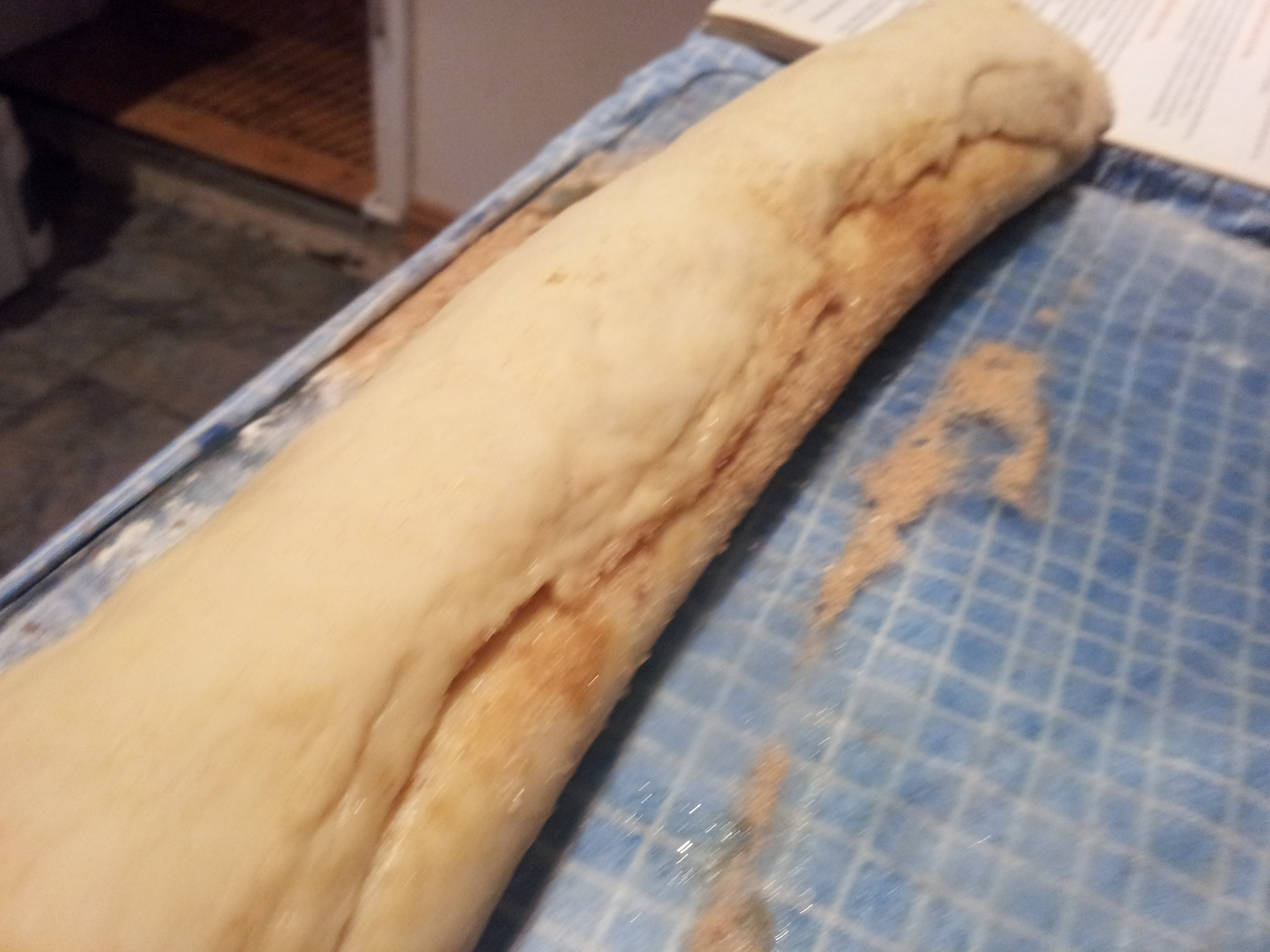
Firmly joined together – then hide this join underneath the roll of dough

This also means you have the smooth (and prettier) side of the dough roll to play with. The most difficult bit of this bake is definitely joining the two short edges of dough together as they are very sugary and don’t want to stick.

This is my Chelsea Bun attempt but it’s very similar! The swirl of cinnamon at each end makes it difficult to join but making sure you have straight edges when you roll out the dough (unlike here – look at the overlap!) makes it much easier to join

I coaxed them together with butter and nipped the edges together with my fingers until they begrudgingly worked with me.

The troublesome join

I breathed a huge sigh of relief when it finally stayed in place! It could almost be one MASSIVE cinnamon doughnut at this point. But it had to have another little rest to prove again (about 20 minutes) before the next step…

a MASSIVE cinnamon doughnut

Now here my recipe reading skills escape me again. What I failed to understand was Marguerite meant for me to cut completely through the ring to create a fan of cinnamon buns in the shape of a ring, like this…

Marguerite’s Swedish Tea Ring – How it should look in real life – fully exposed cinnamon

Unfortunately the photo was on a completely different page and I interpreted the instructions like this…
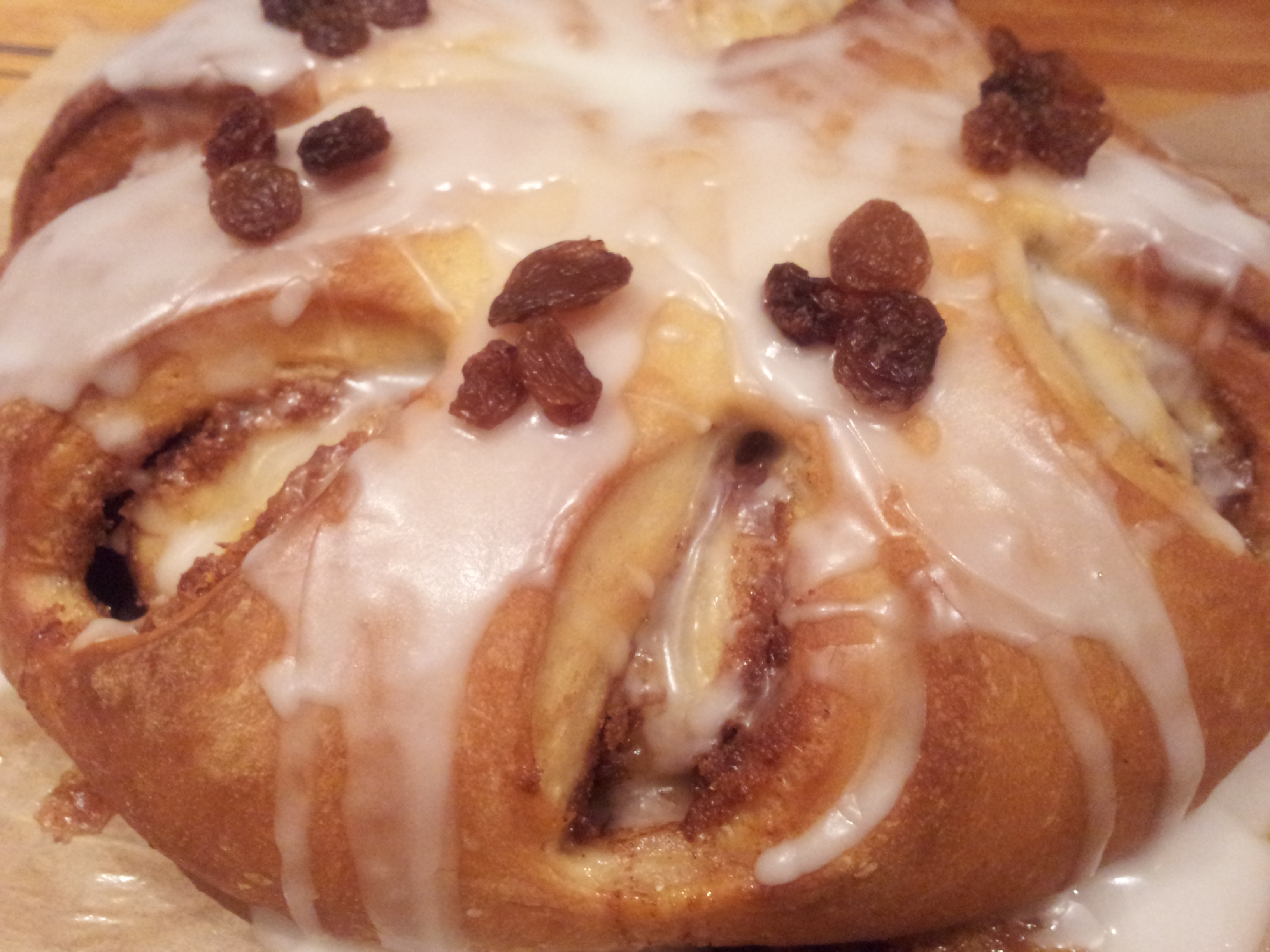
Partially exposed cinnamon – my interpretation

Brandishing my sharpest kitchen scissors I snipped delicately and diagonally into the ring to partially expose the cinnamon swirls. I must admit I was nervous that this slicing would compromise the integrity of my dough join so was possibly overly hesitant at this stage.

Snippity snip

All it needed was to be placed into a moderately hot oven for 30 minutes or so, until it turned golden brown.
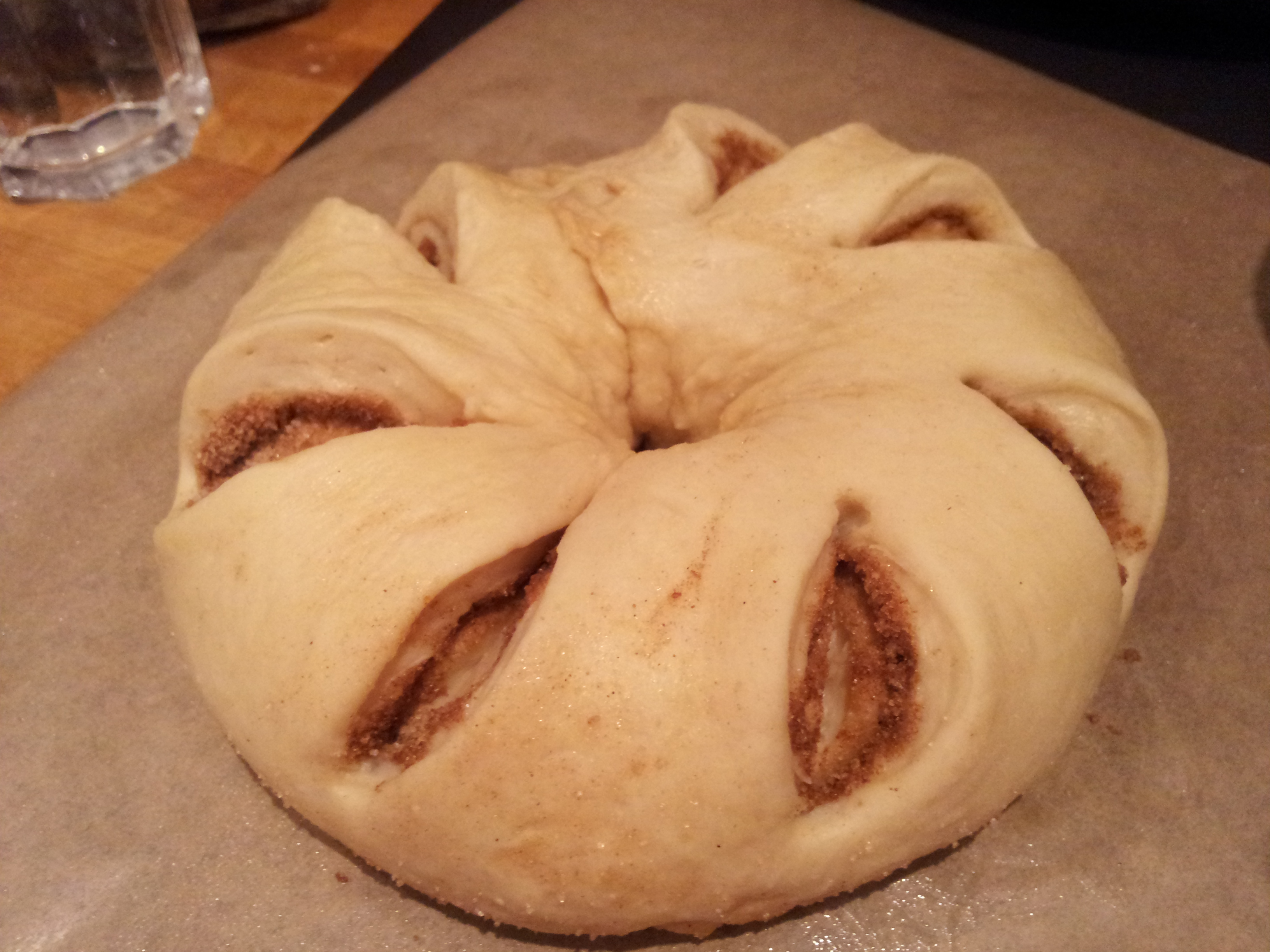
Swedish Tea Ring ready for the oven

As the Swedish Tea Ring is essentially a bread dough I also made sure it was baked through by knocking the bottom of the ring to listen for the resounding hollow tap.

Fully baked (and a bit more irregular in shape than Marguerite’s)

The baked Swedish Tea ring is a tempting sight with glitterring cinnamon peeking out from the dough (although not the most organised of rings it still looks inviting to me!)

Lemon Glace Icing

Once the ring cooled fully I whipped up a batch of lemon glace icing. It hides an enormous amount of irregularities and flaws, especially if you layer up your icing! Again I can;t say I followed Marguerite’s recipe exactly. I like a tart lemon flavour so I sloshed in a bit of lemon extract to give an extra punch to the icing. I also free poured the icing sugar and mixed it with enough lemon juice to create a runny yet thick icing. (This does take quite a bit of icing sugar!).

free pouring icing – balanced over a big mug

When the icing is just about right in consistency it should taste good (obviously!) not be gritty, the sugar should totally melt into the liquid and it should part when stirred in the bowl. (see the picture above) This means it’s starting to hold it’s shape a bit whilst still being runny to cascade over your tea ring and coat the cake in thick white goo.

iced and decorated Swedish Tea Ring

It’s best to pop your Swedish Tea Ring on some greaseproof paper (or a plate) before you pour the icing over it to catch the icing waterfall. It needs some time to dry and set. I iced mine just before bed so it had time to set over night before being deposited into it’s travel box. Please note you may need more than 2 hands and a palette knife to prise your cake from the paper after it’s iced!

The final Swedish Tea Ring

Mary Berry recommends decorating cakes in groups of threes. I didn’t have the traditional galce cherries in my cupboard but I always have a store of sultanas, hence the trio of sultanas dotted on each section of ring. It’s also best to add these decorations while your icing is still wet.

The Swedish Tea Ring in it’s rustic glory

I loved this bake. It was a pleasure to make, especially as I could spend an hour at a time doing each step making it a more manageable bake to do after work over 2 evenings. The contrast of the sharp and sweet icing against the warming cinnamon is so comforting, just what you need after a long drive in the winter night. Each slice reveals a beautiful cinnamon swirl…

A cinnamon swirl in every slice

I can recommend it with a celebratory gin or a cup of tea. Whatever your preference, I think you’ll enjoy this one. I enjoyed seconds, and could have even squeezed in thirds if I wasn’t being polite!

A chunk of Swedish Tea Ring

It was a good job I had baked my mini Swedish Tea Ring and froze it for later on that week for my friend’s house warming, as it then made a special appearance in a photo shoot for the Sunderland Echo who published an article on my Blog North Award. You can see the mini Swedish Tea Ring being balanced on a cake stand by me here

Double Swedish Tea Ring – Little and Large


Things I used to make my Swedish Tea Ring

1 quantity of Richer Yeast Dough

  • 7g of dried instant yeast
  • 3 oz sugar
  • 1 lb plain flour
  • pinch of salt
  • 3 0z butter/margarine (you choose)
  • 1 egg
  • just under 1/2 pint milk (room temperature)

Swedish Tea Ring

Use 8 oz of richer yeast dough to make one tea ring or the full quantity of richer yeast dough to make a larger ring (and a mini ring like me)

Filling

  • 1 oz melted butter
  • 2 oz brown sugar
  • 2 teaspoons of cinnamon (although I added enough to ensure the sugar was a dark brown colour…)
  • Sultanas to decorate (although it should really be glace cherries)
  • 30-35 minutes 350F, Gas mark 3-4 or 170 degrees C

Lemon Water (Glace) Icing

  • about 200g-300g icing sugar (you may need more to get the right consistency)
  • about 3-4 tablespoons of lemon juice
  • a good slosh of lemon extract (not essence)

Winner! Best Food and Drink Blog North Award for Aroundtheworldin80bakes

image

I still cannot believe it. I was stunned when I found out that Foodie Sarah had nominated me for the Blog North Awards for the best food and drink blog. (Thank you very much Sarah!).  I was ecstatic to discover that I had been shortlisted from 400 other nominated northern blogs down to 5. So I almost hit the floor when I heard my name announced as the winner of the Best Food and Drink Blog at the awards ceremony in Manchester last week!

I had toyed with the idea of going to the awards but thought that I would never in a million years actually win as the other shortlisted blogs are really fantastic.
I really recommend having a read of the wonderful food and drink blogs
Northern Food
Squidbeak
Offally Good
Little Red Courguette

And also the other categories too!

I came to the conclusion that I would go along for the sheer delight and experience of being shortlisted and to visit my friends Josh and Mark too. BEST DECISION EVER.

I merrily jumped in the car straight from work and flew down the motorway, through torrential rain and lightening, in the merry bliss of enjoying an amazing experience, with the car packed full of international baked goods to share with the boys. It wasn’t until I hit the one way system in Manchester that my tummy did a little flip. (I should also note that this is the furthest I’ve ever driven by myself before, ever! )

We were treated to some wonderful readings from other shortlisted bloggers, my favourite being Victory Garden a Hudderfield postie with a very entertaining blog of his observations of northern folk encountered en route. It wasn’t until the second interval that I started to feel a bit nervous….

The brilliant Culture Vulturess , who I’ve been following on twitter for quite some time, announced the winner of the Food and Drink Blog award and I did a little squeak and staggered down the staircase and up on to the stage, to babble my thanks and amazement at winning. I’m not entirely sure what came out of my mouth at this point but I know I thanked everyone, A LOT. And then my legs realised that I was on stage, speaking in public and momentarily refused to work to get me back down the stairs and off the stage. Once I regained the use of my limbs, I trotted off in a happy haze clutching my winners envelope, with a £50 cheque, a year’s web hosting and a winners badge to adorn my blog.

Me, on stage babbling a few words

Wow! Can you tell how OVER THE MOON I am??! It still feels like a dream and I’m still (almost a week later) smiling very widely. Who would have thought a year ago that I would be half way around the world in 80 bakes  and the winner of a Blog North Award?? I could never have dreamed this would happen.

I cannot thank you all enough. Thank you for reading, thank you for voting, thank you encouraging me! Thank you for sampling my sometimes bizarre and experimental cakes!

Thank you for a memorable and inspiring evening. I thoroughly enjoyed the relaxed and intimate event and had the opportunity to listen and chat to some very talented people! I am such a lucky girl.

I came away even more excited to continue blogging and baking and to complete my challenge. Bring on the next 39 bakes!

Just in case you want to know more about the awards you can find more details on the blognorth website here.

Also just in case you would like to see there’s a little article on my blog award on Sky Tyne & Wear website and Chris Evans gave me a little mention this morning on his BBC Radio 2 breakfast show (36 minutes in – thanks Mam!)

41. Otto and Fanny’s Fijian Banana Cake

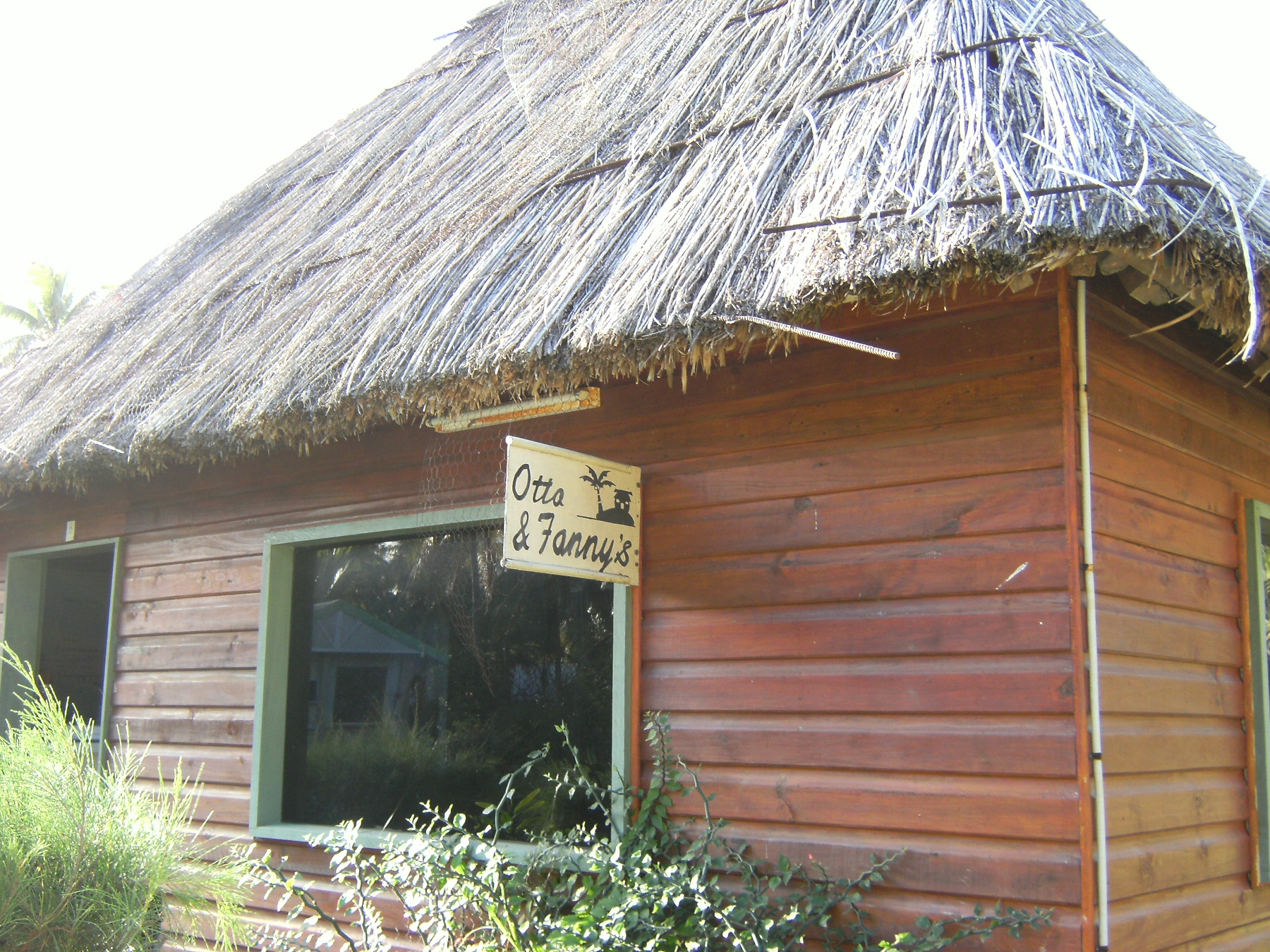
Welcome to Otto and Fanny’s

When choosing which island to visit in Fiji the Yasawas stood out a mile, mainly due to the lure of wonderful food at Otto’ and Fanny’s. We spent an entire week soaking up the scorching Sun, lounging in hammocks,

wandering down idyllic white sandy beaches,

The perfect beach

avoiding falling coconuts, going to bed when the electric was switched off and rising when the drums called us for breakfast. It was absolutely perfect.

Our beautiful straw bure – Home Sweet Home

In our straw bure, despite the cockroaches and millions of mosquitos, who can’t help but be happy when you’re being fed freshly caught fish which is so thick it was difficult to tell if it was fish or meat?

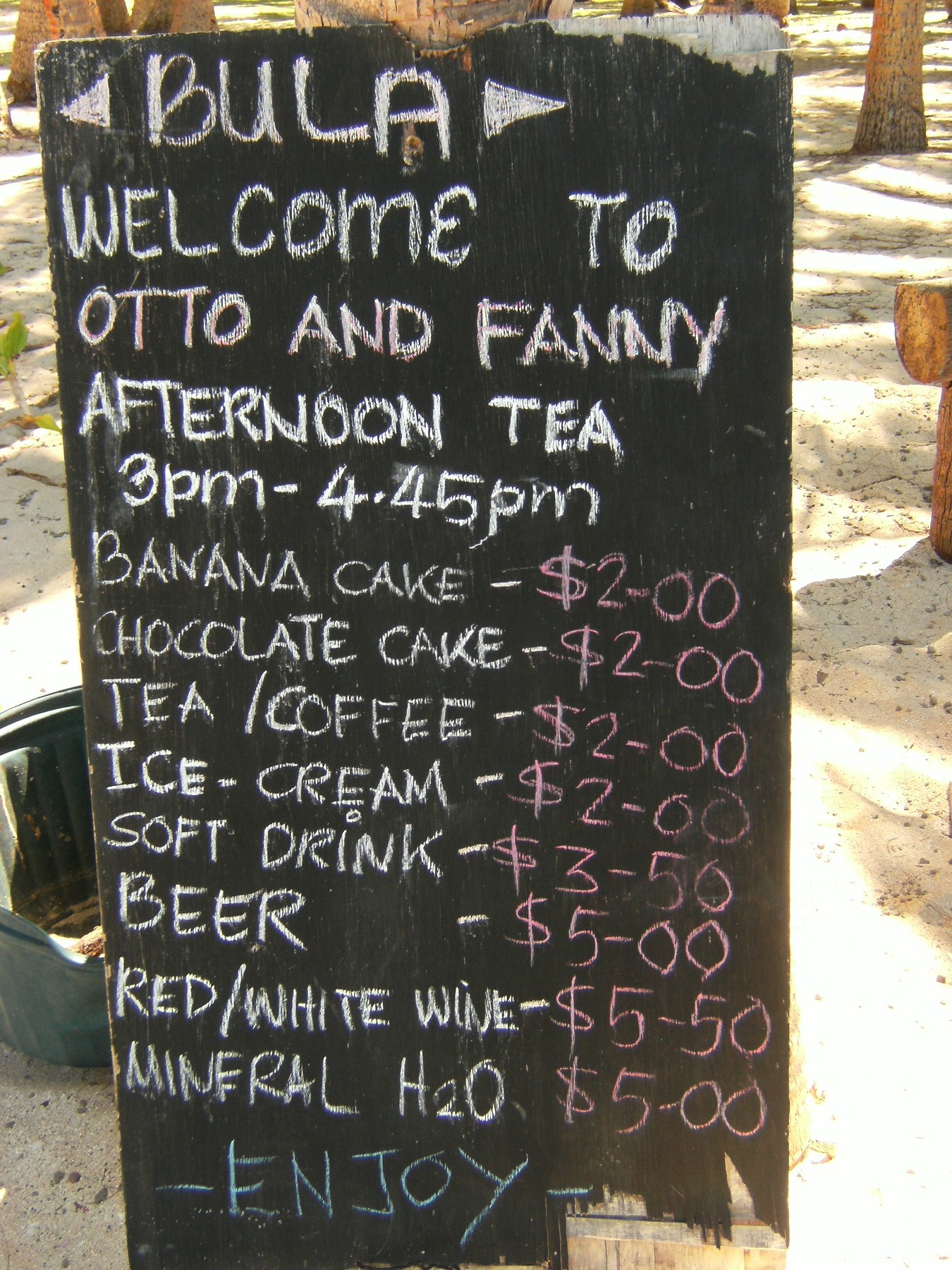
Bula Bula! Welcome to Fanny and Otto’s where the wine is  almost the same price as the water

And when the wine is (almost) cheaper than the water! Frankly I could spend my life sunbathing and eating if only the mosquitos didn’t love me so much…

Afternoon tea at Fanny and Otto’s was infamous with travellers making a special trip just to sample the delights. We ate banana cake and chocolate cake by the boat load with a hot cup of tea made from collected rain water.

What’s not to love?

The cake itself was worth the 5hour boat rude to reach the Yasawas. I haven’t been able to find the exact recipe to recreate the tremendous square slabs of banana cake but I reckon this one is pretty close. I also failed to take a photo of the cake in question! ( This was back in the day before I had a baking blog or the thought had even crossed my mind…)

Fijian Banana Cake

This cake is really quick to make and feeds a lot of people! It’s good by itself and even better with custard!

Step 1: Beat together the butter and the sugar until light and fluffy

I use an electric whisk to get the butter really fluffy. Keep whisking until it becomes a lighter colour – then you know it;s full of wonderful air.

2. The one handed egg crack technique – multi tasking to the extreme

Whisk in the eggs one at a time. It’s taken some practice but I’ve mastered the one handed egg cracking technique now. It makes this whisking so much quicker! Don’t worry if it starts to look like it’s curdling, just keep whisking. Don’t forget to scrape the sides of your  bowl with a spatula to make sure everything is incorporated into the batter.

Keep whisking… until it’s really fluffy

Whisk in the flour

Normally I would fold in flour to a fluffy egg batter to preserve the air content and ensure a light and tender sponge, however the recipe didn’t say to do this. I was feeling particularly lazy and the thought of washing another spoon saddened me. So I reckoned I could just keep using the electric whisk. After all when Mary Berry uses self raising flour in sponge cakes she whisks everything using her ‘all in one method’ and it always works!

Add the mushed up bananas

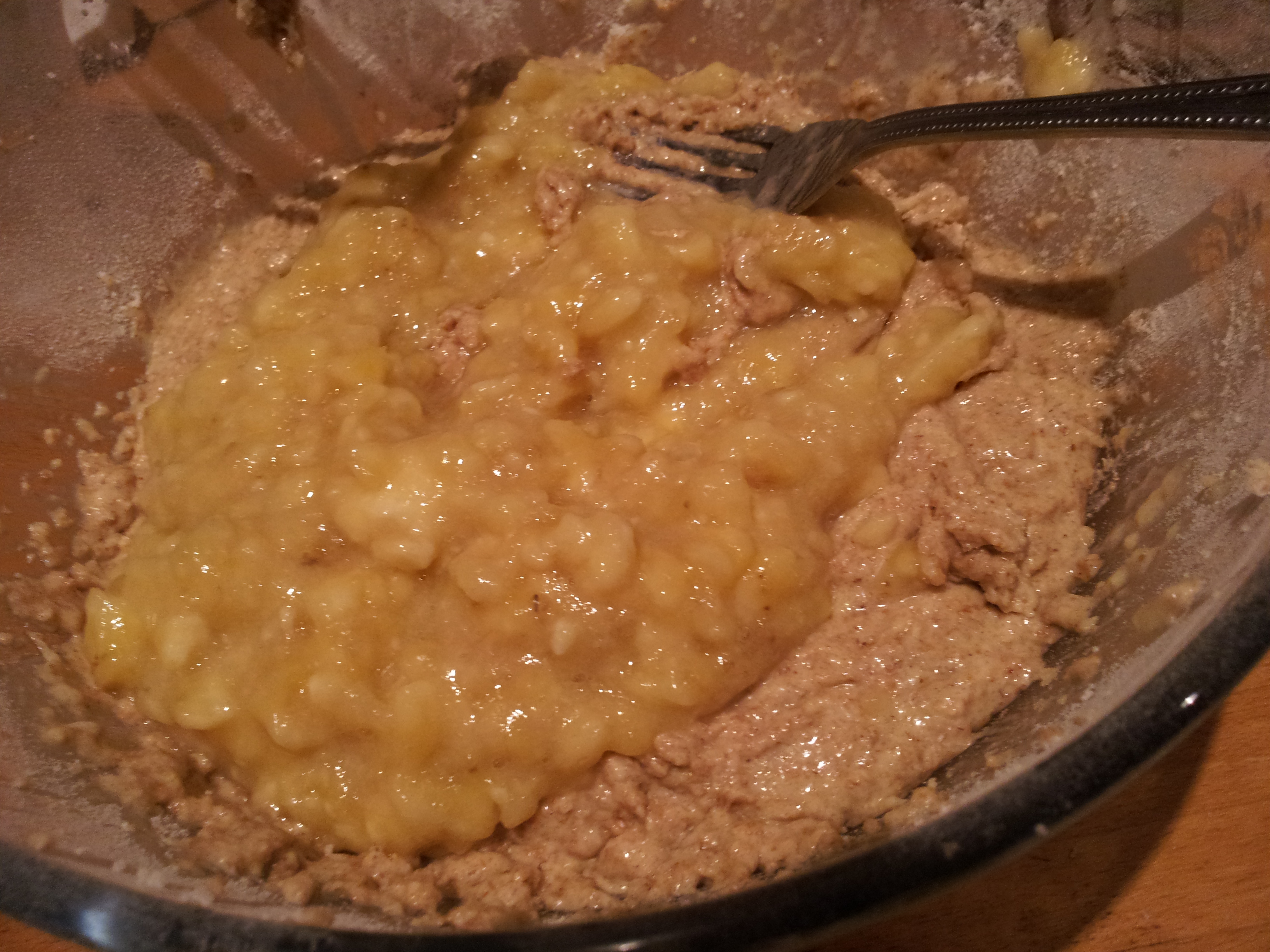
This cake is perfect if you have a few brown bananas that need to be used up. Mash up your tired bananas and add them to the mix. Again I was already using the whisk so I thought let’s carry on regardless. Let’s whisk these bananas up too!

Pour in the coconut milk

Coconut milk is a wonderful addition to this cake. Coconut and banana goes so well together! I added slightly more milk than the recipe asked for as I chose to use wholemeal flour, which is a bit drier than plain flour. It’s also more of a healthy option. I can’t pretend that I chose this purely for health benefits however, as I had a bag of self raising wholemeal flour that needed to be eaten. It worked beautifully!

Whisk everything together into a liquid batter

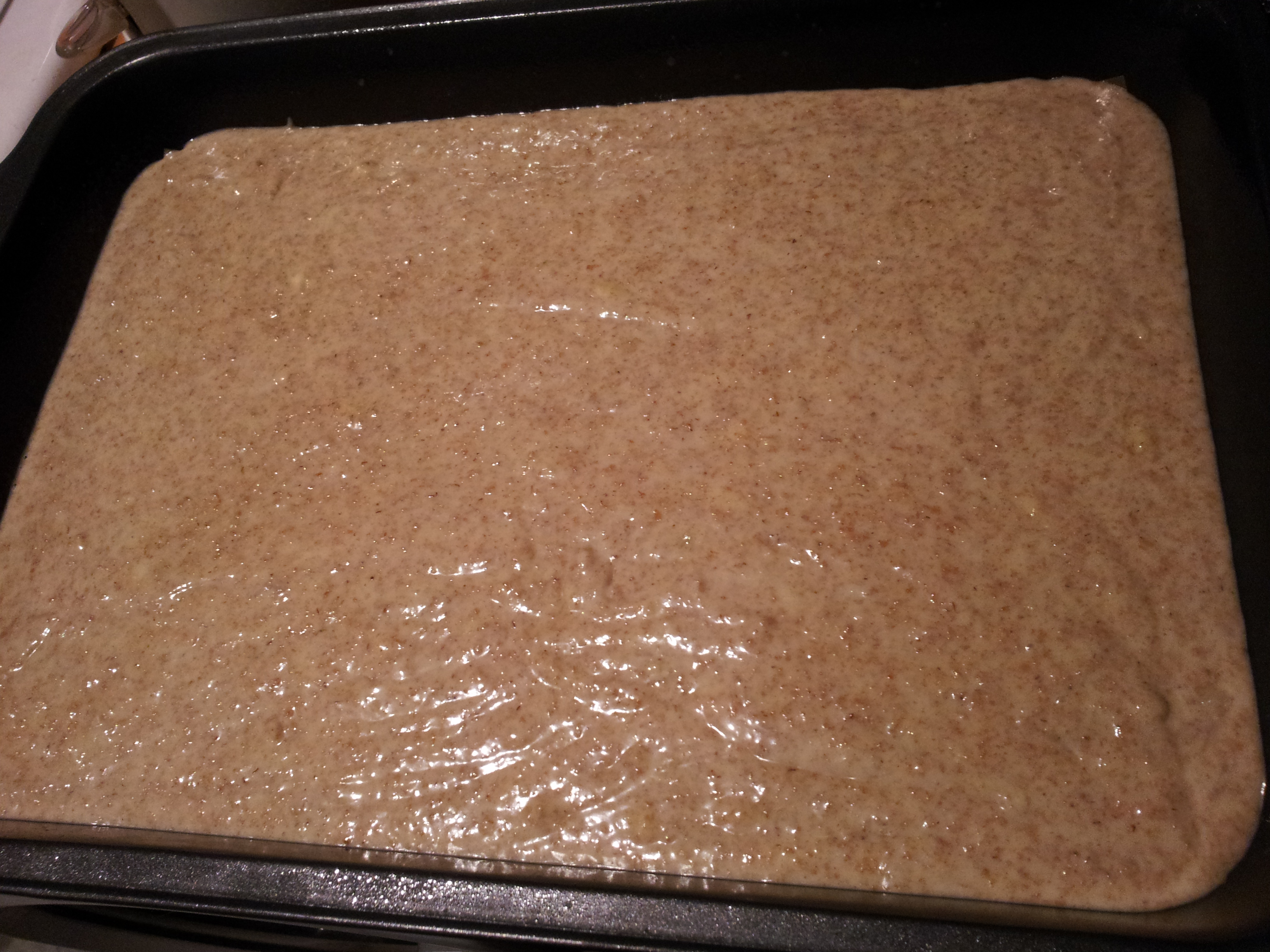
With the final whisk the liquid banana batter is ready for the oven. Don;t be alarmed by how runny it is! It means the mixture spreads out really well into all the corners of your tin. Producing a really smooth surface, which is pratically unheard of in my cakes.

Pre baking

A mere 40 minutes in the oven and you have a perfect slice of Fiji on your plate. This cake is amazing. It was wonderful straight from the oven but even better the following day all by itself. It developed a sweet gloss on the top after a day of rest in my cake box. It’s a beautifully moist cake and the added texture from the wholemeal flour gave it an extra dimension.

Golden Brown texture like sun

With slivers of banana making an appearance throughout the cake it makes a wonderful breakfast cake (but then again show me a cake not fit for breakfast!), a mid afternoon pick me up or a full on pudding with custard/ice cream. Just take your biggest knife and chop it into rectangular slabs and devour.

Otto and Fanny’s Fijian Banana Cake

It just so happened that I was preparing for another race (post Great North Run!) The Edinburgh Great Run 10k and bananas a my favourite running fuel. This is now my favourite running cake. Delicious and nutritious.

Bananas and custard – so comforting

Things that I used to make Otto and Fanny’s Fijian Banana Cake

Serves more than 20 (small -ish portions)

  • 2 cups sugar
  • 4 table spoons butter
  • 4 eggs
  • 5 cups of wholemeal or normal self raising flour (If using plain flour (all purpose), add 5 teaspoons of baking powder)
  • 1 ½ cups of milk or coconut milk (add a bit more – 1 can of coconut milk – if using wholemeal flour)
  • 4 bananas
  • one deep rectangular baking tray (approx 9cms by 25cm)
  • bake for 40-45 minutes at about 170 degrees c

Wish you were here

40. Chinese Rice Cakes – Half way aroundtheworldin80bakes!

Hasn’t time flown? One year in and we’re already half way Around the World in 80 bakes and what better destination to reach than China, one of my most favourite places in the world!

The Great Wall – look how far we walked

China has always been my ultimate must visit country. We visited just before the Beijing Olympics. Travelling around on over night trains from Shanghai to Beijing, climbing the Great Wall (sometimes on my hands and knees  – those steps are steep!) and sampling all of the delights of tasty chicken spine (!) and dried fish skin (yum).

Chinese Street Food – we didn’t eat the seahorses on sticks

Chinese Rice cakes have always intrigued me. I found the recipe in Marguerite Patten’s book and was surprised to discover how little rice flour they actually contain! However they do contain LARD! You may recall my love of lard from previous bakes such as Wiltshire Lardy Cake


These are such a quick little cake to bake and the results are impressive. Paul Hollywood would be proud of my equal sized rice cakes and even bake.

Chinese Rice Cakes – Paul Hollywood would be proud, look at the consistent size of the batch!

All you have to do is sift the dry ingredients together; plain, rice and corn flour, with baking powder, salt and sugar.

Ready to rub in the lard and rice flour

Rub the lard into the flour… My least favourite bit as I still shudder at the smell of lard. It’s definitely pungent.

Lardy times

Then bring together the mixture by stirring in a tablespoon of water, almond extract and half an egg. What a peculiarly precise measurement from Marguerite! I struggled to decide what half an egg was, so I cracked an egg into my cupped palm, over a bowl. I chopped the yolk in half with my finger and slid half (ish) of the egg into the mix. Keeping the other half for glazing the cakes later on.

Sticky dough ready for shaping

Once the mixture is quite sticky it’s ready to be divided and rolled into equal sized balls and plopped onto a greased and lined baking sheet. It’s easier to use your hands to roll them into smooth balls.

Lined up and ready for my close up – Chinese Rice Cakes

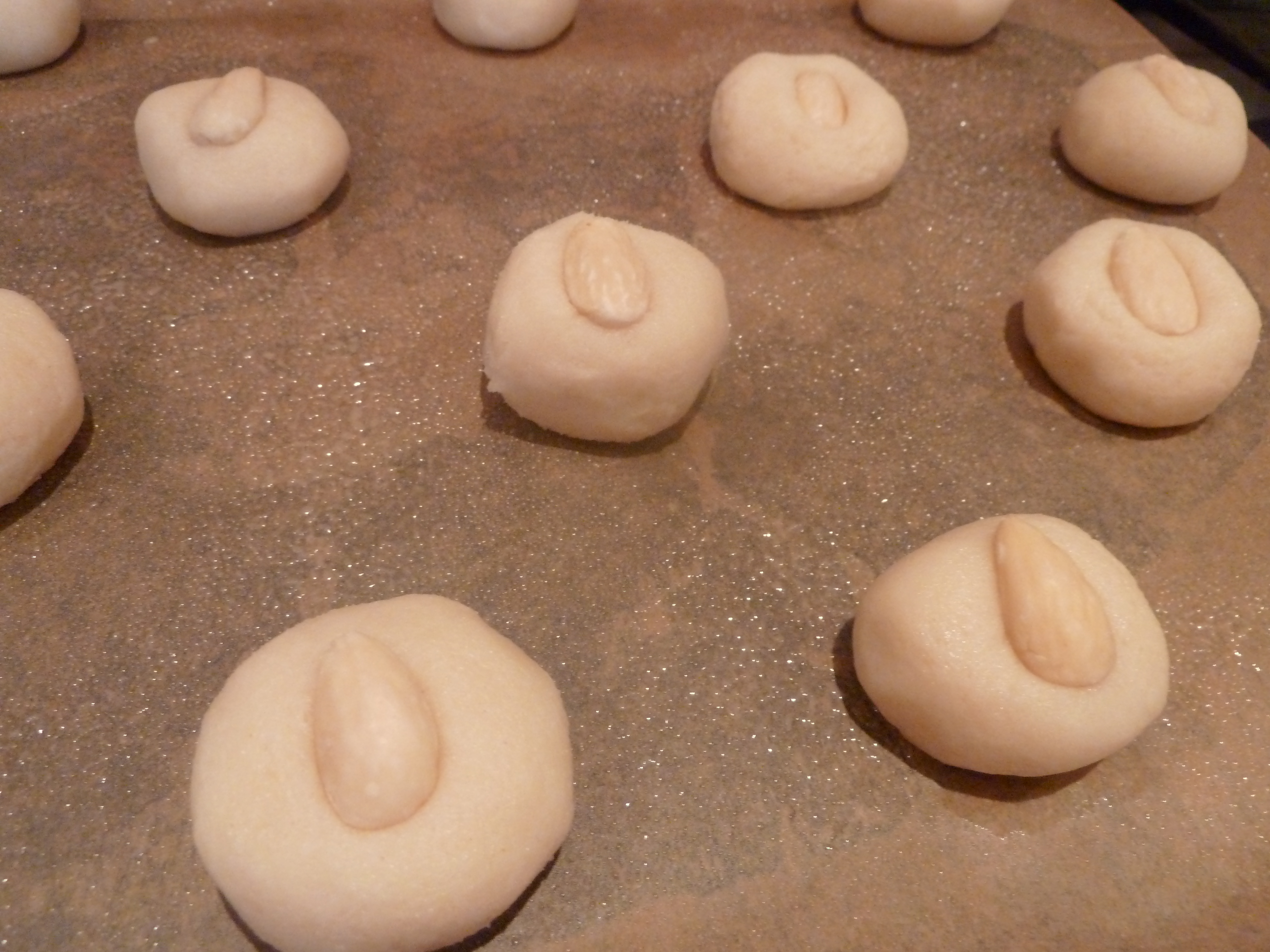
Once they’re on the sheet and spaced out nicely press a blanched almond into the centre and give them a quick egg wash with the other half of the egg. This means they will flatten a little onto the sheet and the almond will stick to the dough as it bakes. You will also get a wonderful golden crust on your cakes.

Perfectly spaced and oven ready Chinese Rice Cakes

Into the oven for for 15 -20 minutes at 205 degrees celsius and…

Just baked Chinese Rice Cakes

Ni Hao Chinese Rice Cakes ah hoy!

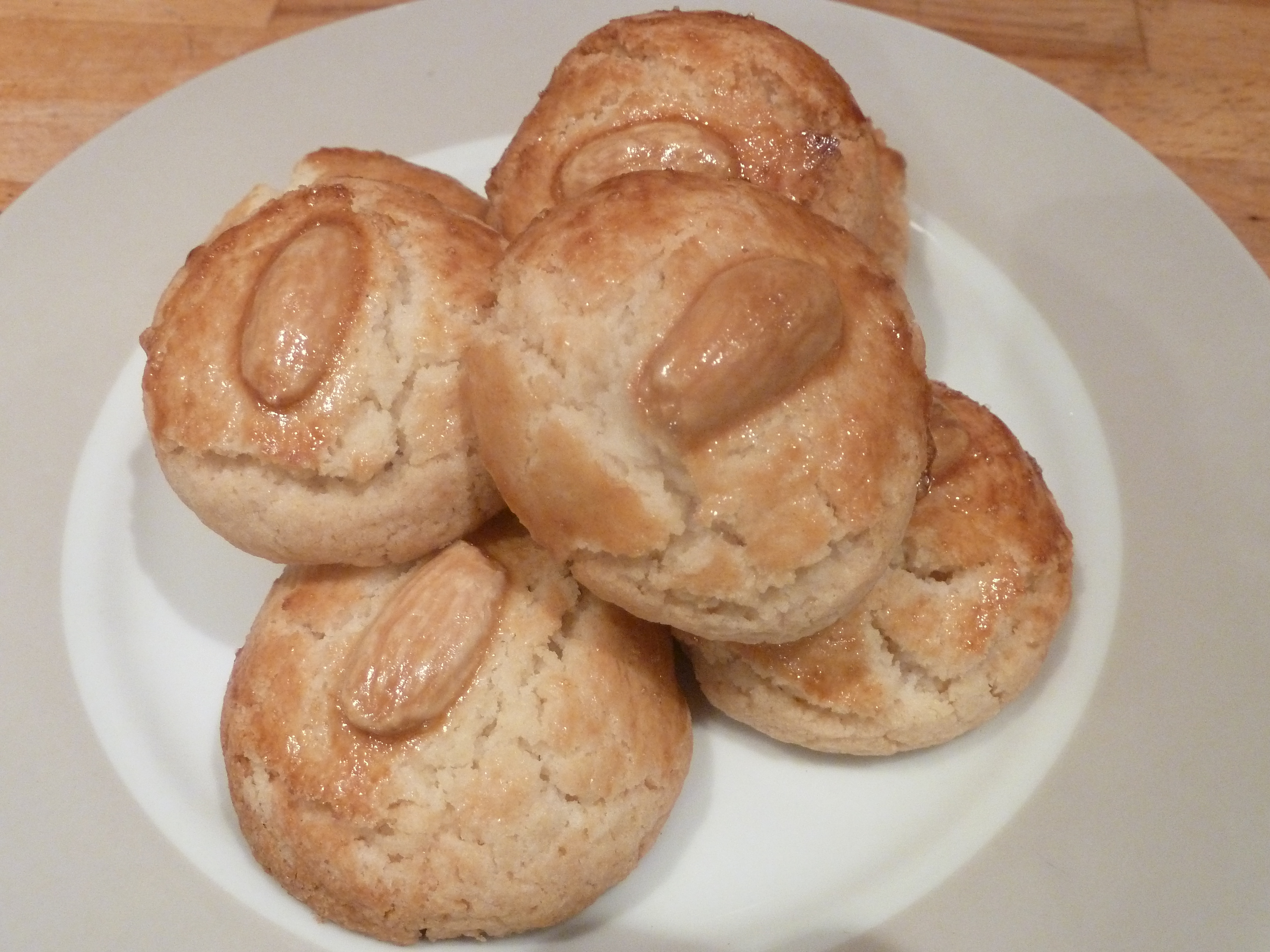
The Final Bake – Chinese Rice Cake

What a tasty little cake! The almond extract really comes though although if I were to make it again I probably would add more almond extract and some ground almonds too for more of an extravagant bake and richer flavour. Marguerite Patten’s recipes tend to be a bit more on the economical side, using minimum amounts of ingredients as she was baking during the war and making do with rations and tight budgets. I often double the quantities to make a larger batch and feed my hungry friends and family. The lard adds the extra moisture needed to give a crumbly yet light texture when baking with gluten free flours such as corn and rice which can be a bit dry side for my liking. They keep for quite a while in an airtight container and freeze really well too. Then easy to defrost as and when needed for a rice cake fix.

All in all a very quick, efficient and consistent bake. I would definitely bake these again and know that I won’t be able to resist experimenting with the ingredients.

Things that I used to make Chinese Rice Cakes

Margeurite Patten’s Recipe

This makes approximately 15 cakes

Preparation time: 10 minutes! (My kind of preparation!)

Cooking time: 15 -20 minutes

  • 4 oz (118g)  plain flour
  • 1 oz (30g) ground rice (rice flour)
  • 1/2 oz (15g) Cornflour
  • 3 oz (88g) sugar
  • 2/3 tsp baking powder
  • 3 oz (88g) lard
  • 1/2 an egg (quite difficult to measure!)
  • 1 tablespoon water
  • 1/2 tsp almond essence (I used extract as it’s stronger)
  • pinch of salt
  • blanched almonds to decorate
  • 15-20 minutes at 205 degrees Celsius